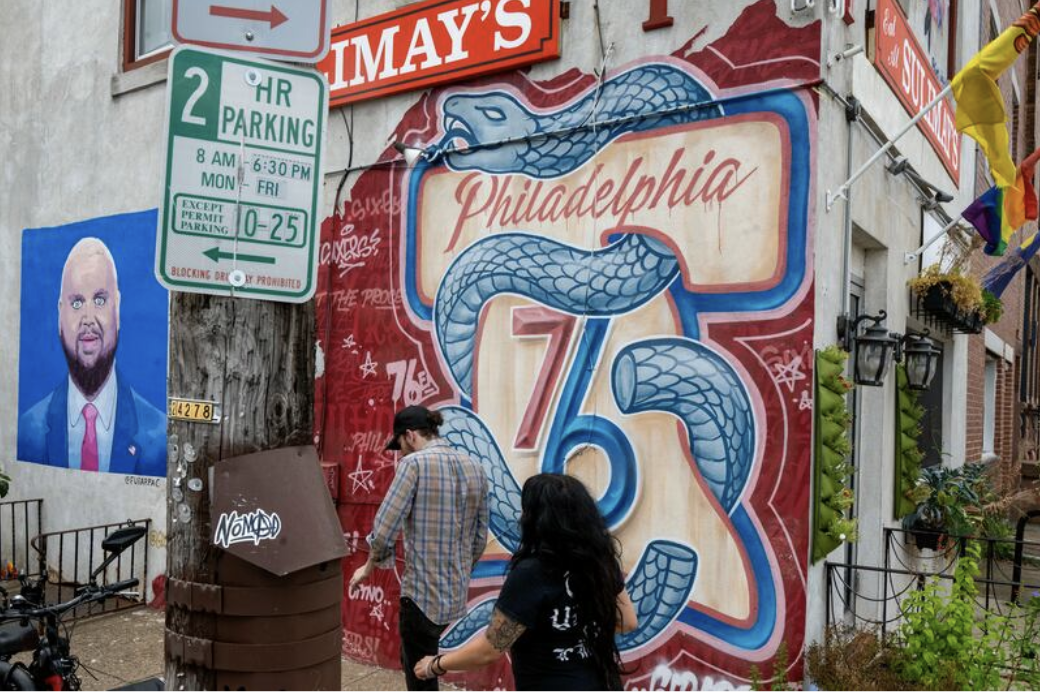
A ‘bald baby’ JD Vance mural has popped up in Fishtown

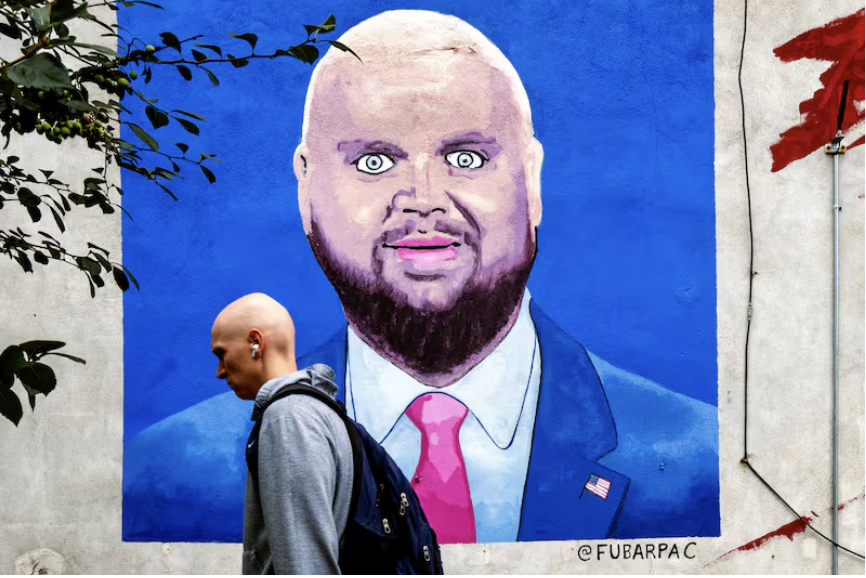
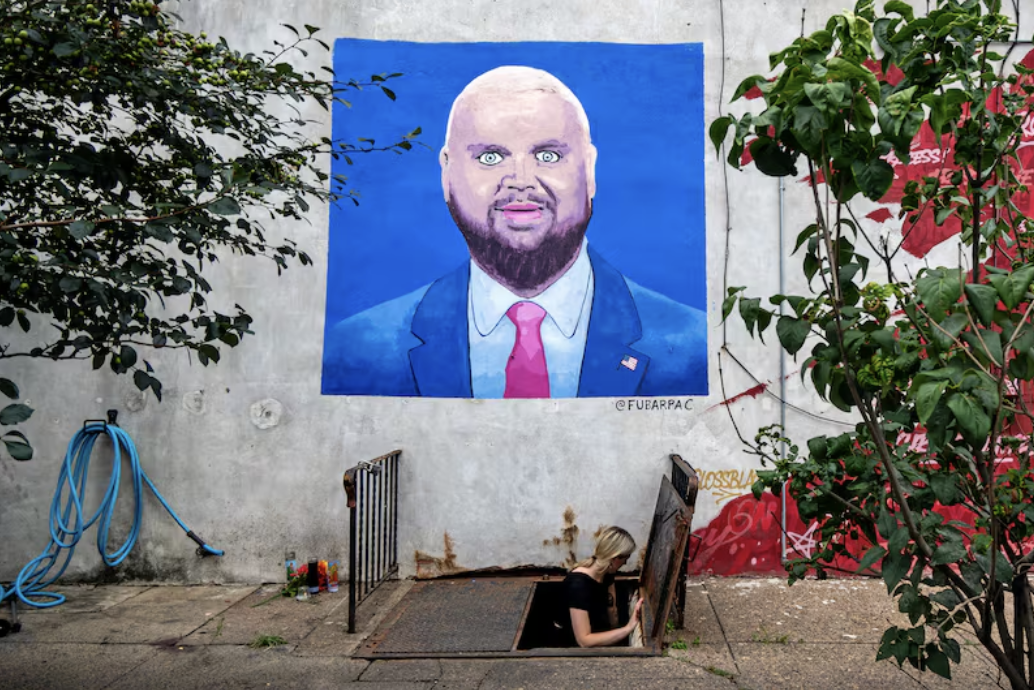
Last week, a mural of U.S. Vice President JD Vance debuted on the side wall of Fishtown restaurant Sulimay’s.

The image is one of many memes of Vance that have been circulating on the internet. The images include Minion Vance, Shrek Vance, and even one where he appears as the Las Vegas sphere.

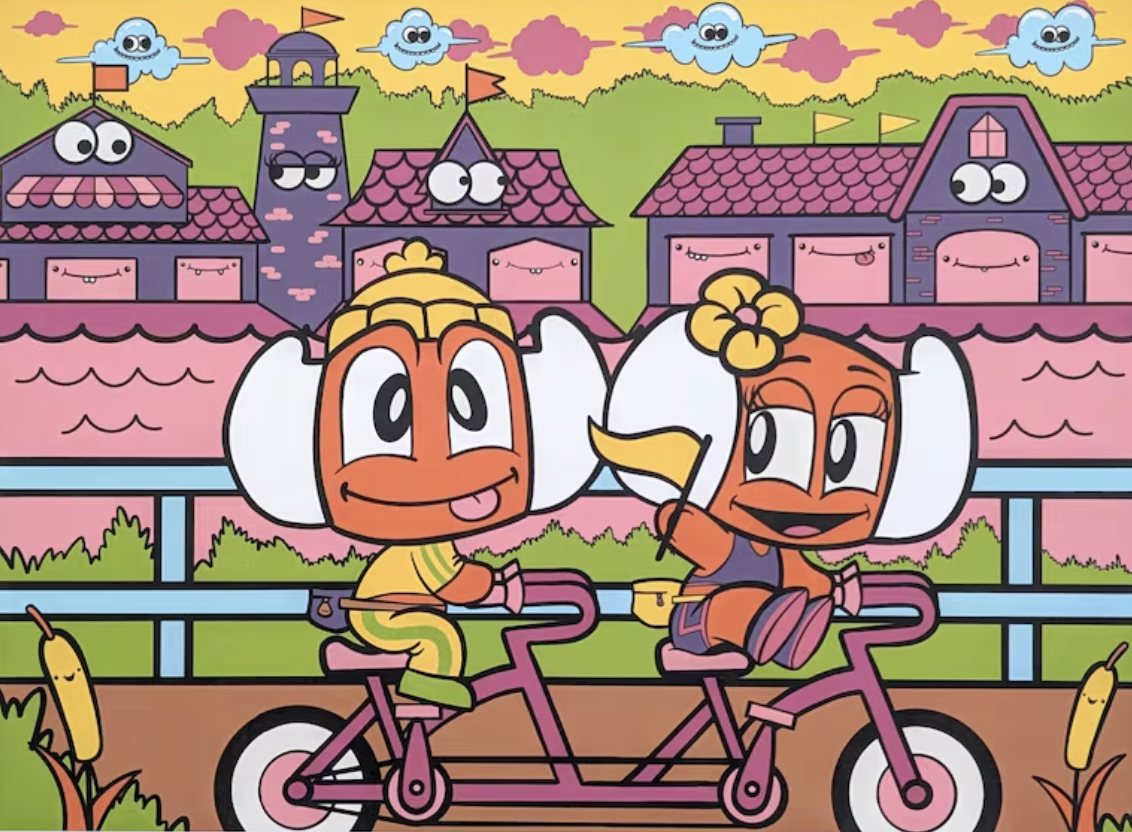
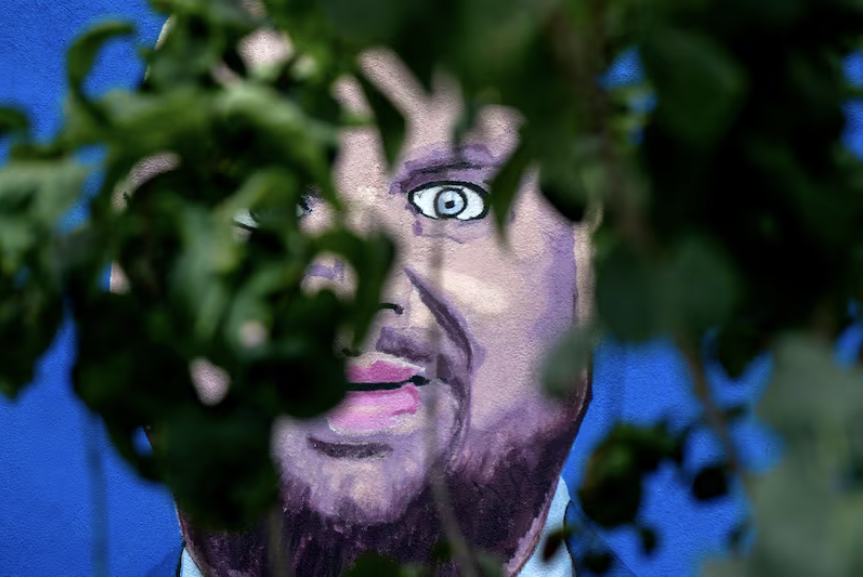
The Fishtown mural shows a wide-eyed, chubbier version of the vice president’s face but with a bald head, often referred to as the “bald baby” or “baby Vance” meme.

Videos of the mural have amassed millions of views on social media. On Sunday, TikTok user Paige Weinman posted a video of the mural that’s gained 900,000 likes and nearly 3 million views.

The bottom right of the mural reads “FUBARPAC,” an acronym for F–ed Up Beyond All Recognition/Repair. PAC is a political action committee.

Jack Inacker, a Philly native and founder of FUBAR PAC — self-defined as a “veteran-led Democratic opposition, waging a ruthless year-round campaign against MAGA cowards and their allies” — is the brain behind the Fishtown mural.

After months of exchanging Vance memes with a friend, Inacker decided to project the images against a prominent wall for Philadelphians to see. After further thought, he decided a painting would draw even more attention.

He made a post in the Philadelphia subreddit, asking if he could use someone’s wall for the project. Among the three users that responded, Inacker said Sulimay’s was the “perfect” fit.

Sulimay’s owner Chad Todd said he backed Inacker’s idea to highlight how “deplorable” both President Donald Trump and Vice President Vance have been since being sworn into office in January.

“No moral person can support what they’re doing,” Todd said. “I’ll take any opportunity to bring attention to it.”

Last Friday, Inacker brought along a projector, a handful of Sharpies, about $200 worth of paint from Lowe’s, and an artist friend.

They began by tracing over a projected image, then filling it with color until the piece was finished 12 hours later. Fishtown residents stopped by to lend a hand, Inacker said. Some suggested touch-ups, like adding eyeliner.

While the muralized meme of Vance is largely seen as something comical, Inacker said its purpose is to forge community and shed light on the Trump administration’s crippling federal financial cuts.

“Painting a meme on the side of a building is dumb bulls—, right?” Inacker said. “It’s fun to do with your friends, but I wanted to figure out a way to transform that into some meaningful action as well.”

In a TikTok posted Monday, Inacker showed a time-lapse of the mural’s creation. The clips were overlaid with references to Vance’s stance on cuts to foreign aid, the increased cost of Medicaid, and the lives impacted by Trump and Vance’s decisions.

Inacker plans to place a small plaque at the bottom of the mural with a QR code that directs people to a voter registration form.

He loves that the mural serves as a photo opp, but he wants it to become a resource and inspire people to think about political issues in their own way.

“I want to make sure that the barrier to entry to politics is really low, that more folks can get involved, and they don’t have to do serious things all the time,” he said. “They can have a party together to paint their own JD.”

With the mural, Fishtown joins somewhat of a global movement as altered images of Vance have become an international fixture.

In June, a Norwegian tourist claimed he was denied U.S. entry at Newark Liberty International Airport because he had downloaded the bald baby meme on his phone. The Trump administration refuted his claim, saying he was denied because of “admitted drug use.”

Weinman said she was surprised by the interest her post generated, but not by the popularity of the mural itself.

“We were like, ‘Oh, if you’re going to deny travelers the ability to come into the country because of their political views, their sense of humor, or their private conversations, that’s something that really stands in opposition to American values.’ So, I can understand why that image really took off in general, and why so many people find it funny.”

Similar murals of Vance have popped up on the vice president’s recent England tour. Last week, a poster by the “Everyone Hates Elon” protest group displayed the same image of Vance on a billboard in Cheltenham, Oxfordshire.

Todd said he has no plans to remove the mural from the restaurant’s wall just yet.

“As long as the positivity continues, it will stay up,” he said. “But I really don’t want to look at that for the rest of the year. It’s slightly terrifying, and freaking out the kids is a concern.”

The story has been updated to include comments from Sulimay’s.

– The Philadelphia Inquirer

The 8 Seconds Rodeo makes its debut in ‘the grittiest and most soulful city’

Ivan McClellan has had two million pounds of dirt to fill Temple University’s Liacouras Center for a “radically Black rodeo” on Saturday, along with 15 bulls, six broncos, 10 sheep, and more than 20 horses.

It has been a decade since he first fell in love with the Black rodeo on a 105-degree day in Okmulgee, Okla. The Portland, Ore., native was photographing the Black cowboys and cowgirls from the grandstands of the Roy LeBlanc Invitational Rodeo.

As they rode in Timberland boots at a speed of 50 miles per hour, braids flowing behind them, and their starched T-shirts crunching as their arms rose in suspension, McClellan realized there was a story that needed more unearthing.

“I got obsessed with rodeo culture at that point,” he said.

Black cowboy culture has existed since the beginnings of the American South, but McClellan felt there was a story that history books widely overlooked. He wanted to spotlight Black cowboys of the past and the rodeo athletes of today, from America’s Great Plains to those in the country’s largest urban centers.

With every rodeo he attended, he made more images and forged new relationships with cowboys and organizers, who inspired him to start a Black rodeo show of his own.

In 2023, he founded 8 Seconds Rodeo to highlight the essence of Black cowboy life, offer Black athletes higher wages than they were accustomed to, and introduce the world of Black cowboy culture to those unfamiliar with its extensive history.

That first rodeo at the Portland Convention Center drew a sold-out crowd of 2,000 attendees for an “electric” all-Black rodeo experience.

“This is not a reclamation story,” McClellan said. “This is something that we’ve always done, and something we’ve always had as Black people. We’re putting a light on it and letting people know it’s part of our identity. If you put on cowboy boots and a hat, you’re just putting on your grandpa’s clothes, and it’s OK.”

After selling out shows on the West Coast, McClellan — who recently moved to Chester County — teamed up with local equestrian and longtime friend Erin “Concrete Cowgirl” Brown to merge Western-style rodeo with Philly’s urban cowboy culture.

With Brown as his tour guide, McClellan ventured to the original home of the Fletcher Street Urban Riding Club, a famed institution for Black cowboys in the heart of North Philadelphia’s Strawberry Mansion neighborhood.

For decades, Black horsemen have roamed the streets of Strawberry Mansion and the nearby lushes at Fairmount Park. Several Black-owned stables have populated the area throughout the 20th century, where lessons on horsemanship and urban cowboy history were shared among riders young and old.

Brown started visiting the Fletcher Street stable at age 6.

And when the story of Fletcher Street and the city’s Black cowboy tradition was made into Netflix’s 2021 film Concrete Cowboy, Brown served as a consultant.

“We’ve achieved a lot in Portland, but I wanted to go to the grittiest and most soulful city in the world to see what we could do,” he said. “We’re going to throw down, the athletes are going to compete at the highest of their abilities, and I’m most excited about the crowd because of the city’s history and vibe.”

Philly’s, McClellan said, is a cowboy culture you don’t see anywhere else in America, and he’s excited to integrate that urban riding culture into Saturday’s event.

“It’s just the swagger of the riders here,” he said. “It’s got a lot of hip-hop in it, and that’s definitely something that has inspired us.”

Brown, who will bear the Pan-African flag to kick off 8 Seconds Rodeo, said the show is a natural fit given the city’s unique history and the recent commercialization of the Black cowboy.

“It’s major,” Brown said. “Cowboy and urban horse culture has been a thing way before I was born, but it’s more mainstream now with Beyoncé and everything coming forth. But what other city to do it than Philadelphia? It’s one of the largest cities, so why not?”

The one-day experience in Philly will feature rodeo athletes from around the country competing in bull riding, barrel racing, and bareback bronco riding for a total of $60,000 in prize money. There will also be a community pre-show that will have line dancing, mechanical bull riding, and roping instructions from fellow rodeo vets, and sounds from Philly’s DJ Diamond Kutz.

“You didn’t get those Fashion Nova and Boot Barn boots to sit in your seat. Come out early for community,” McClellan joked.

This event isn’t just a one-off, McClellan said. 8 Seconds Rodeo is going to be a mainstay event, and one he hopes becomes a place of community and celebration for Black Philadelphians who are familiar and new to the world of rodeo.

“We’re not bringing a rodeo to Philly. We’re building a rodeo in Philly,” he said. “We’re an unapologetically Black cultural event, and this one is going to be an unapologetically Philly event.”

– The Philadelphia Inquirer

How a Kennett Square sandwich maker became best buds with Mark Ruffalo, thanks to ‘Task’

It was February 2024 and a normal workday for Michael Bertrando at Kennett Square’s Sam’s Sub Shop when his phone rang. The sandwich maker saw an unfamiliar number flashing on the phone screen. He usually avoids them but decided to answer this one.

It wasn’t spam. A Heery Loftus casting agent was asking if he’d be interested in being a stand-in for actor Mark Ruffalo in the HBO crime drama, Task.

“If I’m being honest, I didn’t want to do it at first because of the sub shop,” Bertrando said. “But it’s a good opportunity, obviously. So, I took them up on the offer.”

Later that month, he appeared for camera tests at Sun Center Studios in Aston, where he met Task directors Jeremiah Zagar and Salli Richardson-Whitfield. By the beginning of March, Bertrando had landed the biggest acting gig of his career.

Bertrando has appeared in commercials for Mercedes, McDonald’s, Nintendo, Oscar Meyer, and other international brands. After traveling the world as a professional clown, he worked the improv comedy circuit in New York and Chicago. He eventually moved back to Kennett Square to help his aging parents run the family’s sandwich shop, leaving him with little time to pursue acting.

“You get to a certain age and your family’s getting older, you have your parents to think about, and we have the family business. I kind of got bogged down,” Bertrando said.

Years ago, he would’ve jumped at the Task role, but he wasn’t sure he could simultaneously work on set and manage the shop. He is glad he agreed.

“It fuel-injected me,” he said. “After talking to Ruffalo and the other crew members, the experience really put a flame under my ass.”

As Ruffalo’s stand-in, Bertrando shadowed the actor, who plays FBI agent Tom Brandis in the Delco-set, cops-and-criminals series.

Every day Ruffalo was on set, Bertrando was right beside him. He performed stunt work for Ruffalo, and the two bonded over their Italian heritage, Bertrando’s travels as a professional clown, and their common start in theater and commercials.

“Ruffalo just talked me up so much,” Bertrando said. “He would be watching me on the monitor, and then say, ‘Michael, I’m going to steal what you just did there.’ And then I’d joke and say I was his acting coach.”

With encouragement from Ruffalo, Zagar, and creator Brad Ingelsby, Bertrando auditioned for a speaking role and landed the role of “FBI Officer No. 1″ in episode five, which premiered Sunday.

He was thrilled, of course, but he had one other goal in mind. Bertrando wanted to spotlight Sam’s Sub Shop.

Off camera, Bertrando introduced Ruffalo and the rest of the crew to the delights of his hometown, including specialty hoagies and cheesesteaks from the 80-year-old eatery, which is owned by his mother, Sandra Bertrando. Her father, Sam Frabriso, opened the shop 80 years ago. Her husband, Bert Bertrando, Michael’s father, helps out, mostly chatting with customers or slicing tomatoes.

“Ruffalo and [the crew] were fascinated with the stories about my mom, the crazy customers, and everything else,” he said.

Ruffalo ordered Sam’s Sub Shop for the crew, and Bertrando gifted hats and other merch to the wardrobe and production design departments in hopes they could land some screen time.

“I played two angles,” Bertrando said. “I had my acting angle, and then I had my family business angle. I kind of succeeded in both, and it was a great experience all around.”

Along with Wawa coffee and Rita’s Italian Ice, Sam’s Sub Shop menus appear throughout the series.

A photograph of Bertrando and Ruffalo eating the shop’s subs adorns the deli’s entrance walls. When Ruffalo asked what people say when they pass by the framed image, Bertrando said, “People keep asking me how I know Paul Rudd.”

The opportunity didn’t come without sacrifices for Bertrando. He was sleep-deprived for most of the six-month-long production, working 18- to 20-hour days between the set and the shop.

Some Fridays, he was on set until 4 a.m., then opened the shop at 6 a.m. But Bertrando has no regrets. His renewed love of acting has already materialized into new projects.

“If [Zagar and Ingelsby] come to town again, I want to make sure I have something to show them, too, since they were so supportive of me. You can’t lose these connections,” he said.

After Task wrapped production last year, Bertrando returned to the comedy stage. He’s currently testing new material at open mics for a future comedy special, tentatively titled “I’m Not Mark Ruffalo.” He also starred in a short film called Magnet Brain that won the best film award at 48 Hour Film Project — Philadelphia. And he is writing, shooting, and acting in a short film about his family deli.

He credits Ruffalo and the rest of the Task crew for reigniting his passion for acting and comedy. As for a worthy “thank you” gesture, Ruffalo has already offered a “terrible” suggestion.

“He wants a buffalo mozzarella sandwich [named after him] because it rhymes with Ruffalo,” Bertrando said.

“It’s not happening.”

“Task” airs every Sunday at 9 p.m. on HBO.

– The Philadelphia Inquirer

A year of leadership shifts later, the Greater Philadelphia Film Office is charting new successes

In the Philly film world, Sharon Pinkenson was a trailblazer among trailblazers.

As longtime executive director of the Greater Philadelphia Film Office, she made Philadelphia a destination for Hollywood productions. This led to the filming of classics like 12 Monkeys and Silver Linings Playbook in the region and cleared the path for future films, true-crime shows, documentaries, music videos, and commercials.

When Pinkenson stepped down from the film commission in November 2024, after three decades at the helm, it fell upon longtime employees Erin Wagner and Nicole Shiner to carry forward the work of their charismatic mentor.

It’s been a year since they stepped into their roles as co-executive directors, and Shiner said the 20 years they spent under Pinkenson’s wing have begun to pay dividends.

“Having someone who’s been in the position for so long, and who had such a grand reputation and did so much for the community, it’s been hard coming in after her,” she said. “But the good news is, [Wagner] and I have been here for 20 years. We have a lot of institutional knowledge about how to move forward.”

The past year, she said, has drawn expected challenges. Among them is the loss of longtime film office director Joan Bressler, whom Pinkenson hired six months after becoming executive director. Bressler retired in August after 30+ years at the film office.

“She ate, slept, and dreamed of local film,” Wagner said. “She is an amazing woman who ran every program the film office had.”

Without the film office’s most tenured and recognizable leaders at the helm, Wagner said, the duo spent the past year reintroducing themselves to government officials, Hollywood executives, and members of Philly’s film community. The goal was to establish themselves as trusted resources and to showcase their “fresh, down-to-earth approach” as film office leaders.

“We talk up our local crew, our tax credits, our locations, and just remind people that we’re a short drive from New York. We’re close to D.C.,” said Wagner, who has spent many years as the film commission’s production coordinator. “We have an international airport, and we have some of the hardest-working crews in the film business. Don’t discount us.”

“[Pinkenson] taught us very well,” she said. “But at the same time, we’re different people and a different generation, and we just want to remind people that we’re here to help.”

Producer Nancy Glass, who has spearheaded several true crime shows filmed in the region, said Shiner and Wagner have been integral in making her projects come to fruition.

“They are very active and very helpful. They have time for everybody, and that’s really impressive.”

As the new faces of the film office, Wagner and Shiner have made use of their strengths. “I think we really do balance each other out,” Shiner said.

While Wagner handles the “new world of politics,” Shiner has taken on the financial side of the operation. She oversees available tax credits, finance fees, and other operational costs associated with the nonprofit organization.

Wagner’s connections with local crew members have been a boon.

During the filming of the HBO crime drama Task, 777 Pennsylvanians were hired as local crew, cast members, and background players for 177 days. Shiner said the production accounted for a $230 million economic impact on the region.

“We already know how great Philly is,” Wagner said. “The rest of the world’s finally catching up. Even though some of the projects may not have been filmed here, they may have come down for one or two days. But that puts our crew to work, and that’s what we’re happy to see.”

The duo are also building programs in direct support of emerging filmmakers.

Shiner and Wagner have entrusted Daniela Galdi, the new director of filmmakers, with relaunching the long-running Set in Philadelphia Screenwriting Competition.

The competition, now called the Joan Bressler Set in Philadelphia Screenwriting Competition, in Bressler’s honor, is open to all screenwriters who submit a screenplay for a feature-length project or original TV pilot that can be shot in the Greater Philly area. All genres are welcome.

The final deadline for the competition is Nov. 20, and the top winner will be awarded $10,000 to fund their future Philly-set project.

In the new year, they also plan to develop training workshops and hands-on programs to keep local crew members equipped with the latest production technology and techniques, ensuring they have the skills necessary to work on upcoming productions.

“Film is always changing,” Shiner said. “There’s always new technology, and if we don’t keep up and provide that education, those workshops, and the opportunities for people to learn about their craft, our workforce will suffer.”

The yearlong transition, Wagner said, has been “eye-opening” and “humbling.” She’s optimistic about the duo’s relationships with county partners and local legislators, and she’s thrilled for the future productions coming to town.

“I think that these people see a future in film and television and media and workforce development with us, and they see that we’re knocking on doors and don’t plan on leaving,” Shiner said. “We want to forge our own legacy. Not only follow [Pinkenson’s] footsteps, but create our own.”

While they remained tight-lipped on projects coming to the Greater Philadelphia area, Shiner and Wagner teased that there will be something big for the region’s true crime junkies.

– The Philadelphia Inquirer

Penn Museum unveils a new gallery that examines the struggles and resilience of Indigenous nations

For more than a decade, the Penn Museum has offered visitors an encyclopedic history and perspective on Native American history, with artifacts spanning from Alaska tribes to communities in the southernmost part of the continental United States.

On Saturday, the museum unveiled a new gallery showcasing the artistic, linguistic, spiritual, and revolutionary traditions of Native Americans across the country.

The Penn Museum’s "Native North America Gallery: Rooted in Resilience. Resisting Erasure" exhibit features more than 250 cultural items and art pieces.

Christopher Woods, Williams director of Penn Museum, said the new gallery builds on the institution’s expansive Native American collection while offering insights into the lives of Indigenous Americans today. It builds on a former gallery, which similarly focused on first-person narratives and consulted with Indigenous curators.

“We’re an archaeology museum, but this is really about Native American people today, and drawing on the connection between the past and the contemporary world. It’s important to show people that these are vibrant communities,” Woods said during a press preview. “Showing how strong they are, the nature of their resilience, the historical and cultural erasure, and having them speak in their own words is important.”

These works, which build on the previous exhibition, "Native American Voices: The People - Here and Now," that closed in July, offer a reframing of Native American history from four regions of the United States, including the Lenape Natives of the Delaware.

The immersive, multisensory exhibit includes a floral beadwork collar from the Northeast Lenape, a single-weave square basket from the Eastern Band Cherokee in the Southeast, a centuries-old clay ancestral mug from the Pueblo people of the Southwest, and a fringed ceremonial robe, known as a Chilkat blanket, from the Tlingit people of the Northwest.

Among the oldest items on view are chipped stone tools historically used by Native Americans, which were pulled from the Penn Museum’s collections. The newest items include a woven piece that was commissioned from Cherokee mixed media sculptor Brenda Mallory.

The gallery also includes images of regions the tribal nations have inhabited, interactive displays offering insight into the formation of their cultural items, tools, and regalia, and varying stories about their traditions, challenges, and resilience before and after European contact.

Alongside co-curators Lucy Fowler Williams and Megan Kassabaum, this comprehensive gallery was developed by cultural educators, archaeologists, and historians who are direct descendants and members of the tribal nations featured in the exhibit.

Among the eight Indigenous consultant curators, who served as narrative guides, were Jeremy Johnson, cultural education director of the Delaware Tribe of Indians, RaeLynn Butler, secretary of culture and humanities of the Muscogee (Creek) Nation, and Christopher Lewis, cultural specialist of the Zuni Pueblo.

The consulting curators assisted in creating the narrative flow of the gallery and worked with the Penn Museum to recover lost history and study their ancestors’ practices. They also contributed their own art and cultural items to the gallery.

Upon seeing the exhibition for the first time on Thursday, Johnson said it was an “emotional moment.”

“It was overwhelming,” he said. “It’s not just a room with a bunch of paintings or drawings. These are actual people I lived with, know, and are related to. I can tell you about every person here. Being able to give our tribal citizens, considering everyone is a relative, a voice was really emotional. We’ve always been seen as relics of the past.”

Kassabaum said the concept of the exhibit began four years ago, but many of the gallery’s elements were shaped by the consulting curators, who willingly shared their stories and welcomed Kassabaum and others into their communities.

Kassabaum and other Penn Museum consultants traveled to Oklahoma to spend a week with members of the Delaware Tribe. They brought back four items, including the floral beaded collar, and let their protectors relay how they were made.

Those kinds of connections can’t be made without the help of the consulting curators, Kassabaum said.

“These aren’t my stories and they’re not my experiences,” he said. “I have not experienced any of the trauma of these communities. I have not experienced the joy of these communities, and everything people have been willing to share with us has been incredible. … No matter how giddy or passionate I am about anthropology and archaeology, I can’t bring the same thing to the gallery. It was totally essential.”

Unlike other exhibitions sprawled throughout the country, Johnson said Penn’s inclusion of him and his Native “relatives” was based in good faith rather than historical or cultural exploitation.

“We know certain art museums have been problematic in the past, and are still doing that work,” Johnson said. “But I feel this is the first time we were asked in the right way. It was in the spirit of an actual collaboration, instead of asking for items to display, and that’s it. This was a good process, and we hope it stands as a model for future exhibits.”

The opening ceremony of the Native North America Gallery kicked off with remarks from Johnson and the other Indigenous consulting curators.

Their remarks were followed by traditional dance, songs, and storytelling by New Mexico’s Tewa Dancers. There was also an artist talk by Holly Wilson of the Delaware Nation, curatorial presentations led by Johnson and Joseph Aguilar of the San Ildefonso Pueblo, and a series of family workshops.

The gallery, which is now on display, is available for online and in-person viewing.

Visitors can reserve guided, in-person tours on select days. Tickets are priced at $26 for members and $30 for general admission. For more information, visit penn.museum.

– The Philadelphia Inquirer

An artist started befriending strangers in Pa. prisons. Now she is turning them into artwork.

Over the course of three years, Carolyn Harper and Donna Martorano became fast friends.

The two women, on different sides of Pennsylvania, lived very different lives and shared few similarities. But they bonded over emails, handwritten letters, and virtual visits.

Martorano shared tales of her family, her health issues, her hopes of reconnecting with her two sons, and her growing sense of detachment from the outside world.

They spoke daily, but before they could meet, Martorano died in July 2024 at age 74 at the State Correctional Institution in Cambridge Springs. She was serving a life sentence without parole for first-degree murder for contracting two men to kill her husband in 1992.

The official cause of her death was a heart attack.

Harper said Martorano’s past and conviction weren’t the end of her story. In the 32 years she was incarcerated, Harper said, Martorano became a certified braille transcriber and took violence prevention and mentoring programs.

But in her later years, she grew increasingly “bitter,” Harper said. Martorano was confined to her bed and wheelchair and was often bullied as her health worsened.

“Her spirits were crushed,” Harper said. “I really feel she died of a broken heart because she was not given institutional support. A lot of prison administrators just don’t care. She told me she had nothing left to live for.”

For the past five years, Harper, 60, has connected with dozens of other incarcerated people, some with stories similar to Martorano’s and others with far different lives.

These stories, Harper said, opened her eyes to the emptiness, detachment, and inhumanity people experience in prisons.

Their names, faces, and stories are now at the center of her latest portrait series, “Prison Portrait Project: Faces of Despair, Hope and Transformation," on display at Old City’s Muse Gallery.

Harper has placed their portraits on hand-sewn quilts and vibrant batiks, transforming the faces of those suffering from the country’s carceral system into artwork.

Like Martorano, several of Harper’s subjects are serving death sentences, with little to no path for early release or commutation. Harper has never asked specific questions about their pasts, and everything she knows about them is what she has been told voluntarily. But she’s certain about one thing: None of the people she has befriended is the same person they were when they were first incarcerated.

Pennsylvania, she found out, is one of two states in the country that has a mandatory life without parole sentence, known as “death by incarceration,” for both first-degree and second-degree felony murder.

“I have come to see that guilt or innocence, while important, is not the critical thing here,” Harper said. ”It’s the idea of redemption and rehabilitation. This, to me, is the real story — the story of transformation.”

For decades, people suffering from abuse, discrimination, and disenfranchisement have made their way onto Harper’s quilts.

In the mid-1990s, she created panels for the AIDS Memorial Quilt, a visual project that memorializes the hundreds of thousands of Americans who died from AIDS-related causes at the height of the epidemic.

She also developed a series of textile portraits championing queer love stories, and another shedding light on the systemic issues faced by those wrestling with dispossession and homelessness.

“People often come out of prison and don’t have a pathway to find a real job or housing,” Harper said. “I started to see that connection, and I became interested in the issue of incarceration.

“We pay lip service to this idea that prison is reformative, but really it’s punitive.”

Born in Rochester, N.Y., Harper moved to Philadelphia in 1989 to study art at the University of Pennsylvania. Her days volunteering as an art teacher at local homeless shelters from 2013 to 2020 are what first drew her to the links between homelessness, dispossession, and incarceration. She was driven to learn more about the state’s prison system.

After her best friend was arrested in 2020 for abusing his husband, Harper’s interest became a lived reality. The health of her friend, who struggled with addiction and mental health issues, worsened due to his incarceration. Shortly after his release in 2021, he took his own life.

That pushed Harper to join organizations such as the Coalition to Abolish Death by Incarceration, We The People Coalition, and others. She wrote postcards, letters, and emails to incarcerated people throughout the state.

Before this, a self-described “snowflake,” Harper would veer away from conversations about incarceration. She started out fearing that she wouldn’t be able to emotionally cope with the struggles incarcerated people endure and write to her about in their letters. But she grew to become a listening ear, resource, and friend to people seeking human connection.

Through her hand-sewn and fabric-dyed portraits, she encourages her audience to step outside their worlds and enter the worlds of her subjects. Through her art, she highlights the forgotten humanity of incarcerated people and uses their testimonies to draw attention to Pennsylvania’s “harsh sentencing laws,” and correct the misconceptions people hold of those who are incarcerated.

The “Prison Portrait Project” started off with Harper writing to the people whose names, faces, and stories make up her art. Would they send her a photograph, she asked, and consent to be a part of her exhibition?

Most replied with a photo or told Harper where she could find one. Others had family members send photos to her. After she sewed them or transferred them onto quilts, Harper shared images of the final pieces with the subjects of the expressive portraits.

“I think seeing their self-portrait, and knowing it’s going in an exhibition, helps them see themselves in a different light. And that can be empowering,” Harper said.

Each quilt and batik-style image features a written statement from the person who inspired the portrait, ensuring their stories (along with their faces) are integral parts of the exhibit.

A binder containing more stories, statements, and poems written by people Harper connected with through the years, sits at the front of the gallery. Three self-portraits of incarcerated artists are also on display.

Harper is hopeful the show will inspire audiences to view those who are incarcerated as people, rather than lifeless serial numbers and charge sheets.

“Most of us don’t think about people in prison. If we do, it’s sort of with the feeling, ‘Well, they probably did something and deserve to be there.’”

She wants people to recognize the lack of redemptive pathways for people upon release, and the need for advocates to protect, defend, and humanize Pennsylvania’s incarcerated population.

“Prison Portrait Project: Faces of Despair, Hope and Transformation,” through Nov. 30, Muse Gallery, 52 N. Second St., Wednesday to Sunday, noon to 5 p.m. musegalleryphiladelphia.com

– The Philadelphia Inquirer

The West Philly rapper whose work has landed on ‘Abbott Elementary.’ Twice.

When Philly artist Amir Bey Richardson first uploaded his rap songs online in 2010, he was told his music was “too corny” to garner an audience.

“I definitely had friends who encouraged me, but I had other friends who used to call it ‘bus driver rap,’” Richardson said. “Or they said, ‘Too many people rap. Get out of here.’”

Today, Richardson is a go-to musician-for-hire for major network shows, including for the Emmy-winning, Philly-set comedy series Abbott Elementary.

Richardson, who goes by Bul Bey, knows his music doesn’t have the same musical edge that has long defined Philadelphia’s hip-hop sound. But he makes up for it with his more soulful and personal hip-hop records that speak to his West Philly roots and connect with a wider range of rap fans.

“Philadelphia is one of those cities where rapping is held to a higher standard, so I had to listen to my heart,” he said. “I was an artist whether I wanted to be one or not.”

While his sound didn’t match that of his contemporaries, he believes it sets him apart from other Philly artists.

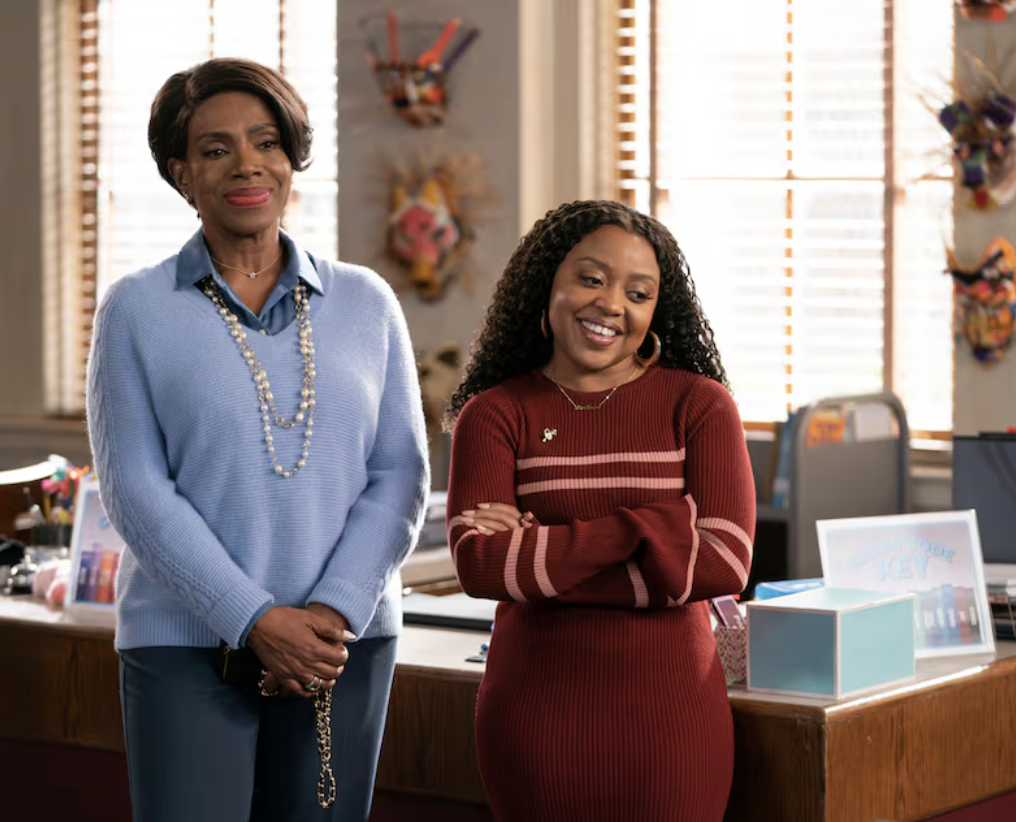
On the Oct. 22 episode of Abbott Elementary, Richardson’s 2024 track “Elbow Deep” can be heard in the background as characters Gregory and Janine (played by Tyler James Williams and show creator Quinta Brunson), set the vibe for a friendly hangout.

“I lost my mind when I heard it,” Richardson said. “There are some explicit moments in the song, but when I saw the scene, it all made total sense.”

This was the second time Richardson’s music was placed in the hit series.

Back in February 2022, Richardson sent an “awkward” introductory message on LinkedIn to Abbott Elementary music supervisor Kier Lehman. Among the tens of tracks Richardson pulled from his catalog to include in that message, the 2014 single “Where I’m From” struck a chord with Lehman.

In early 2023, the Grammy-nominated music supervisor reached out to Richardson to request the use of “Where I’m From” for season two, episode 19, of the show.

Richardson said he’s still processing the achievement. “Sometimes I go back to the episode just to make sure it wasn’t changed,” he said.

That song placement, Richardson said, arrived at a “time of desperation.”

After a decade of making music, Richardson was at a creative crossroads. He was confident in his musical talents, but it felt like there were limited avenues to showcase them. “I felt very lost and desperate,” he said.

He stumbled onto Abbott Elementary like everyone else. Only he paused the TV to find Lehman’s name in the credits and reached out to him months later on the networking platform.

While he’s now “embarrassed” by his direct message to Lehman, the eventual song placement was the first time Richardson was ever paid for his music.

“That was definitely me crossing a threshold,” he said. “And in my mind, I was like, ‘I have to do that again.’”

It would be two years until that would happen. Earlier this year, Lehman reached out to Richardson to use “Elbow Deep.” Richardson approved immediately.

In the meantime, that first placement opened several creative doors.

Between his role as an event coordinator for the Free Library of Philadelphia Foundation, Richardson dropped a pair of collaborative EPs with producers Sam Live and Patrick Feliciano. He also contributed music to WHYY programs, such as Albie’s Elevator and The Infinite Art Hunt, and served as host of the Franklin Institute’s So Curious podcast.

He was even tapped to narrate a Skechers ad featuring Sixers star Joel Embiid, showcasing his abilities as a voice-over talent.

It’s all been a surprising path, Richardson said. One that has inspired him to pursue avenues that meld his love of music and Philadelphia.

“It let me know I had a narrower view of what I could do as an artist,” Richardson said. “I wouldn’t say I’m doing unconventional things, but it’s more of a wider range.”

His goal is to be a more notable name for big-budget shows and eventually land a placement on a blockbuster film. He currently has his sights on Sony’s animated Spider-Man multiverse saga, which Lehman served as the music supervisor for in 2018.

For someone who started out making songs from his college radio station at Pittsburgh’s La Roche University, and now sees his name on TV screens, Richardson has learned to avoid limiting his art and musical reach. And to the friends who previously doubted his abilities, he’s proving his music can take him places he’s never been, including prime-time television.

– The Philadelphia Inquirer

Kendrick Lamar, SZA go full speed at the Linc for the ‘Grand National Tour’

The victory lap continues for Kendrick Lamar. The Compton rap star has journeyed a path few have blazed in hip-hop history.

He sparred with global phenom Drake and came out with a slew of No. 1 hits, five Grammy wins in 2025, and a record-setting Super Bowl halftime performance that will be dissected by hip-hop scholars for years to come.

But Lamar’s behemoth, “Not Like Us,” is only a glimpse into his true musical powers.

Aside from his 22 Grammys and a Pulitzer, the 37-year-old artist has drawn tens of thousands of concertgoers for an already record-breaking stadium tour.

Lamar and R&B supernova SZA generated $9 million for the opening concert of their "Grand National Tour” last month in Minneapolis, making it the highest grossing hip-hop show in music history.

The tour’s momentum remained immaculate at Lincoln Financial Field for Lamar and SZA’s stop in Philly on Monday night.

As DJ Mustard played a a 30-minute set by DJ Mustard, who played classics like “Swag Surfin’” by Fast Life Yungstaz and “We Are Young” by fun., thousands of fans slowly trickled into the stadium.

As the stadium lights flickered, Lamar rose onto the stage. He kicked off the show inside his now-trademarked Buick GNX, rapping the GNX album opener “wacced out murals,” embraced in smoke.

The show featured short skits of Lamar arguing with a lawyer-like disposition, mocking Drake’s recent attempts to take legal action following last year’s grudge match.

Even SZA, born Solána Rowe, gets in on the action. She’s seen correcting the off-camera lawyer’s pronunciation of her stage name in one video, then countering accusations that she has sought dysfunctional relationships for creative purposes.

That fiery intro set the tone for the show, which was adorned with hits from his platinum-selling GNX and SZA’s repackaged deluxe album, Lana.

Once Lamar closed out the first of eight acts with “tv off,” SZA rose to the stage with the same GNX, but perched on top of its moss-covered hood. While Lamar’s “squabble up” and “m.A.A.d city” reflected his rugged Compton roots, SZA basked in sultry tunes like “Love Galore” and “Broken Clocks” as a labyrinth of vines, praying mantises, butterflies, and other bugs flashed across the background screen.

The five-time Grammy winner was in full bloom, showcasing both her roaring vocals and sleek dance routines. While there were moments that seemed off pitch, she recovered as smoothly as her outfit changes.

Decked in knee pads and low-rise safari shorts, the “Scorcese Baby Daddy” singer serenaded the crowd with dazzling slow jams like “Kitchen” and hard-hitting tracks like “Low.” She took her bug fascination to new heights during “Garden (Say It Like Dat),” hopping on a giant mechanical ant she affectionately named “Anthony.”

Lamar’s performance remained sharp, calculated, and grounded. He attacked songs like “Like That” and the showstopper “Not Like Us” with unnerving intensity, while balancing the cunning bars with party records like “peekaboo” and SZA-assisted duets like “All the Stars.”

While the artistic contrasts between Lamar and SZA could alienate crowds, the pair found the perfect equilibrium throughout the nearly three-hour concert.

Lamar’s lyrical performance was impressive throughout the show, but moments like the Playboi Carti cover “Good Credit” and the sequencing of “Count Me Out” did stifle a bit of the momentum. But with over 50 songs shared between the two artists, most performed in full, there was bound to be a break in the action.

As the stadium tour journeys across North America and Europe, their Philly stop proved to be a balancing act with an Olympic-level landing. The concert was a melding of two performers, who are as electric together as they are on their own stages.

– The Philadelphia Inquirer