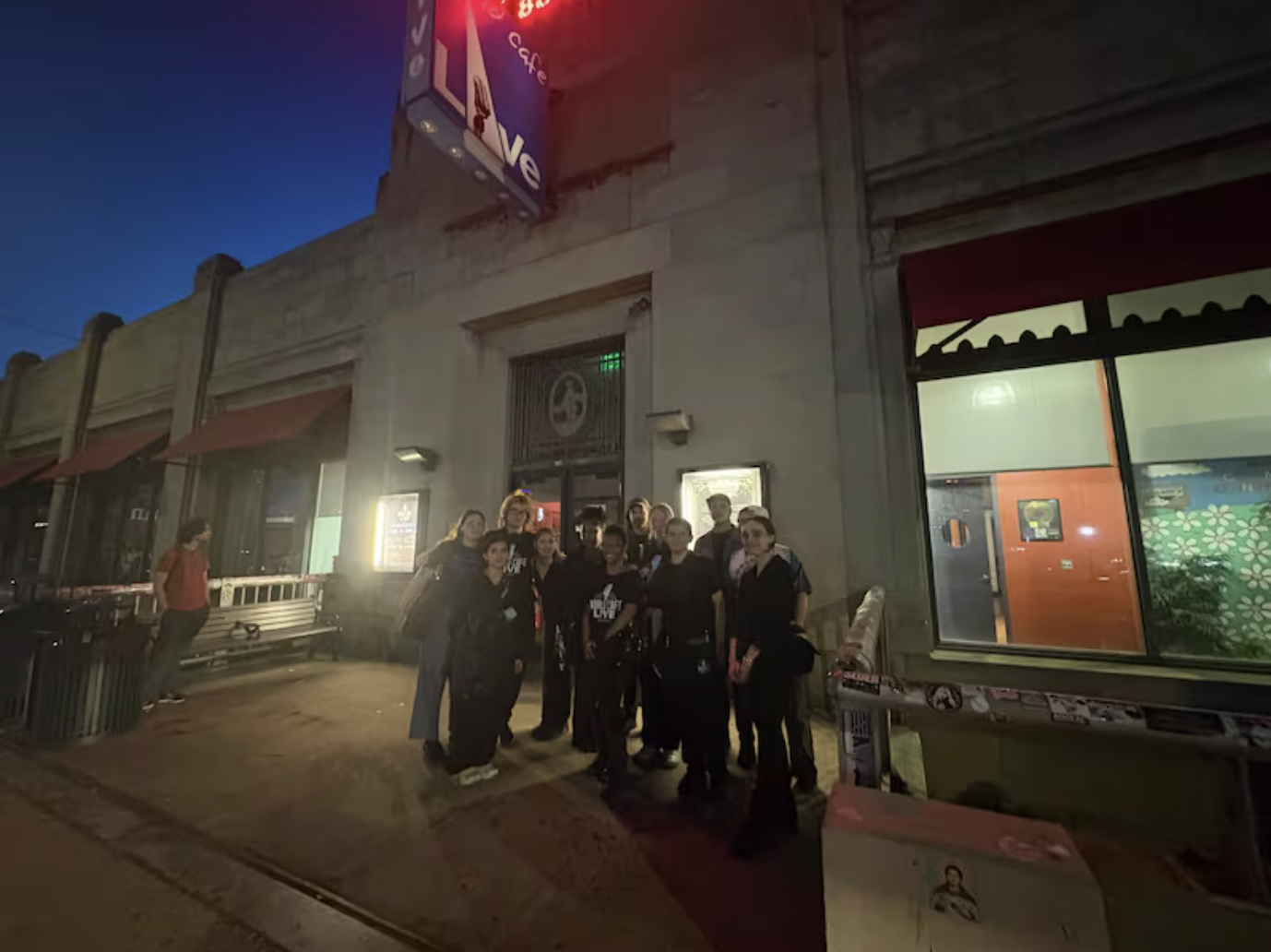
World Cafe Live protests continue as staffers are fired and threatened with legal action

The conflict between the new leadership team of West Philadelphia music venue World Cafe Live and employees escalated on Thursday to include firings.

Employees continued to picket on the day after Wednesday night’s walkout when, during a Suzanne Vega concert, they protested “an unacceptable level of hostility and mismanagement” by the new leadership.

On Thursday evening, the management team headed by new CEO Joseph Callahan responded by firing some employees involved in the protest and announcing plans to file a formal complaint to federal authorities and the Pennsylvania Attorney General’s Office.

In a statement titled “World Cafe Live Responds to Employee Walkout and Reaffirms Commitment to Community and Transformation,” the leadership said Wednesday’s action was “not only disruptive to our guests, but also resulted in significant reputational and operational damage to the organization.”

“The individuals involved in this walkout have been terminated with cause, and are permanently banned from the premises,” it said.

On Wednesday, Sophia Mattes, the night box office manager, read a statement in solidarity with her coworkers that demanded “on-time and accurate pay” and said “the work environment has become hostile to the point of staff safety being questioned.”

Mattes confirmed that she and four other staffers had been served with termination papers outside the venue on Thursday evening. In addition, another source said, two other staffers not involved in the walkout were also sent termination letters.

Those firings follow the resignations of WCL’s longtime COO and general manager Kerri Park, as well as programming director Helen Smith and ticketing and guest services manager Hayley Simmons, all of whom had their last days this week.

On Thursday night, shows went on with Philly’s interstellar musical travelers Sun Ra Arkestra and its 101-year-old leader Marshall Allen downstairs in the Music Hall, and for Sudanese American musician Sinkane upstairs in the Lounge.

When Sinkane and his band members, who blend African pop with electronica and funk, were told of the labor strife, he said he planned to speak out in support of the workers from the stage.

With reduced staff, the box office was closed, and there was no food service available.

“The management is more concerned with the protesters than solving the issues,” one protesting employee said.

The WCL statement said the organization has “retained counsel to file a formal complaint to federal authorities and the Pennsylvania Attorney General’s Office,” citing:

  • Conspiracy to interfere with commerce under the Hobbs Act

  • Theft and destruction of proprietary and contractual records

  • Intentional infliction of financial harm on a 501(c)(3) entity

  • Trespassing and unlawful disruption of business operations

Callahan took over as CEO and head of the World Cafe board this spring, succeeding Hal Real, who founded the venue in 2004 and converted it to a nonprofit in 2019.

According to the WCL statement, as of January 2025, the venue “was carrying over $6 million in accumulated debt” and suffered from “a culture of complacency and entitlement” that created “a dynamic that stifled innovation and smothered the growth potential of an organization with such extraordinary purpose and potential.”

The statement concluded: “World Cafe Live is not just a venue. It’s a home for music, community, education, and equity. … And to those who have sought to undermine this vital cultural institution: you will be held accountable.”

“We are rebuilding stronger, more transparent, and more community-driven than ever before.”

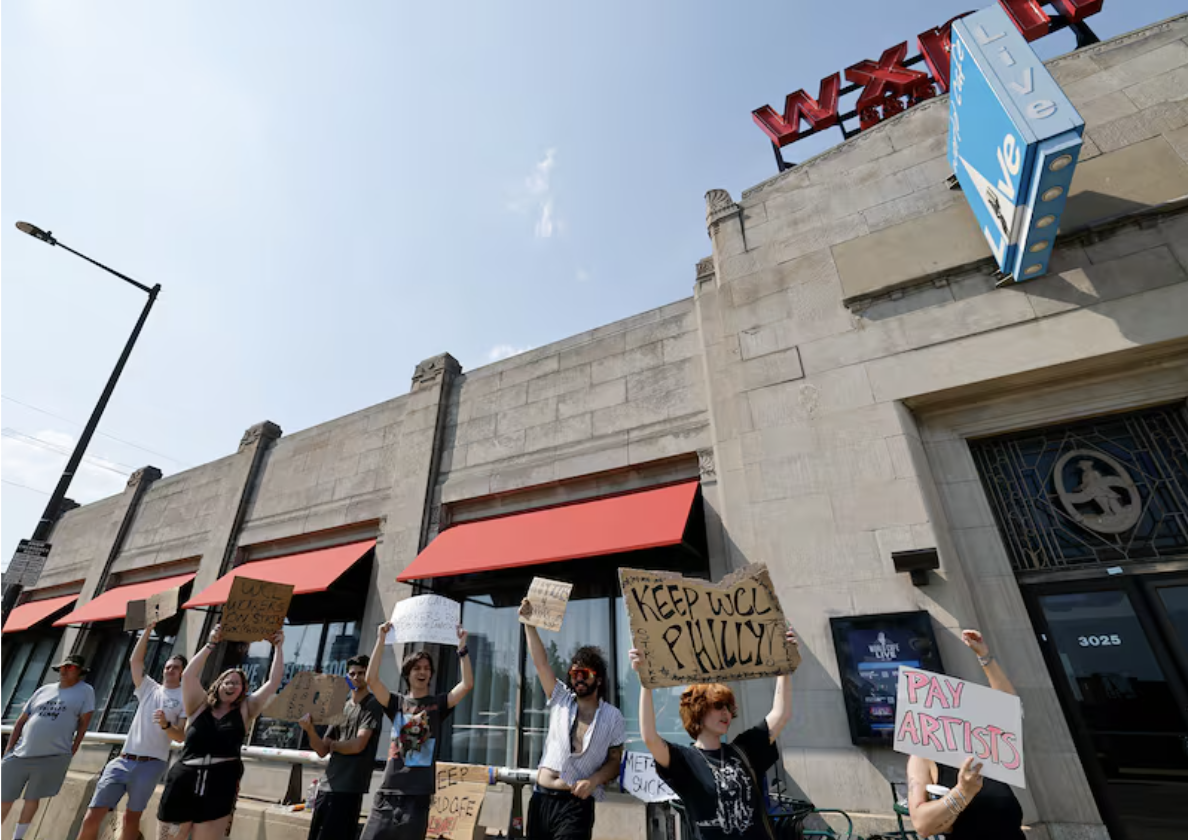
Outside the venue on Thursday afternoon, the protesting bartenders, guest service workers, and box office staff who gathered on Walnut Street shared a sharply contrasting perspective from that offered by WCL management.

Roughly 15 protesters assembled with signs that read, “Callahan Has Got No Plan,” “Keep Philly Independent,” and “No AI. NoMetaverse.” The staffers also launched a SaveWorldCafeLive page on Instagram.

Mattes said the past month has made her physically sick. “My anxiety and my mental health were not well,” she said. “I was scared, and a lot of us were scared, to walk out on [Wednesday], but I do feel relieved. I feel like something good will come of this, one way or another.”

Novalee Wilcher, who works in guest services, said Callahan’s presence has been a “crushing” blow to the venue’s operation, and she’s unsure how the place will survive going forward.

“Those who have been fired,” she said, “have been texted by coworkers, not management. So, there’s no communication about how to deal with these demands that we brought up to them, which shows a total disregard for the artists that are supposed to be playing, or how it affects the guests that are coming in, who have paid for their nights.”

Following Wednesday’s walkout, Wilcher said Callahan has threatened to call the police on her and other staffers as a form of intimidation. He even suggested their strike was “unlawful.”

She said she was locked in a room on Wednesday over a piece of personal mail that one of Callahan’s representatives “confiscated” and “withheld” from her.

Refuting Callahan’s claim of a $6 million debt, Mattes said former staff have verified that debt to be around $2.7 million.

“The fact is, we do need funding,” Mattes said. “But a big part of the problem with this new team is that we don’t believe that VR and hologram concert experiences, and taking the people out of this building, will be what draws people in more.”

Referring to Callahan’s plans to introduce automated servers, bartender Emilia Reynolds said, “I’m nervous about losing my job to a machine that can’t safely serve somebody, have them enjoy their night, and get them home safely. That’s my job.”

“Not even to mention, people woke up yesterday without a paycheck. That was the last straw,” they said.

Mattes and her coworkers, they said, are prioritizing funding efforts to “save” WCL but added that the leadership refuses “to listen to anyone who disagrees with them.”

Despite their indifference, Wilcher said she and others were willing to negotiate with Callahan. The crucial step, she said, was getting management on the “right path,” but, the staffers claim, it appears the tech entrepreneur isn’t looking to change course.

– The Philadelphia Inquirer

(Dan DeLuca also contributed to this story)

Review: Chance The Rapper returns to form at The Fillmore.

It’s been a long six years for Chance the Rapper fans, who awaited the return of a rapper once deemed a leading voice in hip-hop.

In interviews, the Grammy-winning rapper said his absence was due to a combination of personal matters and the negative reception of his debut album, The Big Day, released in 2019.

It was a lofty conceptual album, aimed at promoting the sanctity of marriage in a genre that largely treated it as taboo. But the album was a colossal misfire that slowed Chance’s momentum and forced him to go back to the drawing board.

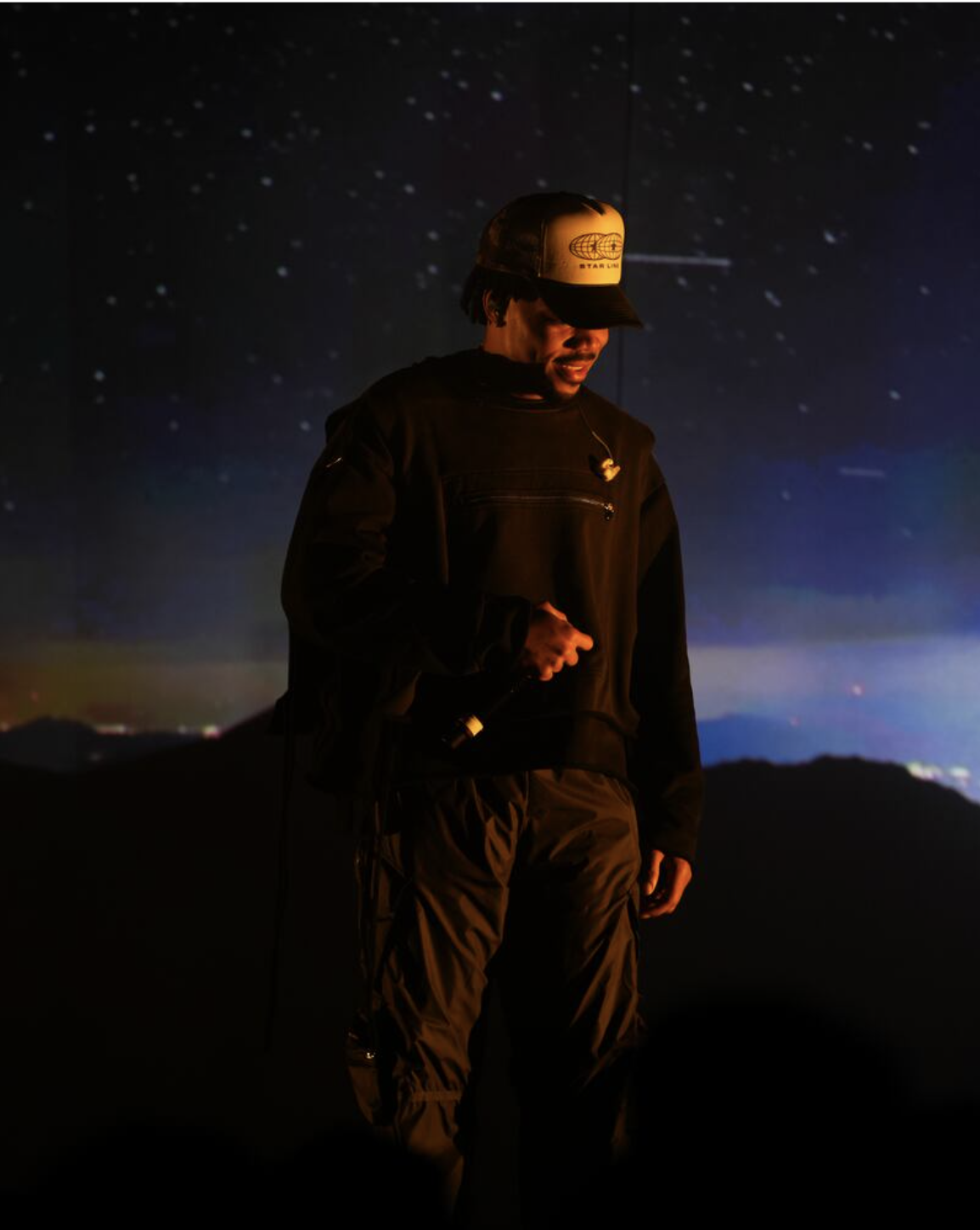
Chance’s follow-up, Star Line, proved that one unfavorably received project doesn’t define him. And with his performance at The Fillmore on Wednesday night, it appears he and his fanbase are fully realigned.

“And … we back,” Chance said to the crowd.

For the fourth stop in Chance’s 15-city “And We Back Tour,” he stepped up to the main music hall stage at The Fillmore with a microphone in hand.

It was a mild entrance for an artist of Chance’s stature, who was atop the 2017 Grammy stage to receive the award for Best New Artist. But it appears Chance has accepted that new ground needs to be covered and familiar rites of passage need to be traveled.

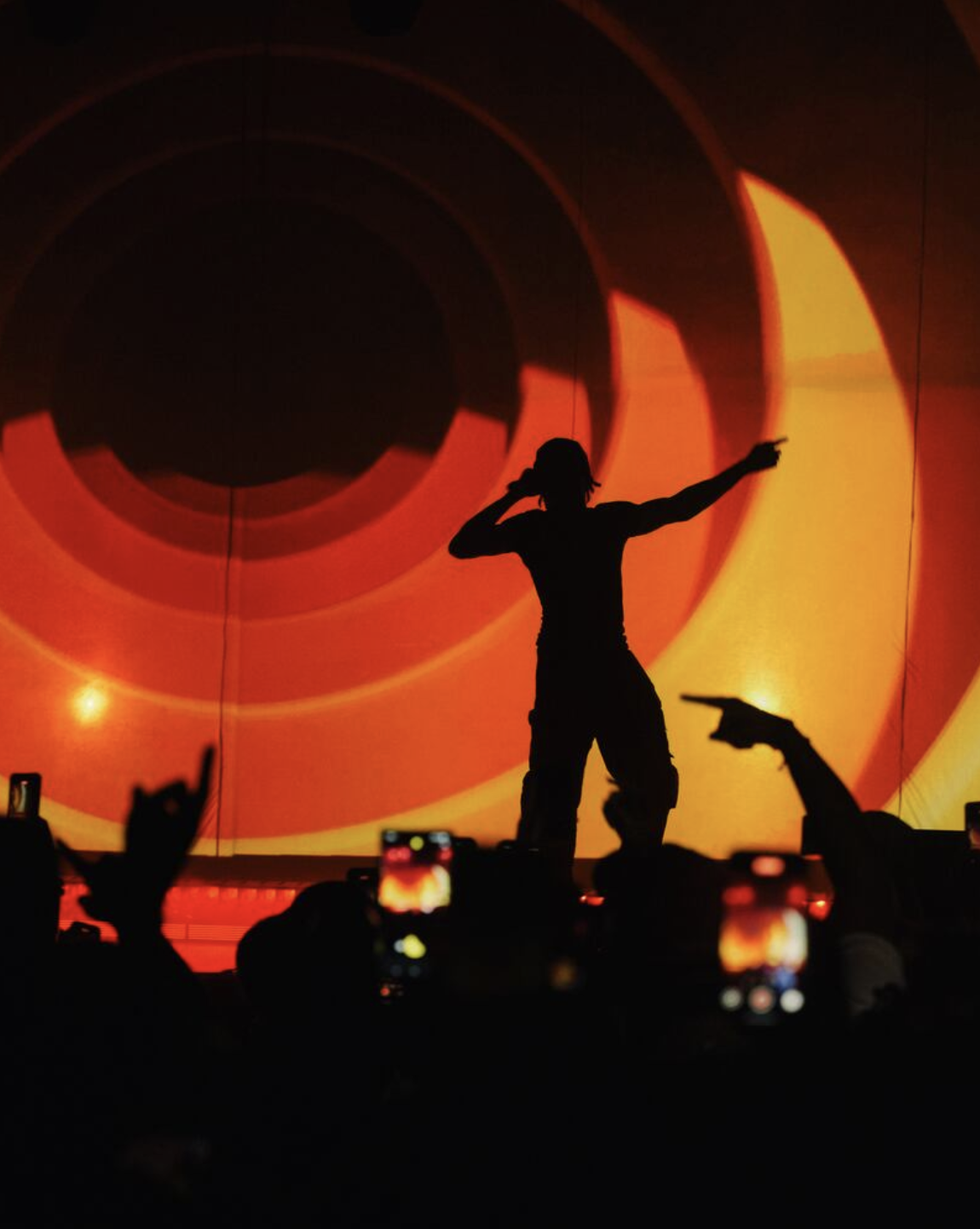
No hype man or dancers, no surprise guests or onstage theatrics. Just him and longtime collaborator Peter Cottontail steering the crowd with hits from Acid Rap; Coloring Book; and his latest album, with the lyrics to his songs projected on a background screen.

“This is going to be a great show,” said Chance, as he circled the stage. “Y’all got me in a flow state.”

Donning an all-black outfit complete with a tasseled Star Line jacket, Chance kicked off the show with “Star Side Intro,” alluding to his journey from being an underachieving high school student to his astronomical climb as a diamond-selling artist.

He then shifted to uptempo tracks like “Ride,” “Drapetomia,” and “Gun In Your Purse,” before weaving in slower, more heartfelt records like ”Back To The Go” and “Just A Drop.”

He was nearly brought to tears reciting the lyrics of “Pretty,” a moment met with added cheers from concertgoers. “Sometimes I think she was the love of my life. So, when I’m alone, sometimes I think that I’m dead,” he rapped as his voice briefly trembled.

It was a small look inside the life of Chance, who’s been purposefully private on the matters of his recent divorce from ex-wife Kirsten Corley, and his upward climb back to rap stardom.

Between the cuts from his latest album, Chance flashed back to decades-old classics like “Juke Juke,” “All Night,” “Blessings,” and the monster hit “No Problems,” inciting the entire crowd to jump from their feet.

While the crowd was engaged throughout his performance, Chance appeared out of sync at certain moments. Either his lyrics were too far in front of him, or he was slowing down to recapture the song’s tempo.

If not for the screen displaying his lyrics, sometimes it was hard to decipher which point he was on during certain tracks.

By the second half of the show, the stage rust was well-shed. He changed from his Star Line jacket to a plain black T-shirt and launched a medley of immersive and crowd-swaying records.

The show was divided by a series of brief intermissions, cut scenes of political leaders and socially conscious entertainers, and set design changes.

For the song “Letters,” an introspective critical look at Christian churches and religious sanctuaries throughout the country, Chance performed from inside a fixed performance box.

The song ends with digital flames rising from the back screen and reflecting on Chance’s body. It may not have fit within the larger performance itself, but it was a welcome dose of performance art that elevated the show.

He went on to perform “Speed of Light, “Just A Drop,“ and ”Ultralight Beam," three records that transformed the Fillmore into a place of shared worship. “I hope y’all feel the spirit, man,” Chance said to the crowd.

The medley of spiritual records is fitting for an artist who began vocalizing his religious awakening on Coloring Book, still his biggest project to date.

Star Line was also reflective of new developments. Before performing “The Negro Problem,” a song named after a compilation of essays by W. E. B. Du Bois and Paul Laurence Dunbar, he described the inspiration for the song.

“It’s about the concept of intersectionality,” Chance said while atop an elevated platform. “Certain things impact us all, and the more we look at the center, the better we’ll all be.”

Chance closed out the 90-minute show with “Speed of Love,” a should-be Grammy contender featuring Philly’s own Jazmine Sullivan.

Before the final curtain call, he left a thank you to the fans who waited for his return and paid to see him back in form. “Thank y’all for holding it down for 10-plus years,” he said. “I appreciate the love.”

– The Philadelphia Inquirer

Kendrick Lamar, SZA go full speed at the Linc for the ‘Grand National Tour’

The victory lap continues for Kendrick Lamar. The Compton rap star has journeyed a path few have blazed in hip-hop history.

He sparred with global phenom Drake and came out with a slew of No. 1 hits, five Grammy wins in 2025, and a record-setting Super Bowl halftime performance that will be dissected by hip-hop scholars for years to come.

But Lamar’s behemoth, “Not Like Us,” is only a glimpse into his true musical powers.

Aside from his 22 Grammys and a Pulitzer, the 37-year-old artist has drawn tens of thousands of concertgoers for an already record-breaking stadium tour.

Lamar and R&B supernova SZA generated $9 million for the opening concert of their "Grand National Tour” last month in Minneapolis, making it the highest grossing hip-hop show in music history.

The tour’s momentum remained immaculate at Lincoln Financial Field for Lamar and SZA’s stop in Philly on Monday night.

As DJ Mustard played a a 30-minute set by DJ Mustard, who played classics like “Swag Surfin’” by Fast Life Yungstaz and “We Are Young” by fun., thousands of fans slowly trickled into the stadium.

As the stadium lights flickered, Lamar rose onto the stage. He kicked off the show inside his now-trademarked Buick GNX, rapping the GNX album opener “wacced out murals,” embraced in smoke.

The show featured short skits of Lamar arguing with a lawyer-like disposition, mocking Drake’s recent attempts to take legal action following last year’s grudge match.

Even SZA, born Solána Rowe, gets in on the action. She’s seen correcting the off-camera lawyer’s pronunciation of her stage name in one video, then countering accusations that she has sought dysfunctional relationships for creative purposes.

That fiery intro set the tone for the show, which was adorned with hits from his platinum-selling GNX and SZA’s repackaged deluxe album, Lana.

Once Lamar closed out the first of eight acts with “tv off,” SZA rose to the stage with the same GNX, but perched on top of its moss-covered hood. While Lamar’s “squabble up” and “m.A.A.d city” reflected his rugged Compton roots, SZA basked in sultry tunes like “Love Galore” and “Broken Clocks” as a labyrinth of vines, praying mantises, butterflies, and other bugs flashed across the background screen.

The five-time Grammy winner was in full bloom, showcasing both her roaring vocals and sleek dance routines. While there were moments that seemed off pitch, she recovered as smoothly as her outfit changes.

Decked in knee pads and low-rise safari shorts, the “Scorcese Baby Daddy” singer serenaded the crowd with dazzling slow jams like “Kitchen” and hard-hitting tracks like “Low.” She took her bug fascination to new heights during “Garden (Say It Like Dat),” hopping on a giant mechanical ant she affectionately named “Anthony.”

Lamar’s performance remained sharp, calculated, and grounded. He attacked songs like “Like That” and the showstopper “Not Like Us” with unnerving intensity, while balancing the cunning bars with party records like “peekaboo” and SZA-assisted duets like “All the Stars.”

While the artistic contrasts between Lamar and SZA could alienate crowds, the pair found the perfect equilibrium throughout the nearly three-hour concert.

Lamar’s lyrical performance was impressive throughout the show, but moments like the Playboi Carti cover “Good Credit” and the sequencing of “Count Me Out” did stifle a bit of the momentum. But with over 50 songs shared between the two artists, most performed in full, there was bound to be a break in the action.

As the stadium tour journeys across North America and Europe, their Philly stop proved to be a balancing act with an Olympic-level landing. The concert was a melding of two performers, who are as electric together as they are on their own stages.

– The Philadelphia Inquirer

Key Glock On Channeling 2Pac With 'Glockaveli' & How The New Album Marks A "Rebranding"

After delivering a series of trunk-rattling hits and Billboard Top 20 projects, Key Glock stepped away from music in 2024 for personal and creative realignment. Upon his return this year, the Memphis rapper had inked a deal with Republic Records. While it was perhaps an uncharacteristic move for the independent star, it fulfilled an important promise.

Born Markeyvius Cathey, Key Glock followed in the footsteps of his cousin and mentor Young Dolph. And one week before the late rapper was fatally shot in their hometown in 2021, Dolph urged Glock to sign a major label deal if anything ever happened to him. In the years since, Glock has continued to praise Dolph in his music and carry on the independent label the "Major" rapper co-founded, Paper Route Empire — and with his new venture, he's able to honor Dolph's legacy and take his own career to the next level. 

The partnership deal with Republic allows the "Let's Go" rapper to maintain his long-standing relationship with PRE while granting him a wider musical audience. As he declared to Billboard upon announcing the deal, "I feel like I exceeded my goals as an independent artist… In this next chapter, I'm planning on getting platinum albums and more plaques."

Glock formally kicked off his major label era on May 2 with Glockaveli, his fourth studio album. Inspired by 2Pac's Makaveli persona, the project channels the same trap-infused sound and motivational anthems that have become parables to his artistry — from the soulful "Watch Da Throne" to the booming, DJ Paul-produced "3AM in ToKEYo."

Like Machiavellian themes laced throughout 2Pac's posthumous classic, Glockaveli hints that Glock is determined to make a bigger mainstream splash, no matter how much work is required. And with a new album, a 20-city tour and another planned project on the horizon, "South Memphis' finest" is already full speed ahead.

Below, Glock discusses the "rebranding" that led to Glockaveli, why he channeled 2Pac with his latest album, and how he plans to top himself with his new musical venture.

How was it piecing together your first mainstream album? I heard you had family and friends vote on which songs deserved to be on the final track list.

It was definitely [hard]. I grabbed like five groups of 10, and I just took votes out of all the 50 songs. It went from 50 songs to 30 songs, to 20 and 18 songs. Once I did that, by the time I was done, I had five or six different track lists. 

I didn't just go with the s— that I liked. I didn't want to be biased. I'd rather have other people's feedback. They're fans, but they're not my fans. They're my people. They're going to tell me what's right and what's wrong, music related or not. 

The album sounds like an elevated version of the sound you've already established. Did you work with any new producers or collaborators for the album?

No new producers. Everybody is from day one. [I worked with] Tay Keith, King Wonka and Mannie iL. Everybody else you heard from this album is who you probably heard from my first or second mixtape. 

I couldn't help but notice the 2Pac and Makaveli connection. What inspired the album title and sound?

It came from 2020 or early 2021. Me and Young Dolph planned after my Yellow Tape series, I was going to do the Glockaveli stuff anyway. A lot of people don't even know I already had the chain pre-made and everything. But stuff happens. After a while, I wasn't focused on it any more. I didn't care for music anymore. 

But last year, when I took the time away from music, and got my mindset right and my personal life set back the right way, I was recording. I never stopped recording. And it was all these different types of songs and music. It just sounded like a way stronger Glock than any other version of Glock.

You talked about this album symbolizing new beginnings. In what way? Is it personally, musically, or a mixture of both?

Both. It's a rebranding. That's how I look at it. 

There's no features on the album. Why such a bold move for your major label debut?

It's a self-confidence thing. I have strong faith and belief in myself, and I just like proving people wrong. I don't mind being the underdog sometimes. 

I'm glad I'm like that because it motivates me to always try to do something better than the last thing I've done. I never get content or satisfied with whatever I just did. I'm trying to top that now. 

You signed a partnership deal with Republic Records back in March. Was that a strategic move to help you take further steps in your music career?

Of course, it will help. But if I didn't have the work ethic and drive that I have — Republic could do the most, but it starts with me. I can't be 50 percent, and [the label] is 100 percent. We both have to be on the same page, and that's where we are.

With everything you have going on, do you feel like you're the face of Memphis? Or even the South?

I never look at stuff like that. I never even aimed to be looked at like that. I just be me, bro. I let people take it how they want. 

Outside of music, you've talked about starting an acting career. What's an ideal role for you?

I'm still waiting for somebody to call me or come get me. I'm slowly showing it myself in my own music videos. And eventually, I'll shoot my own s—, too. Once I get addicted to writing and shooting my own movies, it's over.  

I write most of my [music video] treatments now. Not 100 percent, but most of it is my idea. Every video you've seen, seven times out of 10 it's my idea. 

You've also teased that you'll be dropping another album for your fans this year. Can you reveal any previews of the project?

[The fans] are going to be satisfied. Well, not even satisfied. They're still going to be hungry. It's like you can't get enough of Glock, basically.  

Any surprises fans can expect on the Glockaveli Tour that kicks off May 21?

I can tell you to expect the unexpected. My shows are lit. I'm a rock star. 

– Grammy.com

The Impact Of Jay-Z's 'Reasonable Doubt': How The GRAMMY Hall Of Fame Album Introduced An Icon

It's hard to believe that no one wanted to sign Jay-Z in the mid-'90s.

Before he became one of rap's most decorated and celebrated moguls, the Brooklyn-bred emcee, born Shawn Carter, faced so much rejection from record labels that he was forced to release his first album independently. Little did the naysayers know, that project marked the beginning of perhaps rap's most prosperous career.

Arriving June 25, 1996, Reasonable Doubt introduced Jay-Z as a rapper who wasn't afraid to tell a gritty tale, and who would do so with a captivating and calculated delivery. The album's 14 tracks offer stories of cut-throat street hustling, near-fatal bouts with opposition and the lavish lifestyle acquired from a life of crime — narratives that were true to his background. But that also hinted that Hova had a hunger and wisdom that would take him far.

Reasonable Doubt's now-iconic black-and-white cover further leans into the album's mafioso themes, with then-26-year-old Jay in a suit and brimmed cap, cigar in hand. The cover "was really more like establishing him as this timeless character from Brooklyn. Styled out, sharp and clean," photographer Jonathan Mannion explained to Revolt.

On May 16, the album will be honored with an induction into the GRAMMY Hall of Fame, alongside impactful works by Santana, Luther Vandross, Emmylou Harris, Fela Kuti & Afrika 70, and Cat Stevens. The inducted recordings will be celebrated at an exclusive gala in Los Angeles.

While 1998's Vol. 2… Hard Knock Life is Jay's most commercially successful album, and platinum projects like Blueprint and 4:44 are among his most personal records, Reasonable Doubt was the musical spadework that made all his ambitions possible. The project — which sold roughly 420,000 units by the end of 1996 —  laid the foundation for the legendary emcee, whose contributions inspired generations of artists.

Jay-Z has often talked about his love for Reasonable Doubt, asserting that it's his favorite album in a 2013 interview with "The Breakfast Club": "That's the joint it took my whole life to make."

But the journey to his first album didn't come easy —  yet that's exactly what made Reasonable Doubt so special.

Jay-Z's early collaborations with fellow Brooklyn emcees and mentors Jaz-O and Big Daddy Kane flashed his tongue-twisting rhymes and fast-twitch sound, but records like 1989's "Hawaiian Sophie" failed to convince execs he was anything more than a sidekick to a bigger name. In true hustler form, Hov decided to take matters into his own hands.

"I had to put [Reasonable Doubt] out myself, nobody would sign me," Jay-Z said in a 2001 interview with MTV. "I went to every single record label and they were like, 'This guy is terrible.' He's nothing."

Recorded between 1994-1995 at the former D&D Studios in Manhattan and released independently via Jay-Z's own Roc-A-Fella Records, Reasonable Doubt was elevated by contributions from DJ Clark Kent, Irv Gotti, DJ Premier, Ski, Knobody, and other contributors. Featuring dialogue from Scarface and Carlito's Way, the album leaned into stories that seemed to be torn from the pages of life in the Marcy Projects of Brooklyn.

Part of Jay-Z's genius is in the diversity of offerings on Reasonable Doubt. Tracks like "Politics as Usual" offered a 360 view of the dark and unforgiving drug underworld; "Dead Presidents II" became a generation-spanning motivational anthem; "22 Two's" was a lyrical exercise executed in flawless fashion; and "Can't Knock The Hustle" was a radio-friendly serving.

"Reasonable Doubt showed a mentality of the bosses versus the runners," rapper Tone Hooker said in 2016's Reasonable Doubt documentary, RD 20. "In the '90s, everybody wanted to be the best rapper. Now, everybody wants to be the best hustler."

Similar to Nas' 1994 classic Illmatic, Reasonable Doubt reshaped the genre. Jay introduced a new generation of hip-hop fans to luxury rap. Rather than rapping about his superior flow as was common at the time, Jay talked about hustling your way to exclusivity — like taking boat rides to foreign land while sipping Moet.

Along with rhymes of caviar scoops and margarita sips on "Cashmere Thoughts," the closer "Regrets" reflects on the life-altering costs of these choices — from imprisonment to paranoia and death. Songs like "Can I Live" and "Coming Of Age" flashed his razor-sharp lyrics and street wisdom, while songs like "Ain't No N—" revealed his commercial appeal. The project was further elevated by guest appearances from Mary J. Blige, Foxy Brown, Jaz-O, and The Notorious B.I.G., the latter of which became all the more impactful following Biggie's death in 1997.

The album proved to be the introduction Jay and Roc-A-Fella Records needed. "Had I gone to a label, I don't think I would have been able to fully explore what was really happening," Jay said in a 2023 interview with Gayle King.

Frustrated by record label rejections, Jay, Damon Dash, and Kareem "Biggs" Burke used the funds from their singles-only deal with Payday Records (which spawned Jay's "In My Lifetime" and "I Can't Get With That") to establish an imprint of their own. Roc-A-Fella was born from the trio's ability to "rock" or outmatch a fellow emcee on the mic, and their drive for riches like real-life businessman John D. Rockefeller. The label would eventually birth or accelerate the careers of Kanye West, Beanie Sigel, N.O.R.E, Cam'ron, and others.

After landing a distribution deal with Priority Records, which gave Roc-A-Fella the resources they needed to make a notable splash, Jay was the sole artist and musical backbone of the newly-formed company. And with his growing talent, and the support of top-end producers, Jay was prepared to put himself and the label on the map.

Reasonable Doubt launched Jay-Z to stardom. He went from selling CDs of his single "In My Life" from the trunk of his white Lexus at near-empty college campuses to becoming the most dominant force in hip-hop throughout the late 1990s and 2000s. While it didn't land on the top of the Billboard charts, or garner much buzz on the day of release, it established Roc-A-Fella Records as a formidable hip-hop music label and Hov as a premiere face of the genre.

After the success of Reasonable Doubt, Jay-Z notched bonafide No. 1 hits like "Empire State of Mind," 14 chart-topping albums, and 25 GRAMMY wins and a staggering 89 nominations — making him the most celebrated rapper in Recording Academy history. While it's hard to imagine any other artists achieving Jay-Z's level of success, his first body of work certainly provided breadcrumbs. The path he blazed as an artist and billionaire-mogul was sparked with the release of Reasonable Doubt.

How Future & Metro Boomin Became Trap Music's Greatest Duo

The musical bond between Future and Metro Boomin blazed new paths in Atlanta's rap scene, and transformed trap music into one of music's most expansive exports. The duo first connected on the cult "Karate Chop" back in 2013, and have been on an unrelenting hit streak ever since.

Future's auto-tune-soaked melodies and Metro's ominous trap production has formed an inseparable linkage and some of the biggest records of the past decade. From "Honest" to "Jumpman" and 2024's "Type S**t," the pair have blossomed into music's most in-demand hitmakers and influencers. 

Metro, born Leland Wayne, went from aimlessly sending beats as a teenager from his St. Louis home, to becoming one of the industry's most versatile music producers and a GRAMMY-nominated solo artist. Meanwhile Future, born Nayvadius Cash, has evolved into an international draw with a myriad of No. 1 records, multi-platinum albums, and GRAMMY wins under his belt. 

The two stars have continued to ascend in lock-step, with a new medley of booming street hits and club anthems arriving with each collaboration. But 2024 was their most expansive year to date. The duo cranked out We Don't Trust You in March, and the sequel, We Still Don't Trust You, just weeks later. 

Backed by the Kendrick Lamar-assisted hit "Like That," — and the seismic rap feud it ignited— We Don't Trust You debuted atop the Billboard 100, marking Future's second-largest opening week and Metro's biggest ever. Its follow-up, the more melodic-leaning We Still Don't Trust You, also claimed the No. 1 spot. Together, the joint projects earned the duo four nominations at the 2025 GRAMMYs, including Best Rap Album (We Don't Trust You) and Best Rap Song ("Like That"). 

Future and Metro have hit an artistic zenith unmatched by most rap duos, and it doesn't appear their streak is slowing down any time soon. As their legacy continues to grow, look back at the genesis of their artistic union over the years, and the series of hits that have formed in their wake:

2013

Before Metro became a top-end producer, he was a 17-year-old beatmaker with hopes one of his beats would fall into the hands of a mainstream artist. One faithful email to Brick Squad rapper OJ da Juiceman got him an invite to his Atlanta studio. With permission from his late mother Leslie Wayne, Metro made the eight and a half-hour voyage from St. Louis to the trap music capital. She continued to chaperone him almost weekly until Metro moved to Atlanta full-time to attend Morehouse College in 2012. 

The first-year college student split his time in the classroom and in the studio with Juiceman's mentor Gucci Mane. He eventually crossed paths with Future, who ascended from the disbanded Atlanta group Da Connect and became his own musical entity. Future started meeting up with the teenage producer daily, and the "Tony Montana" rapper hopped on one of Metro's zippy trap beats. He laid down drug-sunken lyrics to the thunderous, heavy-synth instrumental that became 2013's "Karate Chop," but Metro wasn't convinced it was a worthy single. 

"I had no clue from all the records we've done, that [that] s**t just sitting in the studio would be the one. But these days, the people and the streets produce the singles and they was fuckin' with it," Metro said in a 2013 interview with XXL.

Despite Metro's initial hesitancy, the remix featuring Lil Wayne became the lead single of Future's 2014 album, Honest, which featured three other songs from Metro, including the title track and "I Won" with Kanye West. The success of "Karate Chop" convinced Metro to drop out of college and capitalize on the rising momentum. And the musical alchemy between the rapper and producer only strengthened over time.

2015

By 2015, Metro and Future were no longer fighting for attention. The spotlight was keenly focused on the two artists, who, along with figures like Young Thug and Rich Homie Quan, were at the forefront of a booming, melody-infused trap sound. The proof of their collective powers was Future's trap masterwork DS2 and What a Time to Be Alive, an entertainingly disjointed mixtape with Canadian-born superstar Drake

Following the release of 2014's Honest, Future dropped a trilogy of album-quality mixtapes. The first was Monster, a darker and more brooding project that saw Future return to his previous form. Metro executive produced the mixtape, and was credited for crafting "Radical," "Mad Luv," "Wesley Pressley" and other tracks.

The duo carried the momentum of Monster into Future's DS2, widely considered the rapper's masterstroke of bleak, self-medicated drug tales and fiery trap hits. Metro, alongside fellow Atlanta trap architects Southside, Zaytoven, and Sonny Digital, handled the bulk of the project. Some of the tracks he produced included the strip club anthem "Freak Hoe," the tranquilizing "Rich Sex," and "Where Ya At" with Drake. 

After the recording session for "Where Ya At" wrapped, Drake and Future began working on the collaborative mixtape, What a Time to Be Alive.  Drake flew to Atlanta for six days with the hopes of recording a handful of songs, but Future's relentless work ethic prompted the Toronto native to match his tenacity. 

The 11-song mixtape surprisingly dropped in September 2015, and fans immediately swarmed to Metro-produced tracks like "Digital Dash," "Big Rings," and "Jumpman." The latter became a top 20 Billboard hit, and Metro's Future-assisted producer tag, "If Young Metro don't trust you I'm gon' shoot you," became the industry's most recognizable calling card.

2017

Just when it felt Future's smoldering hit streak was beginning to cool, he released back-to-back albums FUTURE and HNDRXX in February of 2017. The two projects teetered between pop-inspired tunes and heavy-handed street records, and Metro was the unsurprising maestro behind the biggest song from the two records. 

The Metro-produced "Mask Off" peaked at No. 5 on the Billboard Hot 100, making it Future's highest charting single at the time of its release. A remix of the track, which samples Carlton Williams' "Prison Song" from the 1978 Selma musical, featured Kendrick Lamar. 

The massive hit encouraged generations of hip-hop fans to chant the song's drug-filled hook "Percocets (ya), molly, Percocets (Percocets)." And while Future's HNDRXX takes a more R&B and bright-eyed musical approach compared to the dreadful trap sound of his previous works, Metro was credited for the album opener "My Collection" and closer "Sorry."

2022

After five years without a collaboration, the super-duo linked back up for Metro's "Superhero (Heroes & Villains)." Future's gravelly and unpolished delivery contrasted the song's more cinematic and orchestral production. It was the first single off the producer's comic book-themed album, Heroes & Villains, which echoed an evolutionary turn for the producer-turned-solo artist. 

His transition from rugged trap sounds to grander production was first demonstrated on 2018's Not All Heroes Wear Capes, but his second album and expansion into film showcased it at a larger scale. Metro went on to produce Sony's Spider-Man: Across the Spider-Verse soundtrack, which featured A$AP Rocky, NAV, Travis Scott, Don Tolliver, Lil Uzi Vert, 21 Savage, and his other frequent collaborations.  

In the years since their last record, Future was also expanding his musical reach. He cranked out joint projects with Young Thug, Zaytoven, Juice WRLD, and Lil Uzi Vert, and released another collection of projects while taking a few momentary breaks in between. "​That's because I'm happy," Future said of his occasional hiatuses in a 2022 interview with GQ. "I'm genuinely happy with life. And there was a time where I was only happy when I was on the stage, and in the studio. Like it was my escape." After an album-less 2021, he followed up the next year with I Never Liked You, which earned the rapper his eighth chart-topping album and a GRAMMY win for the mega hit "Wait For U" with Drake and Tems

Metro wasn't credited on I Never Liked You, but the "Puffin On Zootiez" emcee circled back with his musical companion later that year. The two reunited on other tracks from Metro's Heroes & Villains album, including "Too Many Nights," "I Can't Save You (Interlude)," and ""Lock On Me." And while it may have seemed like Future and Metro disbanded during the five-year stretch, the producer said they never stopped working together.

 "It's crazy, public perception makes it look like we went our separate ways," Metro said in a 2023 interview with Gangsta Grills Radio. "But neither one of us really went nowhere. It's just about the right moment, and I feel like God just brought this moment together."

2024

More than a year before the release of their joint albums, Future hinted at a potential project with his long-time collaborator. In January 2023, the rapper reshared an Instagram post that read, "Future x Metro OTW with the album of the year." But the subtle endorsement failed to highlight how big the joint effort the following year would be. 

In March 2024, Future and Metro confirmed a two-part album release in a 44-second trailer. The duo is seen hopping out of luxury SUVs in the desert, with the late Mobb Deep rapper Prodigy providing the video's contentious narration.  "A lot of f**king garbage ass rappers running around. These n****s ain't supposed to be rapping, man. This game is meant for a select few." 

The first in the series was We Don't Trust You, a 17-song project that combined Metro's cinematic production with Future's street poetics. Kendrick's verse on the single "Like That" sparked a series of diss records between Lamar, Cole, and Drake, with the Comtpon rapper declaring, "Motherf**k the big three, n***a, it's just big me." 

The result was weeks of musical exchanges between the three artists, including a Drake-directed instrumental from Metro called "BBL Drizzy," which the producer encouraged fans to rap over for a chance to win a free beat. The hotly-contested battle, paired with songs like "Type S**t" and The Weeknd-assisted "We Still Don't Trust You," pushed both albums atop the sales and music charts. 

The pair capped off the year with a 27-date North American tour and a handful of nominations at the 2025 GRAMMYs.

2025

While Metro and Boomin went home from the 2025 GRAMMYs empty handed, the duo’s influence remains undeniable. Between the No. 1 records and recognition redefining modern trap music, they have influenced a new generation while staying true to their signature sound. With undeniable chemistry, their legacy is already cemented — but their reign is far from over.

– Grammy.com

5 Best Moments From Megan Thee Stallion’s Twerk-Fueled Lollapalooza 2024 Headlining Set

With Lollapalooza 2024 marking the final stop on the Hot Girl Summer tour, Megan Thee Stallion closed out the first day of the festival with an electrifying performance — and a timely message — on Thursday night (Aug. 1). 

After performing at Vice President Kamala Harris’ first presidential campaign rally in Atlanta earlier this week, Megan continued a stellar week by headlining Lollapalooza on Thursday night, three years after her first main stage appearance at the festival and a few weeks after replacing Tyler, The Creator at the top of the Lolla bill. The combination of political statements and twerk-ready hits made sense in the context of her high-wattage show, and went over well with festival-goers, who were equally in awe of her candid stances and catalog of rapid-fire records.

Decked out in a pink sequence jumpsuit and cowboy boots, Meg started her hour-long set with the venomous “Hiss” before transitioning to her more salacious club anthems. The rap star went on to play records like “Thot S**t” and “Megan Piano,” encouraging the crowd to join her as she twerked in the evening drizzle. And with a black towel in hand and a roaring crowd on its feet, she rolled through fan-favorite bangers like “WAP” and “Wanna Be.” “Tonight, I’m not giving y’all my lightest twerk,” she said. “I’m giving y’all my hardest twerk in the motherf–king rain, because I want the hotties to have a good-ass time.” 

Despite the weather and the wrapping-up of her summer tour, Meg made her return to Chicago worth fans’ while. She even brought a special hometown guest to the stage, and played a new viral hit in front of thousands.

Here are five of the best moments from the Meg Thee Stallion’s headlining Lollapalooza performance. 

The ‘Hotties for Harris’ Campaign

Days after her campaign rally appearance, the “Houston Hottie” paused her Lolla show to double down on her support of the presumptive Democratic nominee. “Let me pop my s**t real quick, because [people] were fake mad that I was popping it for Kamala,” Megan said to the crowd at Grant Park’s T-Mobile stage. “I don’t think they heard what she said. Kamala said she wants a ceasefire. Kamala said she supports women’s rights. And she said she’s tired of those high-ass gas prices … It’s ‘Hotties for Harris,’ goddammit!” There were no audible rejections from the audience — the campaign is in full effect. 

The Twerk Encouragement

It isn’t enough for Megan to simply twerk on her own — she’s a masterful hype woman who encourages her backup dancers to shine during brief intermissions in her set. She even had one of her dancers shine with a solo moment while she performed “Gift & A Curse.” The same courtesy was given to the crowd, as fans broke out into twerk circles and hyped each other up from across the park.

The Newest Hit

In short time, Megan has established herself as one of the biggest rappers in hip-hop, as her catalog of trap-infused hits, sharp-tongued diss records and femme-powered jams have elevated her to superstardom. The international appeal of the viral hit “Mamushi,” featuring Tokyo’s Yuki Chiba and given a TikTok dance, has broadened her horizons as well, and went off like a firecracker during her Thursday night set. But overall, her Lallapooloza performance was evidence of her ascension and rightful place as a headliner. 

The Special Guest

While GloRilla was sadly absent from Meg’s Lollapalooza performance after a rumored appearance, the Houston-born rapper invited a familiar face for Chicago sports fans to the stage. The special guest was WNBA all-star forward Angel Reese, who danced with Megan as she rapped “Where Them Girls At.” The Chicago Sky star mostly stood toward the back half of the stage, but she and Meg shared several videos and hugs during the must-see moment. 

The Day-One Hotties

After playing songs from her recent album Megan and Traumazine, Megan traveled back in time, and fully morphed into her alter ego Tina Snow, for stomping hits like “Hot Girl” and night club anthems like “Big Ole Freak.” And while her newly initiated hotties were welcomed with open arms, Megan acknowledged the festival-goers who supported her as she ascended the rap music ladder. 

– Billboard

5 Best Moments From Chappell Roan’s Jam-Packed Set at Lollapalooza 2024

Even with the unforgiving heat looming over the crowd during the opening afternoon at Lollapalooza 2024, seemingly every fan in attendance left their pockets of summer shade on Thursday (Aug. 1) for a clear view of Chappell Roan’s entrance. The vertically challenged climbed their partners’ shoulders; others slipped through gaps in the tightly packed parkway in Chicago’s Grant Park. 

As the clock struck 5 p.m., the exploding pop star rose onto the T-Mobile Stage, and was welcomed with cheers that stretched across the southern section of Grant Park. Roan came out to the anthem “Femininomenon” while dressed in a cotton-candy-colored outfit with a luchador-style mask covering her face, but once she dove into dance-pop tunes like “Naked in Manhattan” and “Red Wine Supernova,” she unveiled the face that has quickly become a mainstream fixture, and let her fiery amber hair loose. She swooned the crowd with her theatrical moves and striking vocal runs, as flashing lights and fireworks helped turn Lollapalooza into a 1980s-style music video. 

Roan’s command of an audience as large as Lolla’s shouldn’t be a surprise. The self-proclaimed “Midwest Princess” has sprinkled her musical fairy dust across continental lines on her global tour, and her enchanting stage presence was on full display during the opening day of the festival. Roan transitioned from sultry tunes like “After Midnight” to campy dance jams like “Good Luck, Babe!,” giving license to sequenced fist pumps, dance moves and percussive chants among the crowd. “Thank you for having me Lolla!” she screamed — although on Thursday afternoon, Lolla was no doubt thankful to have the ascendant star on its main stage.

Here are five of the best moments from Roan’s Lollapalooza set. 

The Slower Moments

While the sonic potpourri of Roan’s 2000s-inspired pop records garnered the biggest receptions at Lollapalooza, Roan fell to her knees to deliver tales of past hookups on “Casual” and the emotionally rich heartbreaker “Subway.” These setlist entries brought balance to Roan’s high-powered performance, which prompted shared hugs and kisses among festival-goers. 

The Vocal Shapeshifting

Roan has amassed a sprawling fan base for several reasons, but those not paying close attention may not expect the breadth of her vocal ability. At Lollapalooza, Roan continued to prove she’s a musical acrobat who can seamlessly leap from whimsical pop tunes to roaring ballads on a dime. Her vocal power allows for such versatility — and part of the fun of attending a Chappell Roan show is watching the audience try to match it, howling and bellowing in charming attempts to match her flowing harmonics.  

The Outfit

Roan, whose aesthetic is often influenced by glittery drag style, chose to go with a (relatively) muted outfit choice at Lollapalooza: the artist dressed in a wrestling-inspired short-sleeved bodysuit, with colors bursting in blue and pink highlights, lots of fringe and a silver star belt. Despite the 90-degree heat, she sported a luchador mask — but only for a few minutes. Once she settled on stage, Roan turned to the crowd to let her strawberry-colored hair and silver face paint grace the sun. 

The Welcomed Theatrics

Long before she rose to pop stardom, Roan was a theater kid whose Hollywood dreams first bloomed in her hometown of Springfield, Mo. Her Lollapalooza set was full of flashes of her dramatic training, as she twirled on stage, belted out ballads with Broadway fervor and often grabbed her chest to further emphasize the emotional notes. Then she made a full split halfway through her set, leading to some of the loudest audience roars of the day.

The Global Fandom

While she’s crowned the “Midwest Princess,” Chappell Roan’s fandom stretches far and wide, beyond the confines of Lollapalooza. Festival-goers ventured from around the world to attend Chicago’s annual music festival, and shots of the crowd size started going viral before the set had concluded. Roan’s mountainous vocals and crowd-pleasing tunes forged one of the better performances on day one, and with her global success in full bloom, it’s safe to say Roan has graduated from “Midwest Princess” to international star.

– Billboard