World Cafe Live protests continue as staffers are fired and threatened with legal action

The conflict between the new leadership team of West Philadelphia music venue World Cafe Live and employees escalated on Thursday to include firings.

Employees continued to picket on the day after Wednesday night’s walkout when, during a Suzanne Vega concert, they protested “an unacceptable level of hostility and mismanagement” by the new leadership.

On Thursday evening, the management team headed by new CEO Joseph Callahan responded by firing some employees involved in the protest and announcing plans to file a formal complaint to federal authorities and the Pennsylvania Attorney General’s Office.

In a statement titled “World Cafe Live Responds to Employee Walkout and Reaffirms Commitment to Community and Transformation,” the leadership said Wednesday’s action was “not only disruptive to our guests, but also resulted in significant reputational and operational damage to the organization.”

“The individuals involved in this walkout have been terminated with cause, and are permanently banned from the premises,” it said.

On Wednesday, Sophia Mattes, the night box office manager, read a statement in solidarity with her coworkers that demanded “on-time and accurate pay” and said “the work environment has become hostile to the point of staff safety being questioned.”
Mattes confirmed that she and four other staffers had been served with termination papers outside the venue on Thursday evening. In addition, another source said, two other staffers not involved in the walkout were also sent termination letters.

Those firings follow the resignations of WCL’s longtime COO and general manager Kerri Park, as well as programming director Helen Smith and ticketing and guest services manager Hayley Simmons, all of whom had their last days this week.

On Thursday night, shows went on with Philly’s interstellar musical travelers Sun Ra Arkestra and its 101-year-old leader Marshall Allen downstairs in the Music Hall, and for Sudanese American musician Sinkane upstairs in the Lounge.

When Sinkane and his band members, who blend African pop with electronica and funk, were told of the labor strife, he said he planned to speak out in support of the workers from the stage.

With reduced staff, the box office was closed, and there was no food service available.

“The management is more concerned with the protesters than solving the issues,” one protesting employee said.

The WCL statement said the organization has “retained counsel to file a formal complaint to federal authorities and the Pennsylvania Attorney General’s Office,” citing:

  • Conspiracy to interfere with commerce under the Hobbs Act

  • Theft and destruction of proprietary and contractual records

  • Intentional infliction of financial harm on a 501(c)(3) entity

  • Trespassing and unlawful disruption of business operations

Callahan took over as CEO and head of the World Cafe board this spring, succeeding Hal Real, who founded the venue in 2004 and converted it to a nonprofit in 2019.

According to the WCL statement, as of January 2025, the venue “was carrying over $6 million in accumulated debt” and suffered from “a culture of complacency and entitlement” that created “a dynamic that stifled innovation and smothered the growth potential of an organization with such extraordinary purpose and potential.”

The statement concluded: “World Cafe Live is not just a venue. It’s a home for music, community, education, and equity. … And to those who have sought to undermine this vital cultural institution: you will be held accountable.”

“We are rebuilding stronger, more transparent, and more community-driven than ever before.”

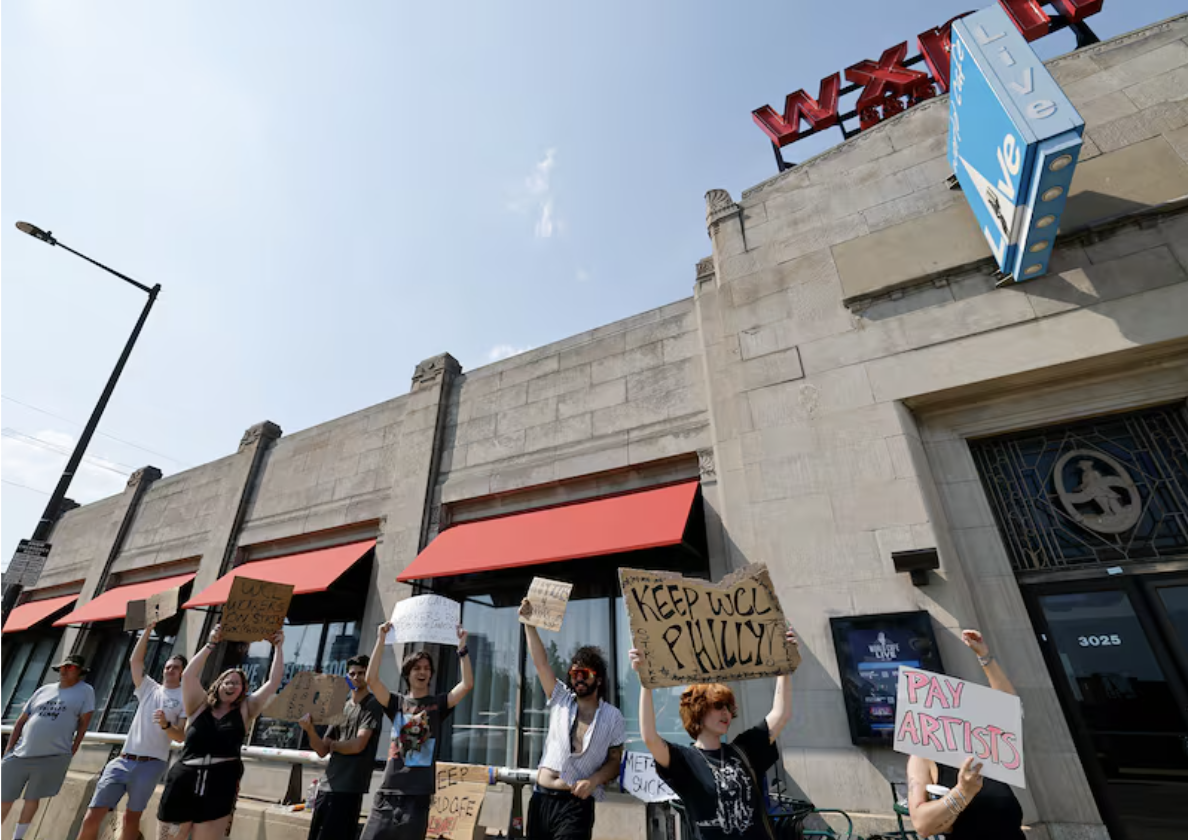
Outside the venue on Thursday afternoon, the protesting bartenders, guest service workers, and box office staff who gathered on Walnut Street shared a sharply contrasting perspective from that offered by WCL management.

Roughly 15 protesters assembled with signs that read, “Callahan Has Got No Plan,” “Keep Philly Independent,” and “No AI. NoMetaverse.” The staffers also launched a SaveWorldCafeLive page on Instagram.
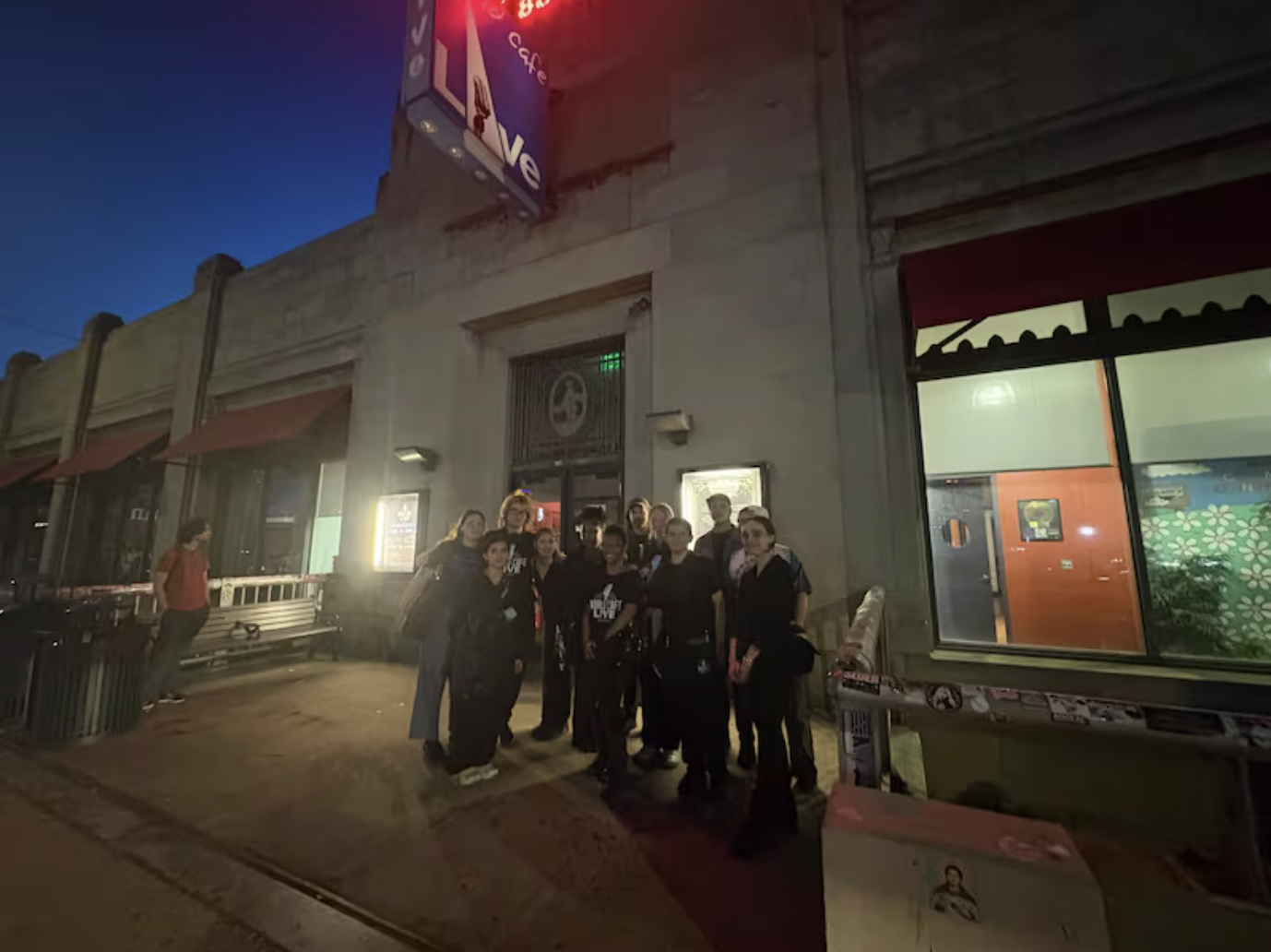
Mattes said the past month has made her physically sick. “My anxiety and my mental health were not well,” she said. “I was scared, and a lot of us were scared, to walk out on [Wednesday], but I do feel relieved. I feel like something good will come of this, one way or another.”

Novalee Wilcher, who works in guest services, said Callahan’s presence has been a “crushing” blow to the venue’s operation, and she’s unsure how the place will survive going forward.

“Those who have been fired,” she said, “have been texted by coworkers, not management. So, there’s no communication about how to deal with these demands that we brought up to them, which shows a total disregard for the artists that are supposed to be playing, or how it affects the guests that are coming in, who have paid for their nights.”

Following Wednesday’s walkout, Wilcher said Callahan has threatened to call the police on her and other staffers as a form of intimidation. He even suggested their strike was “unlawful.”

She said she was locked in a room on Wednesday over a piece of personal mail that one of Callahan’s representatives “confiscated” and “withheld” from her.

Refuting Callahan’s claim of a $6 million debt, Mattes said former staff have verified that debt to be around $2.7 million.

“The fact is, we do need funding,” Mattes said. “But a big part of the problem with this new team is that we don’t believe that VR and hologram concert experiences, and taking the people out of this building, will be what draws people in more.”

Referring to Callahan’s plans to introduce automated servers, bartender Emilia Reynolds said, “I’m nervous about losing my job to a machine that can’t safely serve somebody, have them enjoy their night, and get them home safely. That’s my job.”

“Not even to mention, people woke up yesterday without a paycheck. That was the last straw,” they said.

Mattes and her coworkers, they said, are prioritizing funding efforts to “save” WCL but added that the leadership refuses “to listen to anyone who disagrees with them.”

Despite their indifference, Wilcher said she and others were willing to negotiate with Callahan. The crucial step, she said, was getting management on the “right path,” but, the staffers claim, it appears the tech entrepreneur isn’t looking to change course.

– The Philadelphia Inquirer

(Dan DeLuca also contributed to this story)
An Ardmore ceramic artist will turn your loved one’s ashes into an object of your choice

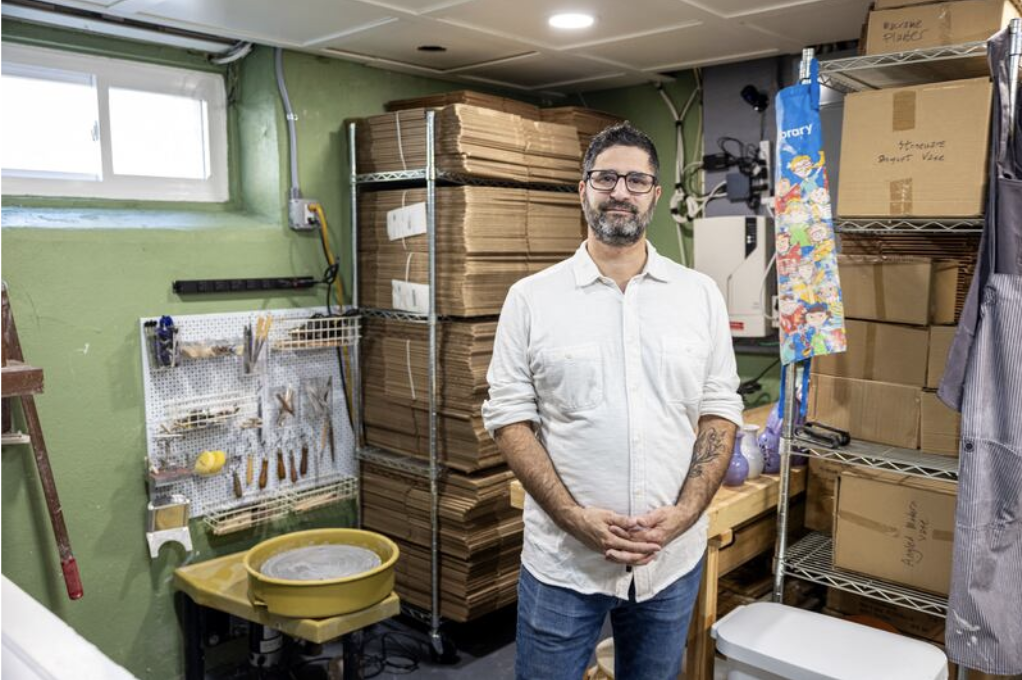
When artist Daniel Hoffman‘s aunt Sheila Rocco passed away in 2011, Hoffman, who was then studying ceramics at Ohio State University, sank into an emotional pit. The only way out, to him, was to create an heirloom that would honor her life.

Weeks later, Hoffman handcrafted a light blue vase, which would be deemed natural for a student of ceramic arts. Only this time, he added a bit of her remains to the glimmering semi-clear glaze, a practice that would go on to define his career, years later.

“It was a super personal way to get started in this field,” Hoffman said. “She was a really special person to me.”

After years of working as a video producer, animator, and creative director, Hoffman established Ahava Memorials in December 2024. He creates multicolored ornaments, twist vases, candle luminaries, and planters in honor of departed loved ones, using their ashes.

“I want customers to really feel that each piece is individual and unique,” the Ardmore-based artist said.

The name Ahava translates to “love” in Hebrew. “It’s an emotional business,” Hoffman said, “and one that requires a layer of trust that few other art specialties do.”

Customers start by selecting a shape and color for the ceramic piece that they think best honors their loved one.

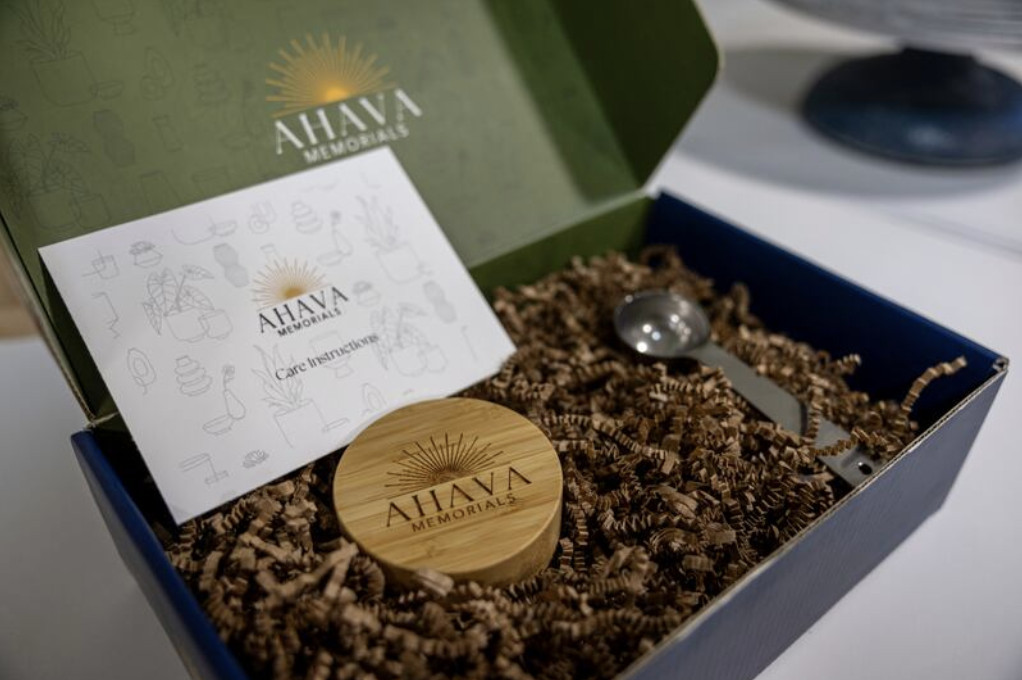
When order requests arrive, Hoffman sends customers a collection kit, along with a personal message assuring them that memories of their loved ones are in trusted hands.

The kit, containing a U.S. Postal Service human remains box, contains a premeasured container for customers to place ashes in. Once shipped, Hoffman picks it up from a secure P.O. box and begins the ceramic-making process.

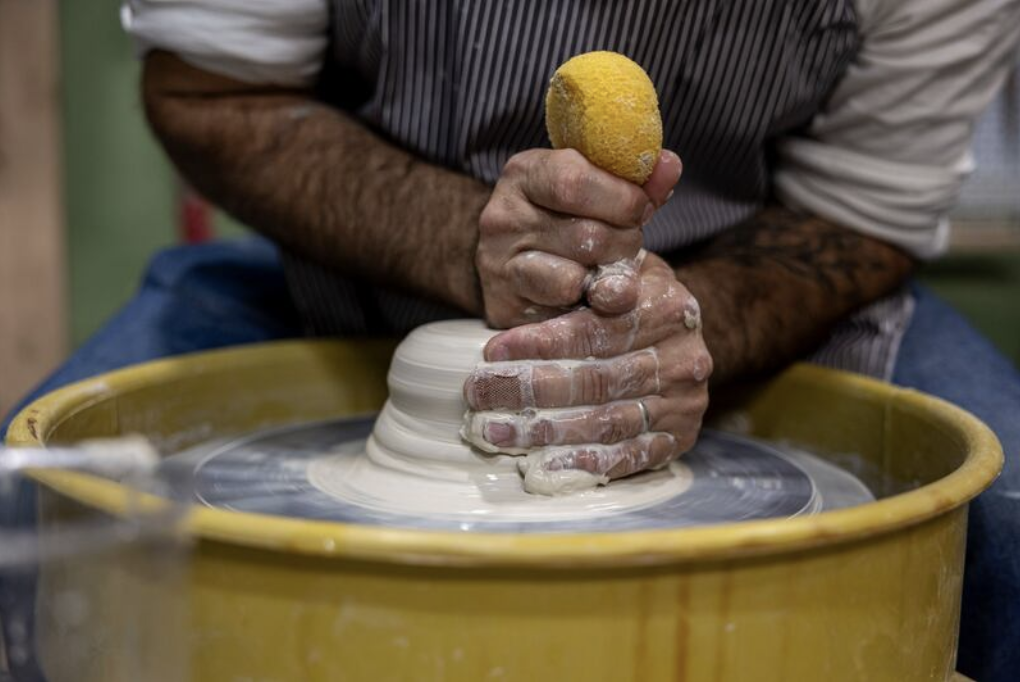
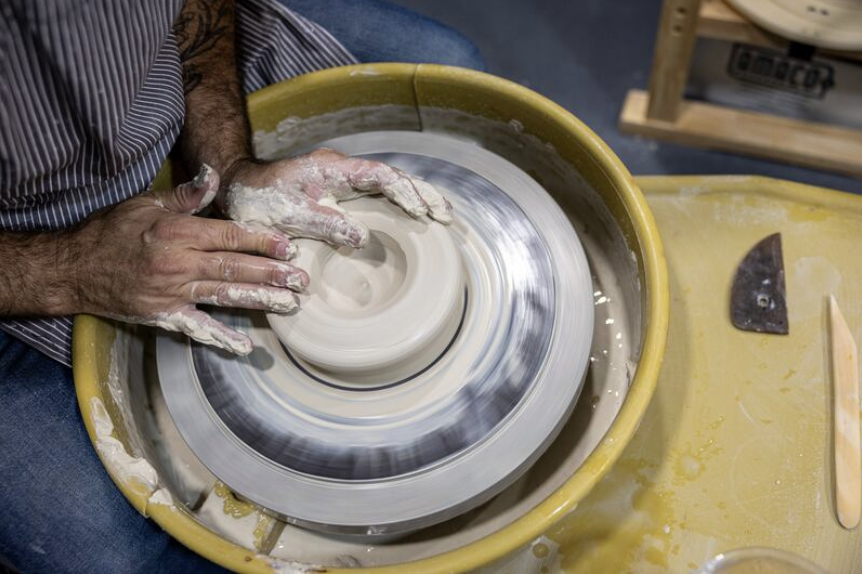
That process involves melding bone ash into a glaze-covered ceramic, using a technique first used in the late-18th century by bone china potter Josiah Spode. But instead of forming cattle bones into hardened clay, as Spode did, Hoffman integrates and seals the ashes into a glaze.

The glaze is then hand-brushed onto a premade ceramic object and placed in a kiln. Once the kiln reaches roughly 1,886° Fahrenheit, the ash-infused glaze is firmly coated onto the ceramic, which becomes the final memorial object.

Among Hoffman’s most popular designs are blue, green, and red-coated vases, ornaments, and planters honoring beloved people and pets.

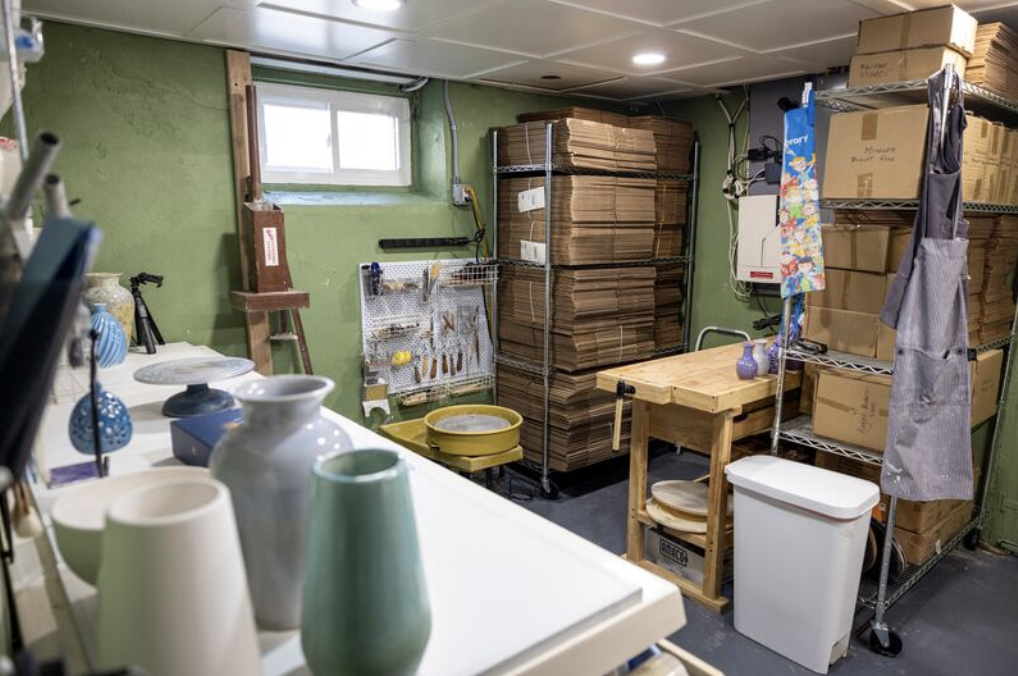
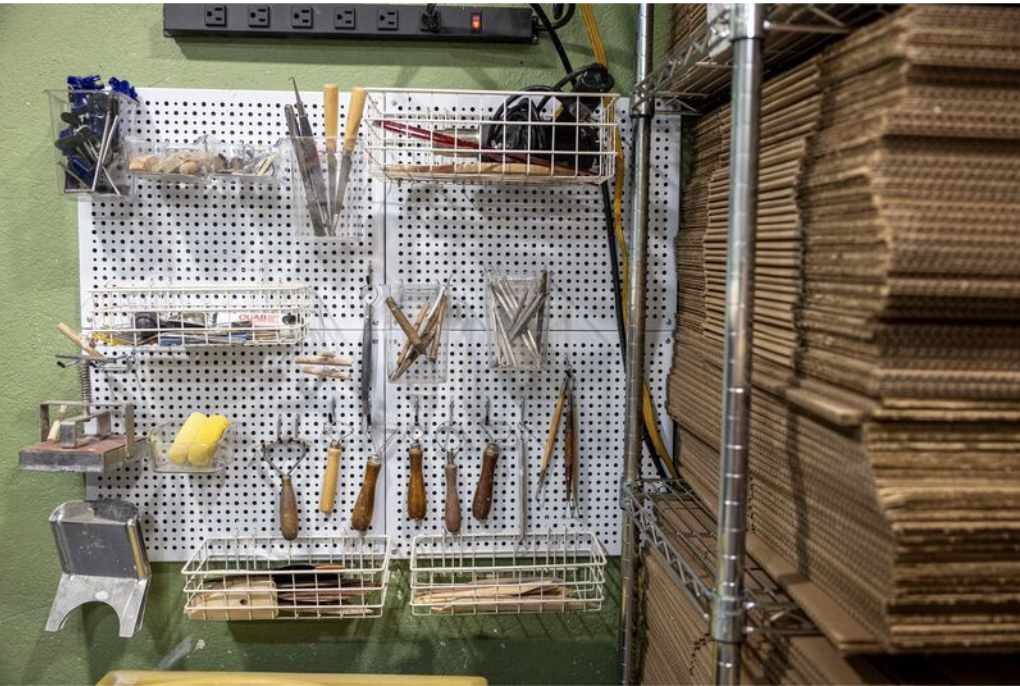
The process, Hoffman said, is a “ton of trial and error.” He spent months building out his home studio and perfecting reliable glaze techniques that would help him create perfect shades of pinks, blues, and reds. And as he’s grown more comfortable with his newly formed designs over the past year, Hoffman’s customer base and offerings have expanded.

Along with new colors and design options, he now casts multiple ceramic objects with one set of remains, and even integrates multiple remains into one design.

Hoffman said he wanted his products to be accessible to everyday buyers. Prices range between $210 and $745, depending on the desired shape, color, and size.

With more people entrusting him with these projects, Hoffman said it has become an even more enriching experience.

“It feels like they’re giving to me as much as I’m giving to them when I make a product for them,” he said. “It’s a special relationship with this product.”

While memorial ceramics seemed like a destined path for Hoffman in college, he never envisioned using his artistic gifts in this way.

“There are a million ways to make a career in the arts,” Hoffman said. “I just kind of found my way doing this.”

He first toiled with clay art as a teenager at Fleisher Art Memorial in South Philly, where he was taught by former chief U.S. Mint engraver Frank Gasparo, who inspired him to pursue a career in ceramics.

After graduating from Temple University and Ohio State, he ventured into studio art, video production, and animation, which led to a role at Comcast as the designer of Jumbotron motion graphics.

It wasn’t until he was laid off as Five Below’s creative director that his passion for memorial-style ceramics was renewed. This time, he was determined to turn it into a full-fledged business.

“I parked this idea for a long time. I tried building it on the side while I was working, but that just wasn’t happening,” he said.

Hoffman said the first phase of production was “hectic,” but with Ahava in full swing now, he is able to forge the kind of relationships with his customers that he first intended. Helping people through grief “feels like an act of giving,” he said.

As the business expands, Hoffman plans to collaborate with crematoriums in the area and dedicate most of his time to creating new products.

He wants to integrate more shapes, colors, and designs into Ahava Memorials, so that the pieces are even more personal to his customers.

Black-owned businesses are finding a home in Chestnut Hill

In Chestnut Hill, newly opened storefronts like Multiverse, NoName Gallery, Serenity Aesthetics & Wellness Medical Spa, and others have breathed new life into the historically affluent neighborhood known for 18th-century architecture, and a bustling commercial corridor. These businesses, owned by people of color, are servicing an evolving and increasingly diverse Chestnut Hill.

“We’ve had more than 24 businesses open in the last two years,” said Courtney O’Neill, executive director of the Chestnut Hill Business District. “The majority were African American owners, young couples, or women — and sometimes all the above.”

While 70% of Chestnut Hill residents are white, the neighborhood has seen a 7% increase in Black residents over the past decade, according to data from the U.S. Census Bureau. Black Philadelphians now make up 19% of the community, and there’s an increasing number of multicultural businesses attracting them to the Hill.

Fitness trainer Kim Harari, who moved to Chestnut Hill a year ago, said she relocated for a “homier” feel, and to find a deeper sense of community as a first-generation immigrant and queer resident.

For Harari, the growing diversity of Chestnut Hill is one of its best qualities. “If I could put a blueprint for what I wanted it to be, it’s here,” said Harari, a trainer at the Balance Chestnut Hill gym. “I never felt in place [in Center City], but [here] it’s diverse, queer-friendly, and a lot of Black-owned businesses. I love it.”

The speculative fiction bookstore Multiverse, which is owned by Sara Zia Ebrahimi-Hughes and Gralin Hughes, hosts monthly showcases for modular synthesizer artists. DanceFit studio owner Megan Kizer has led Beyoncé- and Lil John-inspired after-dark dance sessions. And NoName Gallery’s Jonene Lee has put on First Friday celebrations on the Hill.

Lee has welcomed graffiti artists, local musicians, and hip-hop DJs to her First Friday events, and said the presence of BIPOC-owned spaces and programs like hers has added much-need vibrance to the area. She feels more late-night, block party-style events is something the community has been wanting for some time.

“I’m happy that we’re bringing more color and culture here,” Lee said. “Even little old white women say they love what I’m doing, and that makes me happy.”

Lee says she knows no community is perfect. She’s dealt with “silent racism” all her life — the kind that’s felt through glaring eyes and disturbed faces rather than insults or derogatory statements. But she’s certain there’s real opportunity to grow in Chestnut Hill.

“It’s known for old money, and when you have old money, it’s white and it’s racist, I get that. But it’s not like that here. [Residents are] really open to art and culture, so I found a good spot.”

Tensions over change

While BIPOC business owners have been welcomed into Chestnut Hill in recent years, TC Unlimited Boutique owner Keia Chesson says that wasn’t always the case.

When she first opened her boutique eight years ago, Chesson was attracted to the “quaint” and walkable district, and the general ritziness of the area. At the time, there were only a few Black-owned storefronts in Chestnut Hill, and Chesson said moments of resistance from longtime residents occasionally surfaced.

“When Barack and Michelle Obama were in office, I highlighted purses and other items [with the Obamas’ faces on them] in my window, and some people didn’t like it,” said Chesson, who previously served on the board of directors for the Chestnut Hill Business Association. “Being a Black owner and supporting a Black president may not have been liked among some people [here], but for the most part, people embraced it.”

The increased diversity, O’Neill said, has brought a welcomed and organic change to the area, which has been largely “homogenous” for decades.

“It’s not just the business corridor, it’s just Chestnut Hill overall,” O’Neill said. “It’s an affluent neighborhood, but there’s a lot of affluent African Americans who have found their way here and made homes.”

Emerging unity

Beyond the rise in BIPOC-owned spaces, Will Brown of the Duke Barber Co. said there’s a real sense of unity that’s present throughout the commercial corridor. That’s why he’s kept his business in the area for 15 years, and why other entrepreneurs have gravitated there.

“We all go into each others’ businesses and support each other,” he said.

Brown said the growing diversity doesn’t mitigate the challenges businesses still face. Newly-established entrepreneurs can’t serve just one demographic to be successful — it has to be all of Chestnut Hill.

Owners like Gina Charles are up for the challenge.

Charles, the founder and medical director at Serenity Aesthetics & Wellness Medical Spa, moved her practice from Mt. Airy to Chestnut Hill in November. She wanted to find a ground-level location with greater visibility and easier access to its doors, and a space on the 8100 block of Germantown Avenue was a perfect match.

Charles is excited to see what the future holds, and for Chestnut Hill’s evolution to lead to more job opportunities, business collaborations, and networking events among all residents and patrons. “That’s a win for everyone,” Charles said.

– The Philadelphia Inquirer

CAPA adopts free health verification app Bindle for patrons to use for entry to events

To speed up the health screening process for those attending local performances, the Columbus Association for the Performing Arts has adopted a free health verification app.

Starting Oct. 25, patrons will be able to upload their full vaccination status or negative COVID-19 test information to Bindle, a free health verification app, which will generate an event entry pass on their mobile device.

Read More

Columbus sports agent Ronnie Steward seeks to help players expand business opportunities

In the seven years he has worked in the sports management business, entrepreneur Ronnie Steward has noticed a trend of missed opportunities, leaving many athletes without the resources needed to expand their brands outside of their sports.

Following experience as a sports representation executive at New York City-based Roc Nation Sports and as the business manager of NBA player Trey Burke, Steward decided to launch his own endeavor – Focus Sports Ventures.

Read More

Fashion brand Amongst Peers tailors a retail hub centered on creative collaboration

Beyond creating its own stylings, Columbus fashion brand Amongst Peers has formed a retail hub in the Short North, one that aims to promote and sell streetwear brands from around the world.

Along with offering working class-inspired street and leisurewear branded under the Amongst Peers moniker, co-owner Mario Hairston said the store, located at 15 W. 5th Ave., carries brands and high-end garments from Montana, Miami, New York, Los Angeles and France.

Read More

Company Venture Suite looks to get resources to Mount Vernon community with coworking space

Having grown up on the city's South Side, entrepreneurs Branden, 35, and Bruce, 35, Jones have seen the effects of Columbus' "innovation deserts," which they describe as local neighborhoods plagued by a lack of resources and opportunity.

But the two brothers are looking to pour back into the Mount Vernon community with Venture Suite, a new initiative centered on providing a co-working space for aspiring creatives, start-up founders and tech professionals in an area that's been largely been overlooked.

Read More