‘Tommy and Me’ at People’s Light is the perfect playoff season treat

A sure way to win over Philadelphians is through undying Eagles loyalty and dissing the Dallas Cowboys. Famed sportswriter Ray Didinger uses both these tactics in a theatrical retelling of his lifelong connection with late Eagles legend Tommy McDonald.

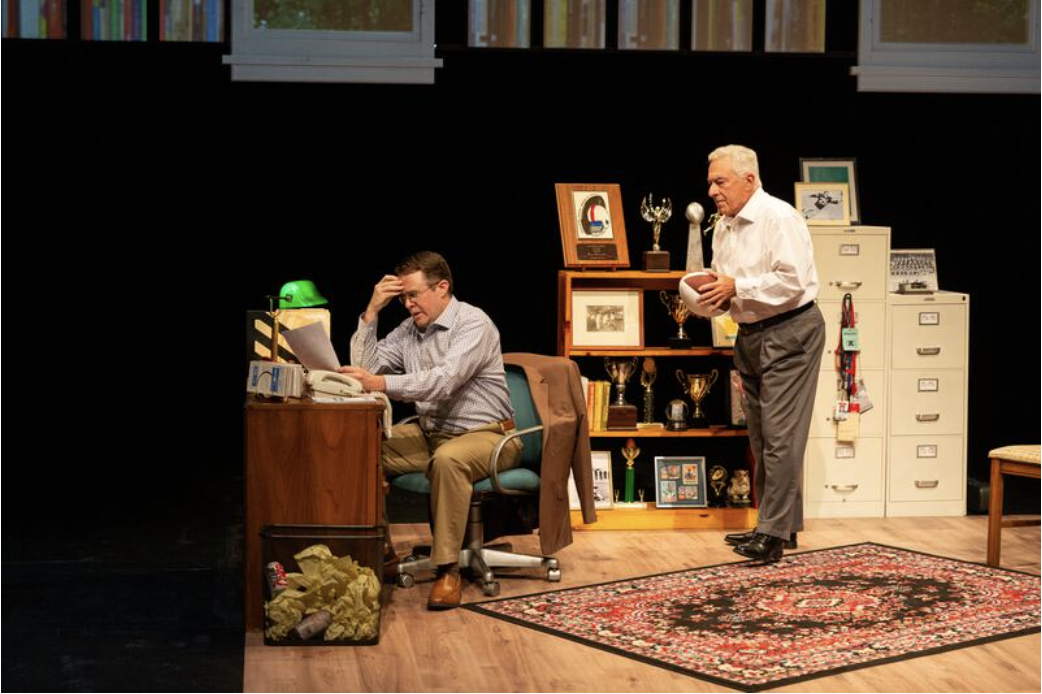
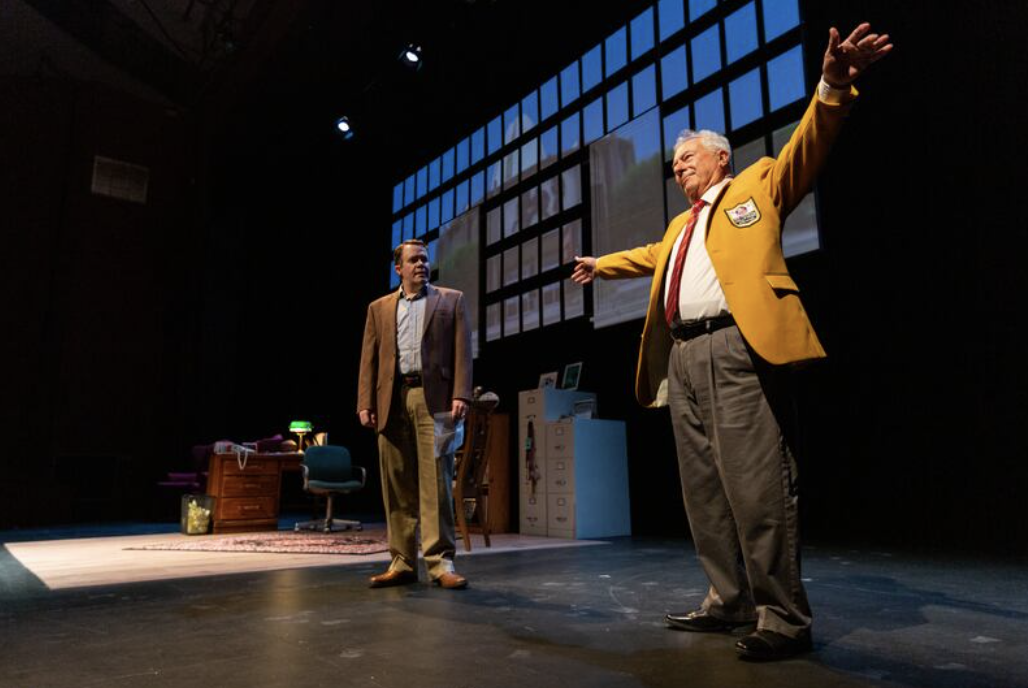
Didinger’s Tommy and Me, which runs at People’s Light, through Feb. 1, opens with Ray (Matt Pfeiffer) reading a handwritten speech by Tommy (Tom Teti), who restlessly paces back and forth across the single-set stage. “You’re not laughing,” Teti’s character notes with disappointment.

Then Pfeiffer’s Ray looks to the crowd at the intimate Steinbright Stage. “I can’t do this to my childhood hero,” he says.

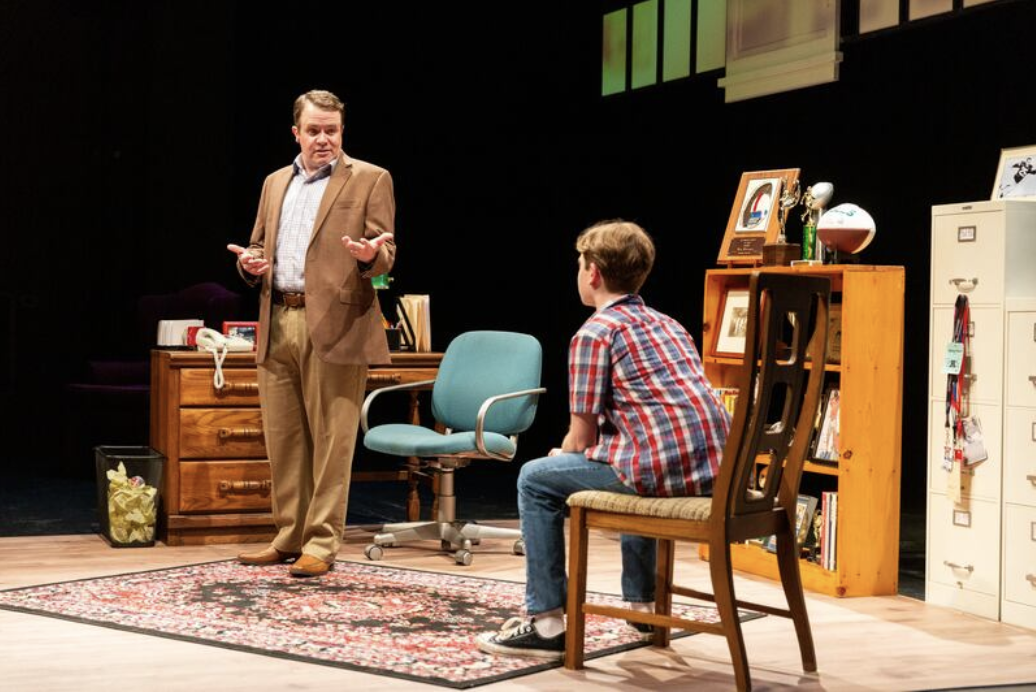
The play, directed by Joe Canuso, then flashes back to a young Ray, played by a charismatic Christian Giancaterino. At 8, he sits in his grandfather’s Southwest Philly bar, glued to Eagles football games and answering team trivia for soda refills. It’s an obsession that would later blossom into a career covering the NFL.

The 5-foot-9 and 175-pound McDonald was his favorite player. While Didinger’s friends were headed to the Jersey Shore for summer, his family drove to Hershey, Pa., to watch McDonald at the Eagles training camp.

Every time he sees a young Tommy (Frank Nardi Jr.), Giancaterino’s bright-eyed Ray runs over to carry his helmet, then walks back to admire the speedy receiver from afar.

The Eagles selected the wiry halfback in the third round of the 1957 NFL draft. And by McDonald’s fourth season, the Pro Bowl receiver caught the go-ahead touchdown to seal the team’s 17-13 NFL Championship victory over Vince Lombardi’s Green Bay Packers.

The winning catch marked Lombardi’s only playoff defeat and cemented McDonald in Eagles lore for eternity. But McDonald’s name never made it to the Hall of Fame ballot. That was until Didinger, who later became an award-winning sports writer and broadcaster, started lobbying for his childhood idol.

When McDonald was finally called to the Pro Football Hall of Fame in Canton, McDonald (then 64) asked Didinger to be his presenter, not knowing his long history of fandom. And that’s where the production dials up the emotional and entertainment factors.

All the flashbacks pay off in heartwarming exchanges and frustrating arguments between the two protagonists.

Pfeiffer’s Ray finally tells Tommy that he was the kid who carried his helmet back in Hershey. The same kid, who Tommy affectionately called a “walking encyclopedia,” is now the man telling him not to read out his wacky speech.

Didinger’s script has the details expected from a sports journalist of his caliber. But the story and the lively performances from the four-person cast are entertaining enough to maintain the attention of viewers unfamiliar with McDonald’s career.

The hook is the universal frustration of nonrecognition, and the subsequent triumph that comes with years of hard labor being rewarded, both as a fan and as an idol.

Didinger’s immersive storytelling, Canuso’s poignant direction, and the believable performances from Pfeiffer, Teti, Giancaterino, and Nardi bring the many layers of the play alive.

Like McDonald’s 35-yard catch in the 1960 NFL Championship Game, Didinger’s play clinches a win.

– The Philadelphia Inquirer

Philly’s Wing Bowl competition is getting a documentary

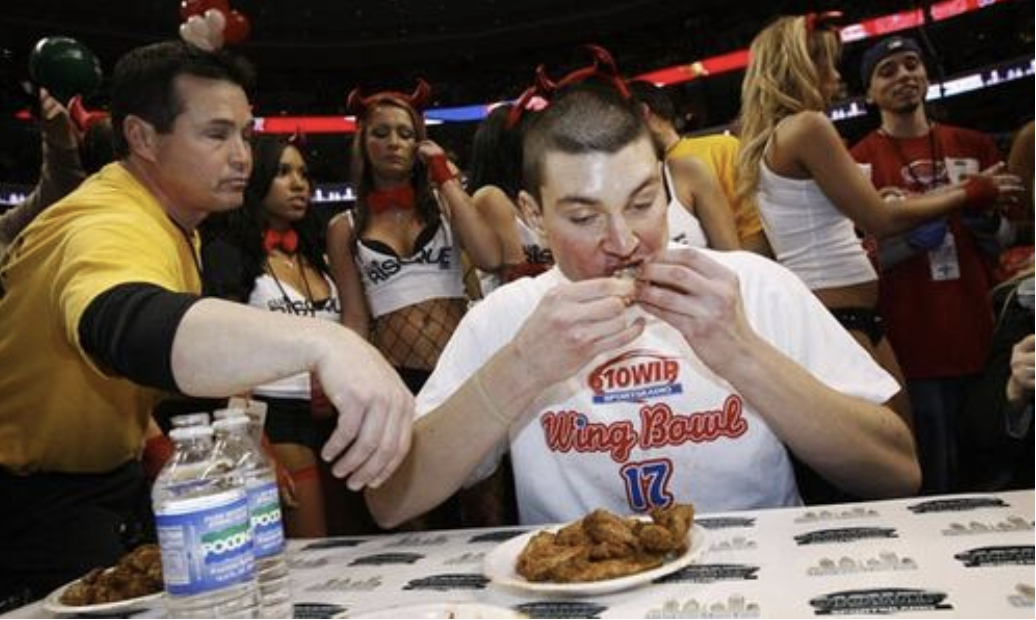
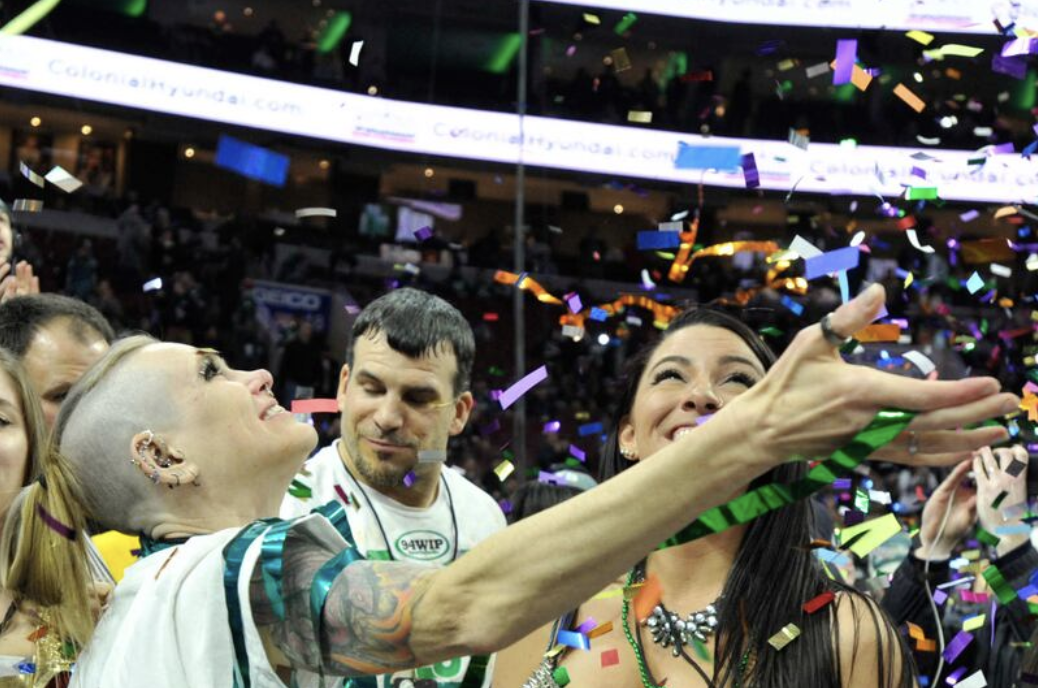
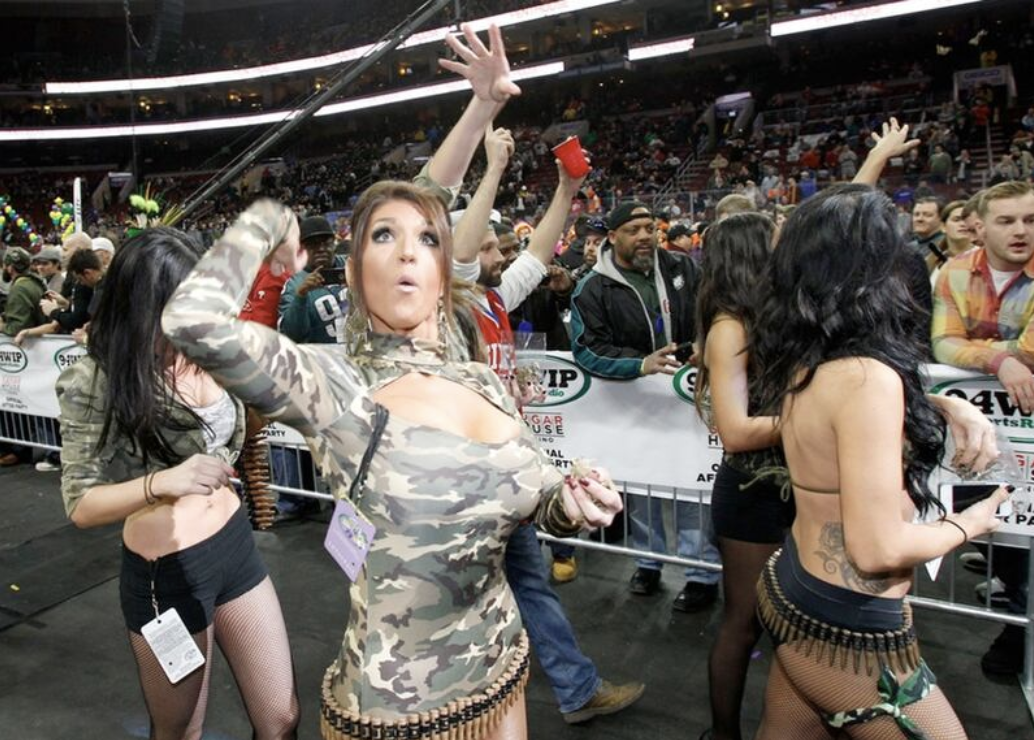
Starting in 1993, the Wing Bowl was a Friday-before-Super-Bowl-Sunday Philly tradition known for its endless flow of booze, arena-erupting antics, scantily clad “Wingettes,” and wildly competitive chicken wing eaters seeking gluttonous gold. But after 26 years of often-rowdy entertainment, fans and cocreator Angelo Cataldi were left with a sour taste.

In 2018, Cataldi and fellow Wing Bowl creator Al Morganti celebrated the final wing-eating competition at the Wells Fargo Center. By the end, Cataldi said there were too many scantily clad women and drunk fans “acting up” in the stands, and skeptics were growing more critical of its direction — including his wife, Gail.

“The last few years were a little sleazy,” Cataldi said. “It didn’t go the way we wanted it to. It wasn’t politically correct enough for where the world had gone in the 26 years [since] when we started it. There were a lot of critics of it, and for good reason.”

Now, documentarians Frank Petka and Pat Taggart of Owl Town Productions are shopping around a film that re-examines this uniquely Philly extravaganza.

Their documentary, No One Died: The Wing Bowl Story, chronicles the origins of the radio promotion and its evolution into a stunt. The name is a nod to Cataldi and Morganti saying “nobody died” as a barometer for the event’s success.

“It was never really about chicken wings,” Petka said. “It was about all the other things that went along with it — the pageantry and that yearning for fame. It was also a party, and Philly embraced it.”

Back in 1993, the Philadelphia Eagles lost to the Dallas Cowboys in the divisional round of the playoffs. The mounting disappointment inspired Cataldi and Morganti, then sports radio hosts at WIP, to start their own pre-Super Bowl tradition.

“It works mostly because the people of Philadelphia wanted to have this party,” Morganti said to The Inquirer in 2004, alluding to the fact that the Eagles hadn’t made it to the Super Bowl since 1981. “It’s fun. It’s kind of like the party we’re never going to have unfortunately.”

The inaugural event started out as a small show in what is now the Sheraton Philadelphia Downtown before expanding to the Wells Fargo Center in 2000. And every year, contestants arrived on floats or were escorted by the Wingettes, a group of women who often worked at the gentlemen’s clubs that sponsored the event.

The early years were mostly filled with novice competitors, who took stage names like Bill “El Wingador” Simmons (who ended up winning the bowl five times), “Rob the Slob,” and “Pot Pie the Sailor.” But eventually, professional eaters stepped in and the original 100-wing winning count got bigger and bigger, with the last winner, Molly Schuyler, eating 501 wings in 2018.

In 2018, the Eagles won the Super Bowl against the New England Patriots. By that point, WIP had been owned by Audacy for about two years. That year, the Wing Bowl hosted its final edition against the backdrop of a victorious football team — and mounting criticism about the event itself.

Taggart and Petka’s documentary will chronicle the bowl’s 26-year journey as narrated by Cataldi, who agreed to the project after seeing the duo’s film Billboard Boys. Neither WIP nor Morganti participated in the documentary.

Impressed by their work in the Allentown-based Billboard Boys, which followed three men who lived on a billboard for 261 days to win a house in a radio contest, Cataldi met Petka and Taggart in Sea Isle City, N.J., in August last year. And two weeks later, the filmmakers recorded the first interview with Cataldi.

“My fear for the whole thing was that someone from L.A. who didn’t understand the contest would come in and do a slam piece,” Taggart said. “You have to understand what it was.”

Petka and Taggart interviewed 40 past organizers, contestants, and attendees, including former Eagle Jason Kelce, former Wing Bowl commissioner and Eagles long snapper Jon Dorenbos, and competitive eaters Eric “Badlands” Booker and Schuyler.

WIP, which still employs Morganti, refused to share archival footage. But through Cataldi, who retired from the radio station in 2023, Petka and Taggart were able to collect old images and videos.

WIP did not respond to a request for comment.

aggart said he aimed to show an unfiltered depiction of the Wing Bowl story — including the raunchier and unappetizing elements.

“You have to show the good, the bad, and the ugly,” he said. “We didn’t go into it with an agenda. It was important for me to find out what it meant to the people that were part of Wing Bowl. Like it or not, for some people this was a huge part of their identity.”

Cataldi said he hopes the film will “give people more of an appreciation for how strange it was.”

“It took everyday guys who were driving trucks and working hard for a living and put them in the middle of an arena where they got applause and attention,” Cataldi said. “They got to sample what it was like for them to be sports stars, and that’s a great thing for so many people. And we forgot that because of how it ended.”

Petka said the self-funded documentary forced him to dip into his savings account. But he and Taggart are shopping the documentary in hopes of making a splash at a film festival close to home.

“I don’t know what road this will take us, but it’s a truly unique Philadelphia thing,” Petka said. “We think it’s the greatest radio promotion of all time, or the worst event depending on who you talk to.”

– The Philadelphia Inquirer

A film about Philly’s mightiest ‘Underdogs,’ brought to you by Jason Kelce and Connor Barwin

Following the success of the Prime Video documentary Kelce, former Philadelphia Eagles Connor Barwin and Jason Kelce continue to dip their toes into filmmaking. But instead of the grit of the gridiron, they captured a different kind of Philly sports story.

They’re focusing on South Philly’s Vare Gymnastics Team in the short documentary Underdogs, which premieres at the Philadelphia Film Festival on Oct. 22.

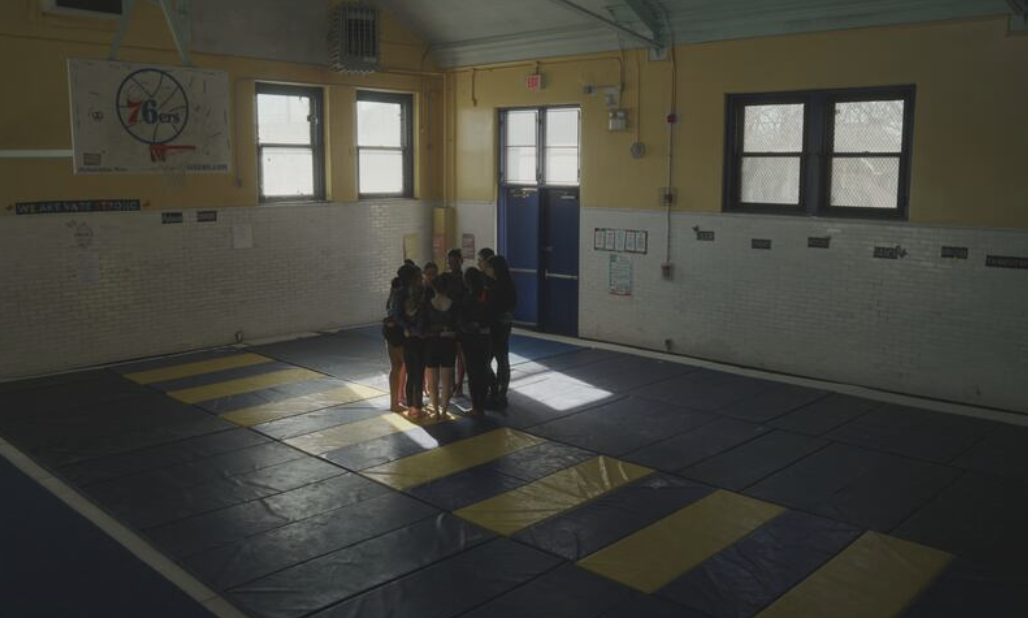
The 26-minute film spotlights the triumphs of an underfunded gymnastics squad, who leap past the challenges they faced after the closing of the historic but dilapidated Vare Recreation Center in 2022.

Director Maria Vattimo said the Vare Gymnastics Team’s resilience and the City of Philadelphia’s plans for a new recreational facility felt like the “perfect story.”

“What stuck out to me is the opportunity to tell a female story about young gymnasts living in this community, who otherwise would have never had the opportunity to partake in a sport like this,” said Vattimo.

Executive producer Kris Mendoza said the documentary was originally slated to be a 10-minute fundraising video about the Make the World Better Foundation, which aids the development of rec centers in Philly’s urban enclaves. In partnership with the City of Philadelphia, the organization developed the nearly $20 million center that the Vare Gymnastics Team would later move into after using multiple temporary practice facilities.

But after meeting with Mendoza and Vattimo, foundation founder and former Philadelphia Eagles linebacker Connor Barwin decided a documentary would be a better showcase for their community-based efforts.

“We wanted to bottle up all the good that we do, and Vattimo thought we should show the impact, rather than tell people,” Mendoza said. “Vattimo found this gymnastics team, which really embodies the spirit of what the Make the World Better Foundation does to create spaces that let these young kids in the inner city feel valued.”

Vattimo, whose award-winning film Kim chronicled the life of a ballet dancer overcoming domestic abuse, said the female-dominated sport of gymnastics presents its own unique barriers.

“Gymnastics is a very expensive sport to be a part of, and it’s only really seen in wealthy communities where young girls can partake in something like that,” she said. “So we looked to see how we could tell this story and to find the right voices.”

Vattimo started filming the team’s hard-fought competitions and the young gymnasts’ late-night practices on a pad-covered basketball court floor.

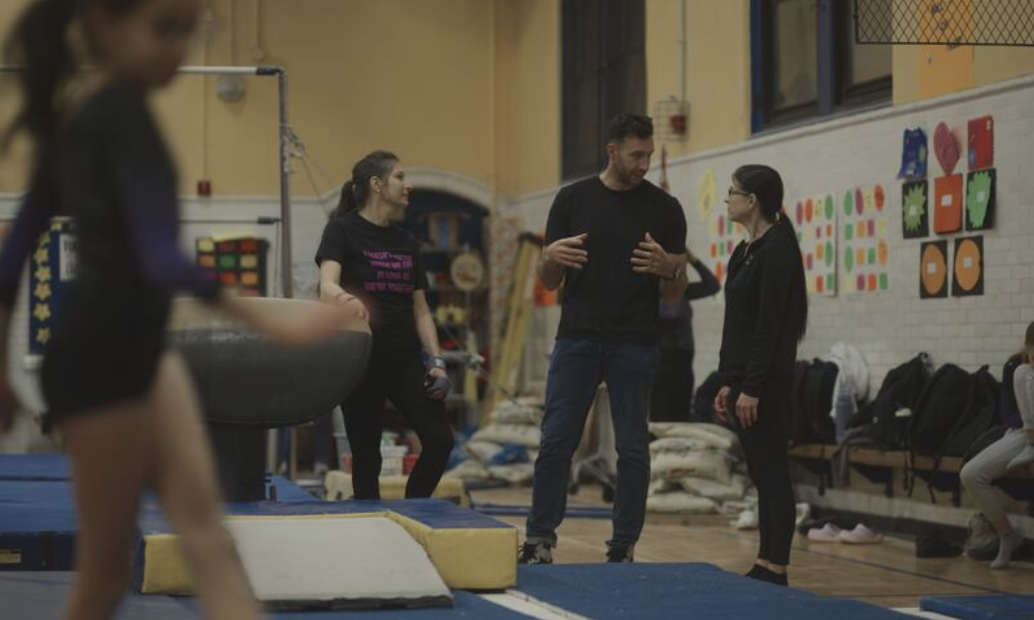
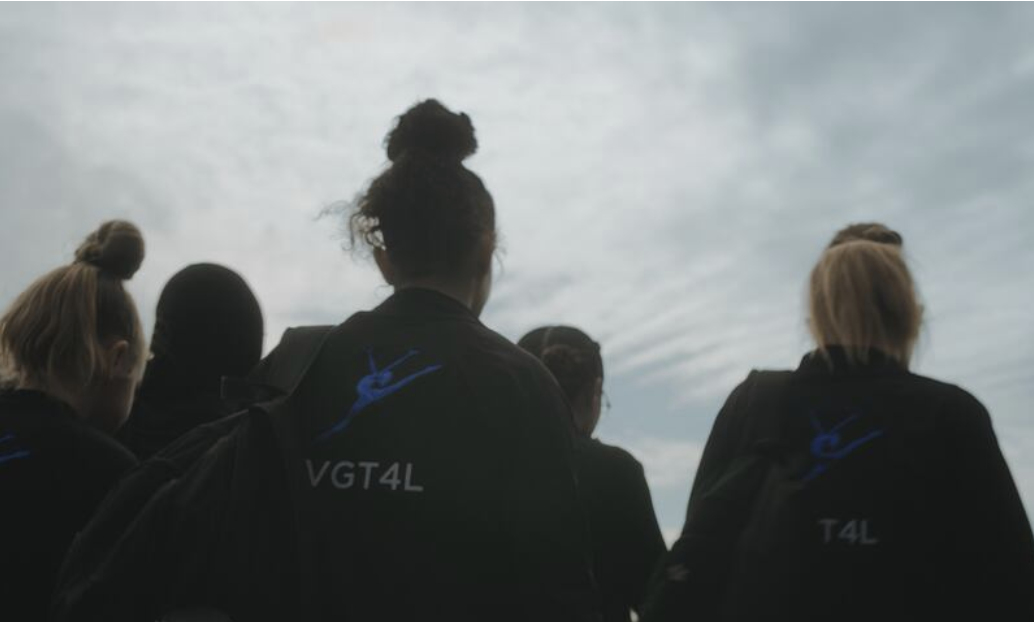
Despite the challenges, head coach Kristin Smerker said the girls continued to rack up competition wins and proudly don the “Vare Gymnastics Team 4 Life” symbol on their backs. And she’s “grateful” Vattimo and others were able to capture their resilience for others to see.

“We loved every minute of filming,” said Smerker, who’s coached the Vare Gymnastics Team since 1998. “The gymnasts felt like superstars and were so happy to be a part of all of this.”

Barwin, who was a gymnast before transitioning to football in his youth, brought Kelce onto the project as an executive producer. Their 2023 Kelce documentary became the No. 1 movie on Prime Video in the United States.

“The story is only about those girls, those coaches, and about how important coaches and public community spaces are for young kids,” said Barwin, who cofounded an entertainment company with Kelce. “That’s the story, but I think me and Kelce’s background playing youth sports understand that and are proud to tell that story.”

The film, starring gymnasts Cherokee Guido, Elianna Olsen, and Su’Adaa “Susu” Muhammad, will premiere at 6:15 p.m. on Oct. 22 at the Film Society Center. A second screening is at 5:45 p.m. on Oct. 27 at the Film Society East theater.

For more information, visit filmadelphia.org.

– The Philadelphia Inquirer

These space-obsessed brothers are bringing a new attraction to South Street. It’s out of this world.

“Hey, you want to see Saturn?”

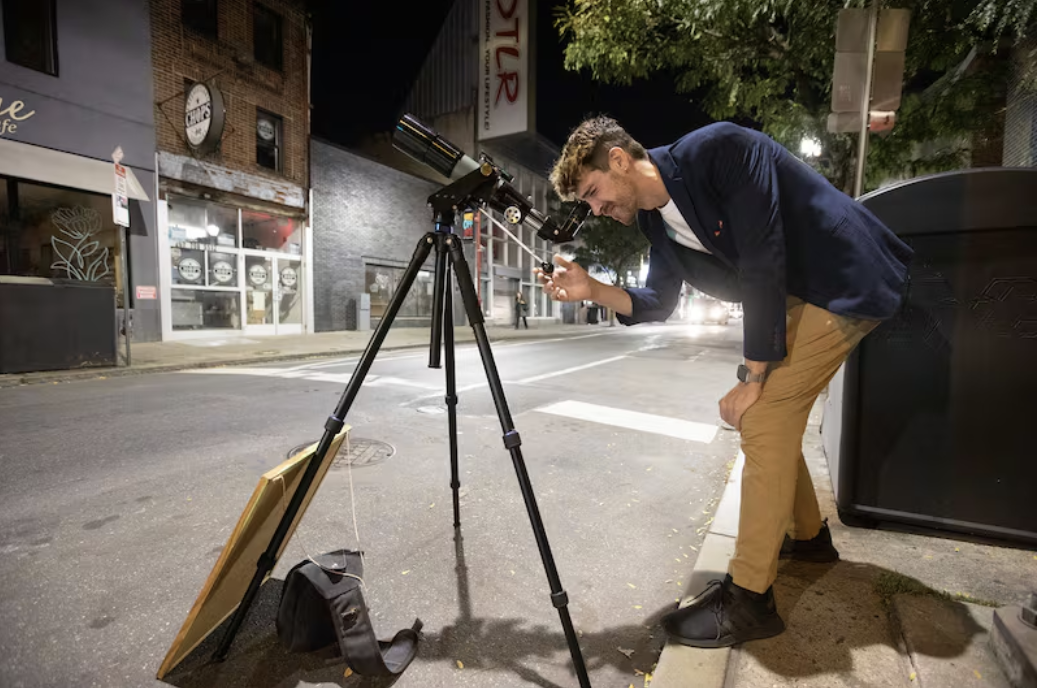
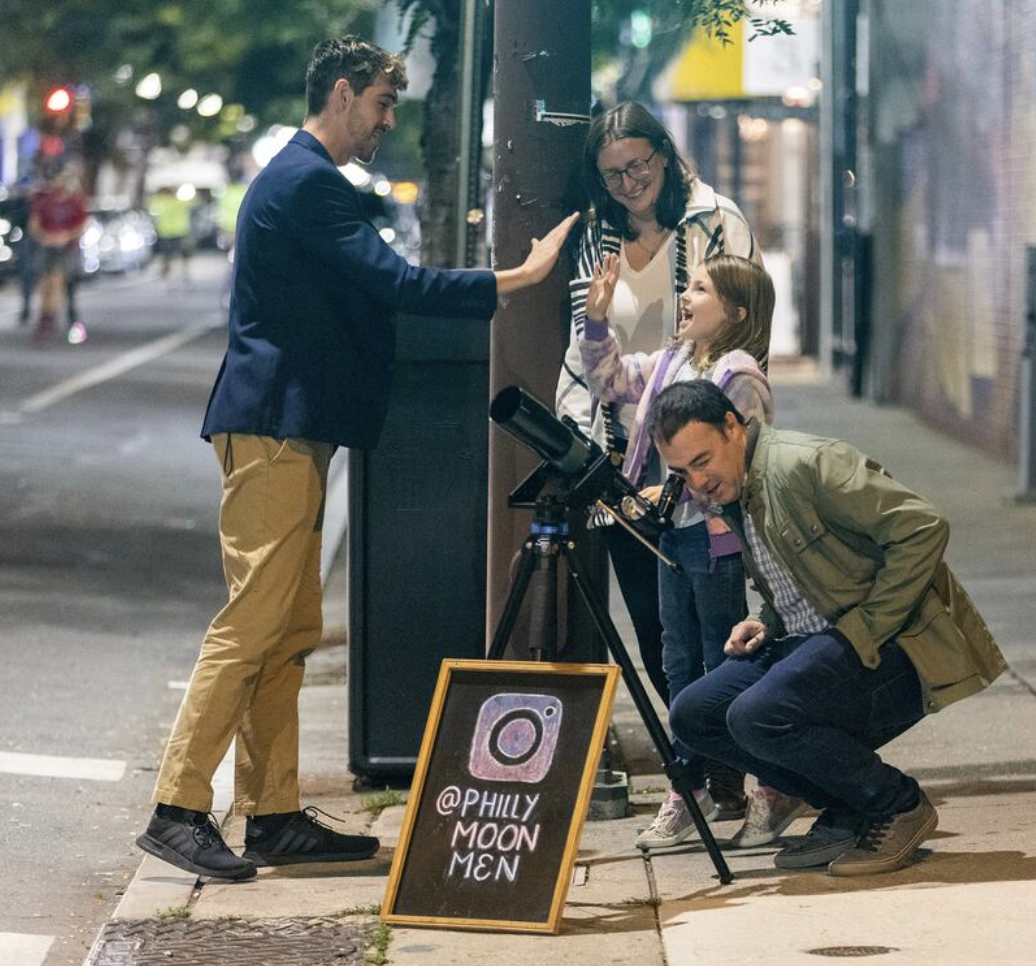
Posted on the corner of Sixth and South Streets on a brisk October night, sidewalk astronomer Brendan Happe greeted onlookers with the question. Some averted their eyes entirely, while others stopped in their tracks with a look of confusion that turned to curiosity within seconds.

Minutes later, a line formed toward the edges of the curb, as more onlookers walked over to Happe with a rush of excitement. Some were looking into a telescope for the first time, while others wanted to add Saturn and Jupiter to their list of sightings from afar. “It’s totally free,” Happe said. The amazement on people’s faces after looking through the lens was priceless.

“A view through a telescope is an opportunity to see something beyond the Earth, and in a way, it’s an inherently human experience,” Happe said. “It allows us to be reconnected to something that makes us human, and it’s something we’ve kind of lost over the past 100 years because of light pollution.”

“It was definitely more impressive than I thought because we saw the telescope and thought, ‘OK, it’s actually not that big,’ ” stargazer Mikolaj Franaszczuk said. “But it was the first time I actually saw Saturn with its rings, so it was really cool.”

“It was so miniature, but it looked so cool,” his 8-year-old daughter, Dahlia, said with a smile.

Happe, a space-obsessed New York native, has greeted Philadelphians for years on South Street with his brother, Bill Green, under the name Philly Moon Men.

Back in 2018, Happe visited Green, who lived above the Theatre of Living Arts at the time. He grabbed a pair of Green’s binoculars to look out into the night sky, and was immediately struck by the magic of the galaxy. The craters of the moon and the gleam of the stars helped spark a newfound passion, he said.

“Through my brother’s binoculars, I had this realization or reminder that we’re living on a planet,” Happe said. “The universe has been here the whole time, and in that moment, I really started thinking about it. Had it not been on South Street, I can’t really say how it would have really gone down.”

Growing up on Long Island, Green said, they never thought to explore space, and knew very little about astronomy before starting Philly Moon Men. But after that night inside his old apartment, he and Happe decided to share their experience and connect fellow Earthlings to the depths of the universe.

Months later, Happe joined his brother and moved to Philly. They started setting up a telescope and pointing people to the night sky on the corner of Fourth and South Streets, and went on to host programs with nearby businesses like Tattooed Mom, and even collaborated with the Franklin Institute in the years after their first night on the bustling street.

Derrick Pitts, the chief astronomer at the Franklin Institute, said he supports sidewalk astronomers like Happe, Green, and others who encourage Philadelphians to explore the universe from the city’s streets. Pitts remembered going down to Second and Chestnut Streets to encourage locals to look up at the stars.

“What happens is the people look through the telescope and suddenly go, ‘Wow, that’s really cool.’ And it makes that person with a telescope feel as if they are introducing people to a whole world. It’s a feel-good thing all the way around, and it introduces people to the sky,” Pitts said.

Having followed the group for some time, Society Hill resident Sam Greenberg said Happe and Green’s efforts to share intergalactic views and knowledge is why Philly Moon Men has gained such a following in the city. “The views are sick,” Greenberg said. “I think what he does is really cool, so I take any opportunity to see more of it.”

Fourth-grade science teacher Jess Trider said the group is a refreshing attraction on the historic street. “It’s really cool to have access to a telescope in the middle of the city,” Trider said. “[Happe] is so knowledgeable about it, and it’s just good to have a quick information dump.”

Instead of drawing people who visit a traditional observatory or museum, Green said he and Happe started Philly Moon Men so they could “just take normal people off the street and turn them into astronomers.” Green said, “It’s even more exciting, I think, than trying to get a physicist outside of a university.”

Established institutions will always have more resources than a group like Philly Moon Men. But Green said sidewalk astronomy brings the wonders of the universe to the city’s streets, and it’s important for both to work simultaneously to reach and educate the public.

“The Franklin Institute is always packed, and it’s usually the same people every time,” said Green, “but they’re not meeting the people outside of those distinct audiences. Those people on the street don’t get that experience. We don’t need this institution or planning, we just need a telescope and a little bit of free time.”

While the mission of the group has evolved over the years, Happe said one that’s remained consistent is their fight for light pollution advocacy. He pointed to countries like the Netherlands, which has made efforts to reduce light pollution, and his and Green’s hope is that their work inspires the United States to follow suit.

Pitts said he plans to form community partnerships with more groups like Philly Moon Men. That way, there will be more programs and community events beyond the science museum’s walls.

Green and his brother often get asked the same question: “Why South Street?” It’s the last place most would expect to see a telescope, he said, but it’s an ideal spot because of the myriad of cultures that brew in the area and the people that frequent the bustling street.

“If it wasn’t for Philly and South Street, this project would have never happened,” Green said. “[Philly Moon Men] is uniquely a Philly thing. South Street has always had this reputation of cultivating creativity, and we’re just another example of that.”

– The Philadelphia Inquirer

Former UArts dance instructor could be deported due to school closure

With dreams of becoming an artist, Turkish-born dancer Su Güzey immigrated to the only U.S. city she had ever visited — Philadelphia.

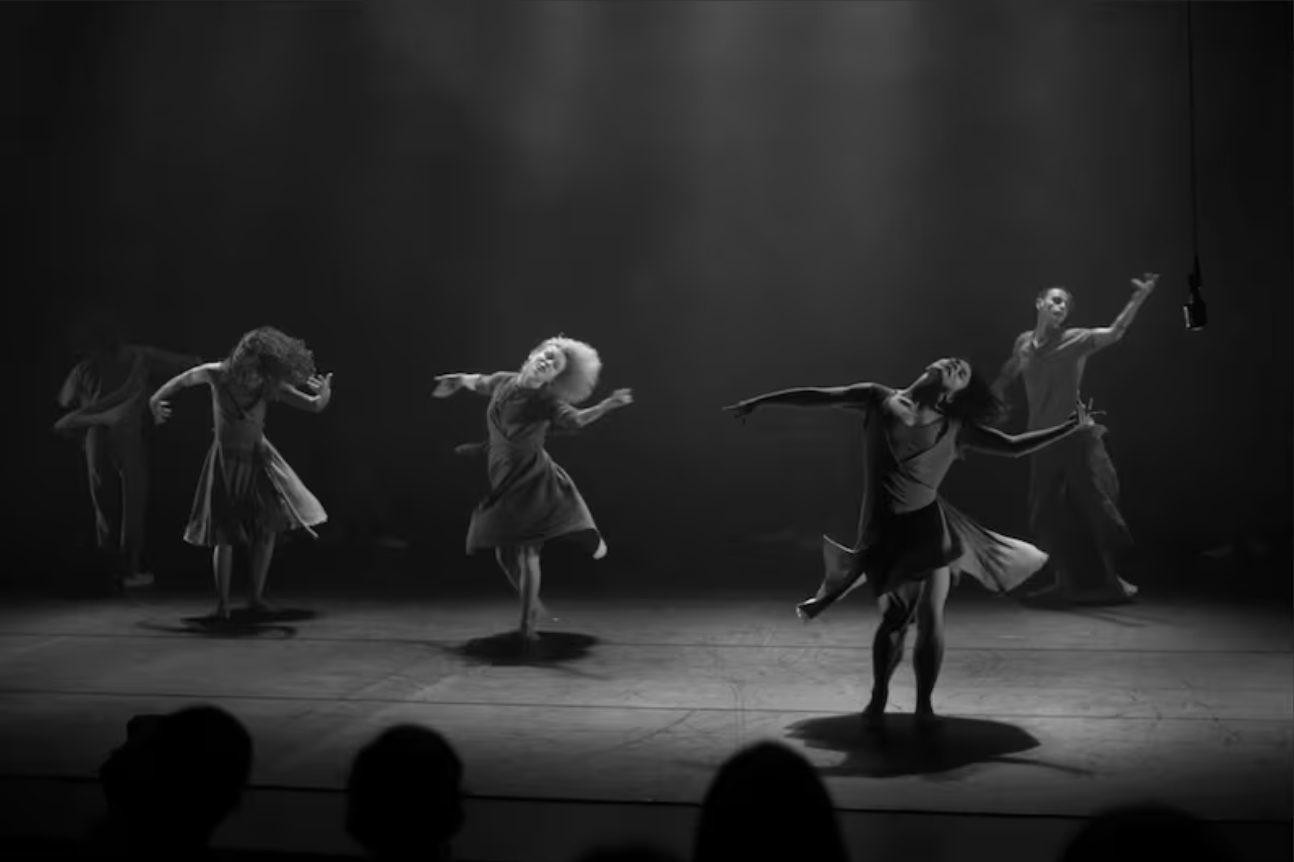
Güzey, now 33, moved to Philly in 2021 after being accepted into UArts’ MFA in dance. While pursuing her master’s degree, she began teaching as an adjunct assistant professor in the dance program, and performing in university-funded productions to help boost her resumé. She volunteered for several local productions and performed at the Philadelphia Fringe Fest.

With the school’s unexpected closure in June, Güzey lost her job and faces a threat far greater than unemployment — deportation. “I’ve had challenges in my life, but I never felt freezing and full despair as if everything was going to go wrong,” said Güzey, who completed her master’s program while at UArts. “It triggers my nervous system in a way that I have never felt before. I don’t like this feeling.”

As former UArts students, staff, and faculty members protested, Güzey was rushing to submit job applications. She had 60 days to find another job in academia in order to maintain her visa status, an almost impossible task given how few academic appointments are made during the summer.

Güzey still doesn’t know if she will be forced to uproot her life in Philadelphia, leaving her home in Fishtown, her career and friendships behind.

“I don’t want to generalize people’s experience when they are migrating from home, but the feeling of home is something you desperately seek,” Güzey said. “It’s not a space that you create. People make a home for you, and the people I’ve met have made Philly home for me.”

Even though the UArts’ dance program is moving to Vermont’s Bennington College the program’s new incarnation will have no full-time faculty but will use a roster of part-timers and visiting artists. With no full-time academic job on the horizon, Güzey is pursuing an O-1 nonimmigrant visa, commonly referred to as an “artist visa,” which could grant her an extended stay in the country.

“It’s just very complicated, and the place I’m in now is because I have looked at possible routes to stay, and this is the only one,” she said.

According to the U.S. Citizenship and Immigration Services website, O-1 visas are given to an individual “who possesses extraordinary ability in the sciences, arts, education, business, or athletics ... and has been recognized nationally or internationally for those achievements.”

Güzey is confident she fits the bill. The only issue is funding.

She needs $5,000 to pay lawyer fees and submit her petition, an astronomical sum for a recently laid-off immigrant artist who’s been struggling to find paid gigs.

To fundraise, two of Güzey’s friends encouraged her to start a GoFundMe campaign, which has raised over $3,000.

“It’s beautiful to see [the support], and it proved my point that I found a home,” she said. “The support and care are undeniable.”

Her friend Jim Anderson, a graphic designer who creates under the name GRIMGRIMGRIM, said it’s “disappointing” to see artists like Güzey have to go to these measures because UArts shuttered its doors. He fears other creatives, too, will continue to be abandoned.

“It’s insanely f — d up,” Anderson said. “I don’t think people really realize the weight of it. The city wants to promote itself as some sort of cultural hub, but yet, they are helping kick people out that want to do good stuff here.”

Güzey said she and her lawyer are handling procedures as best they can, but “everything depends on how well the immigration office is going to respond,” she said. “At this point, we don’t know, and we have so much evidence based on my past experiences in the field. But again, it all depends on how they are going to see it.”

She doesn’t know whether it’s hope or stubbornness, but Güzey said she’s beyond the anxiety-ridden phase. She’s prepared for a more positive outcome, instead of the “bumpy road of pain” she’s been on the past two months.

“I don’t have any more anxiety attacks,” she said. “I have the strength to work on these things more and to fight for my rights. I deserve to stay here, and I have the skills and the experience to offer something to the arts community.”

– The Philadelphia Inquirer

Immigrant advocates encourage Norristown residents to ‘raise their voices’ amid increased ICE arrests.

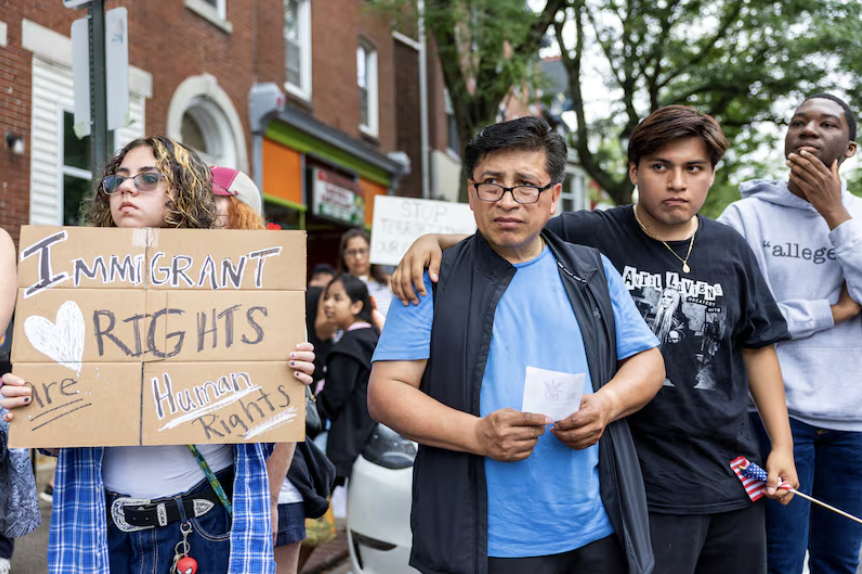
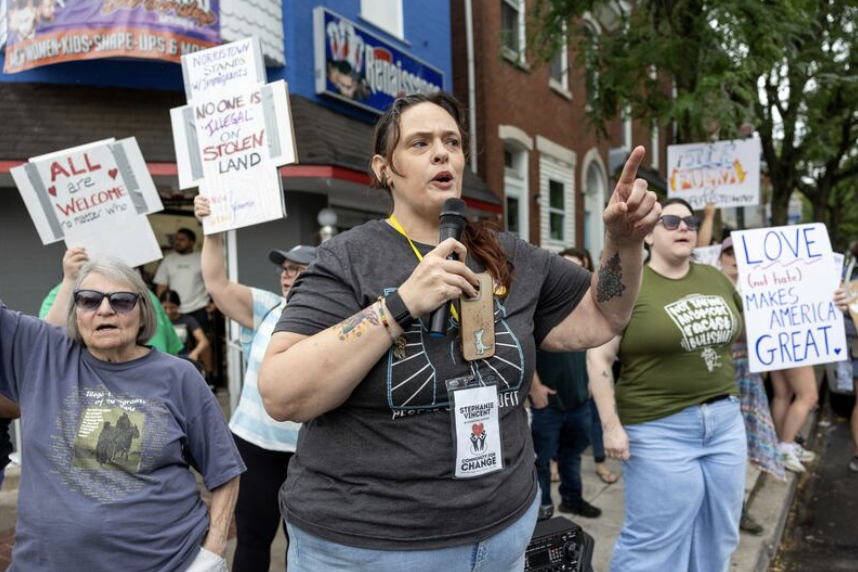
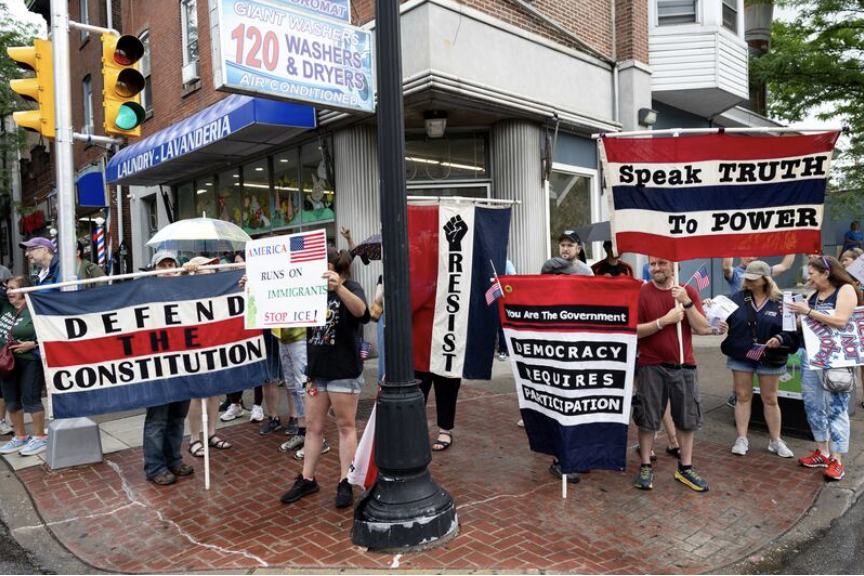
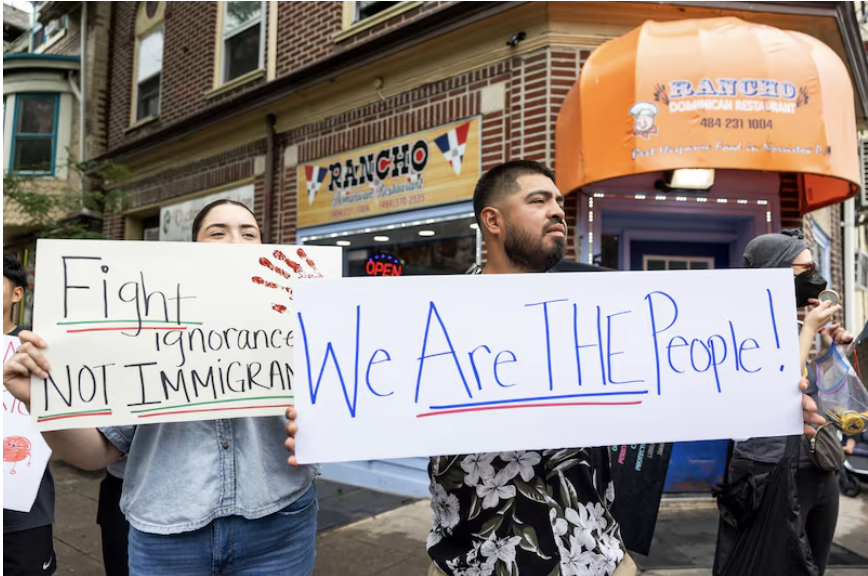
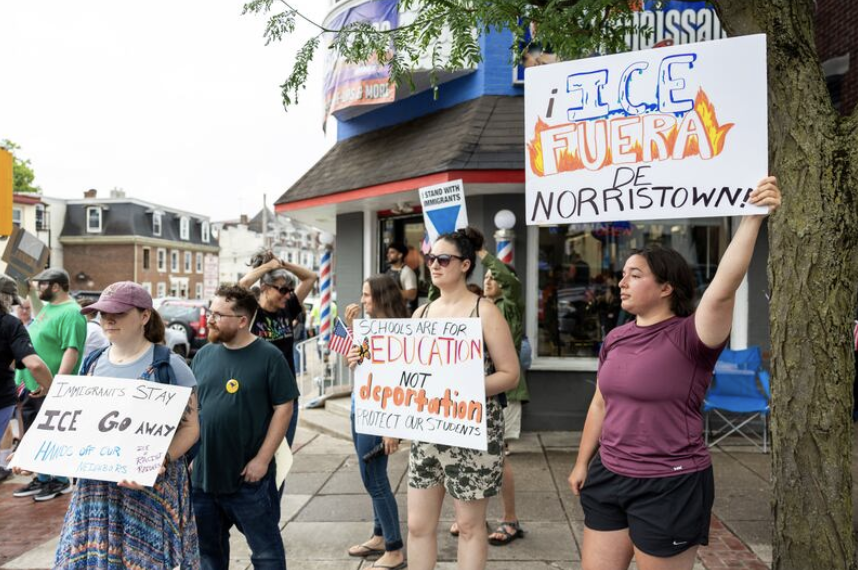
Dozens of Norristown residents stood on the corner of West Marshall and George Streets on Saturday, enduring the rain in support of their immigrant neighbors.

Following weeks of intense ICE presence in the Montgomery County seat, organizer Denise Agurto, 47, asked all undocumented neighbors to go home for their safety.

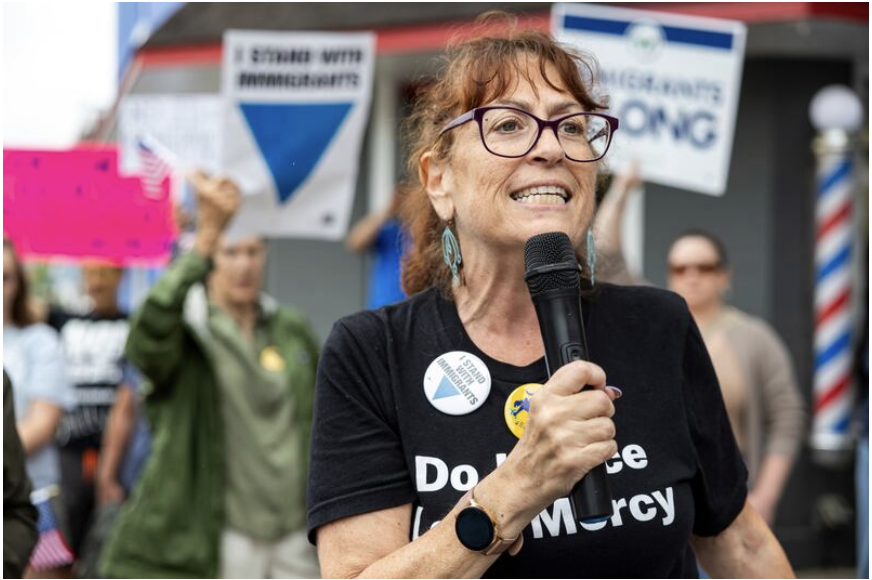
“This is the time for your allies to be here supporting you,” Agurto, executive director of Unides Para Servir Norristown, told the crowd. “No matter where you are from, we are glad you are our neighbor.”

In the last two weeks, more than 20 people have been taken into custody by ICE in Norristown, Agurto said, including a 34-year-old man arrested hours before the rally.

“Today, they broke our heart because they took one of us,” Agurto said. “He is a good guy, a family person who goes from work to home, and is always willing to help the community. He didn’t even have a deportation order.”

Anxious about her immigration status, a bakery owner watched the rally from inside her establishment.

“Norristown used to be a place full of happiness, people used to walk freely,” said the 55-year-old who requested anonymity out of fear of reprisal. “Now Norristown is desolate, people are terrified, and the business is not doing well.”

The Mexican national has spent more than half her life living in the borough — where about a third of the people identify as “Hispanic or Latino, according to Census figures — and has never seen people experience this level of panic.

Confused, she struggles to make sense of the fleeing sense of safety. “Me and my business give back to this country,” she said. “I pay taxes; I am not a burden to the state; I came here with nothing and work day and night to provide for my children. It’s incredibly heartbreaking to see Trump destroying all sense of community for so many of us.”

The arrests in Norristown come as President Donald Trump added Montgomery County to a list of sanctuary jurisdictions, from which he has threatened to cut federal funding.

Several Norristown Municipal Council members have also spoken out against ICE actions and criticized the arrests as cruel and destructive.

ICE has not responded to requests for comment.

Pennsylvania Immigration Coalition and other advocacy groups have issued an “ICE Alert,” warning of the agency’s growing presence throughout the state.

The groups have advised undocumented people, “If you can stay home, please stay home. If you are not able to stay home, please limit your travel.” They also encouraged people to review their rights under the law.

Saying they had no power to act, the county commissioners turned down a request this week to adopt a “welcoming-county” policy that would limit cooperation with ICE.

Legally, no local policy or ordinance can prevent ICE from conducting federal immigration enforcement.

Sanctuary jurisdictions simply choose not to help ICE do its work. But Trump has urged uncooperative cities, counties, and states to enforce federal law.

After shaking up the top leadership of ICE for the second time since February, the agency recorded its highest number of arrests in a single day on Tuesday.

Lydia Villalba, 27, who teaches high-schoolers in the Norristown school district, has witnessed firsthand how the current political situation has taken a toll on the classroom.

“They don’t want to make summer plans because they are afraid to leave their house. They are afraid ICE will be raiding at the parks,” Villalba said. “This is not how they should be living, they are children forced to grow up faster when they should be focusing on sports and being with friends, not about their families being separated.“

While Lorna Cassano, 61, doesn’t personally know anyone who has been taken into custody by ICE, as a healthcare worker, she has a feeling that could soon change.

“What this administration is doing is reminiscent of the Nazi Germany,” Cassano said. “These are my neighbors, my coworkers, my patients, these are fellow human beings.”

Milton Hernandez, 75, can’t help but feel a sense of helplessness after seeing fellow Latinos being taken away.

Norristown has changed, he said. “Now all you see is heads peeking out of doors, neighbors asking each other if it’s safe to go outside,” Hernandez said.

As Agurto continued welcoming supporters to the rally, she urged them to use their voices to inspire other allies to lend a helping hand.

“The allies are the people who can help us stop this, who see how their neighbors are being treated,” Agurto said as cars beeped in support. “They can see the empty streets, the struggling businesses, so they need to raise their voice as citizens.”

– The Philadelphia Inquirer

(Michelle Myers and Jeff Gammage also contributed to this story)

World Cafe Live protests continue as staffers are fired and threatened with legal action

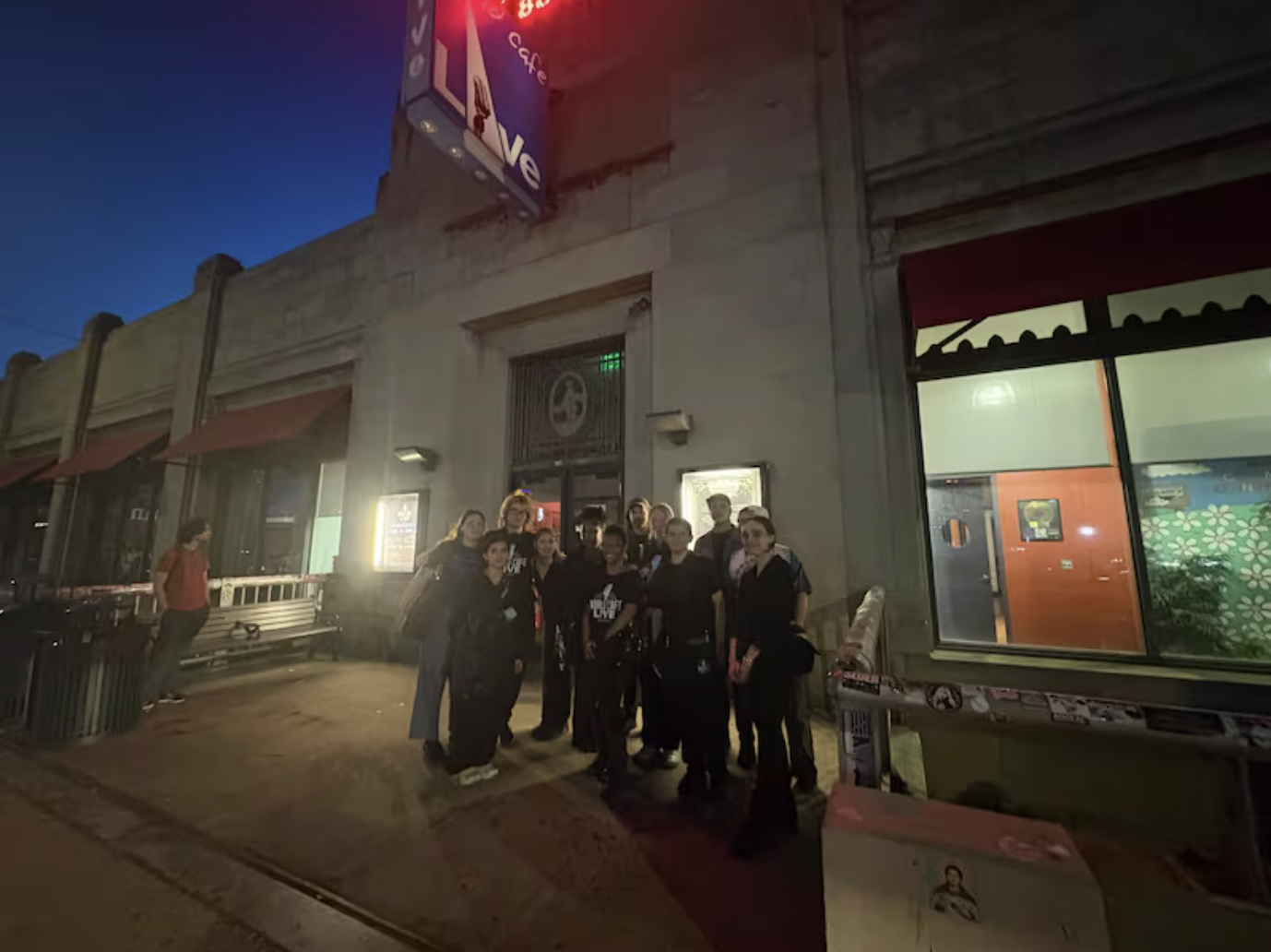
The conflict between the new leadership team of West Philadelphia music venue World Cafe Live and employees escalated on Thursday to include firings.

Employees continued to picket on the day after Wednesday night’s walkout when, during a Suzanne Vega concert, they protested “an unacceptable level of hostility and mismanagement” by the new leadership.

On Thursday evening, the management team headed by new CEO Joseph Callahan responded by firing some employees involved in the protest and announcing plans to file a formal complaint to federal authorities and the Pennsylvania Attorney General’s Office.

In a statement titled “World Cafe Live Responds to Employee Walkout and Reaffirms Commitment to Community and Transformation,” the leadership said Wednesday’s action was “not only disruptive to our guests, but also resulted in significant reputational and operational damage to the organization.”

“The individuals involved in this walkout have been terminated with cause, and are permanently banned from the premises,” it said.

On Wednesday, Sophia Mattes, the night box office manager, read a statement in solidarity with her coworkers that demanded “on-time and accurate pay” and said “the work environment has become hostile to the point of staff safety being questioned.”

Mattes confirmed that she and four other staffers had been served with termination papers outside the venue on Thursday evening. In addition, another source said, two other staffers not involved in the walkout were also sent termination letters.

Those firings follow the resignations of WCL’s longtime COO and general manager Kerri Park, as well as programming director Helen Smith and ticketing and guest services manager Hayley Simmons, all of whom had their last days this week.

On Thursday night, shows went on with Philly’s interstellar musical travelers Sun Ra Arkestra and its 101-year-old leader Marshall Allen downstairs in the Music Hall, and for Sudanese American musician Sinkane upstairs in the Lounge.

When Sinkane and his band members, who blend African pop with electronica and funk, were told of the labor strife, he said he planned to speak out in support of the workers from the stage.

With reduced staff, the box office was closed, and there was no food service available.

“The management is more concerned with the protesters than solving the issues,” one protesting employee said.

The WCL statement said the organization has “retained counsel to file a formal complaint to federal authorities and the Pennsylvania Attorney General’s Office,” citing:

  • Conspiracy to interfere with commerce under the Hobbs Act

  • Theft and destruction of proprietary and contractual records

  • Intentional infliction of financial harm on a 501(c)(3) entity

  • Trespassing and unlawful disruption of business operations

Callahan took over as CEO and head of the World Cafe board this spring, succeeding Hal Real, who founded the venue in 2004 and converted it to a nonprofit in 2019.

According to the WCL statement, as of January 2025, the venue “was carrying over $6 million in accumulated debt” and suffered from “a culture of complacency and entitlement” that created “a dynamic that stifled innovation and smothered the growth potential of an organization with such extraordinary purpose and potential.”

The statement concluded: “World Cafe Live is not just a venue. It’s a home for music, community, education, and equity. … And to those who have sought to undermine this vital cultural institution: you will be held accountable.”

“We are rebuilding stronger, more transparent, and more community-driven than ever before.”

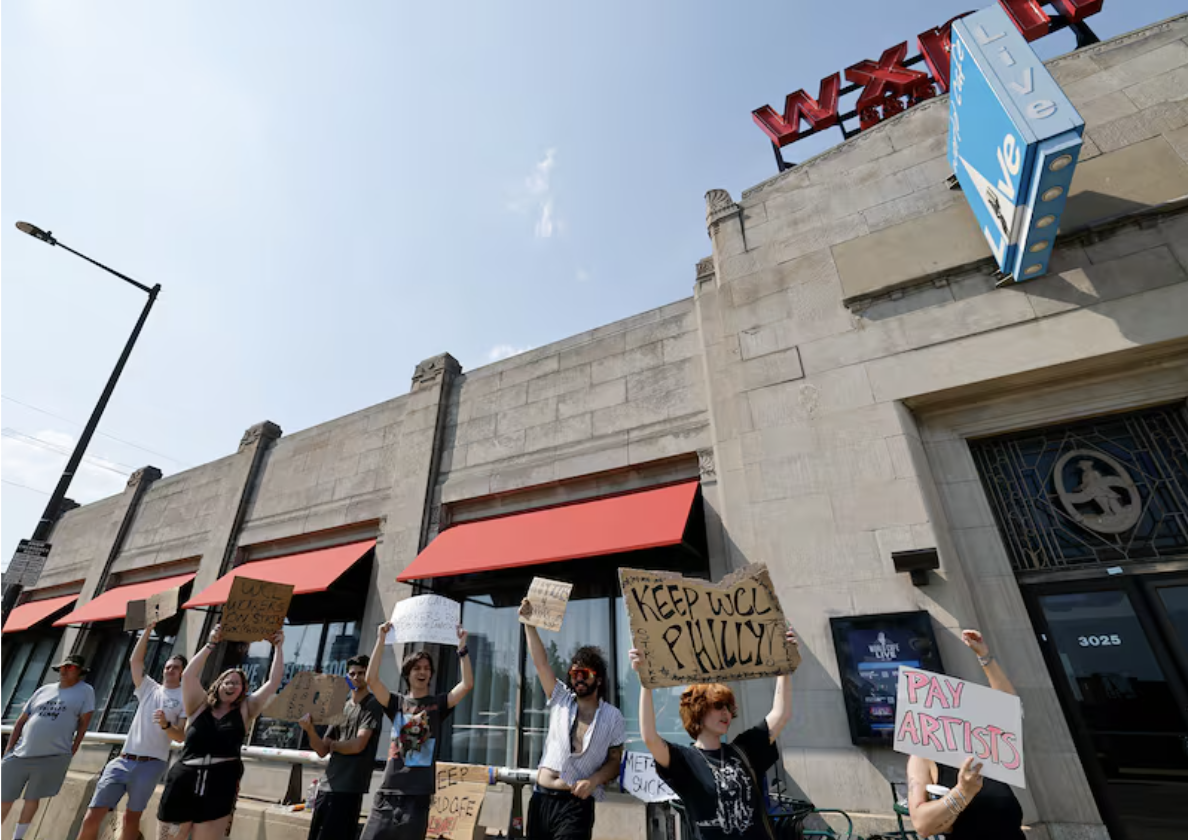
Outside the venue on Thursday afternoon, the protesting bartenders, guest service workers, and box office staff who gathered on Walnut Street shared a sharply contrasting perspective from that offered by WCL management.

Roughly 15 protesters assembled with signs that read, “Callahan Has Got No Plan,” “Keep Philly Independent,” and “No AI. NoMetaverse.” The staffers also launched a SaveWorldCafeLive page on Instagram.

Mattes said the past month has made her physically sick. “My anxiety and my mental health were not well,” she said. “I was scared, and a lot of us were scared, to walk out on [Wednesday], but I do feel relieved. I feel like something good will come of this, one way or another.”

Novalee Wilcher, who works in guest services, said Callahan’s presence has been a “crushing” blow to the venue’s operation, and she’s unsure how the place will survive going forward.

“Those who have been fired,” she said, “have been texted by coworkers, not management. So, there’s no communication about how to deal with these demands that we brought up to them, which shows a total disregard for the artists that are supposed to be playing, or how it affects the guests that are coming in, who have paid for their nights.”

Following Wednesday’s walkout, Wilcher said Callahan has threatened to call the police on her and other staffers as a form of intimidation. He even suggested their strike was “unlawful.”

She said she was locked in a room on Wednesday over a piece of personal mail that one of Callahan’s representatives “confiscated” and “withheld” from her.

Refuting Callahan’s claim of a $6 million debt, Mattes said former staff have verified that debt to be around $2.7 million.

“The fact is, we do need funding,” Mattes said. “But a big part of the problem with this new team is that we don’t believe that VR and hologram concert experiences, and taking the people out of this building, will be what draws people in more.”

Referring to Callahan’s plans to introduce automated servers, bartender Emilia Reynolds said, “I’m nervous about losing my job to a machine that can’t safely serve somebody, have them enjoy their night, and get them home safely. That’s my job.”

“Not even to mention, people woke up yesterday without a paycheck. That was the last straw,” they said.

Mattes and her coworkers, they said, are prioritizing funding efforts to “save” WCL but added that the leadership refuses “to listen to anyone who disagrees with them.”

Despite their indifference, Wilcher said she and others were willing to negotiate with Callahan. The crucial step, she said, was getting management on the “right path,” but, the staffers claim, it appears the tech entrepreneur isn’t looking to change course.

– The Philadelphia Inquirer
(Dan DeLuca also contributed to this story)

Swimwear worn by a Muslim teen lifeguard leads to a heated dispute at Philly’s Kelly Pool

The family of a 16-year-old lifeguard says she was dismissed from her job at the city’s John Kelly Pool this week for wearing modest swimwear, in keeping with her religious beliefs.

In a statement, the Philadelphia chapter of the Council on American-Islamic Relations (CAIR) called for the city to reinstate the teen, who is Muslim.

Susan Slawson, commissioner of Parks and Recreation, on Saturday disputed the family’s account of the Thursday incident. “She was not discriminated against. She was accommodated,” Slawson said.

Slawson said her modest swimsuit wasn’t the issue: The concern was her outer garment, which Slawson said presented safety concerns if worn in the pool.

Slawson added that during a confrontation at the Fairmount Park pool, family members had directed expletives and racial epithets at a Black male staff member.

She said the department would be willing to meet with family members and CAIR officials.

In a news release, CAIR officials said the incident occurred on the girl’s first day on the job.

In an email, legal director Adam Alaa Attia said the lifeguard, whose family did not want her to be identified, wore a long-sleeve rash guard swim shirt and long-leggings rash guard bathing bottoms. A loose-fitting outer garment was then placed over her swimwear “for the times they are sitting on watch and not engaged in the water,” Attia said in an email.

For swift removal, the garment was connected to the swimsuit with a small piece of Velcro.

Despite the lifeguard attire fulfilling safety requirements, the organization stated, she was instructed not to return to her position the following day because of the loose outer garment.

“The young woman’s attire … provided full coverage in accordance with her religious beliefs, and posed no risk to her or others,” the release stated.

As an alternative, the city allegedly offered a 3XL men’s cotton T-shirt, far too big for the young lifeguard, whose own garment was deemed “too flowy,” CAIR said.

It said that the offer disregarded the teen’s religious practices, bodily autonomy, and “undermined any claim that the issue was about fabric or safety.”

Lifeguards are permitted to wear loose hoodies and sweatpants over their swimsuits.

The organization requested a full investigation into the incident and a formal apology to the lifeguard and her family. It also asked that she be reinstated to her job if she wishes to return, and called for citywide training on religious accommodations and antidiscrimination policies.

“This young woman was prepared, professional, and fully qualified,” Attia said in an email. “She was forced to choose between her faith and her employment, a choice no worker should ever have to make, especially in Philadelphia, where the Muslim community is foundational to the city’s identity.”

Slawson said that after speaking with Kelly Pool staffers, the teen’s family, and Quaiser Abdullah, the city’s inaugural director of Muslim engagement, she rejected CAIR’s discrimination contentions.

“She was never asked to remove her rash guard. Her faith was never put into question,” Slawson said. “What she did have on was a safety concern.”

Slawson said Kelly Pool staff asked if the teen could remove a “cape” that was attached to her guard, which would potentially impair her ability to swim through the water.

She said the teen’s mom clarified that it would take only “10 seconds” to remove the outer garment, but Slawson said, “Ten seconds could be someone’s life.”

“You can’t get in the pool with that on because you have to worry about someone getting caught in that guard and possibly drowning because they’re caught in this long cape,” Slawson said. “We weren’t asking her to take off her Muslim attire at all. What we’re asking for is for her to not put the cape on.”

Slawson said the incident escalated when the teen’s family arrived at the community pool and began shouting at a Black male staff member.

Slawson said the teen was paid fully for Thursday’s shift and was invited back to work on Friday. But after the teen said she planned to bring her family back to the pool on Friday, Slawson dismissed the teenager for her scheduled weekend shifts.

“We’re not going to invite trouble,” she said.

Before CAIR Philadelphia released Friday’s statement, Slawson said, she already had planned a meeting on Monday with the teen’s family. Slawson said she also invited members from CAIR Philadelphia to attend.

Slawson said she and others are still willing to have the meeting, and to invite the teen back to her lifeguard role, as well as offer additional shifts to make up for the weekend-long dismissal.

The incident comes as Philadelphia is experiencing a shortage of lifeguards at its pools.

Along with clearing any discriminatory claims or miscommunication regarding safety requirements, Slawson said Parks and Rec wants to ensure another lifeguard isn’t lost in the process.

“We can’t afford to lose any, so it’s important we keep her as a part of our team,” she said.

Staff writer Robert Moran contributed to this article.

– The Philadelphia Inquirer