A year of leadership shifts later, the Greater Philadelphia Film Office is charting new successes

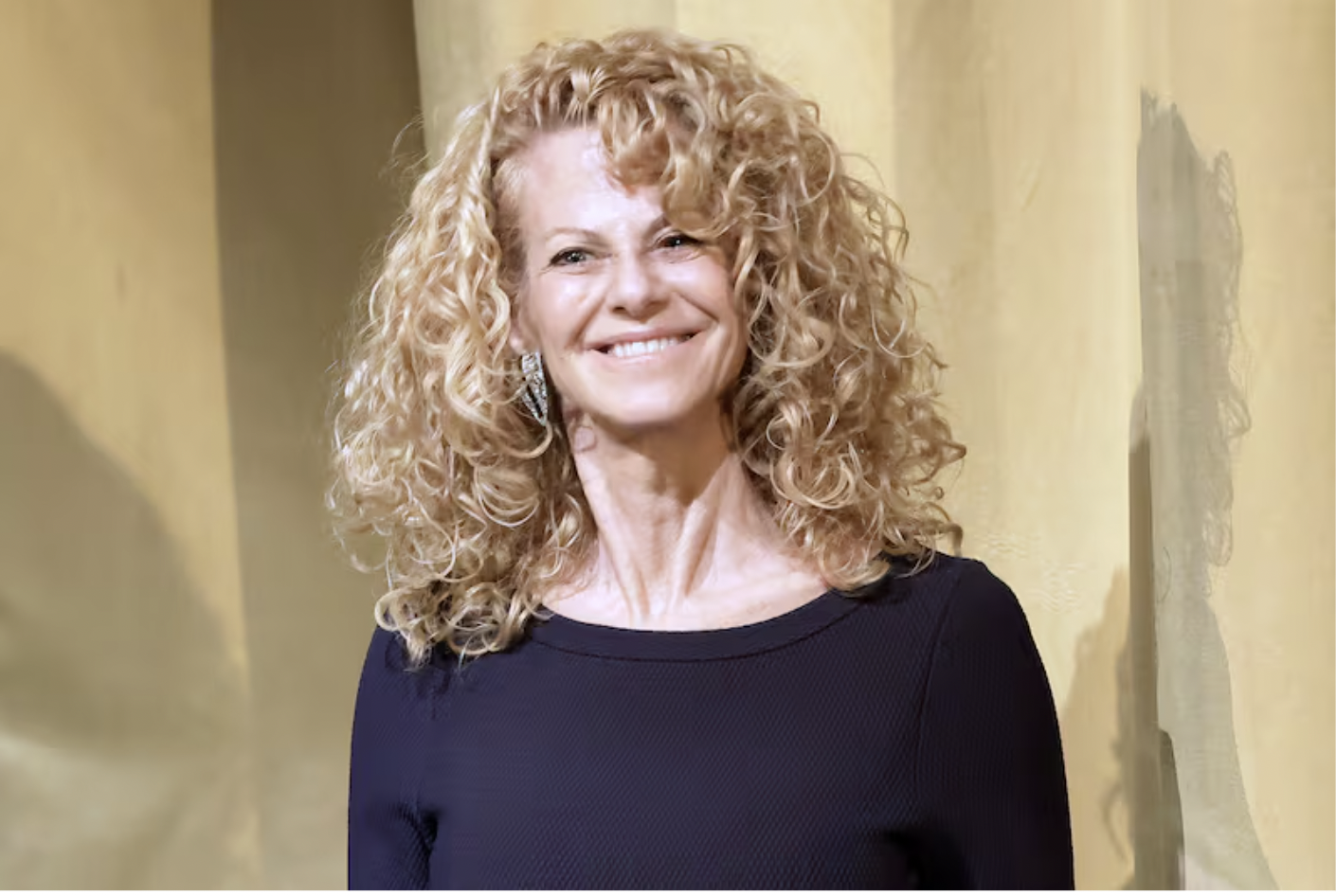
In the Philly film world, Sharon Pinkenson was a trailblazer among trailblazers.

As longtime executive director of the Greater Philadelphia Film Office, she made Philadelphia a destination for Hollywood productions. This led to the filming of classics like 12 Monkeys and Silver Linings Playbook in the region and cleared the path for future films, true-crime shows, documentaries, music videos, and commercials.

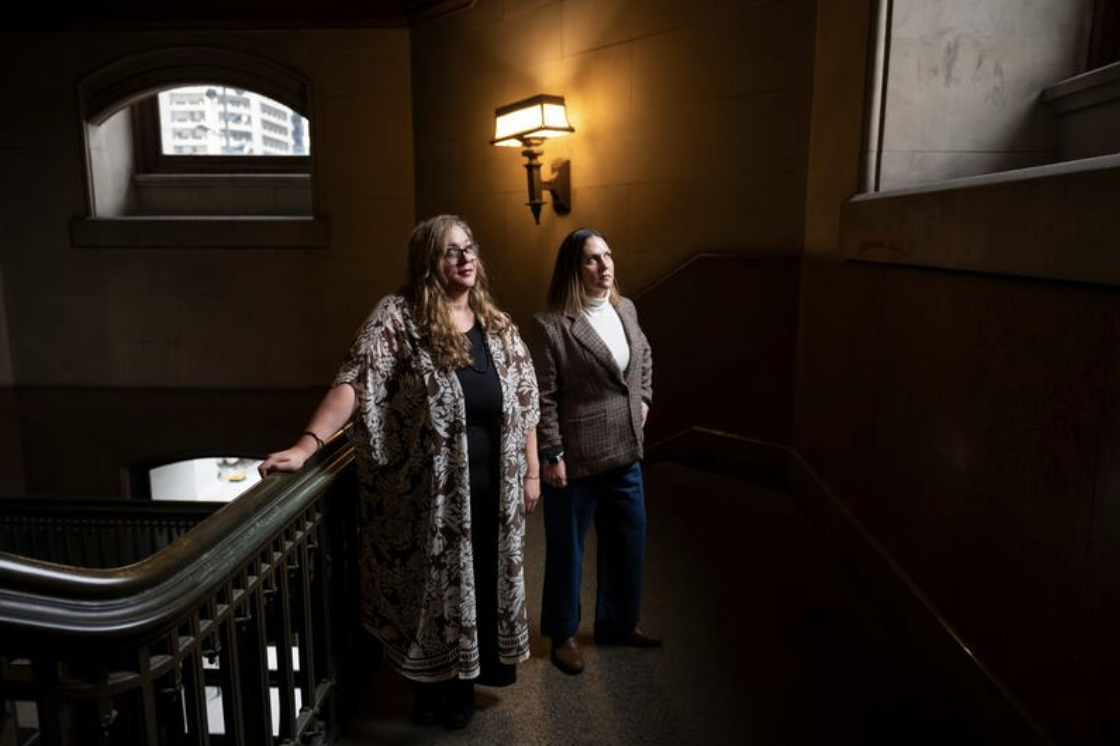
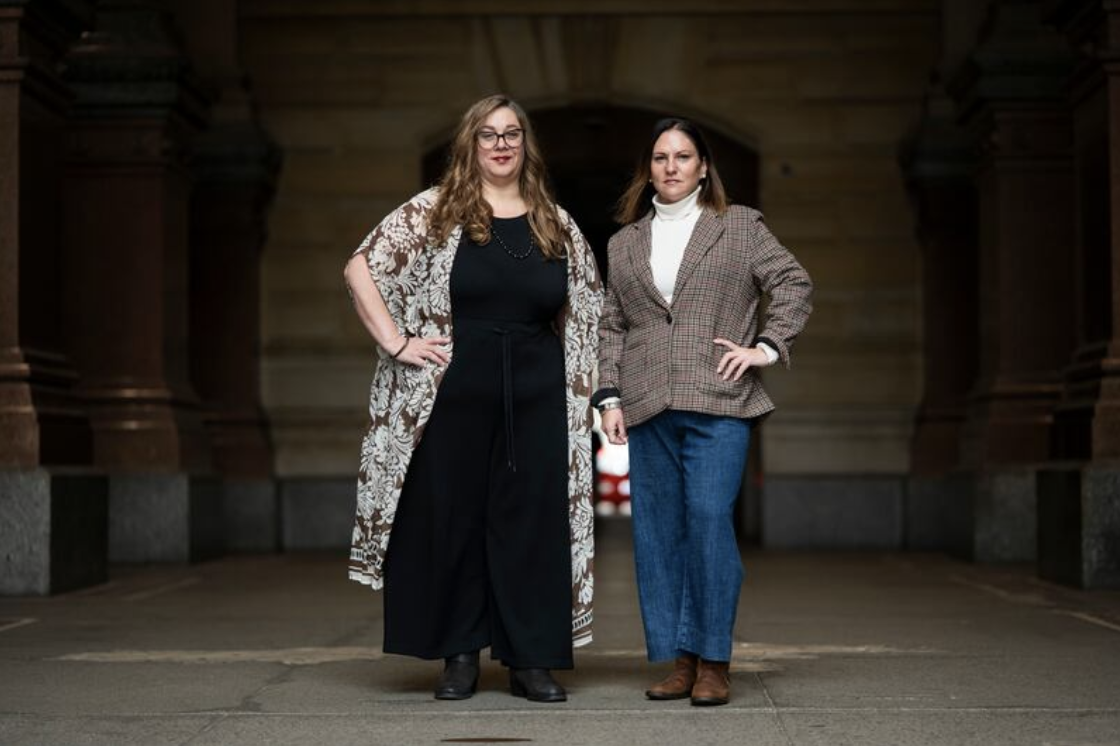
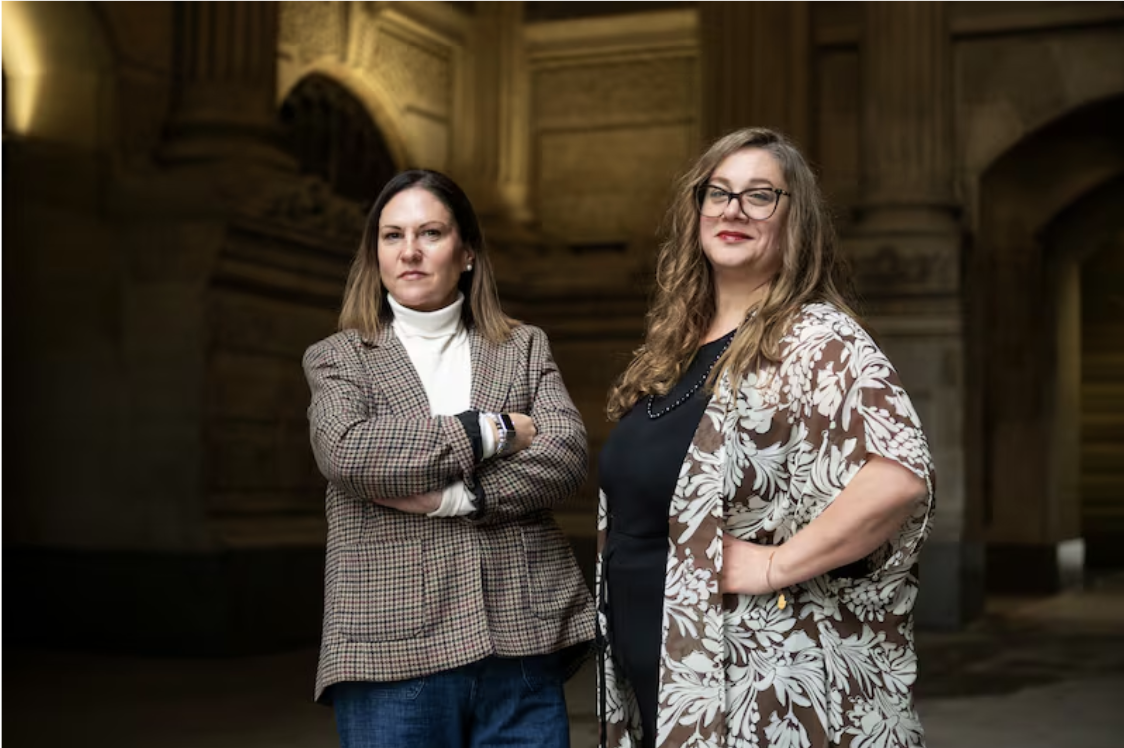
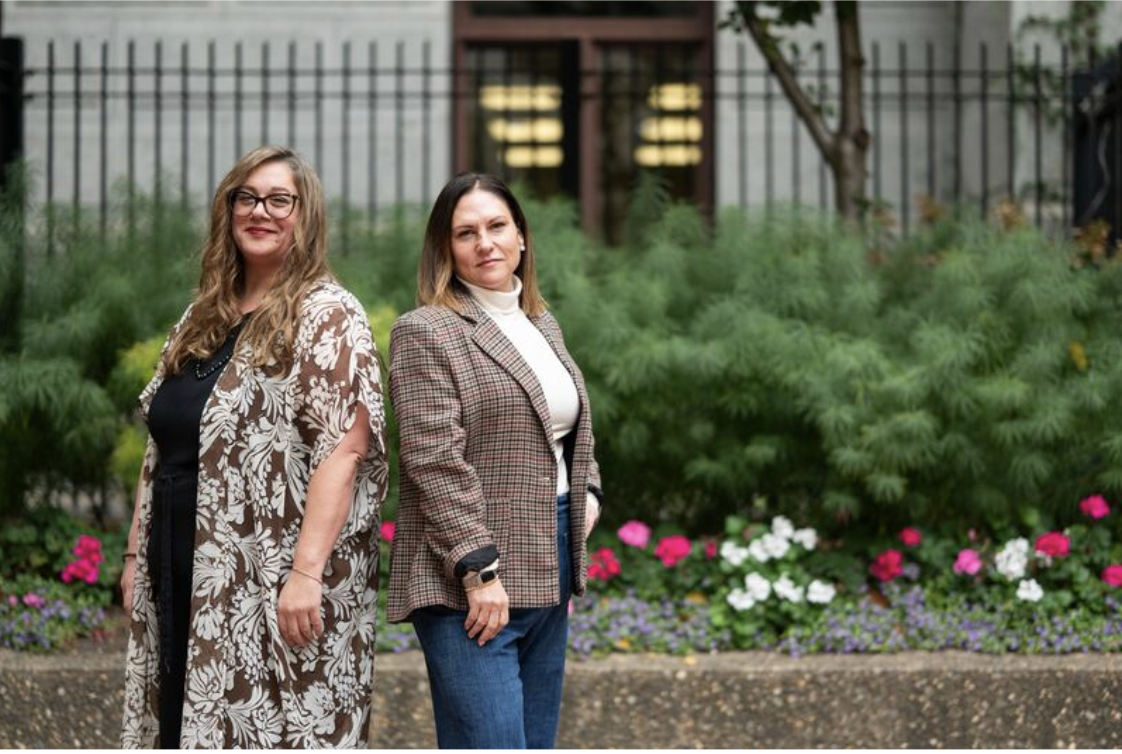
When Pinkenson stepped down from the film commission in November 2024, after three decades at the helm, it fell upon longtime employees Erin Wagner and Nicole Shiner to carry forward the work of their charismatic mentor.

It’s been a year since they stepped into their roles as co-executive directors, and Shiner said the 20 years they spent under Pinkenson’s wing have begun to pay dividends.

“Having someone who’s been in the position for so long, and who had such a grand reputation and did so much for the community, it’s been hard coming in after her,” she said. “But the good news is, [Wagner] and I have been here for 20 years. We have a lot of institutional knowledge about how to move forward.”

The past year, she said, has drawn expected challenges. Among them is the loss of longtime film office director Joan Bressler, whom Pinkenson hired six months after becoming executive director. Bressler retired in August after 30+ years at the film office.

“She ate, slept, and dreamed of local film,” Wagner said. “She is an amazing woman who ran every program the film office had.”

Without the film office’s most tenured and recognizable leaders at the helm, Wagner said, the duo spent the past year reintroducing themselves to government officials, Hollywood executives, and members of Philly’s film community. The goal was to establish themselves as trusted resources and to showcase their “fresh, down-to-earth approach” as film office leaders.

“We talk up our local crew, our tax credits, our locations, and just remind people that we’re a short drive from New York. We’re close to D.C.,” said Wagner, who has spent many years as the film commission’s production coordinator. “We have an international airport, and we have some of the hardest-working crews in the film business. Don’t discount us.”

“[Pinkenson] taught us very well,” she said. “But at the same time, we’re different people and a different generation, and we just want to remind people that we’re here to help.”

Producer Nancy Glass, who has spearheaded several true crime shows filmed in the region, said Shiner and Wagner have been integral in making her projects come to fruition.

“They are very active and very helpful. They have time for everybody, and that’s really impressive.”

As the new faces of the film office, Wagner and Shiner have made use of their strengths. “I think we really do balance each other out,” Shiner said.

While Wagner handles the “new world of politics,” Shiner has taken on the financial side of the operation. She oversees available tax credits, finance fees, and other operational costs associated with the nonprofit organization.

Wagner’s connections with local crew members have been a boon.

During the filming of the HBO crime drama Task, 777 Pennsylvanians were hired as local crew, cast members, and background players for 177 days. Shiner said the production accounted for a $230 million economic impact on the region.

“We already know how great Philly is,” Wagner said. “The rest of the world’s finally catching up. Even though some of the projects may not have been filmed here, they may have come down for one or two days. But that puts our crew to work, and that’s what we’re happy to see.”

The duo are also building programs in direct support of emerging filmmakers.

Shiner and Wagner have entrusted Daniela Galdi, the new director of filmmakers, with relaunching the long-running Set in Philadelphia Screenwriting Competition.

The competition, now called the Joan Bressler Set in Philadelphia Screenwriting Competition, in Bressler’s honor, is open to all screenwriters who submit a screenplay for a feature-length project or original TV pilot that can be shot in the Greater Philly area. All genres are welcome.

The final deadline for the competition is Nov. 20, and the top winner will be awarded $10,000 to fund their future Philly-set project.

In the new year, they also plan to develop training workshops and hands-on programs to keep local crew members equipped with the latest production technology and techniques, ensuring they have the skills necessary to work on upcoming productions.

“Film is always changing,” Shiner said. “There’s always new technology, and if we don’t keep up and provide that education, those workshops, and the opportunities for people to learn about their craft, our workforce will suffer.”

The yearlong transition, Wagner said, has been “eye-opening” and “humbling.” She’s optimistic about the duo’s relationships with county partners and local legislators, and she’s thrilled for the future productions coming to town.

“I think that these people see a future in film and television and media and workforce development with us, and they see that we’re knocking on doors and don’t plan on leaving,” Shiner said. “We want to forge our own legacy. Not only follow [Pinkenson’s] footsteps, but create our own.”

While they remained tight-lipped on projects coming to the Greater Philadelphia area, Shiner and Wagner teased that there will be something big for the region’s true crime junkies.

– The Philadelphia Inquirer

Philly filmmaker Walé Oyéjidé captures the beauty of Blackness in his debut feature

No matter the medium, filmmaker Walé Oyéjidé captures the beauty of Blackness in his artistic pursuits, and embraces his Nigerian heritage and wears it for the world to see.

Oyéjidé weaves the threads of his lineage with style as a clothing designer. And as a musician and photographer, he expresses it in song and image. Now, he shines a light on the Black experience and its lyrical allure with his debut feature, Bravo, Burkina!, set to premiere, in-person and online, at the Sundance Film Festival on Tuesday.

Written and directed by Oyéjidé, the film is a story of a Burkinabè boy who flees his village to start anew in a small Italian city, later traveling back in time to regain what he lost from his voyage. Beyond a tale of migration, the project explores love, loss, and discovery, themes Oyéjidé said resonate with people from all walks of life.

“It’s an immigrant story. It’s an outsider story. It’s a love story. It’s got time travel. It’s got a bunch of darts thrown at the board, and I think there’s a lot for people to connect with,” Oyéjidé, a Landsdowne resident, said. “It’s also unabashedly a beautiful African story. As much as you love Martin Scorsese’s fantastic Italian films, there’s room for this, too.”

A still from Bravo, Burkina! by Walé Oyéjidé, an official selection of the NEXT section at the 2023 Sundance Film Festival. Courtesy of Sundance Institute.Jake Saner

A part of his own story brought to the big screen

Like the film’s main character, Aimé, Oyéjidé was born in West Africa and became an immigrant of the world, growing up largely in Nigeria and the Middle East. As a teen, he and his family moved to Atlanta before settling in Philly, where Oyéjidé graduated from Temple University’s Beasley School of Law in 2010.

It’s a story that’s present in all of his work.

“My upbringing as an immigrant to America has informed all of my artwork and the way I see the world,” Oyéjidé said. “I’m always appreciative of the privilege and benefit of moving to this great country. But I’m also aware of the sacrifices many make so they can come here and the many loved ones they leave behind.”

From Philly lawyer to film director

While practicing as a defense litigator, Oyéjidé began exploring his love of menswear, eventually starting his own West African-inspired fashion brand, Ikiré Jones, with long-time collaborator Sam Hubler in 2012. Their eye for couture led to their first foray into the movie industry when Marvel Entertainment tapped the duo to make costumes for 2018′s Black Panther.

Black Panther was, before this, probably the biggest thing that people would be aware of our work for, and we’re grateful for all the attention and all the opportunities we got,” he said. “It gave me proximity and a chance to do more things.”

That included filmmaking.

“For those of us from immigrant backgrounds, there tends to be a strong emphasis on walking familiar and well-trodden paths — like being a physician or lawyer. Becoming a director wasn’t something I imagined in my youth. But in retrospect, my previous careers as an attorney, a musician, and a designer have all dovetailed here,” he said. “The films have become my arguments. The audience has become my jury.”

Filmmaking as an inevitable path

For the 12-day shoot, Oyéjidé and a small crew flew to Ouagadougou, Burkina Faso, and Bologna, Italy, operating a run-and-gun production with limited resources and an airtight schedule.

“He’s brilliant,” said Hubler, who helmed the audio of the film. “He went in with a pretty set script this time, but he’s also very good at kind of working with what is presented to him — the situation on what’s available on the day and working the story around certain circumstances.”

While the film is a “global effort,” the filmmaker insisted that the production wouldn’t have happened without “the help of Philadelphia’s film community” that supported the film through its production journey.

Giulia Alagna, who worked as a producer on Bravo, Burkina!, said the way Oyéjidé is able to take on other creative mediums is a lost art and reminiscent of iconic artists of the past.

“I always tell him, ‘You’re a real Renaissance man and you’re not even from Italy,’” she said. “Whether it’s poetry, photography, or directing a film, nothing seems unsurmountable to him ... and he conquers them all.”

Oyéjidé believes that it’s important for Black storytellers to showcase the vastness of the Black experience — within U.S. borders and beyond.

“I think the challenge now becomes, if you are choosing to make art that comes from this cultural perspective, we all need to challenge ourselves to just fly higher, be braver, and go to places that we haven’t seen,” he said.

“Bravo, Burkina!” will premiere at the Sundance Film Festival on Jan. 24 and can be streamed online. For information on upcoming screenings, visit bravoburkina.com.

– The Philadelphia Inquirer