The 8 Seconds Rodeo makes its debut in ‘the grittiest and most soulful city’

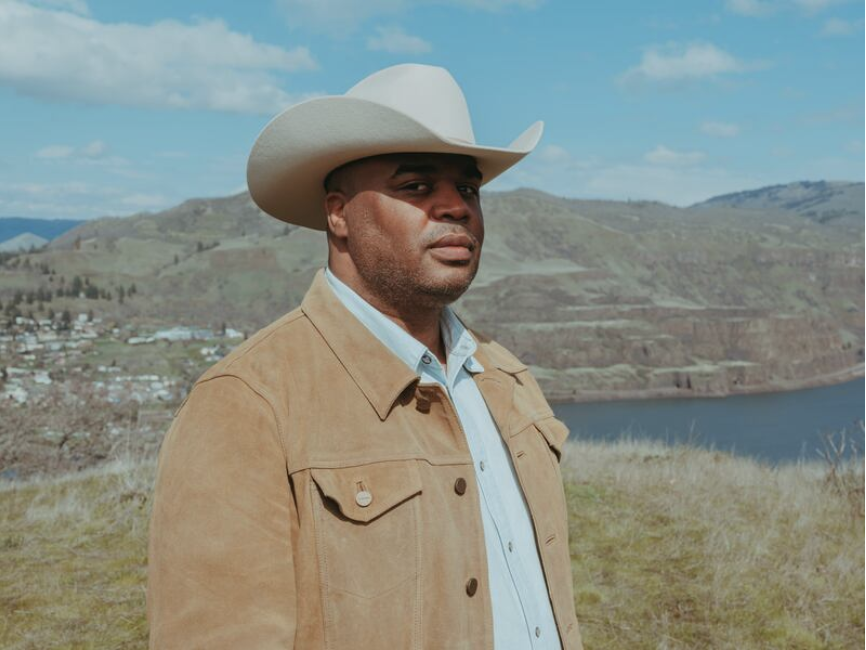
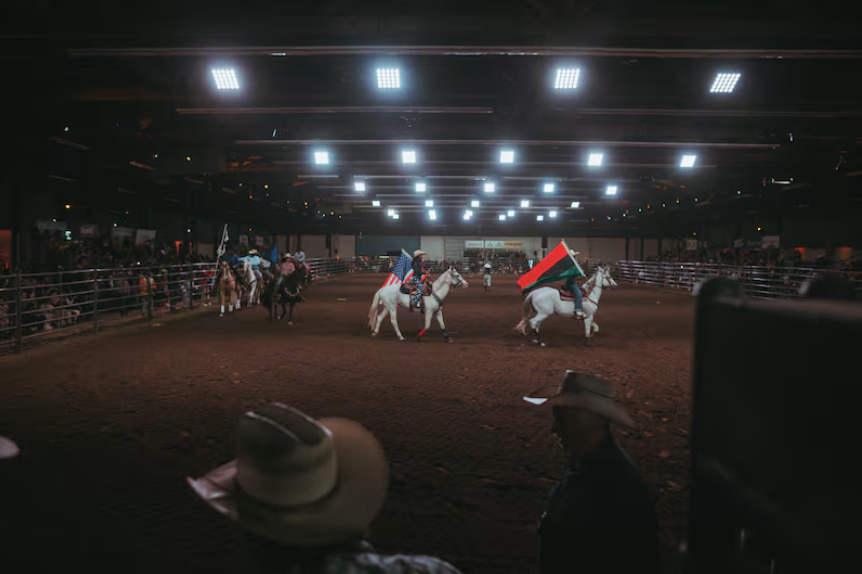
Ivan McClellan has had two million pounds of dirt to fill Temple University’s Liacouras Center for a “radically Black rodeo” on Saturday, along with 15 bulls, six broncos, 10 sheep, and more than 20 horses.

It has been a decade since he first fell in love with the Black rodeo on a 105-degree day in Okmulgee, Okla. The Portland, Ore., native was photographing the Black cowboys and cowgirls from the grandstands of the Roy LeBlanc Invitational Rodeo.

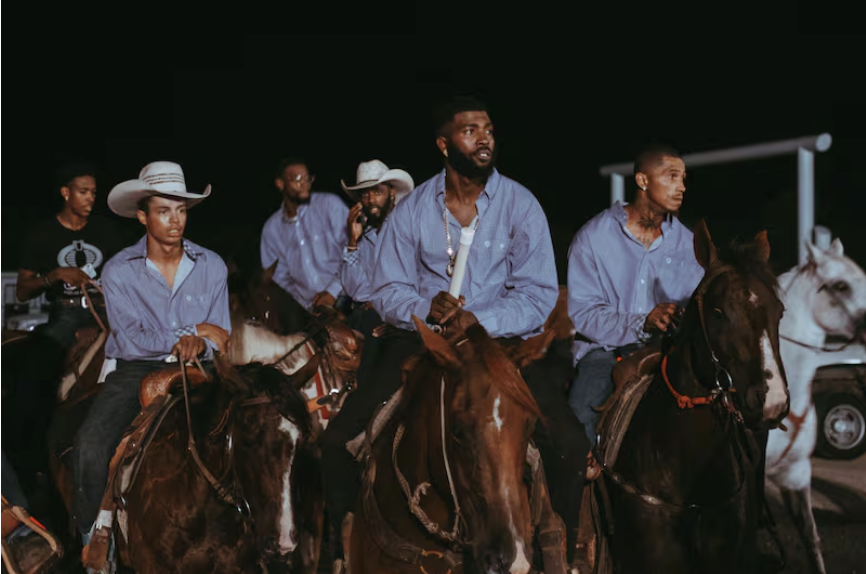
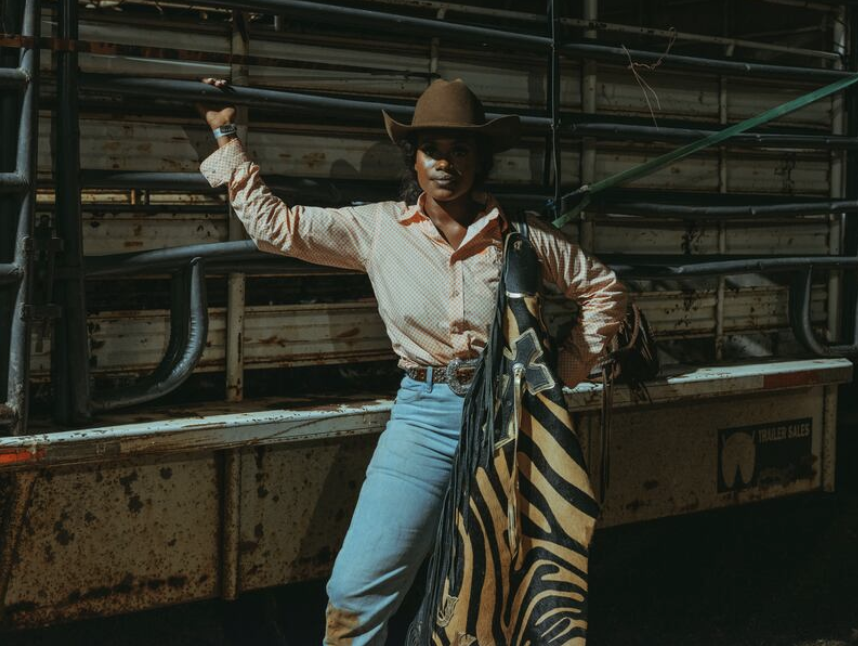
As they rode in Timberland boots at a speed of 50 miles per hour, braids flowing behind them, and their starched T-shirts crunching as their arms rose in suspension, McClellan realized there was a story that needed more unearthing.

“I got obsessed with rodeo culture at that point,” he said.

Black cowboy culture has existed since the beginnings of the American South, but McClellan felt there was a story that history books widely overlooked. He wanted to spotlight Black cowboys of the past and the rodeo athletes of today, from America’s Great Plains to those in the country’s largest urban centers.

With every rodeo he attended, he made more images and forged new relationships with cowboys and organizers, who inspired him to start a Black rodeo show of his own.

In 2023, he founded 8 Seconds Rodeo to highlight the essence of Black cowboy life, offer Black athletes higher wages than they were accustomed to, and introduce the world of Black cowboy culture to those unfamiliar with its extensive history.

That first rodeo at the Portland Convention Center drew a sold-out crowd of 2,000 attendees for an “electric” all-Black rodeo experience.

“This is not a reclamation story,” McClellan said. “This is something that we’ve always done, and something we’ve always had as Black people. We’re putting a light on it and letting people know it’s part of our identity. If you put on cowboy boots and a hat, you’re just putting on your grandpa’s clothes, and it’s OK.”

After selling out shows on the West Coast, McClellan — who recently moved to Chester County — teamed up with local equestrian and longtime friend Erin “Concrete Cowgirl” Brown to merge Western-style rodeo with Philly’s urban cowboy culture.

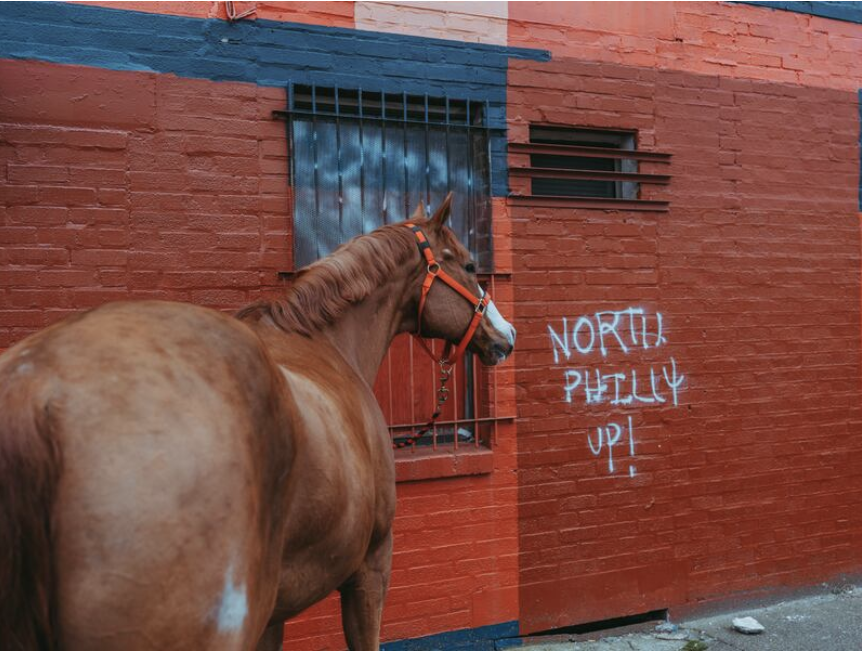
With Brown as his tour guide, McClellan ventured to the original home of the Fletcher Street Urban Riding Club, a famed institution for Black cowboys in the heart of North Philadelphia’s Strawberry Mansion neighborhood.

For decades, Black horsemen have roamed the streets of Strawberry Mansion and the nearby lushes at Fairmount Park. Several Black-owned stables have populated the area throughout the 20th century, where lessons on horsemanship and urban cowboy history were shared among riders young and old.

Brown started visiting the Fletcher Street stable at age 6.

And when the story of Fletcher Street and the city’s Black cowboy tradition was made into Netflix’s 2021 film Concrete Cowboy, Brown served as a consultant.

“We’ve achieved a lot in Portland, but I wanted to go to the grittiest and most soulful city in the world to see what we could do,” he said. “We’re going to throw down, the athletes are going to compete at the highest of their abilities, and I’m most excited about the crowd because of the city’s history and vibe.”

Philly’s, McClellan said, is a cowboy culture you don’t see anywhere else in America, and he’s excited to integrate that urban riding culture into Saturday’s event.

“It’s just the swagger of the riders here,” he said. “It’s got a lot of hip-hop in it, and that’s definitely something that has inspired us.”

Brown, who will bear the Pan-African flag to kick off 8 Seconds Rodeo, said the show is a natural fit given the city’s unique history and the recent commercialization of the Black cowboy.

“It’s major,” Brown said. “Cowboy and urban horse culture has been a thing way before I was born, but it’s more mainstream now with Beyoncé and everything coming forth. But what other city to do it than Philadelphia? It’s one of the largest cities, so why not?”

The one-day experience in Philly will feature rodeo athletes from around the country competing in bull riding, barrel racing, and bareback bronco riding for a total of $60,000 in prize money. There will also be a community pre-show that will have line dancing, mechanical bull riding, and roping instructions from fellow rodeo vets, and sounds from Philly’s DJ Diamond Kutz.

“You didn’t get those Fashion Nova and Boot Barn boots to sit in your seat. Come out early for community,” McClellan joked.

This event isn’t just a one-off, McClellan said. 8 Seconds Rodeo is going to be a mainstay event, and one he hopes becomes a place of community and celebration for Black Philadelphians who are familiar and new to the world of rodeo.

“We’re not bringing a rodeo to Philly. We’re building a rodeo in Philly,” he said. “We’re an unapologetically Black cultural event, and this one is going to be an unapologetically Philly event.”

– The Philadelphia Inquirer

Freezing temps have brought back the backyard ice rink

Philly winters have been streaky in recent years, but homeowners and hockey enthusiasts are making the most of the recent deep freeze to build backyard ice skating rinks.

While many families favor the dependable conditions of an indoor rink, Fox Chase resident David Bara prefers the slow, chilling burn of a homemade skating consortium.

Since 2016, Bara has rolled up his coat sleeves to build a 22-by-48-foot rink for his family and golden retriever Ellie to enjoy. “I’m an absolute fanatic,” Bara said. “There aren’t many people in Philly who are crazy enough to do what I do. It’s definitely something more reserved for Canadians and other people up north.”

For nine straight winters, Bara has built a miniature hockey rink using plywood and a white plastic liner (a black one draws too much sunlight), while navigating the unpredictable forces of Mother Nature. “Half of the passion I have is the challenge of being able to do one where we live,” Bara said. “It’s not easy. It’s me and Mother Nature. If Mother Nature doesn’t cooperate, then there is no rink.”

After building the wooden exterior, he puts down the plastic liner and gradually fills it with water over three days. The shapeless plane slowly transforms into a sleek, 10-inch-high surface, which he wraps with beam-supported banners covered in local business ads.

Bara said his outdoor rink (ODR) wasn’t always as well-executed. His first one was made from a torn blow-up pool, with a thin surface just wide enough to fit his son and one other hockey player. But the haphazard experiment inspired him to take the art of ODR-making to the next level.

What started as a one-off project for Bara has turned into an obsession. “I’m out there building ice four or five times a night. I set my alarm for midnight, 2 o’clock, and 4 o’clock in the morning because it’s better to do it when there’s no sun.

I call it passion; some people call it insanity.”

It’s even become a part of family tradition. Bara hosts a broomball tournament every year for his daughter’s birthday, and his shed-turned-warming room is a late-night hang for Philadelphia Flyers fans. It’s equipped with a TV, a fully stocked bar, cozy insulation, and LED-lit walls covered in Flyers memorabilia.

Flourtown content creator Logan Randazzo said her DIY rink, too, has become a winter tradition. The Canada native and amateur figure skater grew up practicing two-foot turns and forward swizzles on her family’s rink. And for the past three Christmases, Randazzo and her husband have joyfully shared those “core memories” with their five children on the back patio of their historic mansion.


“It’s been fun as a parent to see that through my children’s eyes,” Randazzo said. “I used to spend all day out there with my brothers, so it’s really fun to see them [out there]. I hope it’s the kind of stories they can talk about when they grow up.”

While indoor rinks are great for skating year-round, Randazzo said nothing compares to the feeling of outdoor skating, especially when it’s accessible a few feet from a backdoor. “It’s nothing against indoor rinks, but the convenience of a mother of five to just step outside the door is absolutely priceless.”

Since posting an Instagram video of her 20-by-40-foot rink, Randazzo, who’s amassed more than 250,000 followers on the platform, said other Philly-area residents have contacted her to ask how they can make one of their own.

While ODRs are more common among Canadian and Midwestern households, Long Valley, N.J., resident John Greco said it’s become a growing trend on the East Coast since the COVID-19 pandemic.

The former hockey player runs a backyard ice rink Facebook group with Bara. He said people have been seeking new ways to explore the outdoors, and with more DIY tips and resources readily available, Greco said it’s easier than ever to get started.

The biggest challenges for new rink builders are finding backyard space without a slope, or building rink boards without a gap. Differing levels could lead to uneven ice, and cracks in the exterior can lead to “blowouts,” a balloon-like pop that ends in a flooded yard.

“I’ve heard all the horror stories. I try to collect information for people because that was my battle at the beginning. And now there are resources for people to start,” said Greco.

Barring an occasional snow blitz, or a momentary string of ice-capped days, snow in Philadelphia has been alarmingly scarce the past 10 years.

Last winter, Philly registered the lowest snow cover in a decade since the National Weather Service began tracking it in the winter of 1940-41. And the meteorological winter of 2023-24 was ranked the 10th warmest in records dating back to 1872.

Bara said it takes roughly three straight days of freezing temperatures for ODRs to hold. But despite last year’s record-low snowfall, he was able to build his ice rink in less than 24 hours. “I was making new layers every hour,” he said.

While winters have been more difficult to predict, Bara said the past 10 years have been fairly consistent. Some months (and years) are cooler than others, but the lifelong Philadelphian said the recent weather has been close to what it was when he first started making his backyard rink.

After a decade building “natural backyard rinks,” Greco said this year was his first making it with a chiller system, easing some of the pressure that comes with the weather-dependent pass-time.

YardRink CEO Brian Packard, whose company specializes in National Hockey League-licensed ODR kits, said the ease of technology is also encouraging people to build their own iced arenas.

It’s a trend he hopes will reduce children’s phone screen time and spark added interest in street hockey. Its growth, Packard said, could be similar to the popularity of flag football, which makes its Olympic debut in 2028. “It’s about sticks in hands and smiles on faces,” Packard said. “We’re excited about the resurgence of backyard ice hockey. People are going bananas with it.”

Whether it’s an NHL-licensed rink or a frozen retention basin, Maple Glen resident Kristen Warner said the best thing about ODRs are the moments shared with neighbors, friends, and family.

Warner has had rinks flood, and some have required emergency resurfacing. But no matter the conditions, one element always remains the same – the joy.

“[It doesn’t] matter if you get one weekend of solid ice, or an entire winter,” she said, “it’s worth the time and effort for the memories that are made.”

– The Philadelphia Inquirer

Where to find Austin hotel pools with day passes this summer, including rooftop decks

It's time to soak in this Texas sun.

Now that the smoldering summer heat that lifelong residents have grown up with (and transplants like me are nervously anticipating) is here, it's time to pull out your swimsuits to kick back poolside under some shade, with a fruity cocktail in hand.

Lucky for us, Austin is home to plenty of hotels that open their pools to the public for a fee. If you're looking to lay back in a lounge chair or dive into a lagoon overlooking the city's skyline, we have a few places for you to explore.

Read More