Penn Museum unveils a new gallery that examines the struggles and resilience of Indigenous nations

For more than a decade, the Penn Museum has offered visitors an encyclopedic history and perspective on Native American history, with artifacts spanning from Alaska tribes to communities in the southernmost part of the continental United States.

On Saturday, the museum unveiled a new gallery showcasing the artistic, linguistic, spiritual, and revolutionary traditions of Native Americans across the country.

The Penn Museum’s "Native North America Gallery: Rooted in Resilience. Resisting Erasure" exhibit features more than 250 cultural items and art pieces.
Christopher Woods, Williams director of Penn Museum, said the new gallery builds on the institution’s expansive Native American collection while offering insights into the lives of Indigenous Americans today. It builds on a former gallery, which similarly focused on first-person narratives and consulted with Indigenous curators.

“We’re an archaeology museum, but this is really about Native American people today, and drawing on the connection between the past and the contemporary world. It’s important to show people that these are vibrant communities,” Woods said during a press preview. “Showing how strong they are, the nature of their resilience, the historical and cultural erasure, and having them speak in their own words is important.”

These works, which build on the previous exhibition, "Native American Voices: The People - Here and Now," that closed in July, offer a reframing of Native American history from four regions of the United States, including the Lenape Natives of the Delaware.
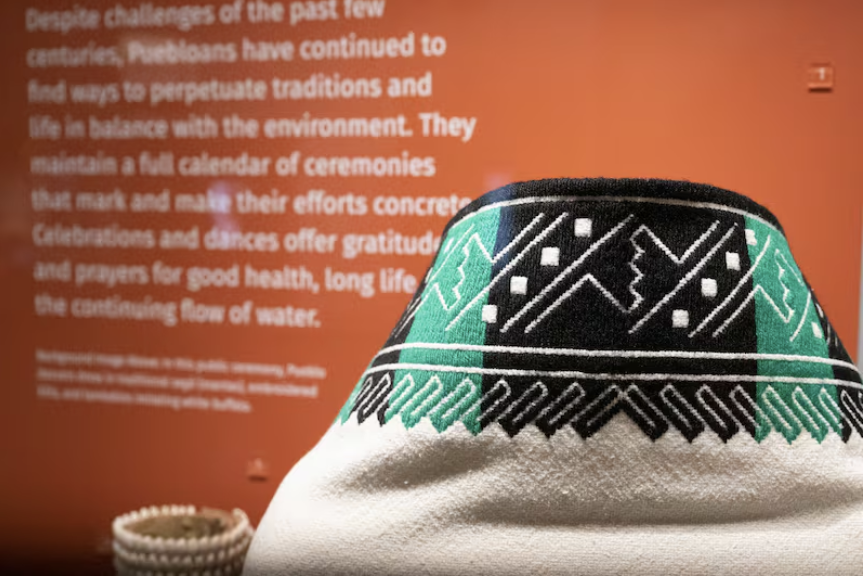
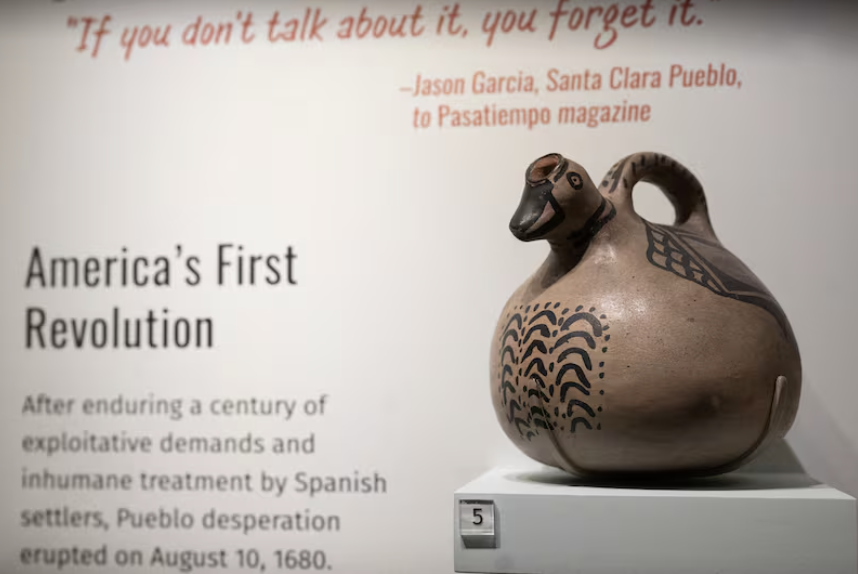
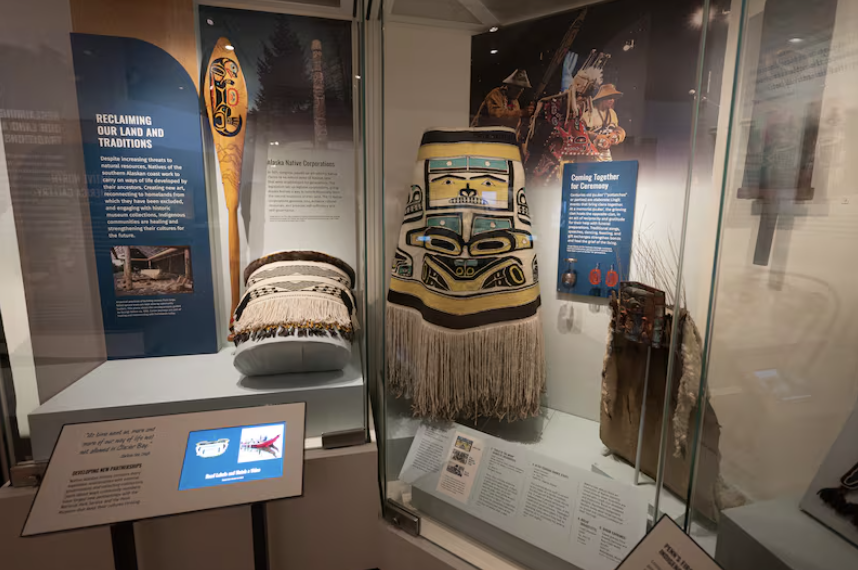
The immersive, multisensory exhibit includes a floral beadwork collar from the Northeast Lenape, a single-weave square basket from the Eastern Band Cherokee in the Southeast, a centuries-old clay ancestral mug from the Pueblo people of the Southwest, and a fringed ceremonial robe, known as a Chilkat blanket, from the Tlingit people of the Northwest.

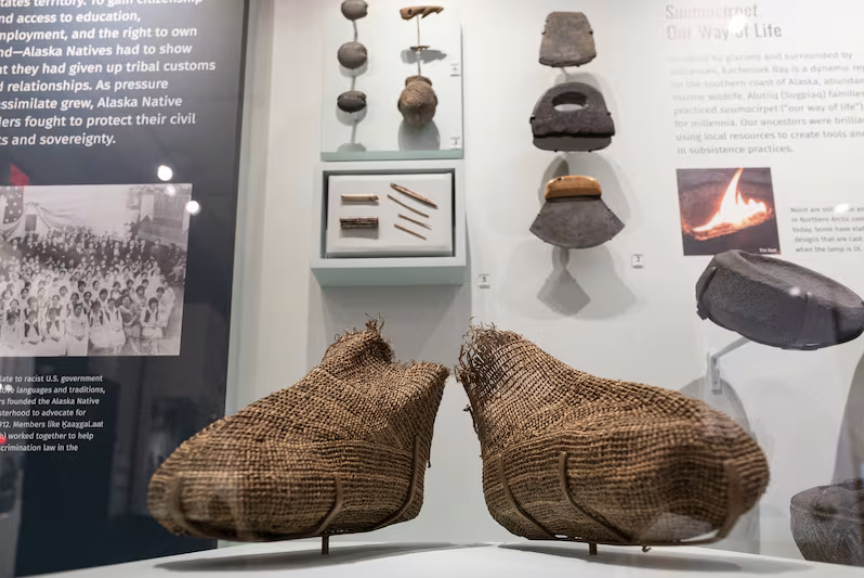
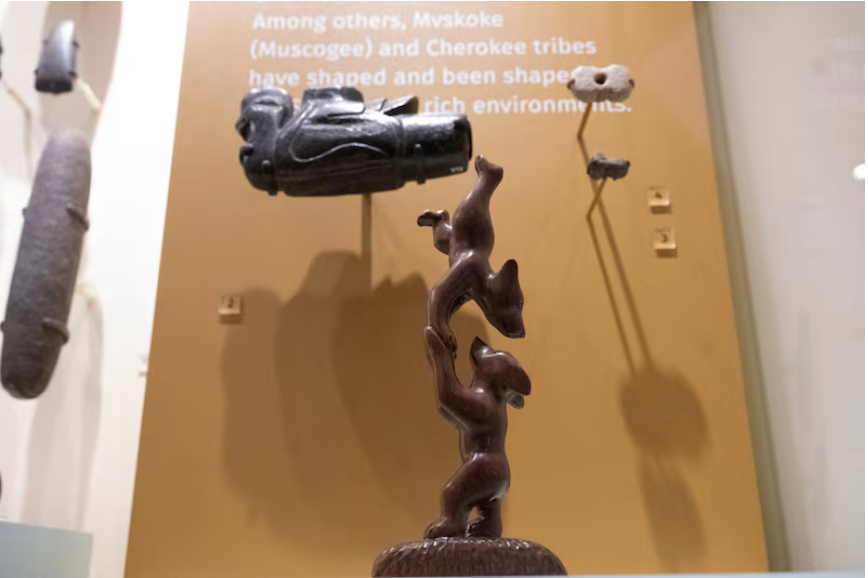
Among the oldest items on view are chipped stone tools historically used by Native Americans, which were pulled from the Penn Museum’s collections. The newest items include a woven piece that was commissioned from Cherokee mixed media sculptor Brenda Mallory.

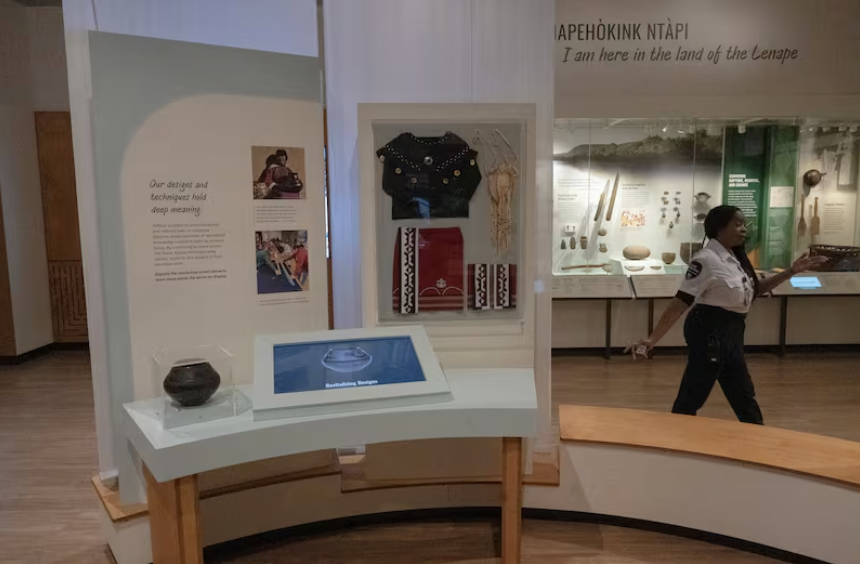
The gallery also includes images of regions the tribal nations have inhabited, interactive displays offering insight into the formation of their cultural items, tools, and regalia, and varying stories about their traditions, challenges, and resilience before and after European contact.
Alongside co-curators Lucy Fowler Williams and Megan Kassabaum, this comprehensive gallery was developed by cultural educators, archaeologists, and historians who are direct descendants and members of the tribal nations featured in the exhibit.

Among the eight Indigenous consultant curators, who served as narrative guides, were Jeremy Johnson, cultural education director of the Delaware Tribe of Indians, RaeLynn Butler, secretary of culture and humanities of the Muscogee (Creek) Nation, and Christopher Lewis, cultural specialist of the Zuni Pueblo.

The consulting curators assisted in creating the narrative flow of the gallery and worked with the Penn Museum to recover lost history and study their ancestors’ practices. They also contributed their own art and cultural items to the gallery.

Upon seeing the exhibition for the first time on Thursday, Johnson said it was an “emotional moment.”

“It was overwhelming,” he said. “It’s not just a room with a bunch of paintings or drawings. These are actual people I lived with, know, and are related to. I can tell you about every person here. Being able to give our tribal citizens, considering everyone is a relative, a voice was really emotional. We’ve always been seen as relics of the past.”
Kassabaum said the concept of the exhibit began four years ago, but many of the gallery’s elements were shaped by the consulting curators, who willingly shared their stories and welcomed Kassabaum and others into their communities.

Kassabaum and other Penn Museum consultants traveled to Oklahoma to spend a week with members of the Delaware Tribe. They brought back four items, including the floral beaded collar, and let their protectors relay how they were made.

Those kinds of connections can’t be made without the help of the consulting curators, Kassabaum said.

“These aren’t my stories and they’re not my experiences,” he said. “I have not experienced any of the trauma of these communities. I have not experienced the joy of these communities, and everything people have been willing to share with us has been incredible. … No matter how giddy or passionate I am about anthropology and archaeology, I can’t bring the same thing to the gallery. It was totally essential.”

Unlike other exhibitions sprawled throughout the country, Johnson said Penn’s inclusion of him and his Native “relatives” was based in good faith rather than historical or cultural exploitation.

“We know certain art museums have been problematic in the past, and are still doing that work,” Johnson said. “But I feel this is the first time we were asked in the right way. It was in the spirit of an actual collaboration, instead of asking for items to display, and that’s it. This was a good process, and we hope it stands as a model for future exhibits.”
The opening ceremony of the Native North America Gallery kicked off with remarks from Johnson and the other Indigenous consulting curators.

Their remarks were followed by traditional dance, songs, and storytelling by New Mexico’s Tewa Dancers. There was also an artist talk by Holly Wilson of the Delaware Nation, curatorial presentations led by Johnson and Joseph Aguilar of the San Ildefonso Pueblo, and a series of family workshops.

The gallery, which is now on display, is available for online and in-person viewing.

Visitors can reserve guided, in-person tours on select days. Tickets are priced at $26 for members and $30 for general admission. For more information, visit penn.museum.
– The Philadelphia Inquirer
An artist started befriending strangers in Pa. prisons. Now she is turning them into artwork.

Over the course of three years, Carolyn Harper and Donna Martorano became fast friends.

The two women, on different sides of Pennsylvania, lived very different lives and shared few similarities. But they bonded over emails, handwritten letters, and virtual visits.

Martorano shared tales of her family, her health issues, her hopes of reconnecting with her two sons, and her growing sense of detachment from the outside world.

They spoke daily, but before they could meet, Martorano died in July 2024 at age 74 at the State Correctional Institution in Cambridge Springs. She was serving a life sentence without parole for first-degree murder for contracting two men to kill her husband in 1992.

The official cause of her death was a heart attack.

Harper said Martorano’s past and conviction weren’t the end of her story. In the 32 years she was incarcerated, Harper said, Martorano became a certified braille transcriber and took violence prevention and mentoring programs.

But in her later years, she grew increasingly “bitter,” Harper said. Martorano was confined to her bed and wheelchair and was often bullied as her health worsened.

“Her spirits were crushed,” Harper said. “I really feel she died of a broken heart because she was not given institutional support. A lot of prison administrators just don’t care. She told me she had nothing left to live for.”

For the past five years, Harper, 60, has connected with dozens of other incarcerated people, some with stories similar to Martorano’s and others with far different lives.

These stories, Harper said, opened her eyes to the emptiness, detachment, and inhumanity people experience in prisons.

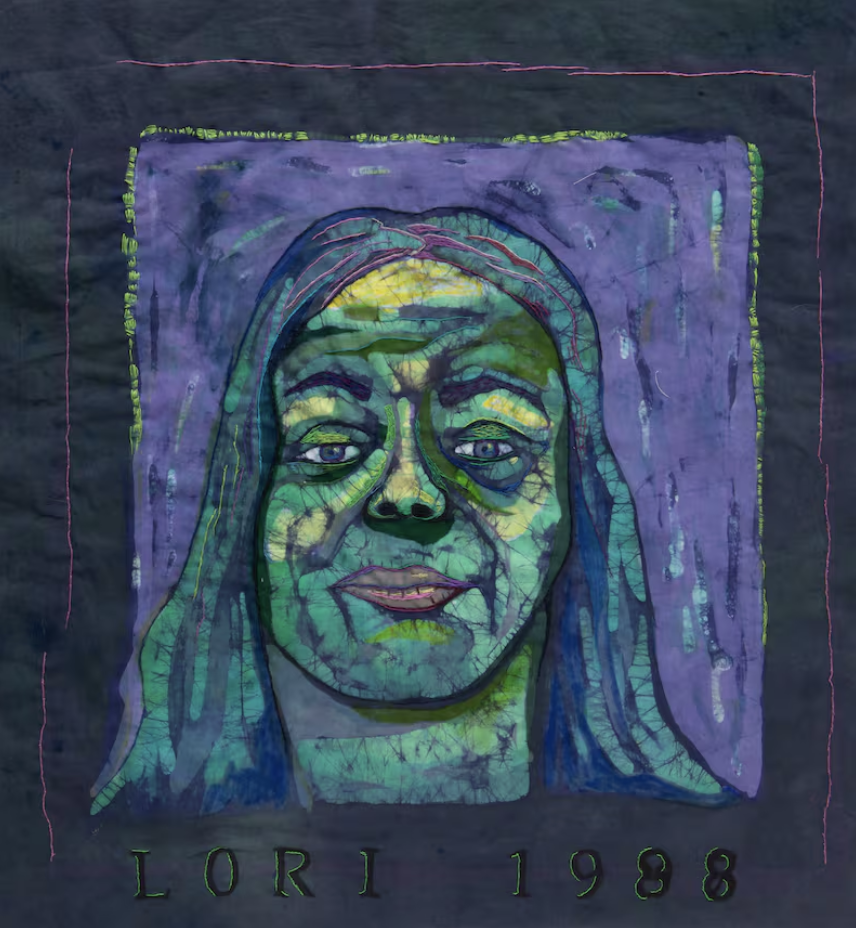
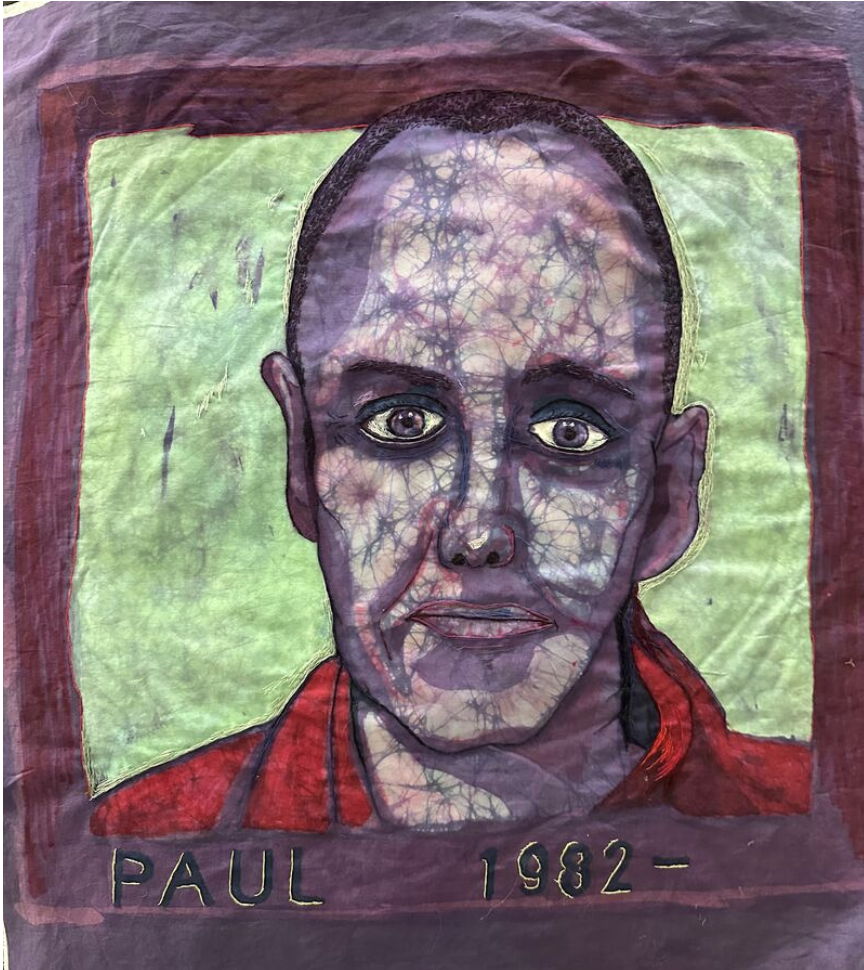
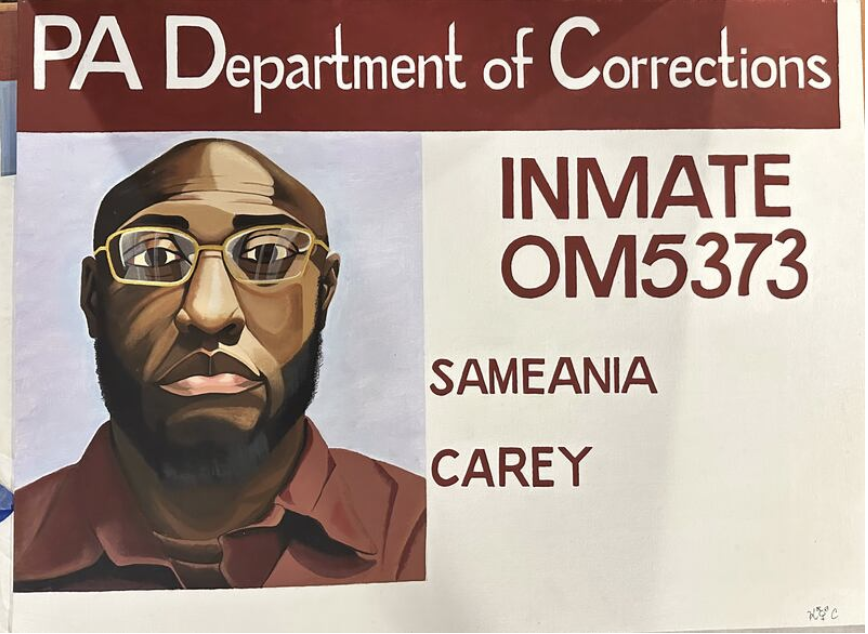
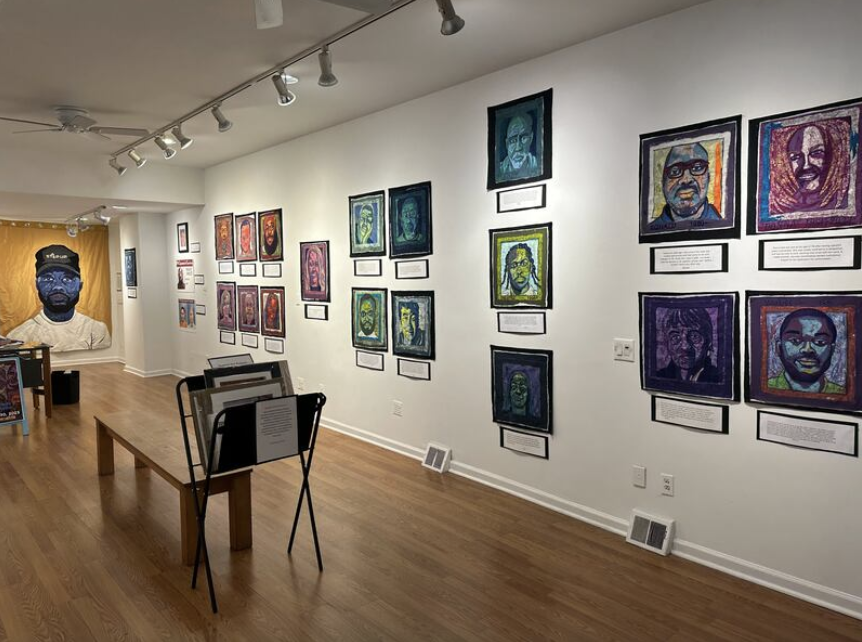
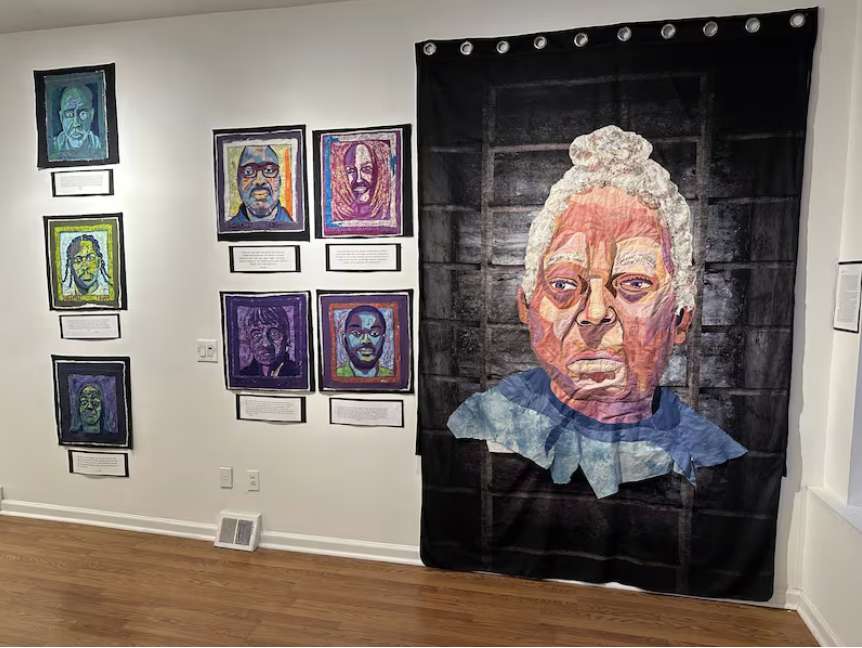
Their names, faces, and stories are now at the center of her latest portrait series, “Prison Portrait Project: Faces of Despair, Hope and Transformation," on display at Old City’s Muse Gallery.

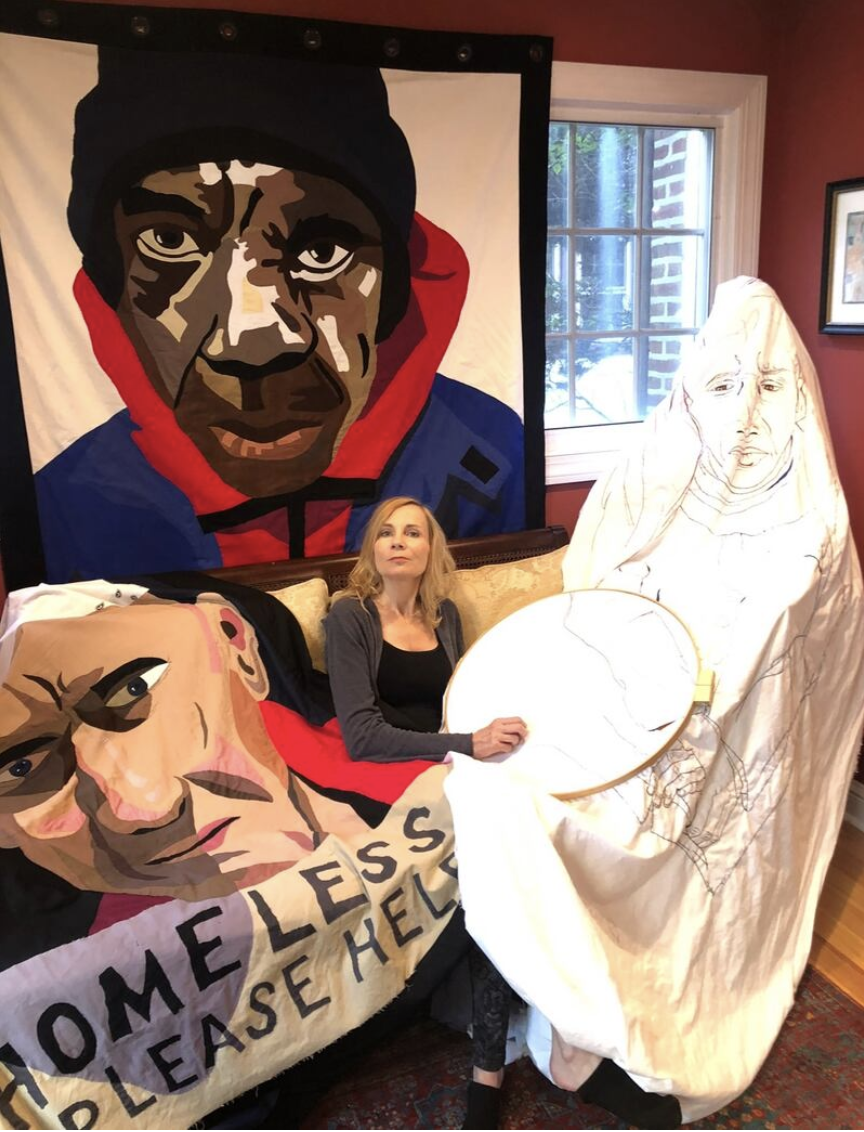
Harper has placed their portraits on hand-sewn quilts and vibrant batiks, transforming the faces of those suffering from the country’s carceral system into artwork.

Like Martorano, several of Harper’s subjects are serving death sentences, with little to no path for early release or commutation. Harper has never asked specific questions about their pasts, and everything she knows about them is what she has been told voluntarily. But she’s certain about one thing: None of the people she has befriended is the same person they were when they were first incarcerated.

Pennsylvania, she found out, is one of two states in the country that has a mandatory life without parole sentence, known as “death by incarceration,” for both first-degree and second-degree felony murder.

“I have come to see that guilt or innocence, while important, is not the critical thing here,” Harper said. ”It’s the idea of redemption and rehabilitation. This, to me, is the real story — the story of transformation.”

For decades, people suffering from abuse, discrimination, and disenfranchisement have made their way onto Harper’s quilts.

In the mid-1990s, she created panels for the AIDS Memorial Quilt, a visual project that memorializes the hundreds of thousands of Americans who died from AIDS-related causes at the height of the epidemic.

She also developed a series of textile portraits championing queer love stories, and another shedding light on the systemic issues faced by those wrestling with dispossession and homelessness.

“People often come out of prison and don’t have a pathway to find a real job or housing,” Harper said. “I started to see that connection, and I became interested in the issue of incarceration.

“We pay lip service to this idea that prison is reformative, but really it’s punitive.”

Born in Rochester, N.Y., Harper moved to Philadelphia in 1989 to study art at the University of Pennsylvania. Her days volunteering as an art teacher at local homeless shelters from 2013 to 2020 are what first drew her to the links between homelessness, dispossession, and incarceration. She was driven to learn more about the state’s prison system.

After her best friend was arrested in 2020 for abusing his husband, Harper’s interest became a lived reality. The health of her friend, who struggled with addiction and mental health issues, worsened due to his incarceration. Shortly after his release in 2021, he took his own life.

That pushed Harper to join organizations such as the Coalition to Abolish Death by Incarceration, We The People Coalition, and others. She wrote postcards, letters, and emails to incarcerated people throughout the state.

Before this, a self-described “snowflake,” Harper would veer away from conversations about incarceration. She started out fearing that she wouldn’t be able to emotionally cope with the struggles incarcerated people endure and write to her about in their letters. But she grew to become a listening ear, resource, and friend to people seeking human connection.

Through her hand-sewn and fabric-dyed portraits, she encourages her audience to step outside their worlds and enter the worlds of her subjects. Through her art, she highlights the forgotten humanity of incarcerated people and uses their testimonies to draw attention to Pennsylvania’s “harsh sentencing laws,” and correct the misconceptions people hold of those who are incarcerated.

The “Prison Portrait Project” started off with Harper writing to the people whose names, faces, and stories make up her art. Would they send her a photograph, she asked, and consent to be a part of her exhibition?

Most replied with a photo or told Harper where she could find one. Others had family members send photos to her. After she sewed them or transferred them onto quilts, Harper shared images of the final pieces with the subjects of the expressive portraits.

“I think seeing their self-portrait, and knowing it’s going in an exhibition, helps them see themselves in a different light. And that can be empowering,” Harper said.

Each quilt and batik-style image features a written statement from the person who inspired the portrait, ensuring their stories (along with their faces) are integral parts of the exhibit.

A binder containing more stories, statements, and poems written by people Harper connected with through the years, sits at the front of the gallery. Three self-portraits of incarcerated artists are also on display.

Harper is hopeful the show will inspire audiences to view those who are incarcerated as people, rather than lifeless serial numbers and charge sheets.

“Most of us don’t think about people in prison. If we do, it’s sort of with the feeling, ‘Well, they probably did something and deserve to be there.’”

She wants people to recognize the lack of redemptive pathways for people upon release, and the need for advocates to protect, defend, and humanize Pennsylvania’s incarcerated population.

“Prison Portrait Project: Faces of Despair, Hope and Transformation,” through Nov. 30, Muse Gallery, 52 N. Second St., Wednesday to Sunday, noon to 5 p.m. musegalleryphiladelphia.com

– The Philadelphia Inquirer

Breaking barriers and opening doors: Philly artists are finding new spaces to showcase their creations

Few spaces are as essential to Philly arts as the city’s history-rich museums and art galleries. The institutions house some of the most prized artifacts and antiquities in the country, and serve as a domain for unknown artists to become international fixtures.

But for Lauren Fiasconaro and other Philly-based creatives, the barrier to entry is often too steep, forcing many artists to turn to local cafés, restaurants, bars, and other alternative spaces to showcase their artwork.

“This is definitely something that’s been cropping up more and more,” said Fiasconaro, 30, who’s currently displaying her cyanotype photography at Northern Liberties’ Mammoth Coffee. “More than half of my ideas came from seeing artwork in places that I wasn’t expecting, and there’s some amazing work in places and venues you wouldn’t expect.”

Philly sculptor Jonathan Santoro, 39, said local artists have taken matters into their own hands.

“Groups of artists are growing tired of white cube galleries and rejecting the status quo while being intentionally anti-commercial,” he said. “More artists are taking the reins and displaying their artwork how they want.”

Rather than wait for spots to open at established art institutions, artist Sue Moerder began hosting small showcases in hair salons, restaurants, bars, and even pet shops under the group philacitywithart. She started the 500-member Facebook page to forge more opportunities for local artists to display and sell their work without having to jump through hoops to get into galleries and museums.

Moerder, who makes sculptures from animal skulls, said the city is flooded with local talent, but the exclusivity of certain spaces has led many artists to seek other ways to sell their work and make ends meet.

“Galleries are great, but they’re very hard to get into,” Moerder, 62, said. “I think one of the harsh realities of being an artist in Philadelphia is that many people can’t survive solely doing their art. Most have to work to support it, which is a shame because there are too many talented artists. And when you’re exhausted and you’re mentally drained, it’s hard to create. It’s frustrating.”

Recognizing the shortage of accessible art spaces, Gleaner’s Cafe owner Stephen Hencheck fills the shop’s walls with the work of local artists as a way to spotlight the city’s talent and build the confidence of newer creatives hesitant to display their designs.

With the cafe’s name partially inspired by Jean-François Millet’s painting The Gleaners, Hencheck said the decision to add these works was an important one. Not only has the move drawn more eyes to local artwork, it’s helped struggling artists fully profit from their creations, rather than fight for higher commission splits in more traditional spaces.

Hencheck allows creatives to fully profit from their work, while more notable galleries have commission splits that teeter between 30% and 50%, he said.

“We just try to keep a starving artist from starving so we can look at their work,” Hencheck, 44, said.

“If your business is your community, you should make it your business to support that community. That doesn’t apply to everyone, and it doesn’t have to. If creativity and culture are what you believe your base is and what makes the neighborhood your business is in, why wouldn’t you try to support that?”

Through partnerships with nearby galleries, the Fitler Club is combining the influence and resources of established spaces to fuel its own alternative venue.

The urban social club has Philly-made pieces throughout its center, a move Visual Arts Director Tricia Maloney said has connected the club’s members to the city’s creative forces, and given more local artists a platform to spread their wings.

“Our hope is that there may be a lower barrier to entry to engage with the art in a place like the Fitler Club,” Maloney, 41, said. “It’s not a gallery — we tried to take that intimidation factor out of the equation, even to the extent that I coordinate the program and I don’t have an arts background. It’s really about relationship building.”

Fitler Club cofounder Michael Forman said the addition of alternative art spaces doesn’t diminish the importance of established art institutions in Philly. It’s an added way to support local creatives and place a brighter spotlight on the work they produce.

Along with the Gleaner’s Cafe and Fitler Club, Fiasconaro said venues and organizations like Persimmon Coffee, Underground Concepts, and Feminist Flea are opening doors for artists in the LGBTQ and Asian American and Pacific Islander communities, as well as others that have been marginalized by their race, ethnicity, sexuality, and identity.

Having these spaces, Fiasconaro said, is key to a more inclusive and well-rounded arts scene.

“Historically, gallery spaces are and can be very inaccessible for a lot of people,” she said. “I have definitely encountered that as well. But I’m seeing more inclusivity in this trend of alternative spaces, which is amazing. It’s been a long time coming.”

Fiasconaro is hopeful more opportunities for artists of all creeds will open up in museums and galleries. And as Philly creatives continue to carve out nontraditional platforms, the artists and businesses receive the support they deserve.

– The Philadelphia Inquirer

Keep your eyes peeled: The art of Banksy is coming to a secret Austin location this summer

The work of anonymous street artist Banksy will be on display for a new immersive art exhibition, Banksyland, at a still-secret downtown Austin location.

More than 80 of the England-based artists' "original and studio pieces, salvaged street artworks and never-before-seen installations" will be at the center of a 20-city international touring exhibit running July 22-24, according to the Banksyland website.

The location won't be revealed to ticketholders until two weeks before the exhibit's opening. At this point, the only clue is an Austin ZIP code, 78712, listed on the event website, which may point to a venue on the University of Texas campus. Keep your eyes peeled, Austin. 

The exhibit, produced by the international experimental arts collective One Thousand Ways, is also taking place June 24-July 4 in Dallas and Aug. 12-14 in Houston. The Statesman contacted One Thousand Ways several times for more information and has not received a response. 

Tickets are $22-$59. Children 6 and under are free and no ticket is required. 

Entry is available for multiple one-hour time slots starting at noon during the three-day exhibition. Visitors are required to arrive 15 minutes before their scheduled entry time. 

For tickets, go to banksyland.com.  

– Austin 360

An 'Immersive Van Gogh' exhibit to make its mark in the capital city

Although details have yet to be confirmed, the "Immersive Van Gogh" exhibit will make its way to the capital city in the near future.

Filled with 500,000-cubic-feet of monumental projections that animate Vincent van Gogh's post-impressionist work, the exhibit will allow visitors to wander through various images that highlight his artistic genius.

Read More