50 years after a deadly refinery fire, Philly firefighters honor those who were lost

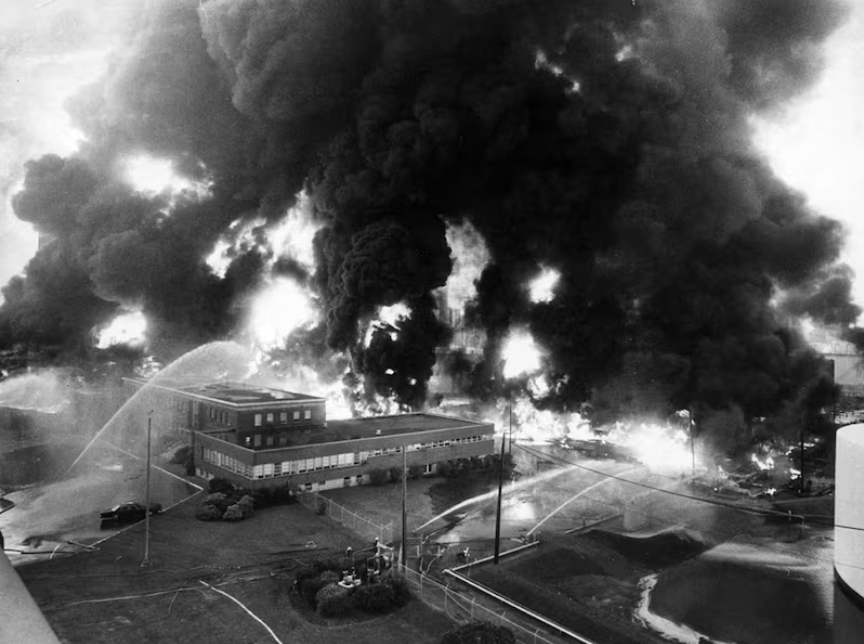
Fifty years after dark black smoke from unrelenting flames clouded the sky over South Philadelphia, more than 100 people gathered Sunday in solemn remembrance of the city’s deadly Gulf Oil refinery fire.

The 11-alarm blaze on Aug. 17, 1975, forced the deployment of 600 firefighters to the Gulf Oil complex at Penrose and Lanier Avenues.

The intense flames and smoke, caused by the ignition of hydrocarbon vapors, resulted in the deaths of eight Philadelphia firefighters and serious injuries to 14 others.
To commemorate the devastation and honor the sacrifice of the men who bravely gave their lives, the Philadelphia Fire Department Historical Corp. held a tribute at Fireman’s Hall Museum on Sunday.

“It‘s rewarding that we’re doing this,“ museum curator Brian Anderson said. “We let the families know that even though they lost their family members, their sacrifice wasn’t in vain. It was with purpose.”

In the audience Sunday were firefighters and the families of those killed and injured in the refinery blaze.
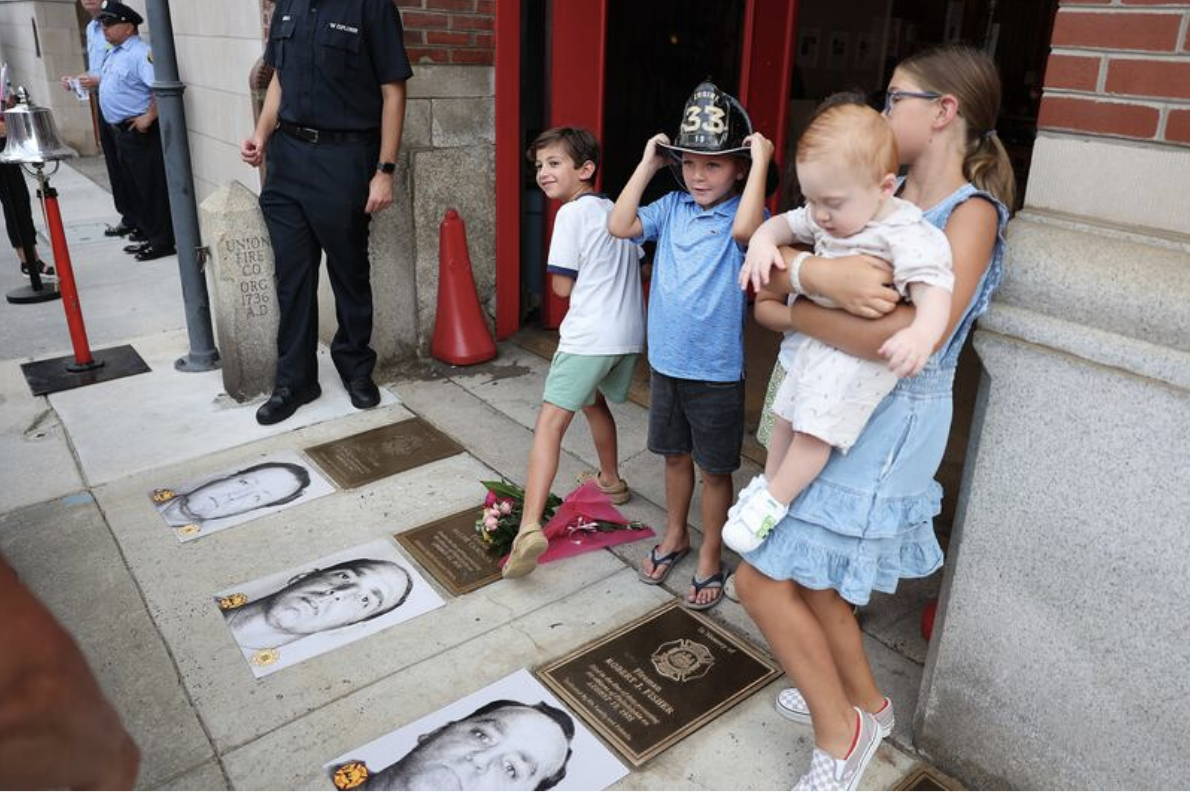
Attendees placed roses on the engraved plaques of the late firemen: John Andrews, Ralph Campana, Robert J. Fisher, Hugh McIntyre, Roger Parker, Joseph Wiley, James Pouliot, and Carroll Brenek.

Many bowed their heads, closed their eyes, and stood in stillness as Anderson and PFD Historical Corp. president Eugene Janda took to the podium to illuminate their sacrifices.

Others shed tears hearing testimonies by friends and family about lost loved ones.
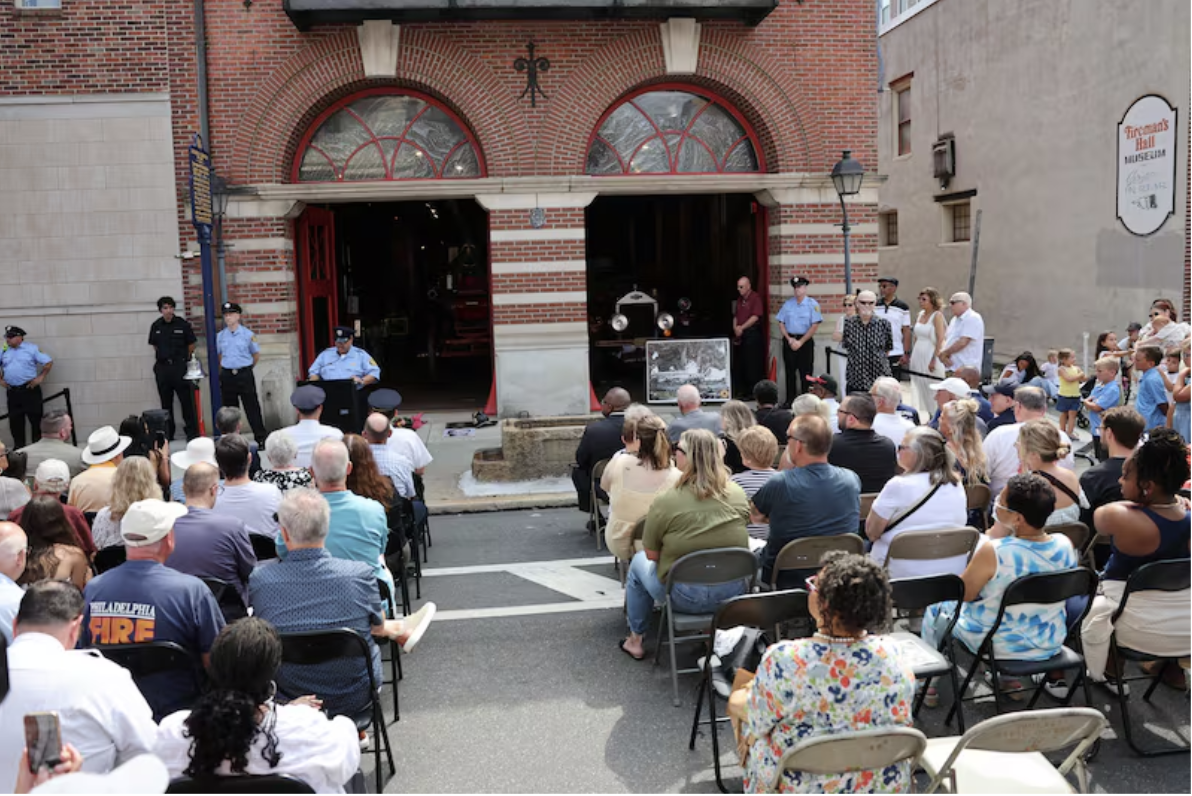
Nearby, vehicles from Philadelphia Second Alarmers, Engine 20, and other emergency responders lined the block of Second Street in Old City.

Over the years, Robert Fisher, the son and namesake of one of the firefighters who died from battling the refinery fire, said he had wanted nothing more from Philadelphia Fire Department and Fireman’s Hall than to memorialize the 50-year milestone of the tragic event that took his father.

“Everything was special,” Fisher said of Sunday’s ceremony. “Standing back and seeing people observe, honor, respect, and reflect on everything was very important. Hopefully, the legacy lives on.”
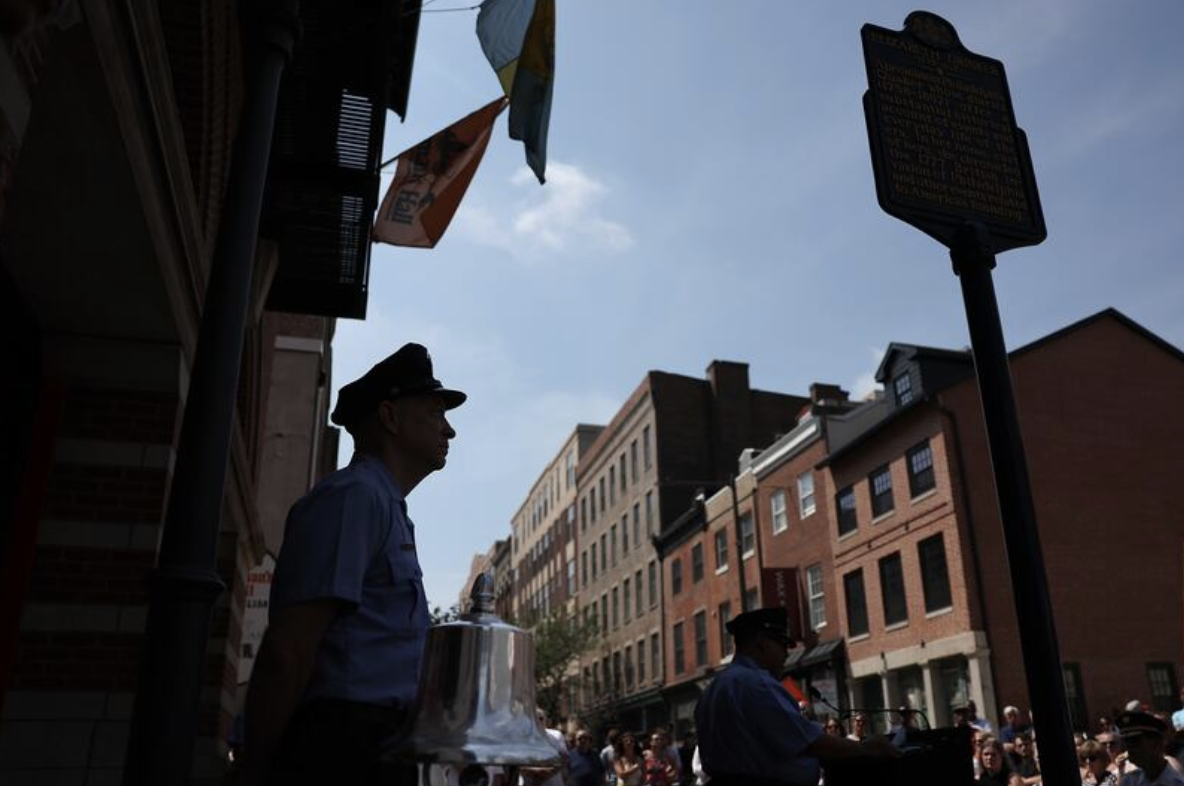
Along with honoring his father’s legacy, Fisher said reconnecting with the families and now-retired firefighters linked to the tragedy brought much-needed community.

“When you see each other, you know what each other’s going through,” he said. “You don’t have to talk about it. You’re just happy that you’re seeing someone. We don’t reflect backwards, we reflect forward.”

Given the support that poured forth from all in attendance, Anderson has no doubt that the sacrifices made by the firemen that day 50 years ago will live on.

“You can tell by the attendance of today’s event, these members will never be forgotten,” he said. “They’ll be forever memorialized here at the museum, too.”
– The Philadelphia Inquirer

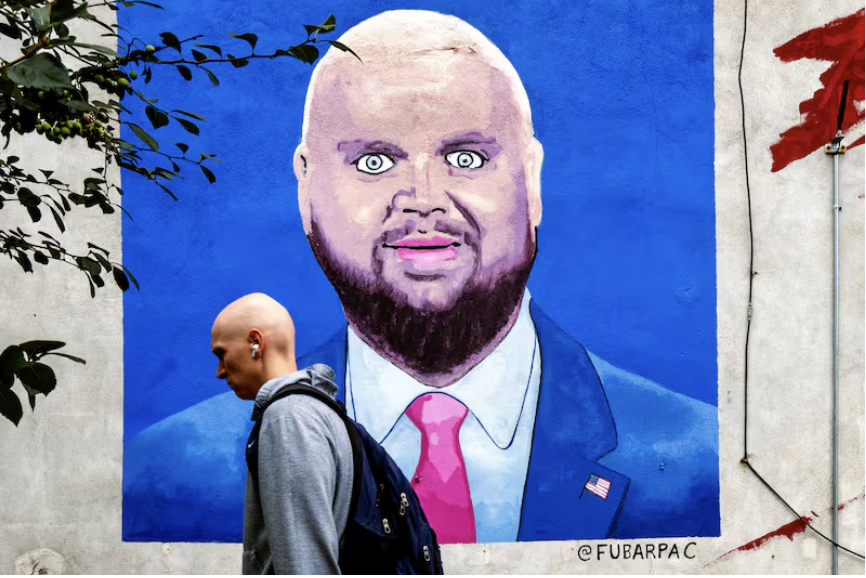
A ‘bald baby’ JD Vance mural has popped up in Fishtown

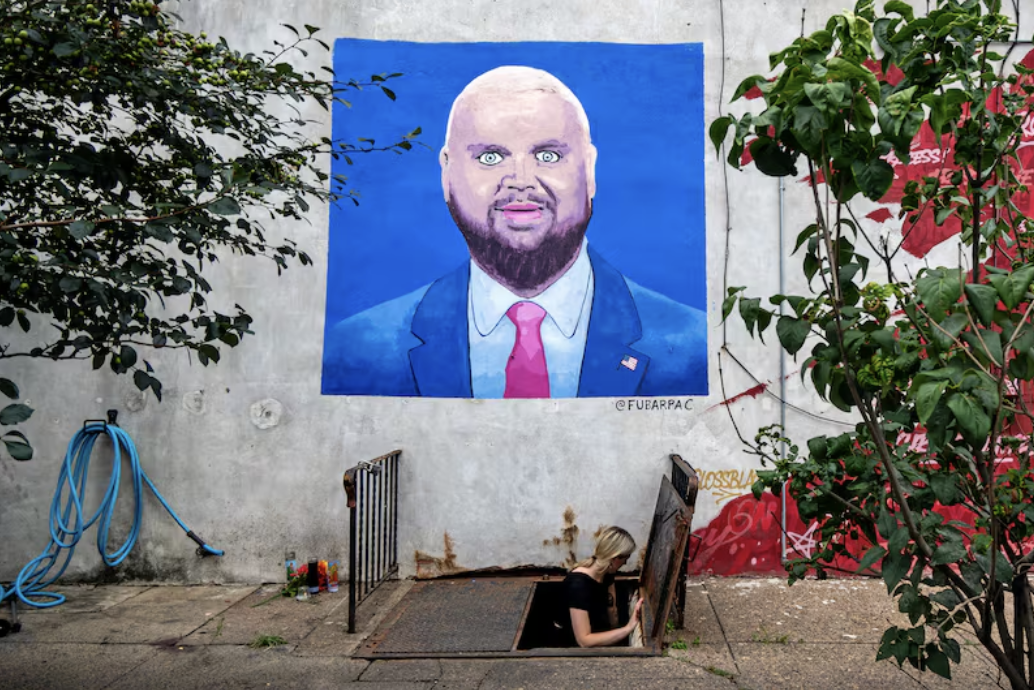
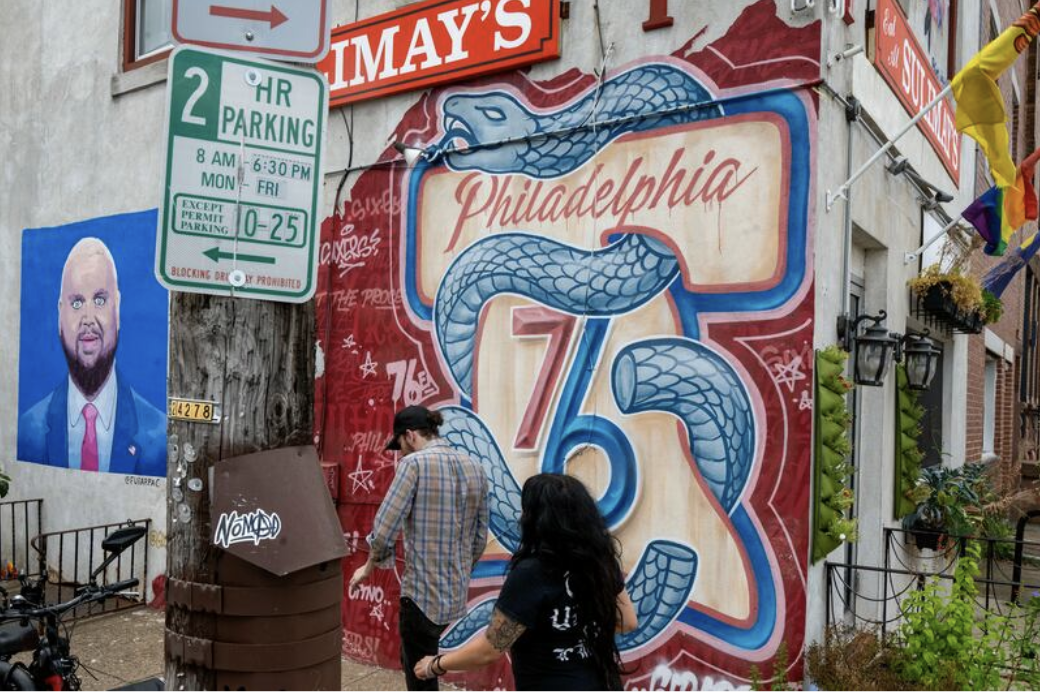
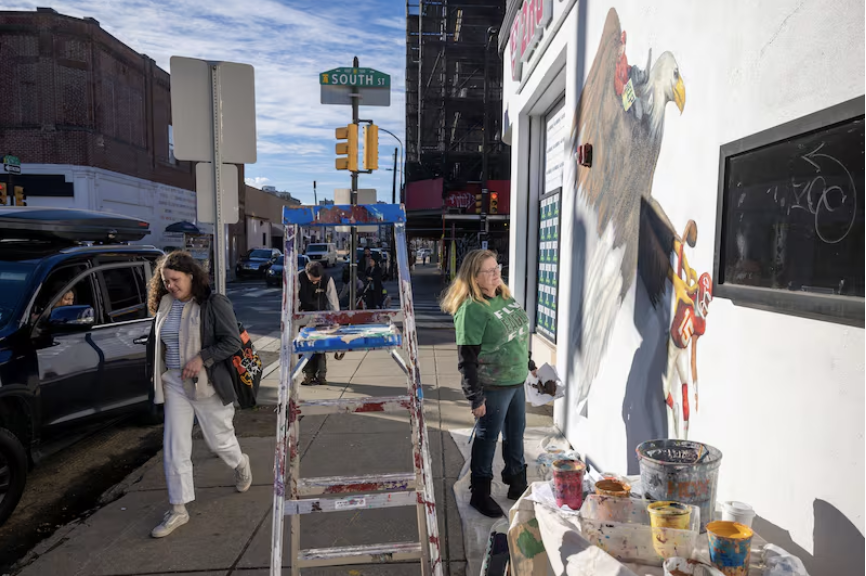
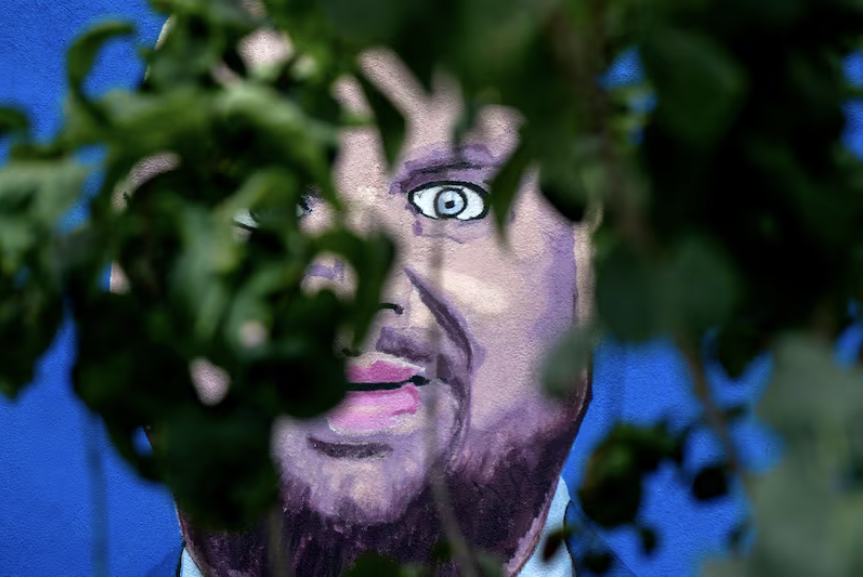
Last week, a mural of U.S. Vice President JD Vance debuted on the side wall of Fishtown restaurant Sulimay’s.

The image is one of many memes of Vance that have been circulating on the internet. The images include Minion Vance, Shrek Vance, and even one where he appears as the Las Vegas sphere.

The Fishtown mural shows a wide-eyed, chubbier version of the vice president’s face but with a bald head, often referred to as the “bald baby” or “baby Vance” meme.

Videos of the mural have amassed millions of views on social media. On Sunday, TikTok user Paige Weinman posted a video of the mural that’s gained 900,000 likes and nearly 3 million views.

The bottom right of the mural reads “FUBARPAC,” an acronym for F–ed Up Beyond All Recognition/Repair. PAC is a political action committee.

Jack Inacker, a Philly native and founder of FUBAR PAC — self-defined as a “veteran-led Democratic opposition, waging a ruthless year-round campaign against MAGA cowards and their allies” — is the brain behind the Fishtown mural.

After months of exchanging Vance memes with a friend, Inacker decided to project the images against a prominent wall for Philadelphians to see. After further thought, he decided a painting would draw even more attention.

He made a post in the Philadelphia subreddit, asking if he could use someone’s wall for the project. Among the three users that responded, Inacker said Sulimay’s was the “perfect” fit.

Sulimay’s owner Chad Todd said he backed Inacker’s idea to highlight how “deplorable” both President Donald Trump and Vice President Vance have been since being sworn into office in January.

“No moral person can support what they’re doing,” Todd said. “I’ll take any opportunity to bring attention to it.”

Last Friday, Inacker brought along a projector, a handful of Sharpies, about $200 worth of paint from Lowe’s, and an artist friend.

They began by tracing over a projected image, then filling it with color until the piece was finished 12 hours later. Fishtown residents stopped by to lend a hand, Inacker said. Some suggested touch-ups, like adding eyeliner.

While the muralized meme of Vance is largely seen as something comical, Inacker said its purpose is to forge community and shed light on the Trump administration’s crippling federal financial cuts.

“Painting a meme on the side of a building is dumb bulls—, right?” Inacker said. “It’s fun to do with your friends, but I wanted to figure out a way to transform that into some meaningful action as well.”

In a TikTok posted Monday, Inacker showed a time-lapse of the mural’s creation. The clips were overlaid with references to Vance’s stance on cuts to foreign aid, the increased cost of Medicaid, and the lives impacted by Trump and Vance’s decisions.

Inacker plans to place a small plaque at the bottom of the mural with a QR code that directs people to a voter registration form.

He loves that the mural serves as a photo opp, but he wants it to become a resource and inspire people to think about political issues in their own way.

“I want to make sure that the barrier to entry to politics is really low, that more folks can get involved, and they don’t have to do serious things all the time,” he said. “They can have a party together to paint their own JD.”

With the mural, Fishtown joins somewhat of a global movement as altered images of Vance have become an international fixture.

In June, a Norwegian tourist claimed he was denied U.S. entry at Newark Liberty International Airport because he had downloaded the bald baby meme on his phone. The Trump administration refuted his claim, saying he was denied because of “admitted drug use.”

Weinman said she was surprised by the interest her post generated, but not by the popularity of the mural itself.

“We were like, ‘Oh, if you’re going to deny travelers the ability to come into the country because of their political views, their sense of humor, or their private conversations, that’s something that really stands in opposition to American values.’ So, I can understand why that image really took off in general, and why so many people find it funny.”

Similar murals of Vance have popped up on the vice president’s recent England tour. Last week, a poster by the “Everyone Hates Elon” protest group displayed the same image of Vance on a billboard in Cheltenham, Oxfordshire.

Todd said he has no plans to remove the mural from the restaurant’s wall just yet.

“As long as the positivity continues, it will stay up,” he said. “But I really don’t want to look at that for the rest of the year. It’s slightly terrifying, and freaking out the kids is a concern.”

The story has been updated to include comments from Sulimay’s.

– The Philadelphia Inquirer

Jane Golden is stepping down as Mural Arts’ executive director

Forty-two years after founding and leading Mural Arts, arts leader Jane Golden announced on Monday that she will be stepping down as the organization’s executive director in July 2026.

Over the next year, Golden will guide major Semiquincentennial projects while working closely with Mural Arts’ senior leadership and board of directors, assisting with the organizational transition.

The search for her successor begins this fall.

Golden, who has dedicated her life to transforming the Philadelphia cityscape through Mural Arts, said she’s content with stepping down. Reflecting on Mural Arts’ impact on local artists and the people of Philadelphia, she said, has made it easier.

“I’m not going to sugarcoat this. It’s really hard to leave,” she said to The Inquirer. “Every day I wake up, I’m excited and inspired. I’m inspired by the power that art has to lift people’s hearts, souls, and to educate … To think about separating from that is almost impossible, except I have to think for the betterment of the organization, that it’s something that’s good.”

Throughout Golden’s career, Philadelphia Mayor Cherelle L. Parker said, her dedication and vision for Philadelphia has built a “powerful model for community-centered public art.”

“Art changes lives,” Parker said in a written statement. “As we honor Jane’s remarkable impact on Philadelphia’s social and physical landscape, we look ahead with excitement to the future of Mural Arts.”

“I think everybody in the city knows who Jane Golden is,” Mural Arts board chair Hope Comisky said. “She has impacted so many lives in so many neighborhoods in so many different ways.”

It will be nearly impossible to fill Golden’s shoes, she said. Mural Arts’ board of directors has established a seven-member search committee to work with a national firm to select Golden’s successor.

Ideally, Comisky said, the incoming director will work with Golden for a month before she officially departs from her post.

“It’s important for the organization to ensure continuity of its leadership, to make sure that there’s a smooth transition in such an important role, and also reduce disruptions of programming that might be associated with a change in leadership,” Comisky said.

While the details of Golden’s involvement in the search are still being worked out, Comisky is hopeful the new leader will carry on the mission that’s made Mural Arts such an integral part of the city.

Even after her departure, Golden will continue to work to bring some of her long-held ideas to fruition, in a contracted ambassadorship role.

Among those ideas is a restorative justice program and she’s interested in growing the Color Me Back Program, which aids artists struggling with housing insecurity.

“I’m really driven by the impact that art can have on the life of our city. And I feel very passionate and sort of relentless about it,” Golden said. “People always say, ‘You’ve done so much,’ but there are always things to do.”

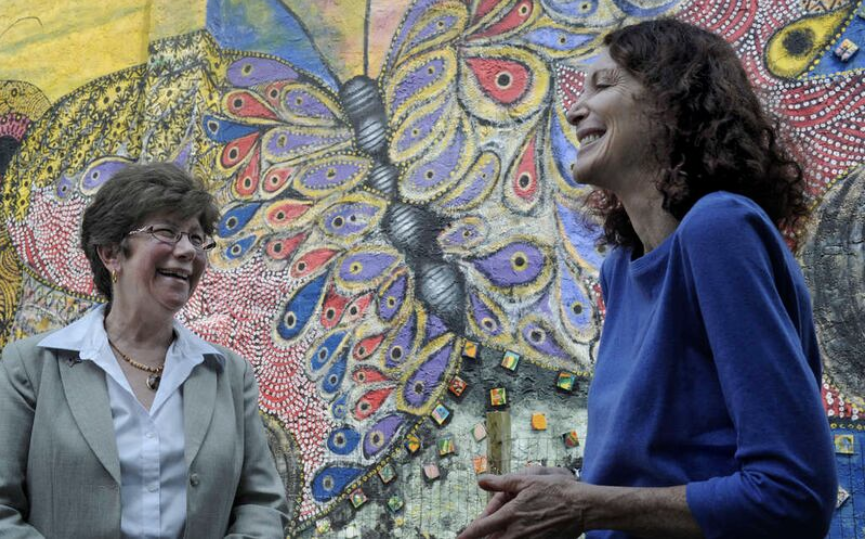
Artist Meg Saligman, who has worked with Golden since the late 1980s, said no one else has been as committed to supporting and employing Philly artists as Golden.

“She’s like how Berry Gordy was to Detroit during [the height of] Motown,” Saligman said. “Her dedication is unsurpassed by anything I’ve seen. The fact that she’s still planning and thinking about the future shows who she is.”

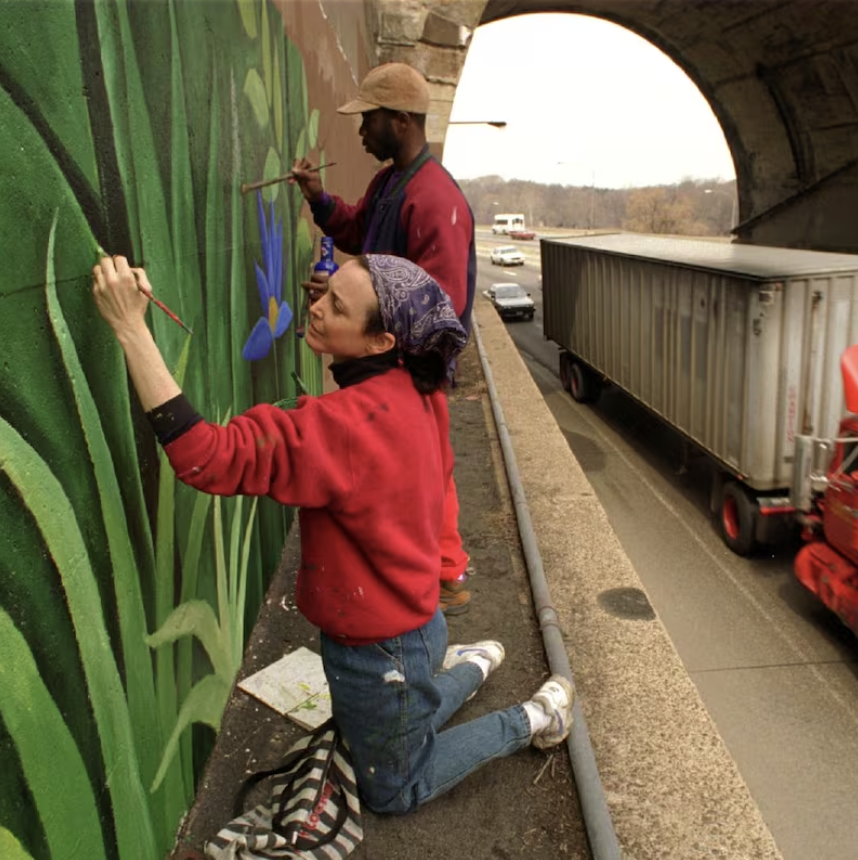
In 1984, former Mayor Wilson Goode hired Golden to address the city’s graffiti problem through the Philadelphia Anti-Graffiti Network.

Golden then spearheaded the Anti-Graffiti Network’s transition to the Mural Arts Program in 1996, with the support of then-Mayor Ed Rendell. She also established Philadelphia Mural Arts Advocates, an independent nonprofit organization designed to raise funds and support the mural-making program.

She collaborated with and commissioned local artists to design murals that mirrored places, people, and stories that make up the city.

Under Golden’s leadership, City Council President Kenyatta Johnson said Mural Arts has grown into a nationally recognized arts organization that’s cemented Philly’s reputation as the mural capital of the world.

“I thank [Golden] for her extraordinary service to our city, her unwavering commitment to inclusion and social justice through art, and her belief in the limitless potential of Philadelphia’s people,” Johnson said in a written statement.

As her time at the helm soon expires, Golden intends to continue supporting Mural Arts and the people who make Philly whole.

“I don’t think I’ll ever really leave Mural Arts in my heart,” she said. “I’m always going to care a lot about the organization … there’s a part of me that feels like I would just want to work forever.”

“I just love this organization. I love the people, and I love the people we work with across Philadelphia. I love our city tremendously. And every day I wake up, I feel very privileged and honored to do this job.”

– The Philadelphia Inquirer

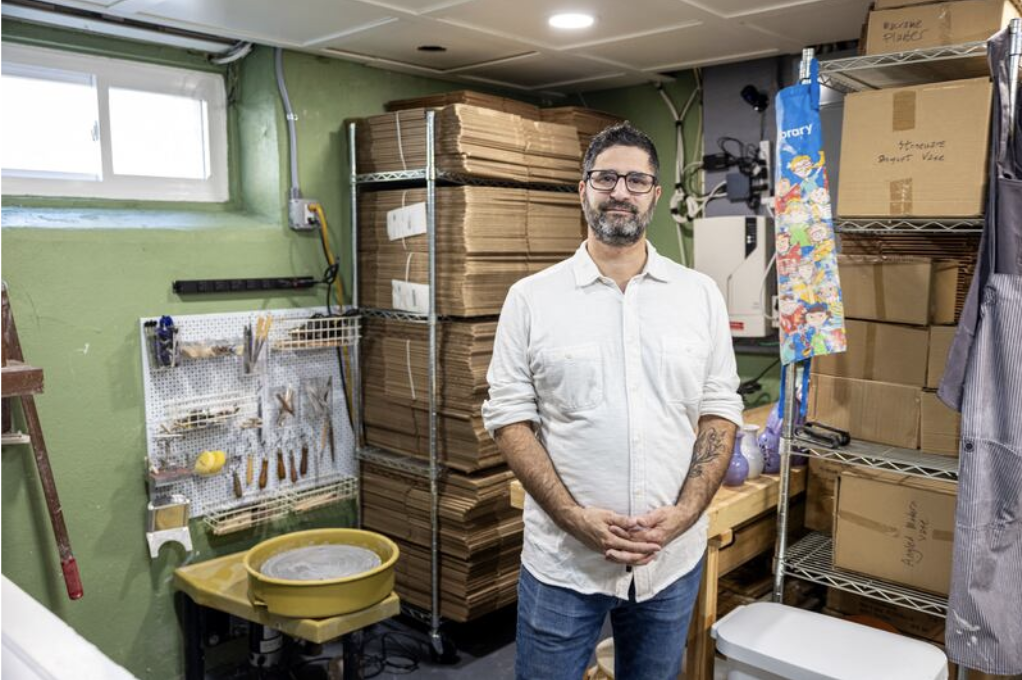
An Ardmore ceramic artist will turn your loved one’s ashes into an object of your choice

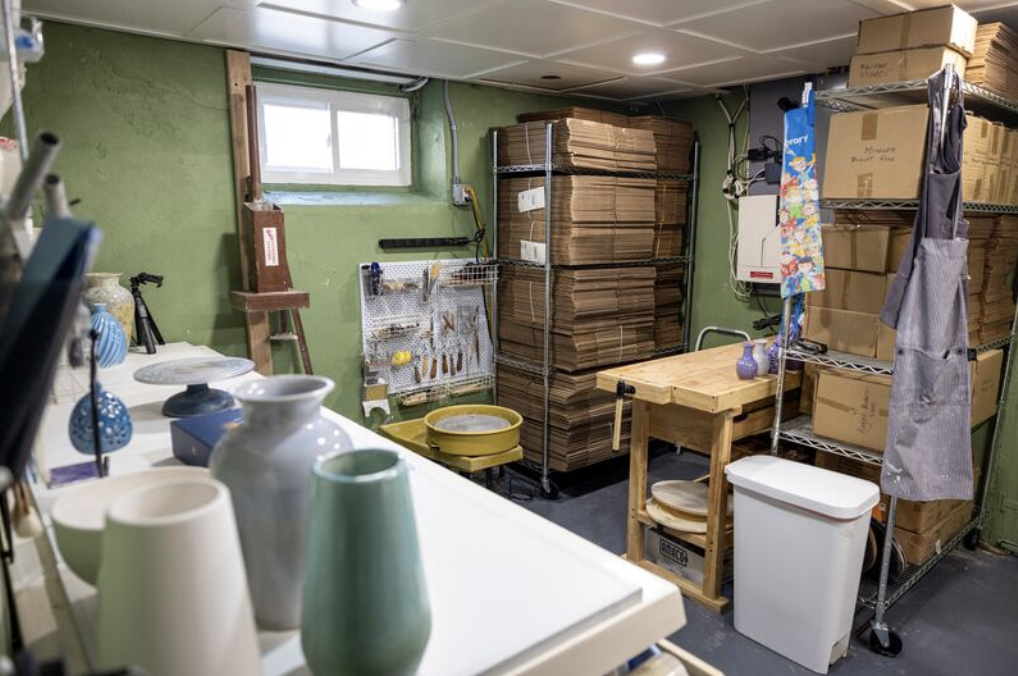
When artist Daniel Hoffman‘s aunt Sheila Rocco passed away in 2011, Hoffman, who was then studying ceramics at Ohio State University, sank into an emotional pit. The only way out, to him, was to create an heirloom that would honor her life.

Weeks later, Hoffman handcrafted a light blue vase, which would be deemed natural for a student of ceramic arts. Only this time, he added a bit of her remains to the glimmering semi-clear glaze, a practice that would go on to define his career, years later.

“It was a super personal way to get started in this field,” Hoffman said. “She was a really special person to me.”

After years of working as a video producer, animator, and creative director, Hoffman established Ahava Memorials in December 2024. He creates multicolored ornaments, twist vases, candle luminaries, and planters in honor of departed loved ones, using their ashes.

“I want customers to really feel that each piece is individual and unique,” the Ardmore-based artist said.

The name Ahava translates to “love” in Hebrew. “It’s an emotional business,” Hoffman said, “and one that requires a layer of trust that few other art specialties do.”

Customers start by selecting a shape and color for the ceramic piece that they think best honors their loved one.

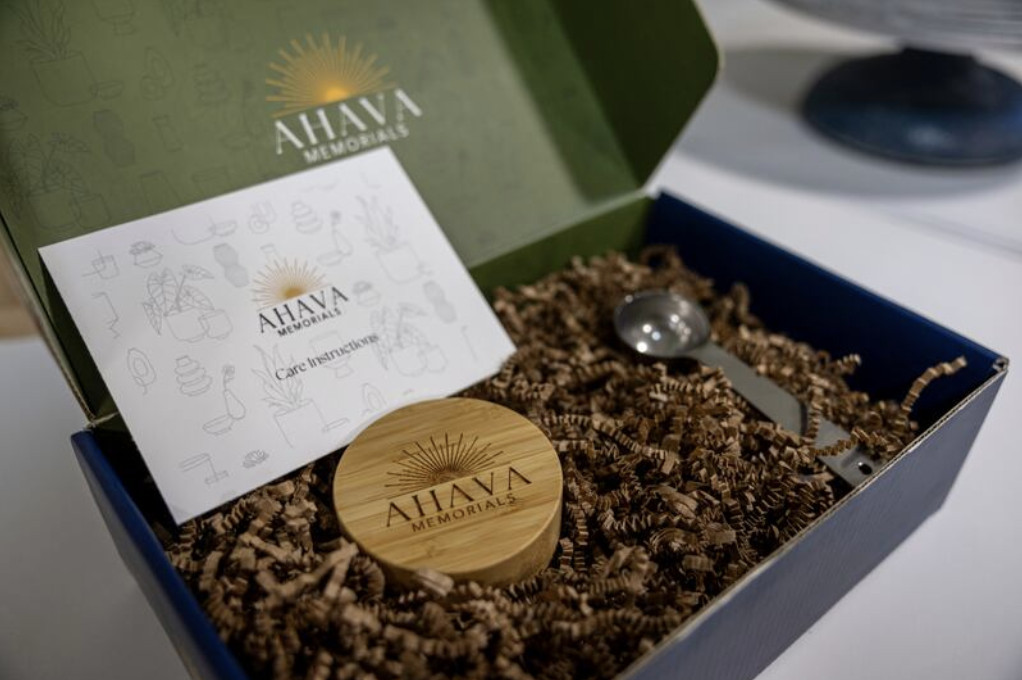
When order requests arrive, Hoffman sends customers a collection kit, along with a personal message assuring them that memories of their loved ones are in trusted hands.

The kit, containing a U.S. Postal Service human remains box, contains a premeasured container for customers to place ashes in. Once shipped, Hoffman picks it up from a secure P.O. box and begins the ceramic-making process.

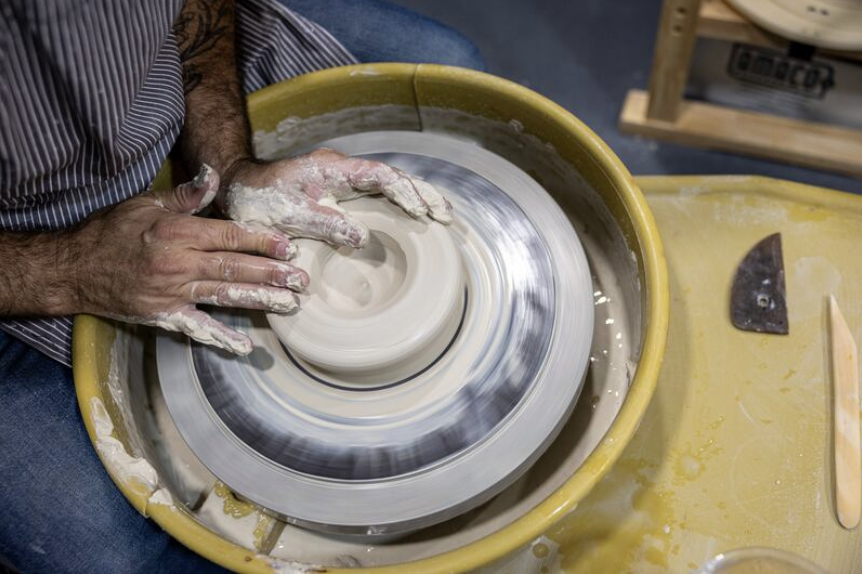
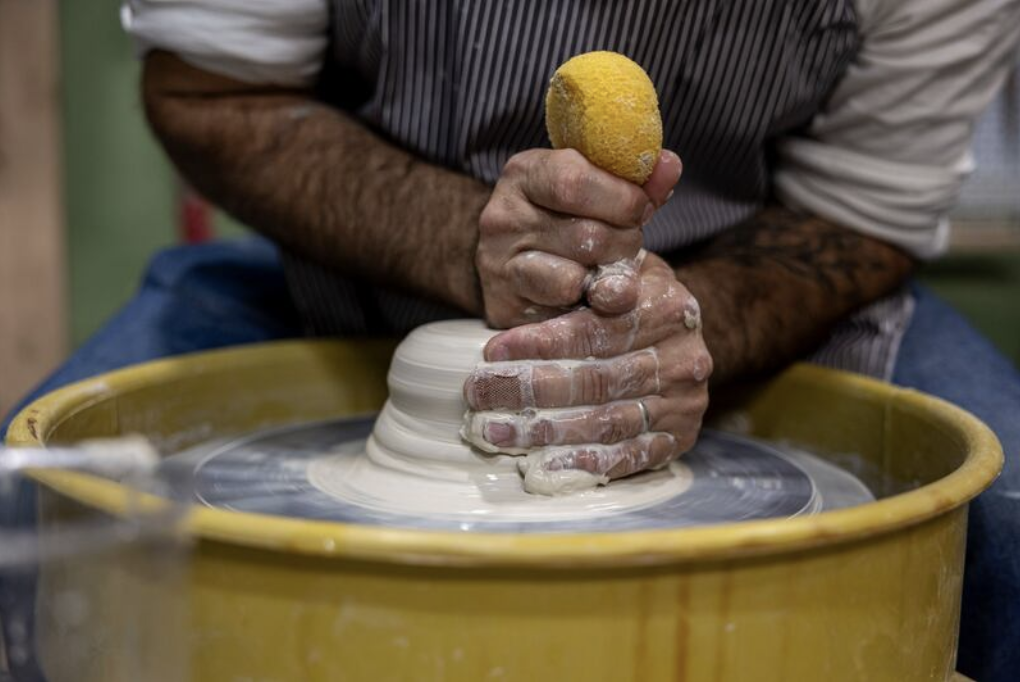
That process involves melding bone ash into a glaze-covered ceramic, using a technique first used in the late-18th century by bone china potter Josiah Spode. But instead of forming cattle bones into hardened clay, as Spode did, Hoffman integrates and seals the ashes into a glaze.

The glaze is then hand-brushed onto a premade ceramic object and placed in a kiln. Once the kiln reaches roughly 1,886° Fahrenheit, the ash-infused glaze is firmly coated onto the ceramic, which becomes the final memorial object.

Among Hoffman’s most popular designs are blue, green, and red-coated vases, ornaments, and planters honoring beloved people and pets.

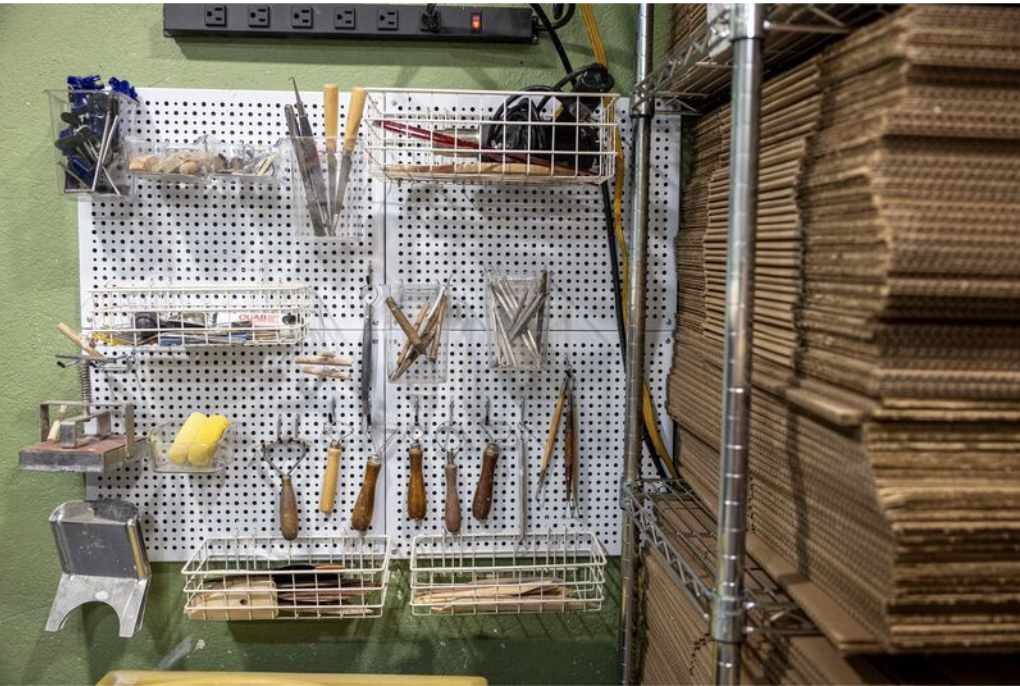
The process, Hoffman said, is a “ton of trial and error.” He spent months building out his home studio and perfecting reliable glaze techniques that would help him create perfect shades of pinks, blues, and reds. And as he’s grown more comfortable with his newly formed designs over the past year, Hoffman’s customer base and offerings have expanded.

Along with new colors and design options, he now casts multiple ceramic objects with one set of remains, and even integrates multiple remains into one design.

Hoffman said he wanted his products to be accessible to everyday buyers. Prices range between $210 and $745, depending on the desired shape, color, and size.

With more people entrusting him with these projects, Hoffman said it has become an even more enriching experience.

“It feels like they’re giving to me as much as I’m giving to them when I make a product for them,” he said. “It’s a special relationship with this product.”

While memorial ceramics seemed like a destined path for Hoffman in college, he never envisioned using his artistic gifts in this way.

“There are a million ways to make a career in the arts,” Hoffman said. “I just kind of found my way doing this.”

He first toiled with clay art as a teenager at Fleisher Art Memorial in South Philly, where he was taught by former chief U.S. Mint engraver Frank Gasparo, who inspired him to pursue a career in ceramics.

After graduating from Temple University and Ohio State, he ventured into studio art, video production, and animation, which led to a role at Comcast as the designer of Jumbotron motion graphics.

It wasn’t until he was laid off as Five Below’s creative director that his passion for memorial-style ceramics was renewed. This time, he was determined to turn it into a full-fledged business.

“I parked this idea for a long time. I tried building it on the side while I was working, but that just wasn’t happening,” he said.

Hoffman said the first phase of production was “hectic,” but with Ahava in full swing now, he is able to forge the kind of relationships with his customers that he first intended. Helping people through grief “feels like an act of giving,” he said.

As the business expands, Hoffman plans to collaborate with crematoriums in the area and dedicate most of his time to creating new products.

He wants to integrate more shapes, colors, and designs into Ahava Memorials, so that the pieces are even more personal to his customers.

Review: Chance The Rapper returns to form at The Fillmore.

It’s been a long six years for Chance the Rapper fans, who awaited the return of a rapper once deemed a leading voice in hip-hop.

In interviews, the Grammy-winning rapper said his absence was due to a combination of personal matters and the negative reception of his debut album, The Big Day, released in 2019.

It was a lofty conceptual album, aimed at promoting the sanctity of marriage in a genre that largely treated it as taboo. But the album was a colossal misfire that slowed Chance’s momentum and forced him to go back to the drawing board.

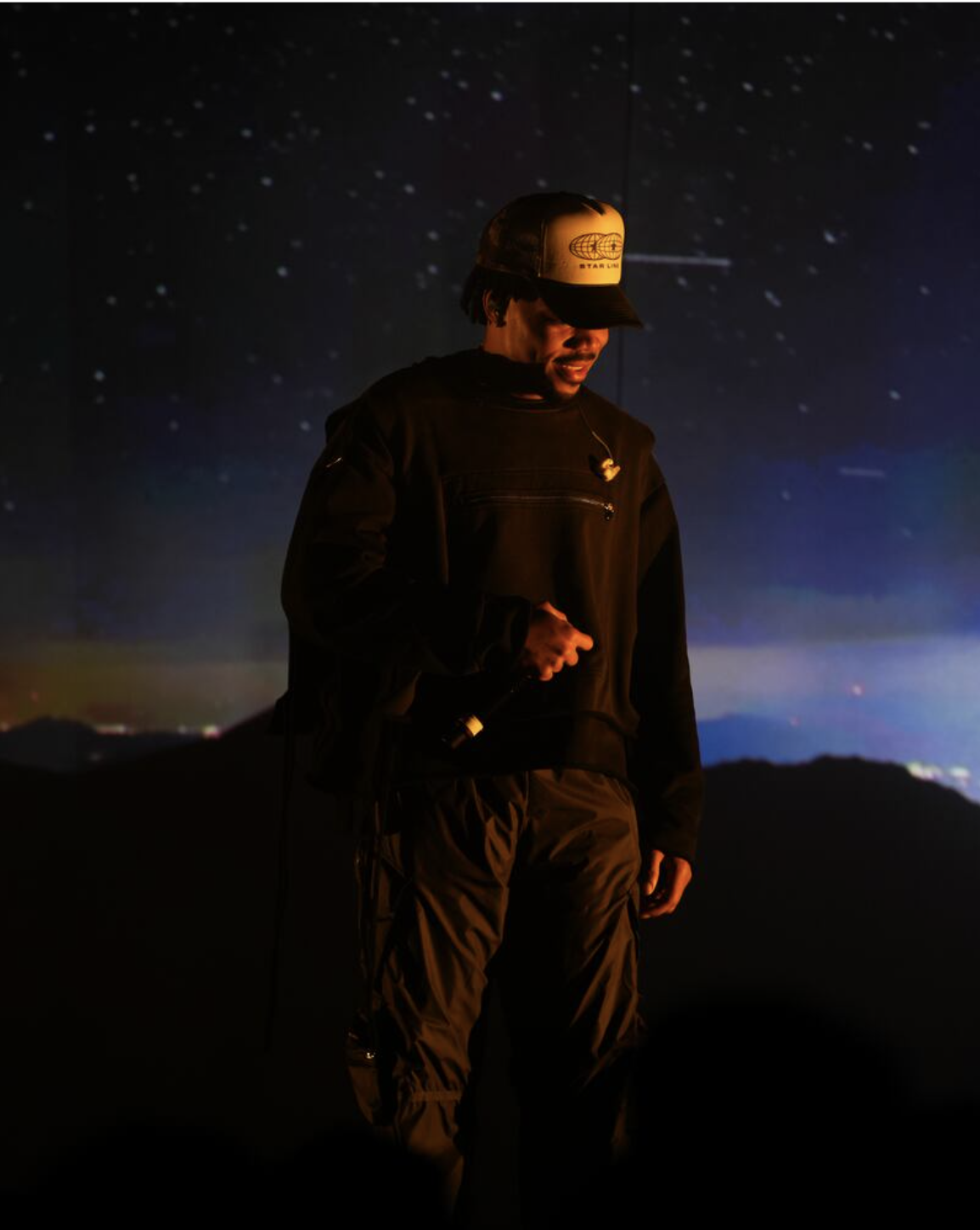
Chance’s follow-up, Star Line, proved that one unfavorably received project doesn’t define him. And with his performance at The Fillmore on Wednesday night, it appears he and his fanbase are fully realigned.

“And … we back,” Chance said to the crowd.

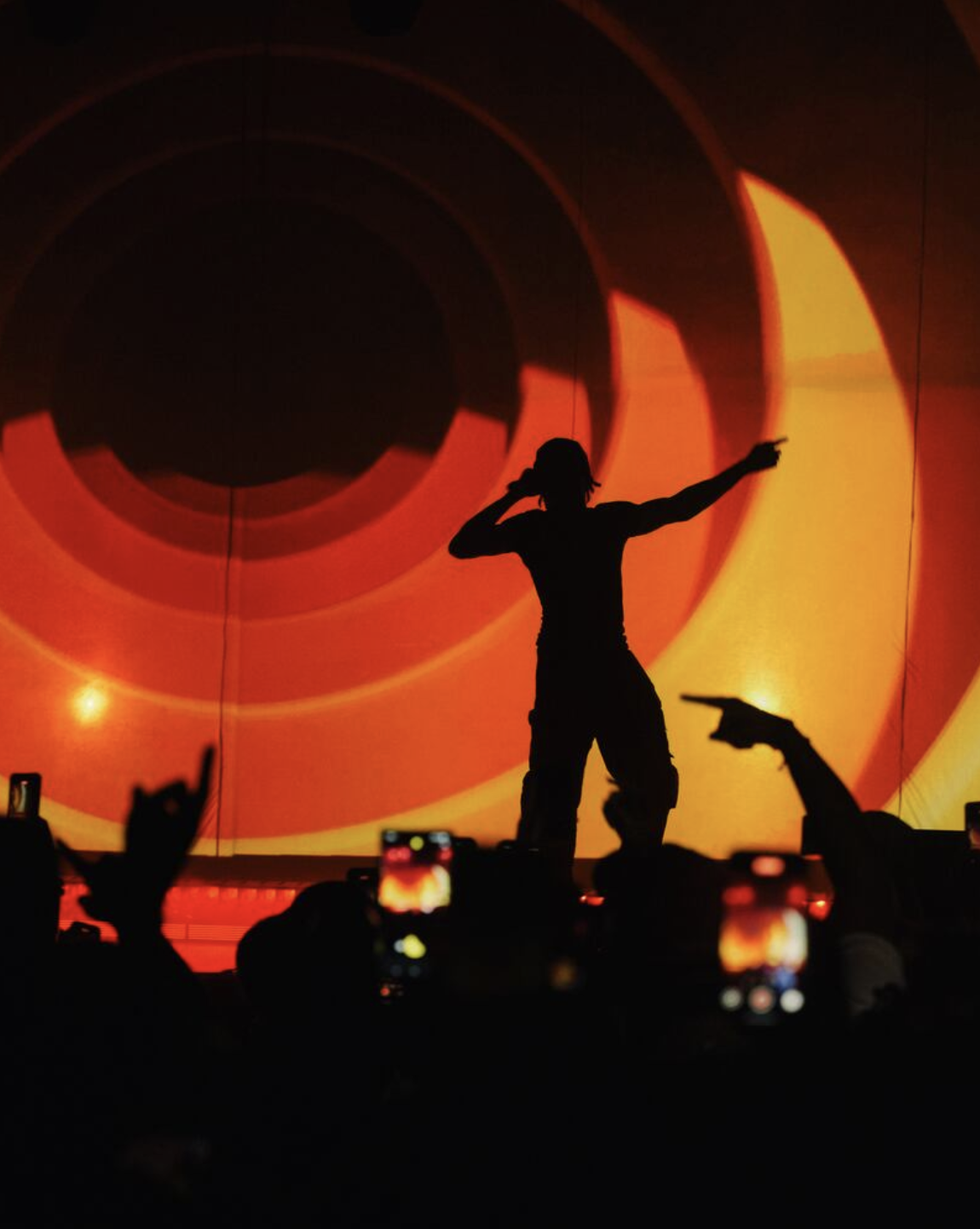
For the fourth stop in Chance’s 15-city “And We Back Tour,” he stepped up to the main music hall stage at The Fillmore with a microphone in hand.

It was a mild entrance for an artist of Chance’s stature, who was atop the 2017 Grammy stage to receive the award for Best New Artist. But it appears Chance has accepted that new ground needs to be covered and familiar rites of passage need to be traveled.

No hype man or dancers, no surprise guests or onstage theatrics. Just him and longtime collaborator Peter Cottontail steering the crowd with hits from Acid Rap; Coloring Book; and his latest album, with the lyrics to his songs projected on a background screen.

“This is going to be a great show,” said Chance, as he circled the stage. “Y’all got me in a flow state.”

Donning an all-black outfit complete with a tasseled Star Line jacket, Chance kicked off the show with “Star Side Intro,” alluding to his journey from being an underachieving high school student to his astronomical climb as a diamond-selling artist.

He then shifted to uptempo tracks like “Ride,” “Drapetomia,” and “Gun In Your Purse,” before weaving in slower, more heartfelt records like ”Back To The Go” and “Just A Drop.”

He was nearly brought to tears reciting the lyrics of “Pretty,” a moment met with added cheers from concertgoers. “Sometimes I think she was the love of my life. So, when I’m alone, sometimes I think that I’m dead,” he rapped as his voice briefly trembled.

It was a small look inside the life of Chance, who’s been purposefully private on the matters of his recent divorce from ex-wife Kirsten Corley, and his upward climb back to rap stardom.

Between the cuts from his latest album, Chance flashed back to decades-old classics like “Juke Juke,” “All Night,” “Blessings,” and the monster hit “No Problems,” inciting the entire crowd to jump from their feet.

While the crowd was engaged throughout his performance, Chance appeared out of sync at certain moments. Either his lyrics were too far in front of him, or he was slowing down to recapture the song’s tempo.

If not for the screen displaying his lyrics, sometimes it was hard to decipher which point he was on during certain tracks.

By the second half of the show, the stage rust was well-shed. He changed from his Star Line jacket to a plain black T-shirt and launched a medley of immersive and crowd-swaying records.

The show was divided by a series of brief intermissions, cut scenes of political leaders and socially conscious entertainers, and set design changes.

For the song “Letters,” an introspective critical look at Christian churches and religious sanctuaries throughout the country, Chance performed from inside a fixed performance box.

The song ends with digital flames rising from the back screen and reflecting on Chance’s body. It may not have fit within the larger performance itself, but it was a welcome dose of performance art that elevated the show.

He went on to perform “Speed of Light, “Just A Drop,“ and ”Ultralight Beam," three records that transformed the Fillmore into a place of shared worship. “I hope y’all feel the spirit, man,” Chance said to the crowd.

The medley of spiritual records is fitting for an artist who began vocalizing his religious awakening on Coloring Book, still his biggest project to date.

Star Line was also reflective of new developments. Before performing “The Negro Problem,” a song named after a compilation of essays by W. E. B. Du Bois and Paul Laurence Dunbar, he described the inspiration for the song.

“It’s about the concept of intersectionality,” Chance said while atop an elevated platform. “Certain things impact us all, and the more we look at the center, the better we’ll all be.”

Chance closed out the 90-minute show with “Speed of Love,” a should-be Grammy contender featuring Philly’s own Jazmine Sullivan.

Before the final curtain call, he left a thank you to the fans who waited for his return and paid to see him back in form. “Thank y’all for holding it down for 10-plus years,” he said. “I appreciate the love.”

– The Philadelphia Inquirer

The 8 Seconds Rodeo makes its debut in ‘the grittiest and most soulful city’

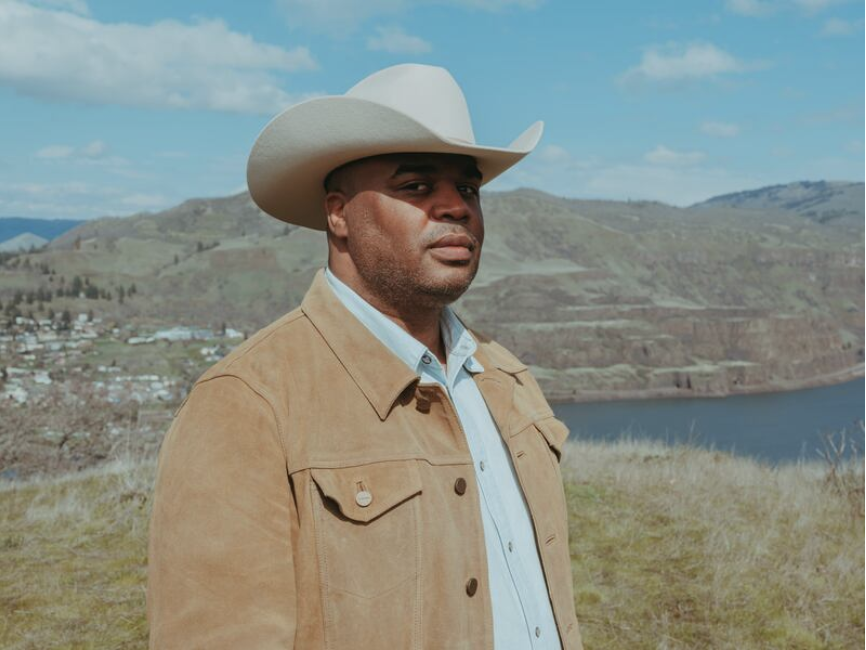
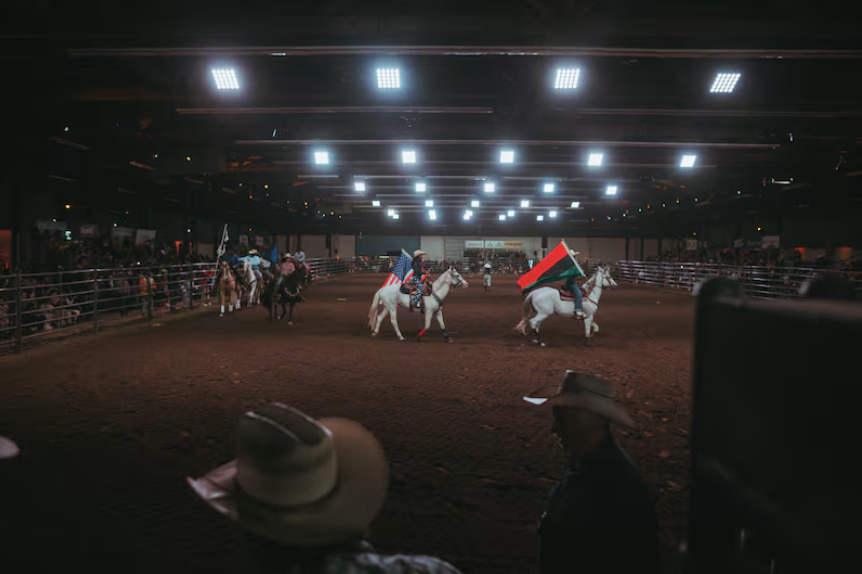
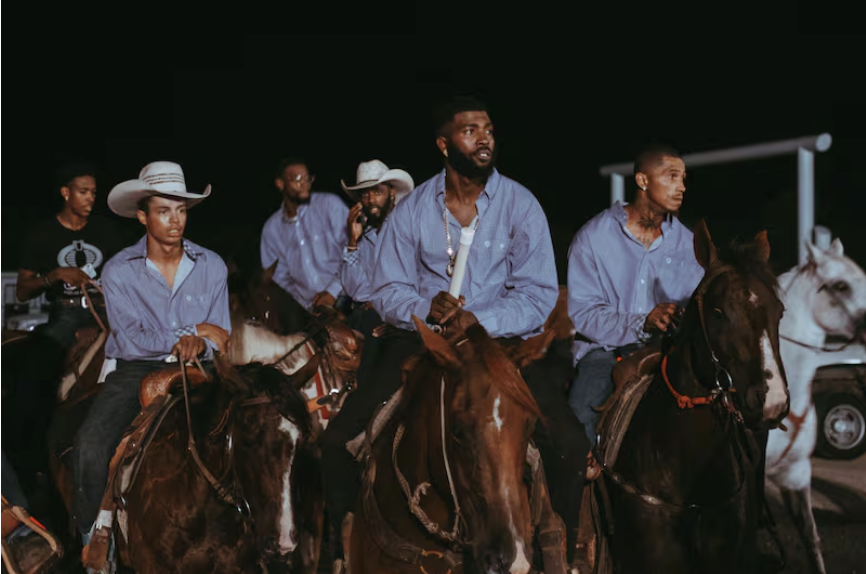
Ivan McClellan has had two million pounds of dirt to fill Temple University’s Liacouras Center for a “radically Black rodeo” on Saturday, along with 15 bulls, six broncos, 10 sheep, and more than 20 horses.

It has been a decade since he first fell in love with the Black rodeo on a 105-degree day in Okmulgee, Okla. The Portland, Ore., native was photographing the Black cowboys and cowgirls from the grandstands of the Roy LeBlanc Invitational Rodeo.

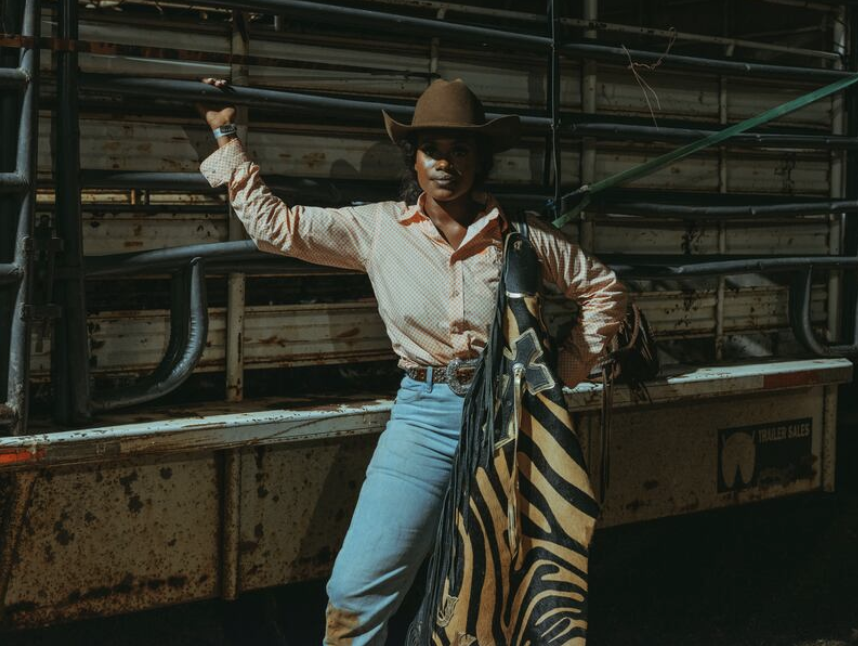
As they rode in Timberland boots at a speed of 50 miles per hour, braids flowing behind them, and their starched T-shirts crunching as their arms rose in suspension, McClellan realized there was a story that needed more unearthing.

“I got obsessed with rodeo culture at that point,” he said.

Black cowboy culture has existed since the beginnings of the American South, but McClellan felt there was a story that history books widely overlooked. He wanted to spotlight Black cowboys of the past and the rodeo athletes of today, from America’s Great Plains to those in the country’s largest urban centers.

With every rodeo he attended, he made more images and forged new relationships with cowboys and organizers, who inspired him to start a Black rodeo show of his own.

In 2023, he founded 8 Seconds Rodeo to highlight the essence of Black cowboy life, offer Black athletes higher wages than they were accustomed to, and introduce the world of Black cowboy culture to those unfamiliar with its extensive history.

That first rodeo at the Portland Convention Center drew a sold-out crowd of 2,000 attendees for an “electric” all-Black rodeo experience.

“This is not a reclamation story,” McClellan said. “This is something that we’ve always done, and something we’ve always had as Black people. We’re putting a light on it and letting people know it’s part of our identity. If you put on cowboy boots and a hat, you’re just putting on your grandpa’s clothes, and it’s OK.”

After selling out shows on the West Coast, McClellan — who recently moved to Chester County — teamed up with local equestrian and longtime friend Erin “Concrete Cowgirl” Brown to merge Western-style rodeo with Philly’s urban cowboy culture.

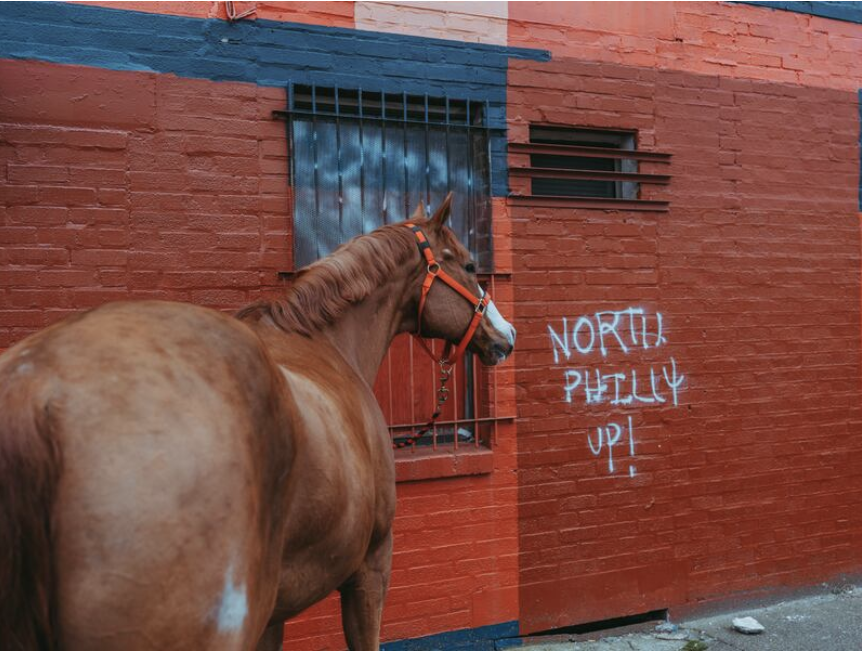
With Brown as his tour guide, McClellan ventured to the original home of the Fletcher Street Urban Riding Club, a famed institution for Black cowboys in the heart of North Philadelphia’s Strawberry Mansion neighborhood.

For decades, Black horsemen have roamed the streets of Strawberry Mansion and the nearby lushes at Fairmount Park. Several Black-owned stables have populated the area throughout the 20th century, where lessons on horsemanship and urban cowboy history were shared among riders young and old.

Brown started visiting the Fletcher Street stable at age 6.

And when the story of Fletcher Street and the city’s Black cowboy tradition was made into Netflix’s 2021 film Concrete Cowboy, Brown served as a consultant.

“We’ve achieved a lot in Portland, but I wanted to go to the grittiest and most soulful city in the world to see what we could do,” he said. “We’re going to throw down, the athletes are going to compete at the highest of their abilities, and I’m most excited about the crowd because of the city’s history and vibe.”

Philly’s, McClellan said, is a cowboy culture you don’t see anywhere else in America, and he’s excited to integrate that urban riding culture into Saturday’s event.

“It’s just the swagger of the riders here,” he said. “It’s got a lot of hip-hop in it, and that’s definitely something that has inspired us.”

Brown, who will bear the Pan-African flag to kick off 8 Seconds Rodeo, said the show is a natural fit given the city’s unique history and the recent commercialization of the Black cowboy.

“It’s major,” Brown said. “Cowboy and urban horse culture has been a thing way before I was born, but it’s more mainstream now with Beyoncé and everything coming forth. But what other city to do it than Philadelphia? It’s one of the largest cities, so why not?”

The one-day experience in Philly will feature rodeo athletes from around the country competing in bull riding, barrel racing, and bareback bronco riding for a total of $60,000 in prize money. There will also be a community pre-show that will have line dancing, mechanical bull riding, and roping instructions from fellow rodeo vets, and sounds from Philly’s DJ Diamond Kutz.

“You didn’t get those Fashion Nova and Boot Barn boots to sit in your seat. Come out early for community,” McClellan joked.

This event isn’t just a one-off, McClellan said. 8 Seconds Rodeo is going to be a mainstay event, and one he hopes becomes a place of community and celebration for Black Philadelphians who are familiar and new to the world of rodeo.

“We’re not bringing a rodeo to Philly. We’re building a rodeo in Philly,” he said. “We’re an unapologetically Black cultural event, and this one is going to be an unapologetically Philly event.”

– The Philadelphia Inquirer

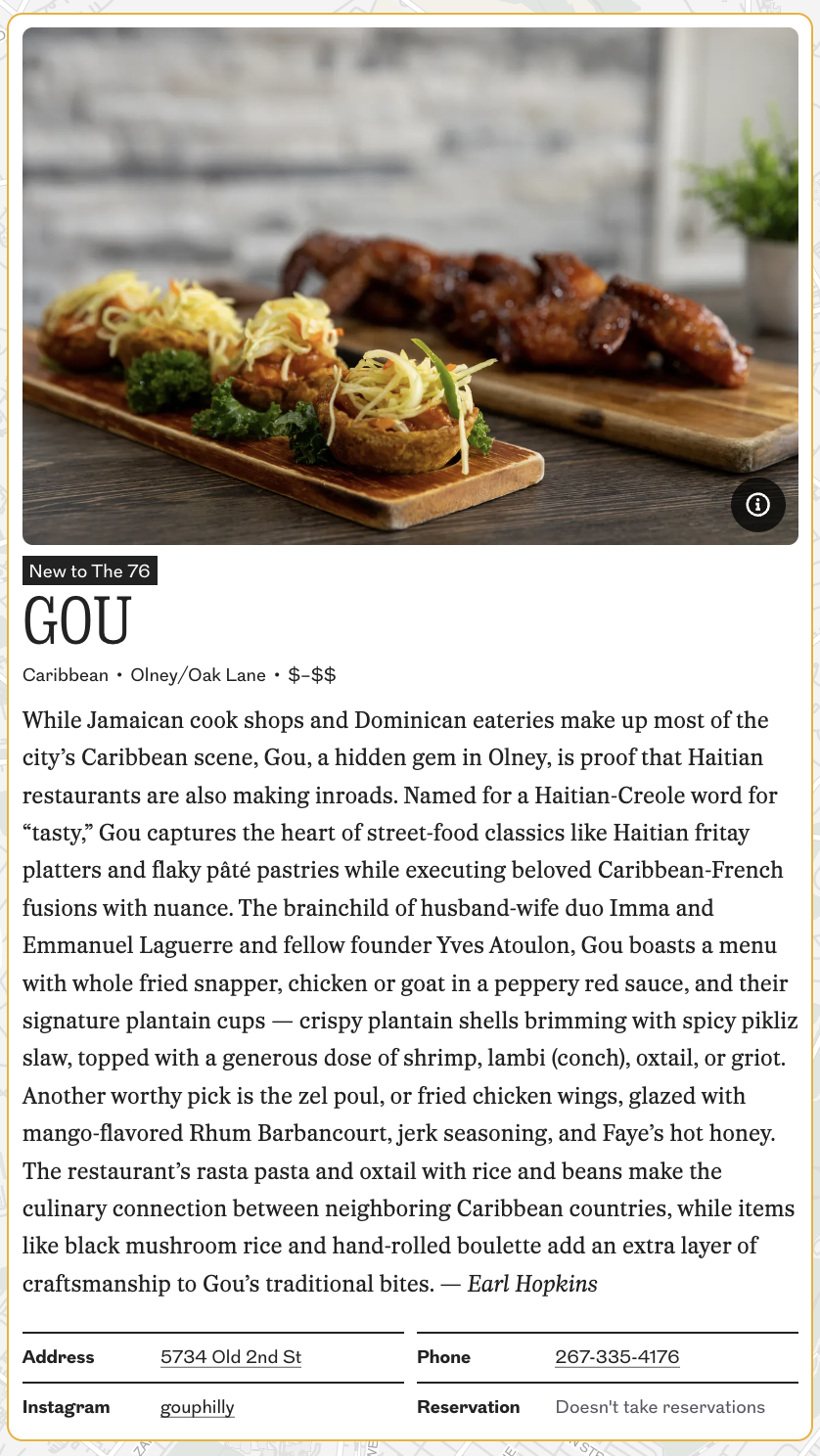
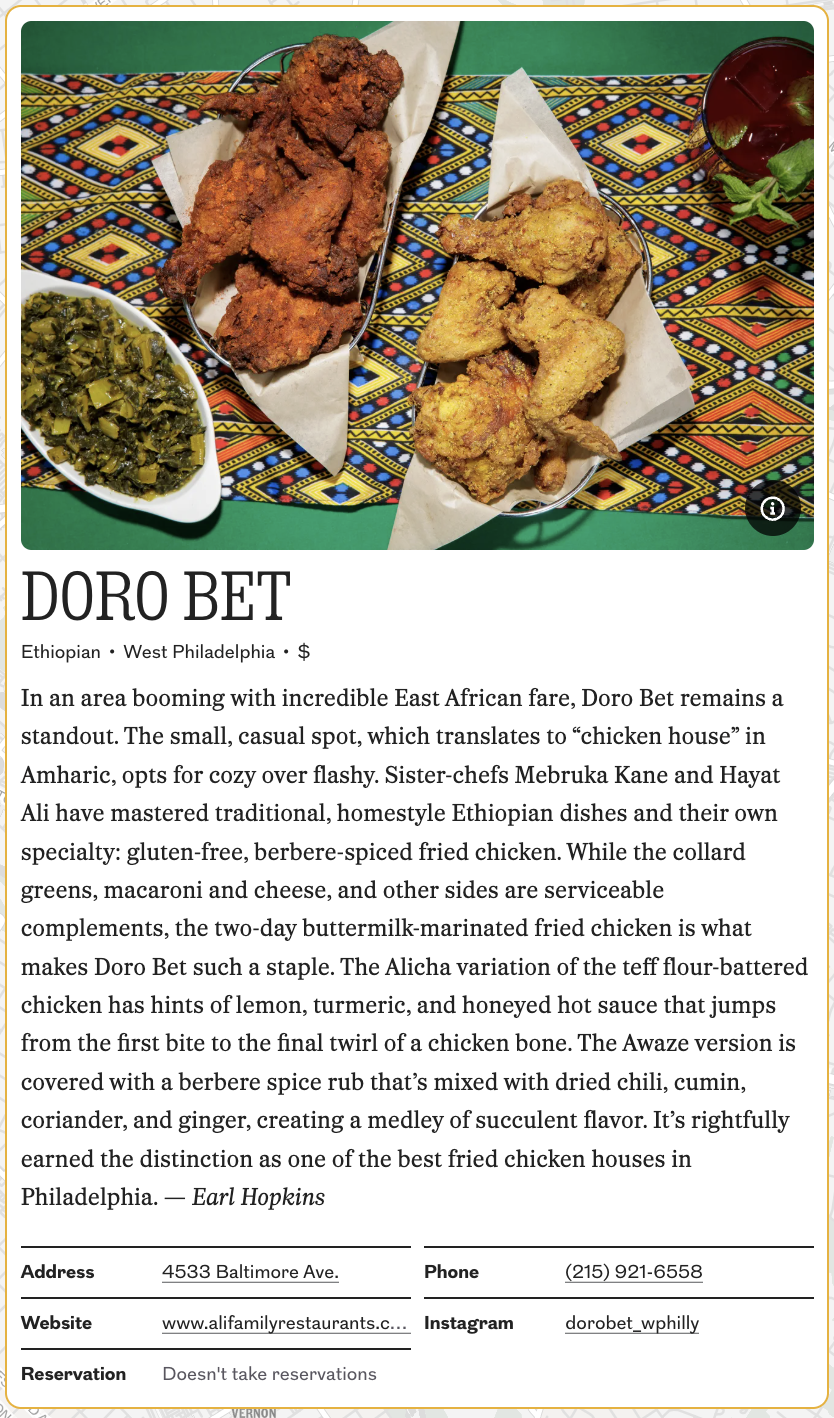
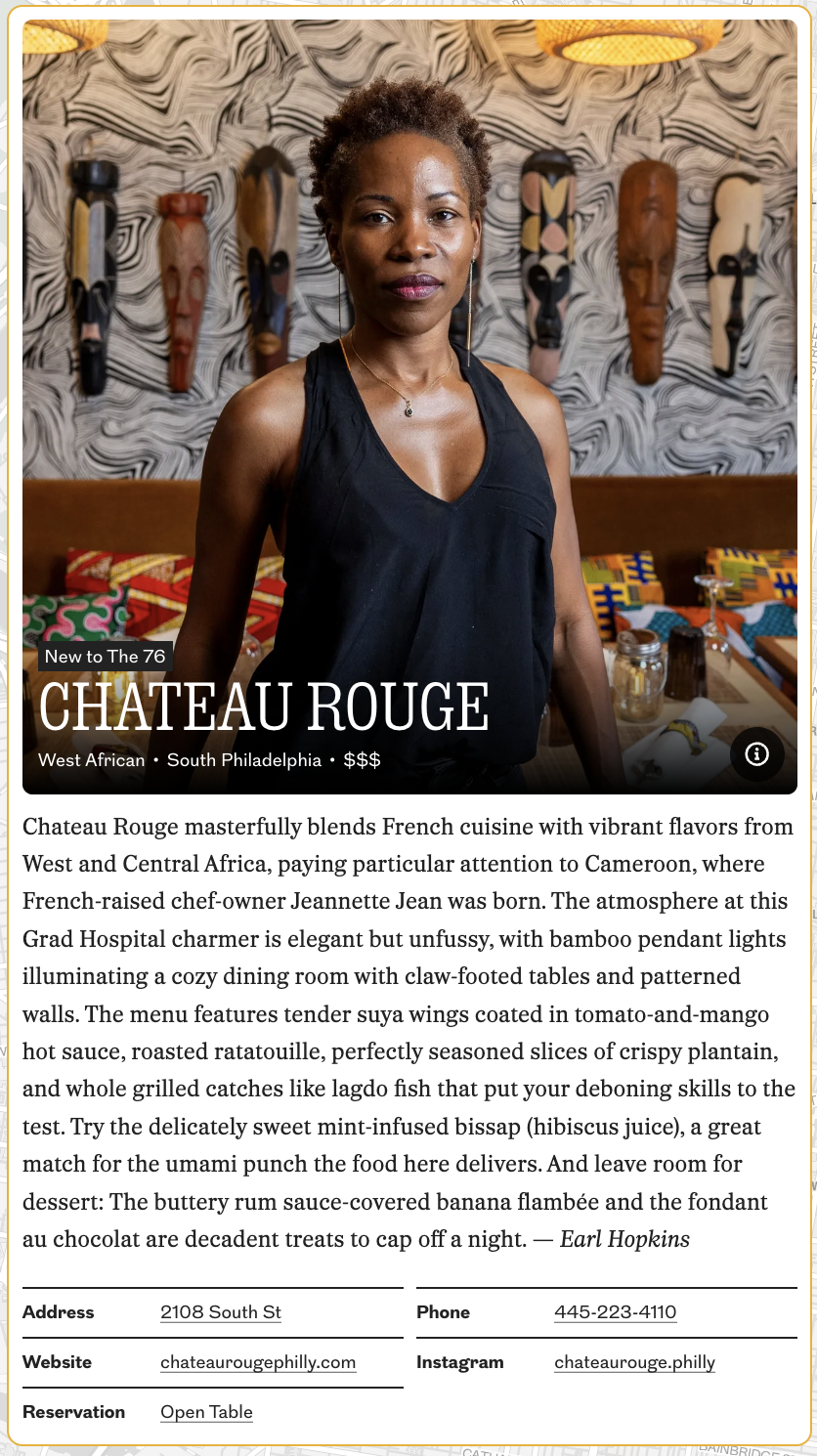
2025’s most vital Philly restaurants

It’s a brand-new year for The 76, The Inquirer’s annual list of the most vital restaurants in the Philadelphia area. This year, we started fresh with a new batch of dining scouts and an even wider purview, diving deeper into pockets of Philadelphia that we didn’t get to eat through last year. The result is a list that we hope is as vibrant, diverse, and interesting as the city that it reflects.

You’ll find some favorites from last year on 2025’s 76, which held on to their spots by being just as impressive as they were the last times we ate there (Friday Saturday Sunday still dazzles, as does Gabriella’s Vietnam).

But you’ll notice that there’s a good deal of turnover, too. More than half of the list is fresh — either classics we felt deserved their time in the spotlight, like the white-tablecloth red-gravy stalwart Dante & Luigi’s or chef favorite Pho 75, or new and new-to-us spots that reflect the shifting energy of the dining scene, like Indonesian karaoke hot spot Niki Echo and the revived Tequilas, a three-restaurants-in-one experience.

Our scouts, all 18 of them, fanned out across the Philadelphia area and ate through cuisines we were curious about, like the wide-ranging food truck landscape and the vibrant Mexican community in Norristown. We found a Main Line cheesesteak (Johnny’s Pizzeria) that rivals South Philly’s best. The result is a list filled with gems, some in plain sight and some that required a bit more hunting.

We think this list, which is unranked and alphabetical, is the most useful list of Philadelphia-area restaurants out there. Some hotly anticipated openings like Stephen Starr’s Borromini and Phila Lorn’s Sao opened too late to make the cut. But don’t worry, there’s always next year.

The 76 is how we think Philadelphia is eating right now, and — we hope — might help you uncover your next favorite spot. Grab a plate and dig in.

– The Philadelphia Inquirer

The urban designer whose weekly work commute is a trip from Philadelphia to Atlanta, and back

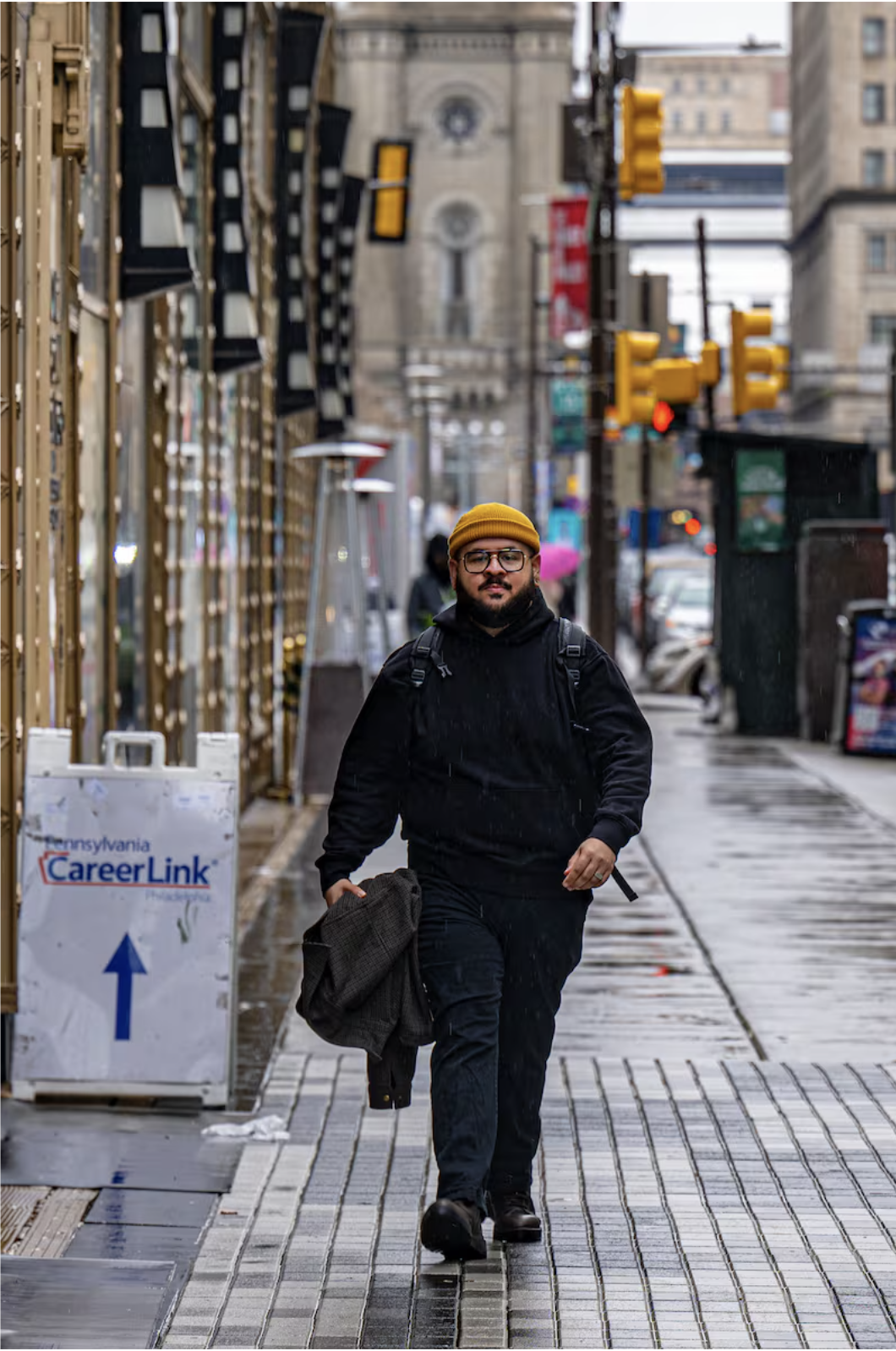
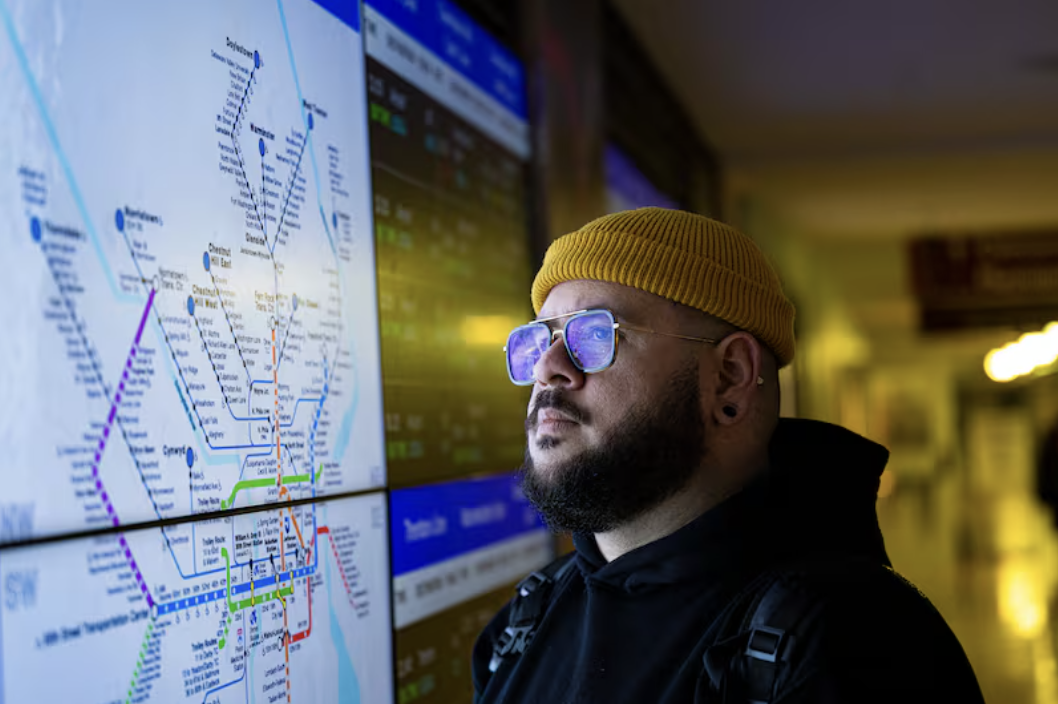
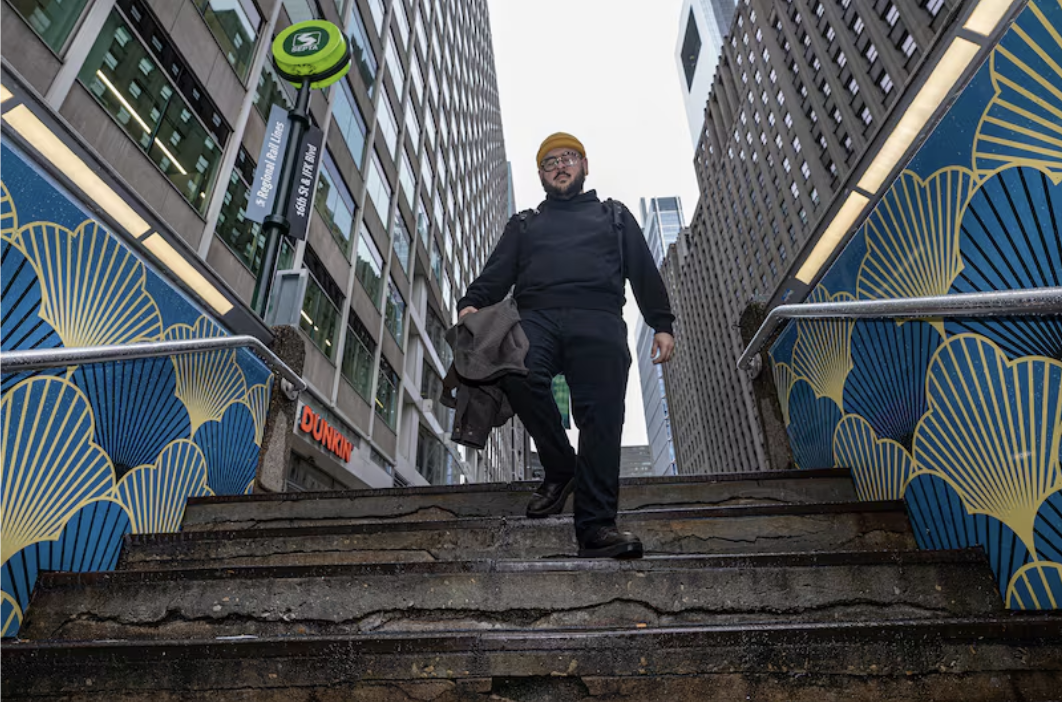
Philadelphia’s congested highways or crowded SEPTA platforms don’t get in the way of Daniel Rodriguez’s commute to work.

That’s because the Philadelphia-based urban designer’s commute between his firm’s two offices consists of two flights, two trains, and a bus across two states each week.

Rodriguez, who lives with his wife in their Jewelers’ Row apartment, ping pongs between his home (and his Center City office) in Philadelphia and his office in midtown Atlanta, twice a week.

Rather than moving to Georgia or embracing a simpler hybrid work-life balance, Rodriguez prefers an 800-mile trek to work that doesn’t have him dealing with Philly rush hour traffic and the restrictions car owners face.

“I want to live a life that’s intentionally, anti-whatever everybody else is doing,” Rodriguez said. “I feel like there are problems in society, and this is one of them that just trickles and affects so many things in our personal and professional lives. It’s not anti-car. It’s really about getting away from the dependency and focusing on building systems that help people move. That’s my whole philosophy.”

Rodriguez, who grew up in Bayamon, Puerto Rico, said it’s a lifestyle driven by the independence and movement he felt was missing in his youth.

The geographical barriers of the island often led to feelings of physical and mental entrapment as a child.

“Where I come from, I’ve never seen people so hungry to have something in life, with no ability to achieve it,” he said. “And I’m willing to do extreme things to do that.”

In May, the 34-year-old began posting videos of his travels to and from Philadelphia and Atlanta. His TikTok and Instagram posts have drawn millions of viewers, with hundreds of users questioning how Rodriguez balances his workload and travels.

His schedule varies each week, but he usually flies into Atlanta on Sunday nights and returns to Philadelphia on Tuesday nights. Sometimes, he will fly out on Monday morning and return on Wednesday morning. He also does additional same-day round-trips a couple of times a month.

The planning for his trips to Atlanta begins the night before. Rodriguez packs his bags and puts toothpaste on his toothbrush before going to bed.

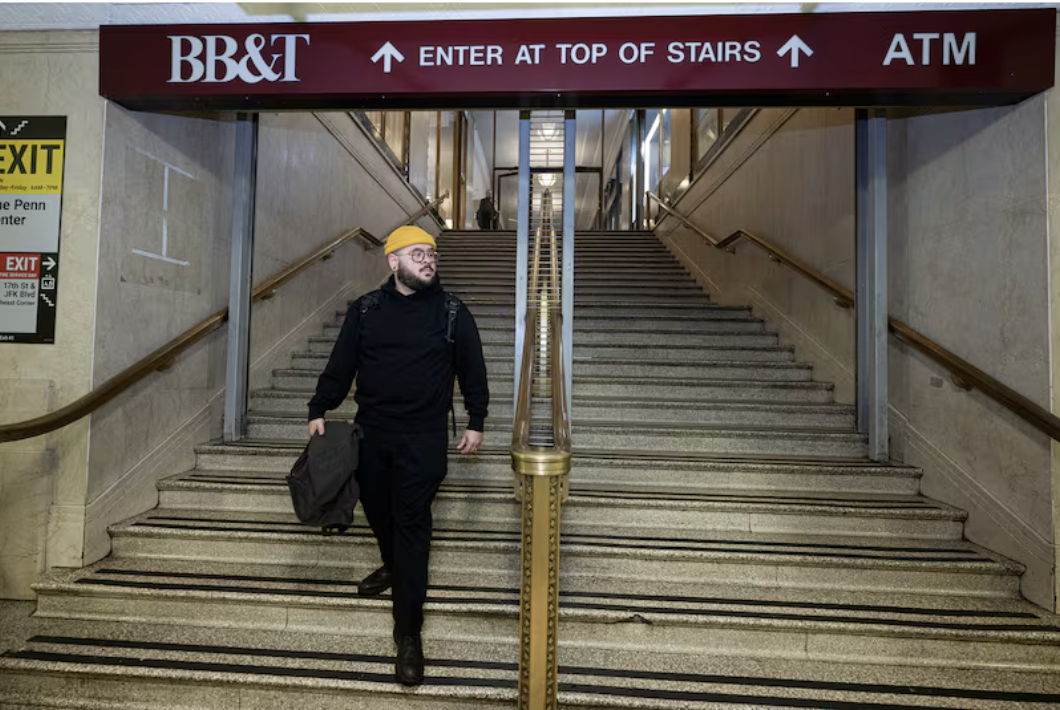
He wakes up at 4 a.m., grabs his belongings, and walks to the Suburban Station. Here he boards the train to the Philadelphia International Airport and lands in Terminal F for his flight to Atlanta. He does have to factor in the regular delays.

“Terminal F is like the dingleberry of Philadelphia. It’s the last one at the airport, and really far,” he joked.

After the 90-minute flight to Atlanta, he walks over to the Metropolitan Atlanta Rapid Transit Authority platform for a 30-minute train ride to his company office in midtown Atlanta.

He’s not completely “anti-car,” he insists. He often rents a Zipcar for small errands and to explore Atlanta restaurants, art galleries, and sites that feed his architectural interests.

“I’m more along the lines of, ‘I don’t want to be dependent on a car,’” he said. “I don’t want to put my money toward that. I’d rather put that into something else, and suffer the consequences.”

Once his work day is finished, he either uses ride-share or takes a one-and-a-half-hour bus ride to a friend’s apartment in Decatur, arriving around 9 p.m. And before he rests his head for the night, Rodriguez begins his routine all over again for his return to Philly the following morning.

Rodriguez said his travel costs come out to about $180 each week, with the most significant barrier being the time and energy he spends to balance out his travels.

“It’s not unachievable,” Rodriguez said. “I feel like the pain point for a lot of people is the time. People don’t want to spend the time.”

Rodriguez didn’t always live like this. His super commute began after years of uncertainty. He moved to Philadelphia in 2022, and between 2023 and 2025, Rodriguez was laid off twice, incurring thousands of dollars in debt.

“I wasn’t even paycheck to paycheck anymore. I was living in the negative,” he said.

After another eight months of job hunting, he was at a crossroads. With limited jobs in his industry in Philly, he applied for roles in other cities.

He applied to an urban design firm in Atlanta, and the week his unemployment ran out, he landed his current role in May 2025. While the company has an office in Center City, the Atlanta location was the only one hiring in his specific field.

Rodriguez consults on transportation, green space, urban design, and master planning in Atlanta and other cities along the East Coast.

While the demands of the commute were challenging at first, Rodriguez believes he has made a decision that works for him. “I have my wife here, and I don’t want to uproot her,” he said.

Since he started making videos of his commute, his world has “completely flipped,” Rodriguez said.

He’s landed brand deals with travel-based companies and has spoken in various cities across the country about how fellow millennials can traverse the country without the burden of a vehicle.

Rodriguez plans to become a content creator full-time to encourage viewers across YouTube, Instagram, TikTok, and other platforms to avoid the pitfalls of car ownership.

His ambitions haven’t gone unchecked. Environmentalists who watch his videos often point to the carbon footprint he leaves behind, despite his aversion to car ownership.

Rodriguez admits his lifestyle could be viewed as contradictory. His modes of travel contribute to gas emissions, but he contends he’s not the sole source of the issue, simply a product of a system already in place.

“I did not pass the laws that allow oil barons to drive or force corporations to fuel jets that release stored carbon,” he said. “I am a participant in society, and there is no fully ethical way to exist within it.”

While he understands people’s precaution and confusion, Rodriguez is confident his weekly commute and lifestyle will work as well for others as they do for him.

“I love to create. I love to build. And I don’t want to do anything where you’re just staying still,” he said.

– The Philadelphia Inquirer