An in-the-works UArts documentary will show what led to the school’s collapse

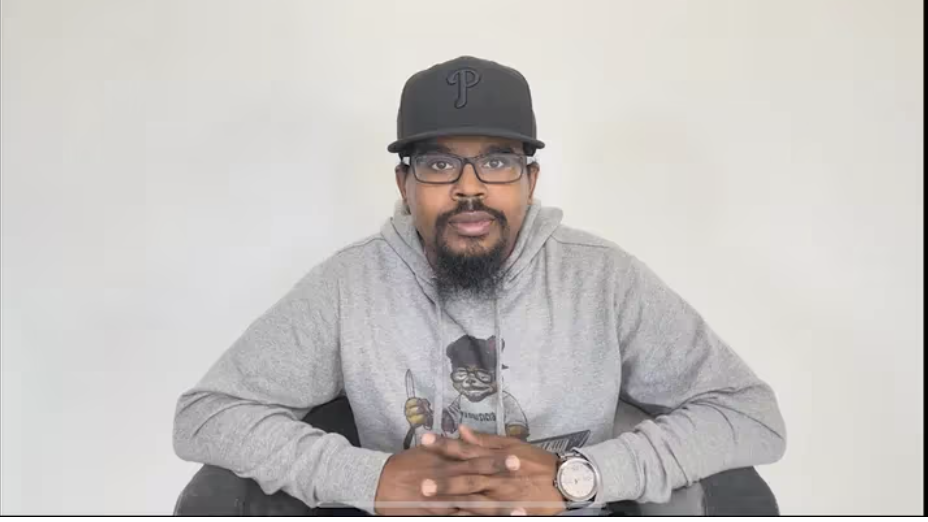
Amid the thousands of emails that filled his inbox, former University of the Arts professor Kyle Crichton never expected to receive a message like the one delivered at 6:19 p.m. on May 31.

Crichton froze as the news broke — president Kerry Walk said the school was closing in a week. And on June 7, the historic arts college officially shuttered its doors, leaving hundreds of students and educators wondering how and why the university suddenly collapsed.

Administrators blamed declining enrollment and unexpected financial challenges as the source of the dismay, while some UArts employees and union members pointed to alleged mismanagement. The closure sparked days of protests and class-action lawsuits filed by dozens of ex-staffers.

‘I started filming it’

With uncertainty still looming,Crichton grabbed his camera and began capturing student-led protests on the steps of Dorrance Hamilton Hall on June 5. The award-winning filmmaker had another project on the books, but he decided to chronicle the story he was experiencing and watching unfold.

“As it happened, I started filming it,” said Crichton, who received a Mid-Atlantic Regional Emmy for his work on the 2023 documentary Angel Dose. “I was disappointed financially, but I was also disappointed I wasn’t going to be teaching these kids.”

In need of a cinematographer and co-director, Crichton tapped fellow UArts graduatesKatie Supplee and Michelle Rose Goodwin, who agreed to be a part of the project, still in early stages and currently titled “Reckless Education.”

Along with capturing the devastation of the June 7 announcement, the three filmmakers have interviewed UArts students, staff, and faculty about the lasting affects of the shut down over the past four months.

Goodwin, the co-director and producer of the film, is hopeful the documentary will fully capture the frustrations, anger, and heartbreak felt among the UArts community in the days and months after the unforeseen closure.

“The school dissolving in the fashion that it did shook a lot of people’s foundations, took a lot of control from their lives, and made a lot of people feel powerless,” Goodwin said. “And I think this documentary is a way to try to give them that power back.”

Why did UArts close so suddenly?

Goodwin said they aren’t shying away from the school’s missteps, which ultimately led to its dissolution and Chapter 7 bankruptcy filing. But a goal of the documentary is to figure out what happened.

To unveil the full wreckage of UArts, Crichton said it’s a “multi-pronged” approach that requires the voices of city officials.

Crichton, Supplee, and Goodwin are hoping to land interviews with city council members and attorney general Michelle Henry.

“Art is such a good vessel for spreading ideas, and I feel like that’s what we’re doing here,” Supplee said. “We don’t want to just impact the Philly arts scene with the film. We want to speak to the shuttering of educational institutions as a whole.”

Next steps for production

Supplee, whose fiancé worked at UArts before the university closed its doors, said the small production crew is now following “displaced UArts students who were forced to transfer schools to pursue their creative arts career.”

With filming in full swing, Crichton said the team is aiming for a 2026 release. The next step is to add more interview subjects, researchers, and filmmakers to bolster up the production, and score additional funding to piece the self-funded project together.

The three filmmakers are funding the independent venture while balancing their daily work as documentarians and content creators.

Crichton is confident they can produce the film “rag-tag style” for $100,000. And as they bring on more contributors, preferably UArts alums, he believes the nearly two-year process will be worth the wait.

“It feels like we have lightning in a bottle, and we want to continue pursuing it,” Crichton said. “Things will unfold, and we’ve come to the realization that it’s going to be a little bit of time, but we’re prepared for it.”

For more information, visit recklesseducationfilm.com.

– The Philadelphia Inquirer

Yo Philly, we did it! The Visitor Center announces the city’s first Rocky festival

Nearly 50 years after the release of Rocky, Sylvester Stallone’s iconic Rocky Balboa remains an integral part of Philly lore. And this December, tourists and longtime fans will get to celebrate the first-ever RockyFest.

Following the success of last year’s Rocky Day, which drew thousands of spectators and fans dressed as their favorite boxer, the Philadelphia Visitor Center on Tuesday announced the first RockyFest. The center made the announcement atop the very Philadelphia Museum of Art steps made famous by Stallone in the 1976 Academy Award-winning film.

Visitor Center president and CEO Kathryn Ott Lovell said the weeklong celebration, which runs Dec. 3-8, will feature a series of free and ticketed events, including a 90-minute bus tour. The Rocky Bus Tour will take fans to Mighty Mick’s Gym, the Italian Market, and Adrian Balboa’s fictional grave site at Laurel Hill Cemetery, among other filming locations.

“We’re just excited to give people the opportunity to celebrate Rocky,” Lovell said. “Visitors want to run the steps and get a picture in front of the statue, but this is giving people a much more comprehensive experience.”

The festival aims to expand the fan experience that is already served by the Rocky Shop, located at the bottom of the Philadelphia Museum of Art steps, and Rocky Day, which Stallone attended along with his family and friend, actor Chevy Chase.

During his visit last year, Stallone called residents of Philly the true heroes.

“I want to thank you from the bottom of my heart — and Rocky’s, too, because we’re very close — to all of you who, believe it or not, are the real-life Rockys, because you live your life on your own terms, you try to do the best you can, and you keep punching,” he said.

Through partnerships with Visit Philadelphia, the Philadelphia Film Society, Philly PHLASH, and other organizations, RockyFest will help recreate Rocky and Adrian’s date nights at the University of Pennsylvania’s Class of 1923 Ice Rink and the Philadelphia Zoo. There’ll also be a Rocky marathon at the Philadelphia Film Center.

The Kennel Club of Philadelphia will host the “Southpaws at the Docks: Pugs and Mugs Yappy Hour” at the Cherry St. Pier on Dec. 5 to celebrate the bond between Rocky and his bullmastiff, Butkus. And historian Paul Farber, director of Monument Lab and host of The Statue podcast, will lead a discussion about the significance of the Rocky statue on Dec. 6.

“We’re excited about this year’s lineup of events and look forward to welcoming all who journey here to celebrate this cultural icon,” Visit Philadelphia president and CEO Angela Val said in a statement.

RockyFest guests will be offered free hotel parking and vouchers to the Rocky Shop, Val added.

Jennifer Nagle, vice president of special projects at the Philadelphia Convention and Visitors Bureau, is confident the festival will draw Philly natives in addition to out-of-towners. “I’m from South Philly myself, and there’s nothing more South Philly than what we just put together with this RockyFest, Nagle said. “It’s long overdue.”

For more information and tickets to the inaugural festival, visit phlvisitorcenter.com/rockyfest.

– The Philadelphia Inquirer

The Philly photographer who spent decades photographing the beauty and majesty of Black cowboys

More than 30 years ago, Pulitzer Prize-winning photographer Ron Tarver began photographing Black cowboys, rodeo queens, and ranchers across the southern plains of east Texas, the low hills of Oklahoma, and the urban pathways of Philadelphia.

On assignment for National Geographic and The Philadelphia Inquirer, Tarver captured generations of cowboys and cowgirls working in their stables, strutting in small-town parades, or cooking breakfast inside their ranch-style homes. After failed attempts to thread the detailed portraits and textured landscapes into a book project, Tarver put away nearly 20,000 pictures in a storage container.

In the years since, Tarver published a book about the experiences of African American war veterans and became an associate art professor at Swarthmore College after a 30-plus-year career in photojournalism.

His new book The Long Ride Home: Black Cowboys in America finally releases on Saturday. A week later, Tarver will be doing a book signing, sponsored by the Print Center, at the 20 / 20 Photo Festival Photo Book Fair at Cherry Street Pier on Sept. 7. The book photos will also be on display at InLiquid Gallery as part of their Brotherly Lens: A Portrait of Philadelphia exhibition, which is also part of the 20 / 20 festival.

“This is one of those projects that wouldn’t leave me alone for the longest time,” said Tarver. “It’s always been on my mind because it’s such an important project to get out into the public.”

Black cowboy culture’s recent renaissance in pop culture may have started with the 2020 North Philadelphia-set western Concrete Cowboy, starring Idris Elba. Musicians from Lil Nas X to Beyoncé have also straddled horses and donned bolo ties for songs honoring the Old West.

For Tarver, the timing is perfect. “It’s out in the zeitgeist now,” he said. His book’s 110 images showcase the deep roots of the country’s Black cowboys and cowgirls.

Tarver’s The Long Ride Home isn’t the act of an outsider looking into Black cowboy culture. He lived it.

Tarver grew up in Fort Gibson, Okla., where he rode horses bareback, attended rodeo shows, and spent his summers working on local farms and his cousin’s ranch.

His grandfather, Thomas Wilson, was a working cowboy in the 1940s. His father, Richard, introduced Tarver to the world of documentary-style photography.

It wasn’t until Tarver, now an Elkins Park resident, moved to Philadelphia in 1983 that he realized how unacquainted people were with the Black West.

“The bottom line was people didn’t think there was such a thing as a Black cowboy. I got all kind of strange feedback [on the book] from people literally saying, ‘I don’t think there’s an audience for this. I don’t think there’s any kind of thing or entity as a Black cowboy.’ So, that’s why I put this thing in a box and just said, ‘Forget about it.’”

According to Smithsonian Magazine, one out of every four cowboys who were “trailblazing, sharpshooting, and horseback-riding” on the American frontier were Black. And with the release of The Long Ride Home, Tarver plans to paint a vivid picture of the culture’s history and grandeur.

Liz Spungen, executive director of the Print Center, said Tarver faced many roadblocks with the book’s release. But she’s thrilled to see the decades-long project come to life, and to have the capacity to showcase his work in a planned exhibition in fall 2026.

“I think there’s probably a more receptive audience for it now … people are now more eager, I hope, to understand the larger contributions of Black Americans in the West. We are more attuned to hearing these stories now, so I’m hoping it will receive a fabulous audience.”

With renewed interest in his Black Western project, Tarver was tasked with cutting down his 20,000-image collection to a book-size number. He focused on the years between 1992 and 1996, and zeroed in on photos of everything from the rodeo shows to the after-hour hangs.

“I wanted to show that this isn’t a fad,” Tarver said. “I wanted to show the broad spectrum of Black Western lifestyle, and its vibrance even as far back as then.”

Tarver narrowed it down to 250 photos, and then tapped longtime friend and former NatGeo magazine photo editor Elizabeth Krist to pare the project down even further.

Through the editing process, Krist was impressed by the stark contrast between Tarver’s detail-rich portraits and “visceral action shots.”

A founding member of the Visual Thinking Collective, Krist is hopeful the book opens people’s eyes to the lived culture of Black cowboys, both then and now. “It’s an ongoing culture. It’s not something you look back and think, ‘OK, that was the 1800 or 1900s.’ This is something that is still going on. I hope people really understand it on a deep level when they see his work.”

Once the final lineup of photos was selected, New Mexico-based designer David Skolkin stepped in. He was in awe of Tarver’s ability to meld his journalistic practices with his creative nuance.

The two men connected on long phone calls and Zoom meetings for months to finalize the layout and photo sequencing for The Long Ride Home. “It was like figuring out a puzzle,” Tarver said.

“The images felt very real to me. I could feel the people, sense their emotions, and could even sense how things smelled in the environment of the photographs. They had a texture that was very accessible to me,” Skolkin said of the final book.

As Tarver prepares for the book’s release, he’s reminded of the people he connected with throughout his career. Many of the children he photographed in the early 1990s have carried on their family’s legacy of farming and cowboy culture.

He hopes to develop another book that’s dedicated to the families he first photographed. He also wants his images to be placed in national museums and global showcases to continue sharing the story of the Black West for people to celebrate its largely undocumented glory.

“We all built this country,” Tarver said, “and to remind people that we were in this culture and have been for a long time is important. I hope this book carries out that idea, as well as the beauty and majesty of it.”

A wholesome rap battle promises cash — and takes a stand against gun violence

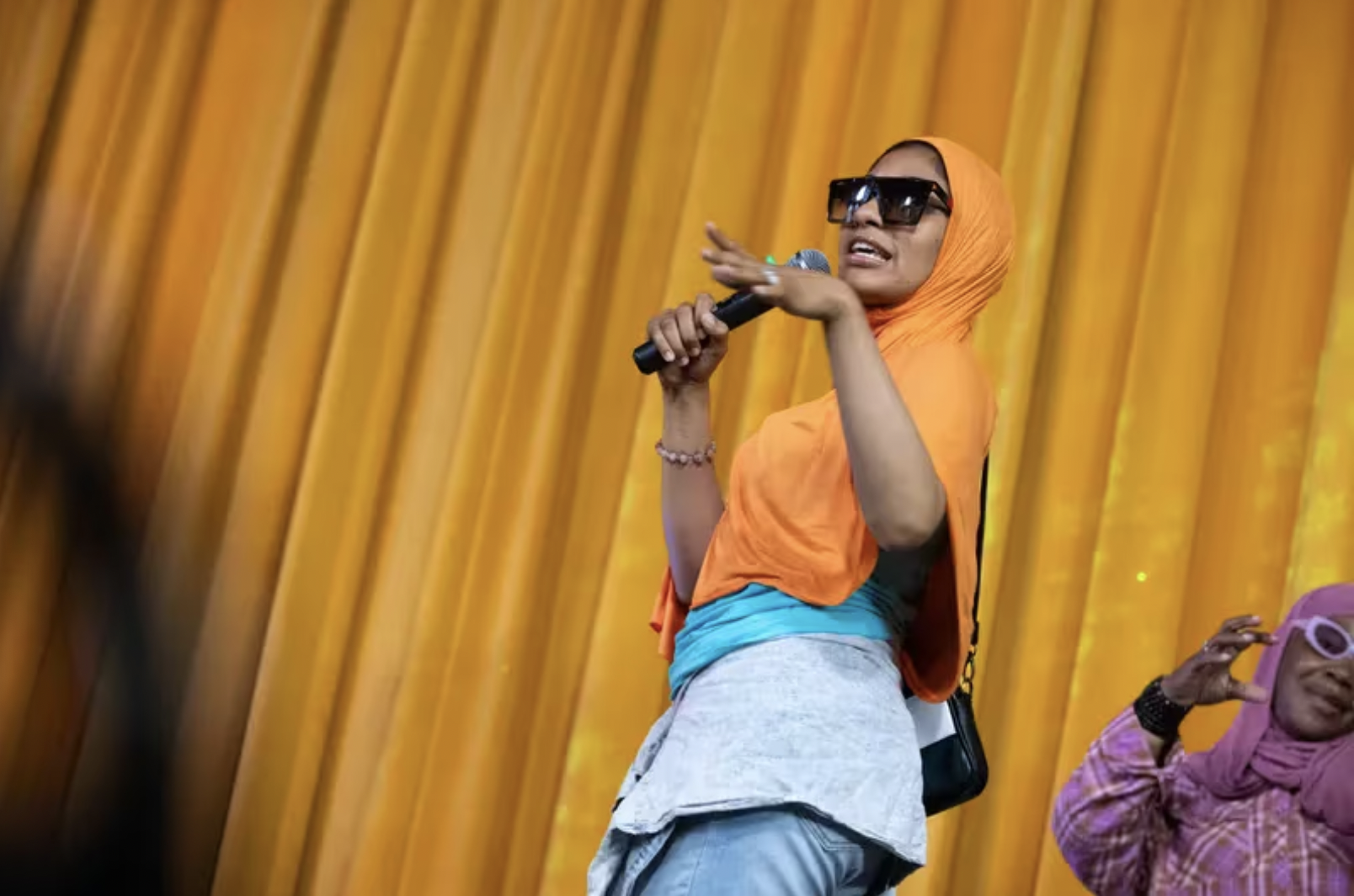
In the grueling battle against gun violence in Philadelphia, community leader and activist Sajda “Purple” Blackwell has served on the front lines.

At age 7, she lost her brother, Ronnie Easley, who died of a gunshot wound.

In January 2023, Sideic Robinson, the son of her husband, Thomas Blackwell VI, was fatally shot in Rochester, N.Y., while leaving his job at a local Burger King.

As the owner and operator of the online radio station PQRADIO1, Blackwell realized she had a role to play in perpetuating a trigger-happy culture. Her station played music that glorified street violence. And as death tolls rose, she swore only to promote “positive music on purpose.”

While she still plays urban contemporary artists like Lil Baby, Megan Thee Stallion, and Meek Mill, Blackwell doesn’t play or promote records that glorify gun violence.

Adding to her efforts at reprogramming the minds of local listeners, Blackwell also started the West Philly-based nonprofit Blackwell Culture Alliance Inc., which looks to “build stronger communities, neighborhoods, and economies through educating, donating, and volunteering.” It organizes food distribution drives and other outreach programs.

One such program is the open mic series How Dope Are You?, which Blackwell hopes will counteract some of the pervasive pop culture messages she finds so harmful. .

Since 2021, the monthly rap battle has encouraged local rappers to spread anti-gun violence messages through their music. The competition awards Philly rappers, poets, and spoken word artists with a $1,000 prize, but there are two rules: they can’t use curse words and have to firmly address the problem of gun violence.

“We became very intentional on promoting nonviolent music, and to challenge our young people to make the music they talk about, what they want to hear, and to make it hot. People have really begun to step up to the challenge,” Blackwell said.

Inside West Philly’s Holy Apostles & the Mediator Episcopal Church, the rap battle starts with gun violence survivors and their families locking arms in a “healing circle.” After Blackwell welcomes everyone, the attendees share their experiences.

“Whether we have 50 or 100 people, we’re creating a space for nonviolent music,” Blackwell said leading up to a recent showcase. “And if you can make a song about not killing anybody, then you can come get this ‘shmoney.’”

On May 22, South Philly artist Michael “Mike J” Johnson and nearly a dozen other creators exchanged stories and caring words before setting the stage ablaze.

“It just felt like a real encouraging space,” Johnson said. “Nobody was out for each other. The dynamic was genuine, wholesome, and very supportive.”

Johnson, who was inspired to rap after hearing Nas’ “I Gave You Power” at 8 years old, admits his music isn’t always the most uplifting. Days before the competition, he worked tirelessly to craft a song he felt was up to Blackwell’s standards.

He thought about the victims and perpetrators of gun violence, and how both their lives can seemingly end with the pulling of a trigger. He came up with the song “Let’s Rise Up,” which incited a seismic chant from the crowd in attendance.

“Bro, rise up. Sis, rise up,” the audience screamed. “Bro, rise up. Sis, rise up.”

By the end, Johnson and the other performers were awarded portions of the $1,000 prize. The program — and the camaraderie that was formed among the participants — made it feel more like a family gathering than a competition. There were no losers, Johnson said.

“It’s not just West [Philly],” said Reika Safiyya, a singer-songwriter, teacher, and sustainable clothing designer based in West Philly. “When you’re in Philly long enough, you can see the different dynamics. It’s a city full of art and talent, but the resources and support isn’t always there for people to thrive and live healthy lives. What Blackwell is doing is very necessary.”

Along with reducing gun violence, Blackwell said the open mic shows local artists that positive music can still fuel success. “It perpetuates the idea that the music is not corny, and that there are artists out there who can still survive in the rap game that’s not killing anybody,” she said.

What started as a five-person crowd three years ago has bloomed into a more recognizable open-mic series and family outing with catered food and a fresh lineup of local talent.

There’s been a notable drop in gun violence in recent years. According to the Office of the Controller, there was a 20% decrease in total homicides from 2022 to 2023. And Blackwell likes to think the Blackwell Cultural Alliance played a part in the decline.

Having cared for patients impacted by gun violence, Philly pediatrician and How Dope Are You? supporter Vivek Ashok said Blackwell has inspired him to take a more active approach to advocacy. For any program to be sustainable, he said, it requires a healthy investment from community members and elected officials.

“A lot of these community initiatives, specifically run by Black and brown folks, are not adequately funded,” he said. “I think highlighting the resilience and beauty of Philly youth is critical to understanding this group. And How Dope Are You? does that.”

As the program evolves, Blackwell’s goal is to foster more relationships with local organizations and brands. She hopes the city will fully get behind her campaign for nonviolent music. “We’re here to change people’s outlook on what music can be, and for the music industry to follow suit,” she said. “This effort is boundless. There’s no limit.”

– The Philadelphia Inquirer

Black-owned businesses are finding a home in Chestnut Hill

In Chestnut Hill, newly opened storefronts like Multiverse, NoName Gallery, Serenity Aesthetics & Wellness Medical Spa, and others have breathed new life into the historically affluent neighborhood known for 18th-century architecture, and a bustling commercial corridor. These businesses, owned by people of color, are servicing an evolving and increasingly diverse Chestnut Hill.

“We’ve had more than 24 businesses open in the last two years,” said Courtney O’Neill, executive director of the Chestnut Hill Business District. “The majority were African American owners, young couples, or women — and sometimes all the above.”

While 70% of Chestnut Hill residents are white, the neighborhood has seen a 7% increase in Black residents over the past decade, according to data from the U.S. Census Bureau. Black Philadelphians now make up 19% of the community, and there’s an increasing number of multicultural businesses attracting them to the Hill.

Fitness trainer Kim Harari, who moved to Chestnut Hill a year ago, said she relocated for a “homier” feel, and to find a deeper sense of community as a first-generation immigrant and queer resident.

For Harari, the growing diversity of Chestnut Hill is one of its best qualities. “If I could put a blueprint for what I wanted it to be, it’s here,” said Harari, a trainer at the Balance Chestnut Hill gym. “I never felt in place [in Center City], but [here] it’s diverse, queer-friendly, and a lot of Black-owned businesses. I love it.”

The speculative fiction bookstore Multiverse, which is owned by Sara Zia Ebrahimi-Hughes and Gralin Hughes, hosts monthly showcases for modular synthesizer artists. DanceFit studio owner Megan Kizer has led Beyoncé- and Lil John-inspired after-dark dance sessions. And NoName Gallery’s Jonene Lee has put on First Friday celebrations on the Hill.

Lee has welcomed graffiti artists, local musicians, and hip-hop DJs to her First Friday events, and said the presence of BIPOC-owned spaces and programs like hers has added much-need vibrance to the area. She feels more late-night, block party-style events is something the community has been wanting for some time.

“I’m happy that we’re bringing more color and culture here,” Lee said. “Even little old white women say they love what I’m doing, and that makes me happy.”

Lee says she knows no community is perfect. She’s dealt with “silent racism” all her life — the kind that’s felt through glaring eyes and disturbed faces rather than insults or derogatory statements. But she’s certain there’s real opportunity to grow in Chestnut Hill.

“It’s known for old money, and when you have old money, it’s white and it’s racist, I get that. But it’s not like that here. [Residents are] really open to art and culture, so I found a good spot.”

Tensions over change

While BIPOC business owners have been welcomed into Chestnut Hill in recent years, TC Unlimited Boutique owner Keia Chesson says that wasn’t always the case.

When she first opened her boutique eight years ago, Chesson was attracted to the “quaint” and walkable district, and the general ritziness of the area. At the time, there were only a few Black-owned storefronts in Chestnut Hill, and Chesson said moments of resistance from longtime residents occasionally surfaced.

“When Barack and Michelle Obama were in office, I highlighted purses and other items [with the Obamas’ faces on them] in my window, and some people didn’t like it,” said Chesson, who previously served on the board of directors for the Chestnut Hill Business Association. “Being a Black owner and supporting a Black president may not have been liked among some people [here], but for the most part, people embraced it.”

The increased diversity, O’Neill said, has brought a welcomed and organic change to the area, which has been largely “homogenous” for decades.

“It’s not just the business corridor, it’s just Chestnut Hill overall,” O’Neill said. “It’s an affluent neighborhood, but there’s a lot of affluent African Americans who have found their way here and made homes.”

Emerging unity

Beyond the rise in BIPOC-owned spaces, Will Brown of the Duke Barber Co. said there’s a real sense of unity that’s present throughout the commercial corridor. That’s why he’s kept his business in the area for 15 years, and why other entrepreneurs have gravitated there.

“We all go into each others’ businesses and support each other,” he said.

Brown said the growing diversity doesn’t mitigate the challenges businesses still face. Newly-established entrepreneurs can’t serve just one demographic to be successful — it has to be all of Chestnut Hill.

Owners like Gina Charles are up for the challenge.

Charles, the founder and medical director at Serenity Aesthetics & Wellness Medical Spa, moved her practice from Mt. Airy to Chestnut Hill in November. She wanted to find a ground-level location with greater visibility and easier access to its doors, and a space on the 8100 block of Germantown Avenue was a perfect match.

Charles is excited to see what the future holds, and for Chestnut Hill’s evolution to lead to more job opportunities, business collaborations, and networking events among all residents and patrons. “That’s a win for everyone,” Charles said.

– The Philadelphia Inquirer

‘There’s no edge like Philly’: Why the city’s most talented won’t leave their hometown

Philly’s “got major talent,” as entertainment mogul Charles “Charlie Mack” Alston says. “There are some remarkable people and talent that have come out of Philly, and the city has a surplus of it.”

But the demands of the industry often pull artists, musicians, and actors away from their beloved hometown, forcing them to pack their bags and migrate to cities like New York, L.A., Atlanta, and Miami.

But for Mack, who was Will Smith’s long-term bodyguard and personal assistant before becoming a notable Hollywood power broker, there’s only one place he calls home — and that’s Philly. And he is not alone.

Some entertainers born and bred in the region can’t seem to leave the city behind. We asked them why.

Responses have been lightly edited for clarity.

DJ Jazzy Jeff

DJ and hip-hop pioneer; West Philly native

Where do you live?

I’ve lived in Delaware for almost 20 years, but I never had a desire to move far away. It’s what I know. This is home.

Does the Philly area’s affordability play a factor?

It’s true – Philly isn’t as expensive as New York or L.A., and I know the city so I feel more comfortable here. I know how to navigate Philly; I don’t know how to navigate New York or L.A. In Philly, I know my surroundings.

Why do you think some Philly-born entertainers choose to leave the city?

Philly is a tough town. It prepares you to go off into the rest of the world because Philly doesn’t show love to those who don’t deserve it. Nothing comes easy, and it prepares you to go to places like New York and do a good job.

I think the people who move out of Philly never lose the love for Philly.

What does Philly’s future as an entertainment hub look like?

If you look at the history, [the Philly scene was lively] with Kenny Gamble and Leon Huff, then it left. That was the neo-soul movement and [then came] The Roots, it all goes in cycles. I tell a lot of inspiring musicians to just be ready when it comes back because it’s coming back.

Tierra Whack

Rapper; North Philly native

What’s inspired you to stay in Philly?

I love to travel, visit new places, and experience new things but nothing feels better than waking up in my hometown, with people that look and feel just like me.

Did you always see yourself staying in Philly?

I am Philly [and] Philly is me. I love my city and everything it has to offer. I want to put my city on the map. I’m not sure why other people leave, but I’m here to stay.

In a past interview, you talked about pouring back into the city. What does that look like for you?

My goal is to build a creative space here in Philly. Not only where I can go and be creative, but where others can, too. I love what’s happening in our city right now, [and] I want to be a positive light for everyone coming up after me.

Eugene ‘ManMan’ Roberts

Producer and musical director; South Philly native

Why do you think so many popular entertainers from Philly prefer to live in Philly?

A lot of people pull from Philly. Every major album, tour, and every band — someone from Philly is in the mix. And sometimes when we leave home and go to these other places, you’re filling them up with your energy, your presence, and your sound, but they can’t refill that cup. You got to go back home to get that vibe, inspiration, and aesthetic that makes home, home.

What’s stopped you from leaving the city?

We got rich history here. We have amazing producers, songwriters, and artists. We’re really good, and I never wanted to turn my back on the place that made me who I am. I’ll always be that no matter where I go.

Do you see Philly becoming a renewed musical hub?

Philly used to have Philly International, Sigma Sound, and all these other studios, and people came here to cut records. But when the world went digital, it took away needing studios. Until we build up an empire of entertainment with studios and rehearsal facilities, I don’t think any city can [become a musical hub].

L.A. is all that because that’s where all the celebrities live, and there’s good weather but I think the pandemic made it a level playing field for everybody.

Charlie Mack

Entertainment mogul and community leader; Southwest Philly native

Why do you think big-name entertainers from Philly choose to venture elsewhere?

Philadelphia is like a character, and people that used to come here admired it, but admired it from afar. If you don’t feel safe, you can’t relax and let your hair down. Right now, we’re in a place where we’re hemorrhaging and going through a very horrific transition, and I hope and pray that the kids here have an opportunity to experience Philly the same way I did.

I love my city, but the reality is people don’t feel safe. And home is supposed to be just that: a place you feel safe and welcome.

How can Philly go back to being what it used to be?

The natives of Philadelphia are in a space where they don’t love themselves. That’s the harsh reality, and it’s hard for someone to stay put when they’re not received or revered from their own people. Artists need validation and love, it’s a part of their makeup. Philly is real and harsh, it will hit you right in your face. Residents won’t give you fanfare if you’re not tapping into the things that make them move.

How can we better retain the talent that comes out of Philly?

I feel like the men of the city of Philadelphia have to restore safety. Women are stepping up in major ways, but men have to restore everything that is amazing about Philadelphia: the artistry, the streets, the sports, the politics, city government, and everything that it’s about.

Adam Blackstone

Multi-instrumentalist and songwriter; Trenton native

What does being close to Philly mean as an entertainer?

One thing is the culture of Philadelphia. There’s a go-getter and hustler’s spirit. For me, no other city has embraced the arts like Philly.

In Philadelphia, we just want to see each other win and we represent our city from all over the world, no matter where we’re from. That’s always a plus we have that maybe other cities don’t.

Are there certain Philly spots that give you inspiration?

When we go to any sports event, whether it’s the Philadelphia Eagles, Sixers, or Flyers, I feel a sense of oneness and a feeling that we’re all fighting for the same thing.

Don Cannon

DJ and record executive, West Philly native now living in Atlanta

Why does it seem like more Philly artists are staying in the city?

I feel like people just love the culture. I can walk through Society Hill and Parkside, and it just feels different than anywhere else in the world, from Brooklyn to Compton. It’s just a different feel, and I think that’s why people want to stay here. And sometimes you get away from home and think, “Man, it’s not the same,” and go back.

I know you relocated to Atlanta, but do you ever come back to Philly?

I left when I was 18, but I often go back to see what’s happening there, what’s the newest trends, and to get some edge. Sometimes you travel across the world, but there’s no edge like Philadelphia.


– The Philadelphia Inquirer

Philadelphia’s Black Cowboys honor a fallen, four-legged figure

Every time he marched across Fletcher Street stables, the strapping frame and cappuccino-colored mane of the American Quarter Horse drew the attention of Philadelphia’s Black cowboys and cowgirls.

His name was Streakin’ E Class. The quiet equine had a grandeur and presence that matched that of partner and former owner Eric “E” Miller, founder of the Philadelphia Urban Riding Academy.

Miller purchased his four-legged friend from the New Holland Horse Auction in 2017, nicknaming him “Chuck” in honor of a childhood best friend who passed.

On Sunday, Chuck died at age 29. His passing was felt across Philly’s horse-riding community, with several Instagram users commenting Monday on PURA’s announcement. “Rest well Big Chuck,” one user wrote. “I’m glad I gave you extra treats last night.”

“Everyone that visited the barn loved him because he was just so pretty, and he was just the man,” said PURA executive director Erin Brown, who goes by the moniker Concrete Cowgirl. “People adored him. He was just so beautiful and strong-looking, and even the other cowboys noticed he had this presence just like [Miller].”

Chuck was one of several horses Miller owned but wasthe first he bought after his release from prison in 2017. Miller’s interest in horses was rooted in his childhood. His father, who went by Butch, owned a stable in North Philadelphia.

In January 2019, Miller founded PURA, and the nonprofit became an outgrowth of the Fletcher Street barn, where Miller kept his horses and employed locals to care for them. His vision was to teach horsemanship to riders young and old and to preserve the history of Philly’s urban cowboys, bringing their stories to the general public.

His work led to the making of the Netflix film Concrete Cowboy, released in 2021, which starred actors Idris Elba, Caleb McLaughlin, and Jharrel Jerome. Brown said Miller was “the voice behind the movie and script.” But a month before filming began in North Philadelphia, Miller was shot and killed inside his Roxborough home.


Brown, who met Miller as a teenager at Fletcher Street, was determined to fulfill Miller’s vision for the movie and to care for Chuck. “I just knew [Miller] would haunt me if I didn’t,” she joked. “I knew how important it was to him.”

Brown said that Chuck was Miller’s “baby boy” and that he never missed an opportunity to brag about his dashing looks.

After Miller’s death, Brown took up the executive director role at PURA and ownership of Chuck. Recently, the horse’s health began to worsen. “It was best to let him go out like a G,” she said. “You could tell he was really tired.”

The long-time horse rider gifted braided pieces of Chuck’s mane to Miller’s four children. It’s a custom among cowboys and their fallen horses, and Brown felt it was the best way to honor Chuck’s legacy and the bond he and Miller shared. “I knew he was special to [Miller],” she said.


Miller’s daughter, Emani, said Chuck was like an older brother.

Chuck even joined Emani during her prom send-off last spring. The horse’s shoulders were adorned with images of him and her father, bringing the teenager to tears. “I couldn’t believe the amount of joy I felt,” Emani said. “It just made the presence of my father feel so real.”

Looking back at photos of her and Chuck, Emani said that she is saddened at Chuck’s death but that knowing he and Miller are now “reunited in heaven” has brought her a sense of solace.

“I know how much my dad loved his horse,” she said. “It felt so good to receive a piece of Chuck’s mane, and I was able to have a piece of him I will forever hold near [and dear] to my heart.”

Brown didn’t ride Chuck much but on commercial sets, he was the “grumpy old man” she entrusted for the job. He even appeared in Concrete Cowboy alongside Elba.


With support from Philadelphia and Councilmember Curtis Jones, PURA is set to open a new stable in Cobbs Creek next spring. The roughly $1.2 million project will convert an existing structure into a climate-controlled barn, Brown said, and Chuck was to be the first horse to walk through its doors.

Jones said the project will not only provide added resources for PURA, which currently boards its horses at the Dream Park in Logan Township, Gloucester County, but it will pass the “the baton” for future cowboys of color and protect the history of Philly’s urban cowboys.

“If this city were left to its own devices, it would totally erase the rights of cowboys out of its city limits,” he said. “Brown is not only fighting for the rights of the cowboy of color ... assuring there will be riders in upcoming generations.”

Brown said that a plaque honoring Milller and Chuck — and stories of them together — will be placed along the stable’s walls.

Meet the Philly artist who counts Shaq, Kevin Hart, and Brooke Shields among his fans

Long before the work of Justin Wadlington was placed in world-renowned gallery spaces, and he had Shaquille O’Neal, Brooke Shields, Kevin Hart, and other celebrities on his client list, the Philadelphia-bred artist learned to master another medium: the art of perseverance.

By 2009, Wadlington was worn by the grind of his 9-5 airline job, and it had been five years since he picked up a pencil and sketchpad. But a trip to Cancun reignited his artistic flame. Inside his job’s break room, he began sketching an image of a figure enjoying a beachfront, with a photograph of himself in the Mexican city as a guide.

His coworkers glanced at his work and were in awe of his abilities. That was enough for Wadlington to renew his pursuit of making it as an artist. “I made a promise to myself: get back into this and see what you can do with it. And ever since then, I kept trying to push the limits.”

As a kid, Wadlington submitted sketches of X-men characters to his school’s drawing competition. His high school teachers were some of the first to spot his artistic talents, and they placed his work in the building’s auditorium for a mini art show. “Back then, I knew I could draw, but I didn’t think it was special,” Wadlington said. “I just knew I could draw cartoons, but I never knew it was something beyond a hobby. I didn’t look at it as a passion, but it was.”

Growing up in Southwest Philly, survival was his main focus. His artistic pursuits fell to the background.

At 5, he accidentally ran into a piece of metal sticking out from a wall, and the devastating blow left him blind in his left eye. Wadlington’s mother struggled with mental illness and was later murdered in 2004. His father, a Vietnam War veteran, died by suicide when Wadlington was 2 years old. His grandmother raised him, but when she could no longer care for him, he was in and out of group homes until he was old enough to live on his own.

He enrolled in the Community College of Philadelphia in 2001 but dropped out after one semester. “Nobody was around as successful artists, so I felt like I had to get a job,” he said. “I looked around, but I knew Disney wasn’t going to hire me.” He worked up to two jobs a week to make ends meet, and over time, the desire to become a sought-after painter disappeared.

That moment in the American Airlines break room led him back to his creative path. Wadlington, inspired by England-based hyperrealist artist Kelvin Okafor, began sharing his detailed drawings of hip-hop artists and cultural figures on social media. Soon, he would put down the drawing stencil for a painting brush.

He was “self-conscious” about his left eye for a while, but the 40-year-old artist says it’s become one of his “strengths.”

“When I was younger, sometimes people would make fun of [my eye], and I used to feel some type of way about it,” he said. “But once I got older, started taking life into my own hands, and embracing the negativity, I began to show it more. I no longer hid it behind sunglasses.”

He took on the moniker Blind Eye Artist as a “reminder that I’m embracing something I was once ashamed of.”

As he refined his style on canvas — detailed images of pop culture icons, athletes, and artists against a Renaissance-style backdrop — Wadlington began gifting his work to high-profile entertainers, including Amber Rose, Joe Budden, and others. In 2017, one of his friends said they could get him in touch with Kevin Hart, so the artist worked on a portrait of the comedian for weeks, and was able to send him a large-scale painting.

Struck by the detail of Wadlington’s work, Hart posted the portrait on his Instagram. “Your talent in your craft is ridiculous man. I’m humbled by your gesture. ...This is the true definition of a #DopePic,” his caption read.

The post caught the attention of Shaquille O’Neal, who asked Wadlington to draw a portrait of him. In February 2018, the artist flew out to Los Angeles to hand the 7-foot NBA Hall of Famer the portrait, and another painting that paid tribute to the late Notorious B.I.G. Impressed by Wadlington’s talents, Shaq introduced him to New York-based art investor Glenn Fuhrman.

“I got the sense pretty quickly that he was a pretty special guy and definitely different and also a super talented artist,” Fuhrman said, “and that was really the beginning of a great relationship.” He and Wadlington quickly formed a mentor and mentee relationship.

With Fuhrman’s guidance, Wadlington began showcasing his abstract paintings in New York gallery spaces, schools, and museums, including the New York Academy of Art and the South Hampton Art Center in Long Island. His life and artistic journey soon struck Philly filmmakers Ashwin Chaudhary and Jonathon Korn of Juice Groove Films.

The two filmmakers wanted to make a short film around the Philly-based artist, but, Chaudhary said, the film quickly turned into a full-length feature. “He was larger than life when I first met him,” Chaudhary said. “Off the bat, his journey and how he got to where he is was just so compelling.”

The documentary, titled Blind Eye Artist, was primarily filmed between 2020 and 2022 and captured Wadlington’s roots in Southwest Philly. The film was released on Amazon Prime in October. “To witness the power of his art in transforming his life, it’s a story that will motivate anyone who wants to accomplish anything in a creative medium of any kind,” Korn said.

In the years he’s been in the art world, Fuhrman said many have fallen to their vices and life traumas. Wadlington, he said, could have easily fallen in the same trap. But because of his hard work and dedication to the craft, he’s never let it happen. “He’s got a great combination of talent, passion, and belief in himself that I think the sky’s the limit for him,” Fuhrman said. “I think he can go very, very far on this path that he’s taking.”

While he’s still carving his path, Wadlington said he wants to continue expanding as an artist and push the boundaries on all creative levels.

“I want to do impossible stuff, and I want people to see that they can do impossible stuff, too, regardless of where they come from or if they’re blind in one eye,” he said. “This is bigger than me, and I’d be doing people a disservice if I stopped going.”

– The Philadelphia Inquirer