Two East Germantown neighbors had a falling out so dramatic that two reality TV shows had to tell their story

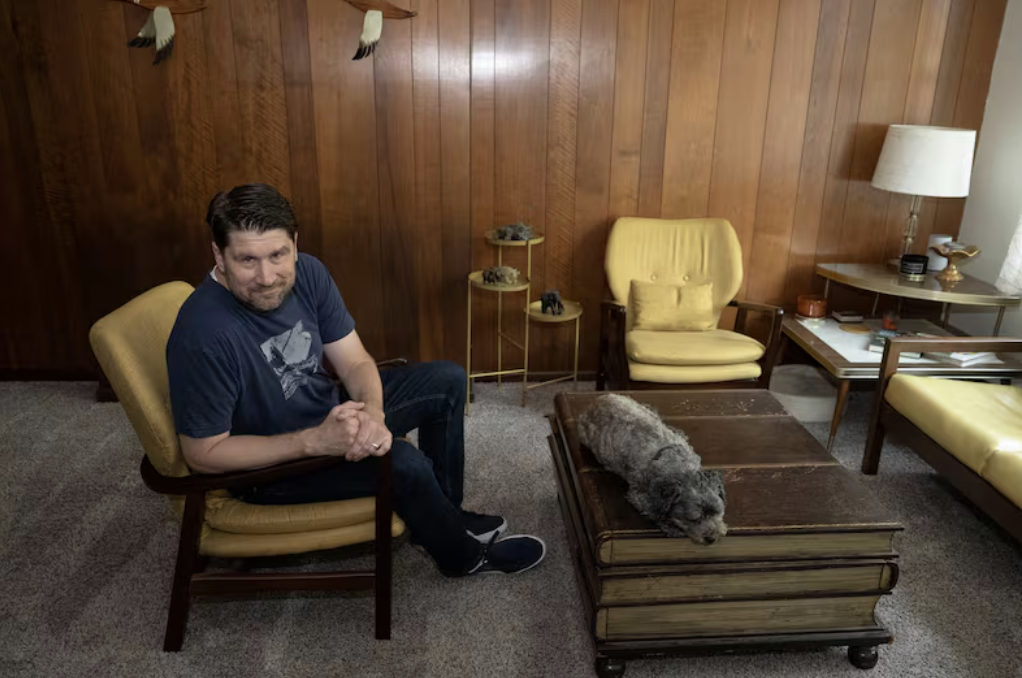
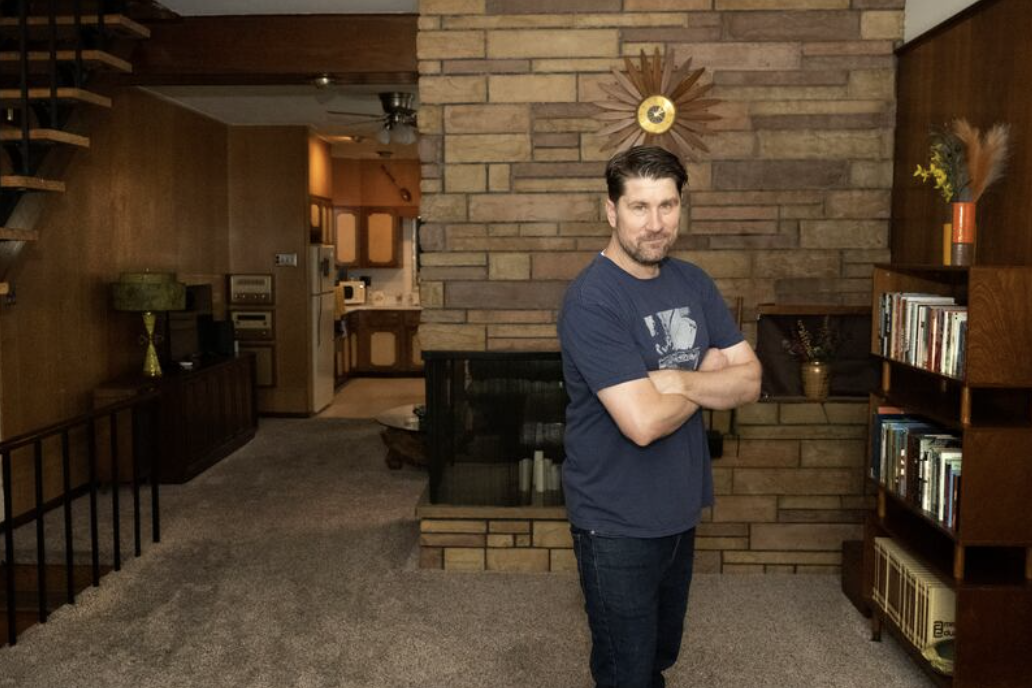
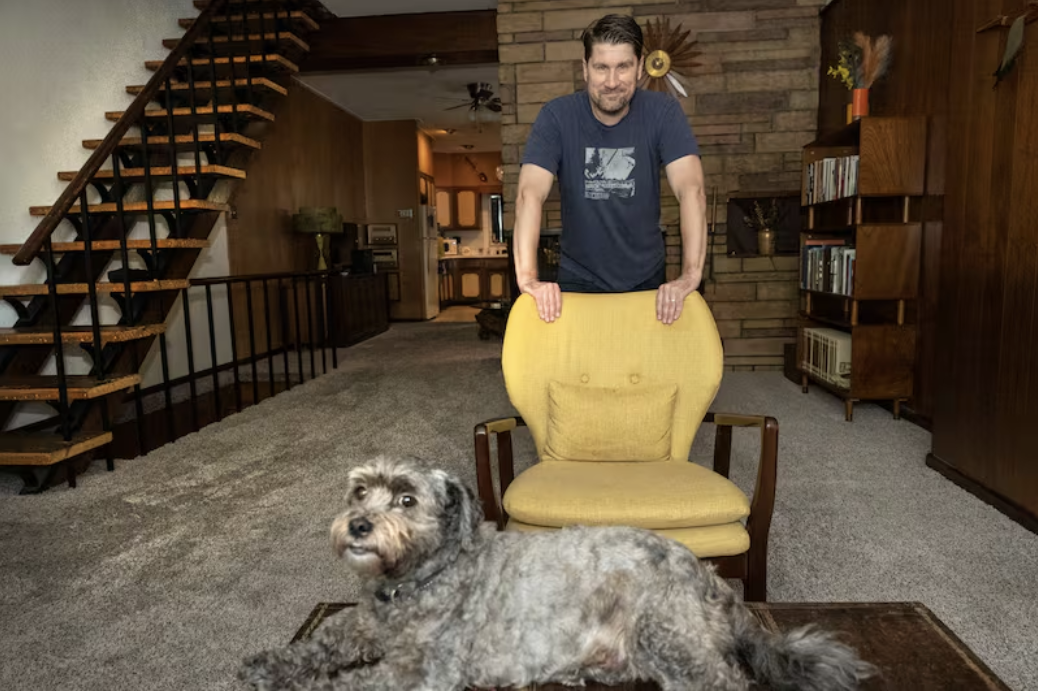
It’s not uncommon in Philadelphia to have a neighbor who is a cat lover. Some even feed stray cats and turn their homes into a refuge for feral kittens. It can be cute, until those scrappy felines get into the neighbor’s lawn, forcing the resident to mow an urine-infested yard and breathe in dust from piles of years-old feces.

That’s exactly what happened between East Germantown resident Marice Johnson and the neighborhood’s resident cat lady Jean Galliano, in July 2024.

An incident that is now the basis for a lawsuit, a Judy Justice episode, and an episode of the HBO reality show Neighbors.

It was the last straw for Johnson. He asked Galliano to keep all nine of her undomesticated cats from crossing over property lines and defecating on his family’s lawn.

“My daughter is 4 going on 5. She’s never been able to enjoy her front yard,” Johnson says on the HBO show.

Galliano refused, Johnson stopped the lawnmower, and walked over to one of her make-shift cat shelters and beat it into a pile of scraps.
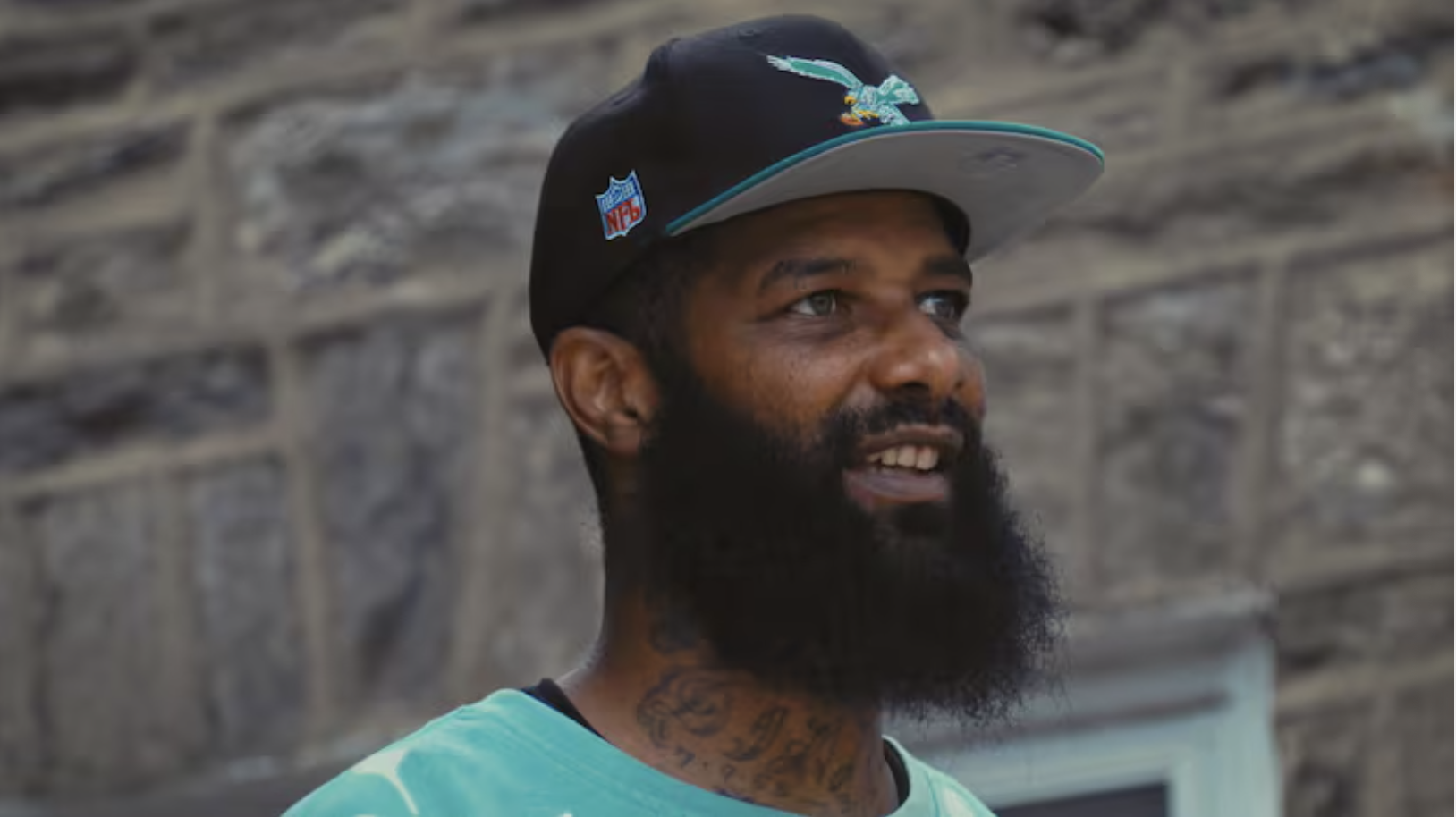
“I don’t know what he’s going to do next,” Galliano says in Neighbors. “He’s very unpredictable. If my husband wasn’t dead, he’d go over there and kick his a—.”

She sought retribution by taking their neighborly dispute to a small claims court last fall. Then she dropped those charges before seeking justice from another courtroom; this one helmed by famed justice Judith Sheindlin, better known as Judge Judy on TV.

The dispute makes up the second episode of HBO’s new reality TV series. Created by Dylan Redford and Harrison Fishman, the show explores intense and wildly-bizarre disputes among neighbors across the country.

Titled “The Farm,” the episode also follows a rift between a retiree named Darrell and his neighbor Trever, who starts raising livestock on his grandmother’s property, much to the dismay of his neighbors in a small suburban community in Kokomo, Ind.

Redford (who is Robert Redford’s grandson) and Fishman, who have previously worked on 2021’s The Big Parade, share an obsession with online neighbor fight videos. When they received a chance call from a company seeking TV show ideas, the two directors thought centering real neighbor-to-neighbor clashes would make for great television.

For months, casting director Harleigh Shaw and story producer (and Redford’s sister) Lena Redford sifted through small claims court filings across the country and searched for people who would agree to air their neighborly linen on camera.

“This was a story with a lot of layers and really interesting people, and we thought we should really look into this,” Dylan Redford said of Galliano and Johnson’s case.
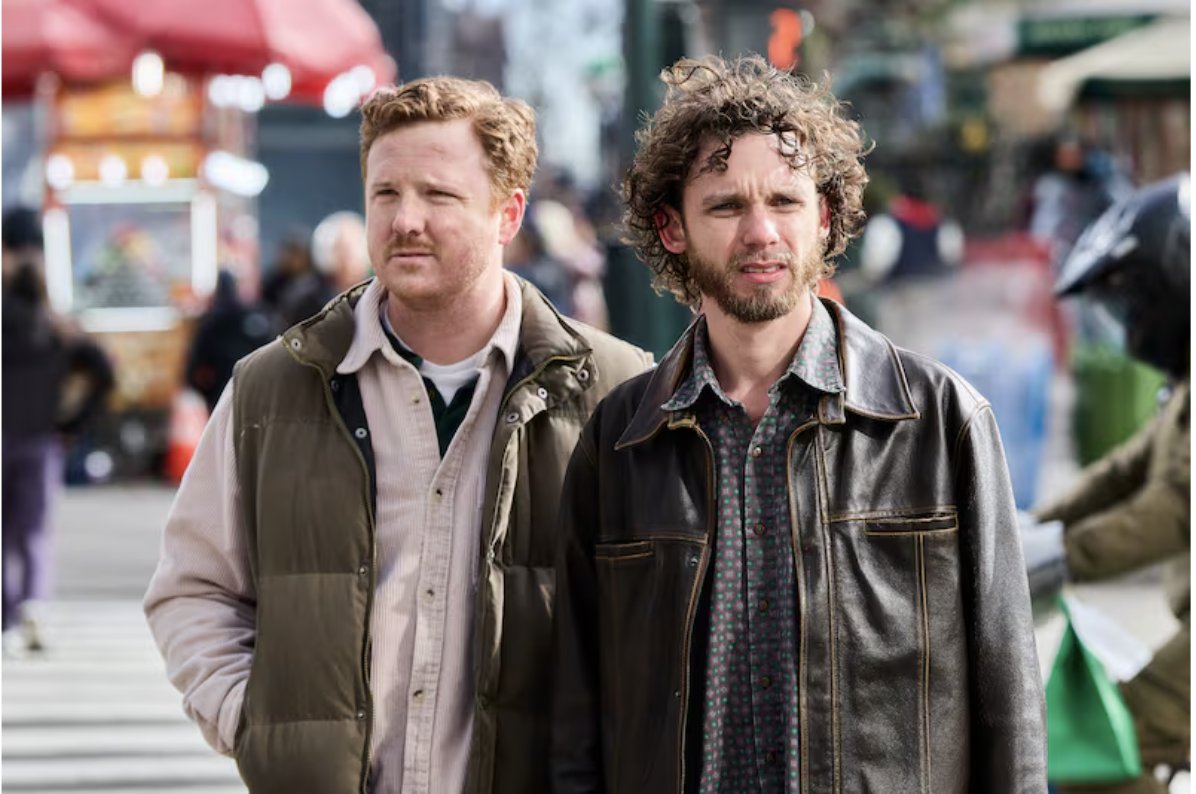
Fishman, a Philly native, said the two neighbors are representative of his hometown in two very different ways.

“[Galliano] really embodies what I love about Philly. She’s just shamelessly herself, and so excited to tell us about it. And [Johnson] is so funny, and his family was so fun to hang out with.”

They started filming with the neighbors last fall.

Their dispute, the crew found out, started shortly after Johnson and his wife Amala moved into their Northwest Philly rowhome nearly six years ago. But with the birth of their daughter, Johnson said his and Galliano’s quarrels intensified.

“I said ‘Ma’am, we just moved here and have a newborn’,” Johnson says on the show. “I just don’t want the cats on my property at all.” From Galliano’s point of view, Johnson was a disgruntled, cat-hating neighbor whose “berserk” behavior led to the civil case filing.

She recorded a video of Johnson slamming and kicking the cat shelter she had built for one of her cats, named Butter. She claimed it resulted in nearly $2,826.90 worth of damages. Galliano also tried to file criminal charges against Johnson, but “they wouldn’t let me do it,” she said on the show.

But she soon found a way to litigate the dispute when she and Johnson received an unexpected invite to Judy Justice last fall. Turns out, Judy Justice producers were also, coincidentally, sifting through the same court claims and Johnson and Galliano’s fight stood out.

The two neighbors flew out to Los Angeles soon after.
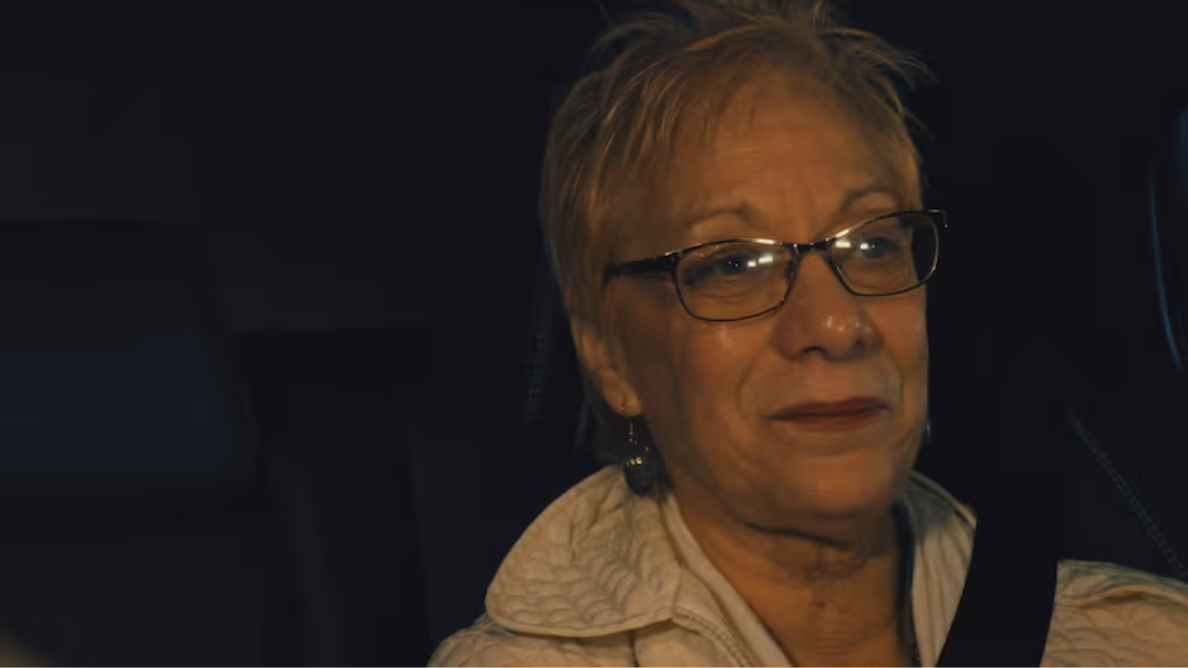
Confident that she would earn the favor of Judge Judy, Galliano said she will go from nine to 500 strays once she secures a legal victory.

“[Judy] is an animal activist,” Galliano says in the show, before getting to LA. “She’s going to help me.”

Redford and Fishman were barred from filming on the Culver Studios set, but the Jan. 18 episode of Judy Justice, titled “Catty Neighbors Caught on Tape,” shows Galliano suffering a crushing loss.

In her classically stern and blunt tone, Judge Judy said Galliano’s reckless care for un-collared and unvaccinated cats had become a “community problem,” one directly impacting Johnson’s livelihood. She urged a noticeably combative Galliano to sell the home she’s turned into a “crack hole,” and purchase land where her cats can roam free without interference.

Until then, the reality TV judge said, “be a better animal caretaker.”

“Judge Judy ate her for f–ing lunch. It was so bad," Galliano’s friend Nina Medley, who tagged along for the hearing, says on the show.
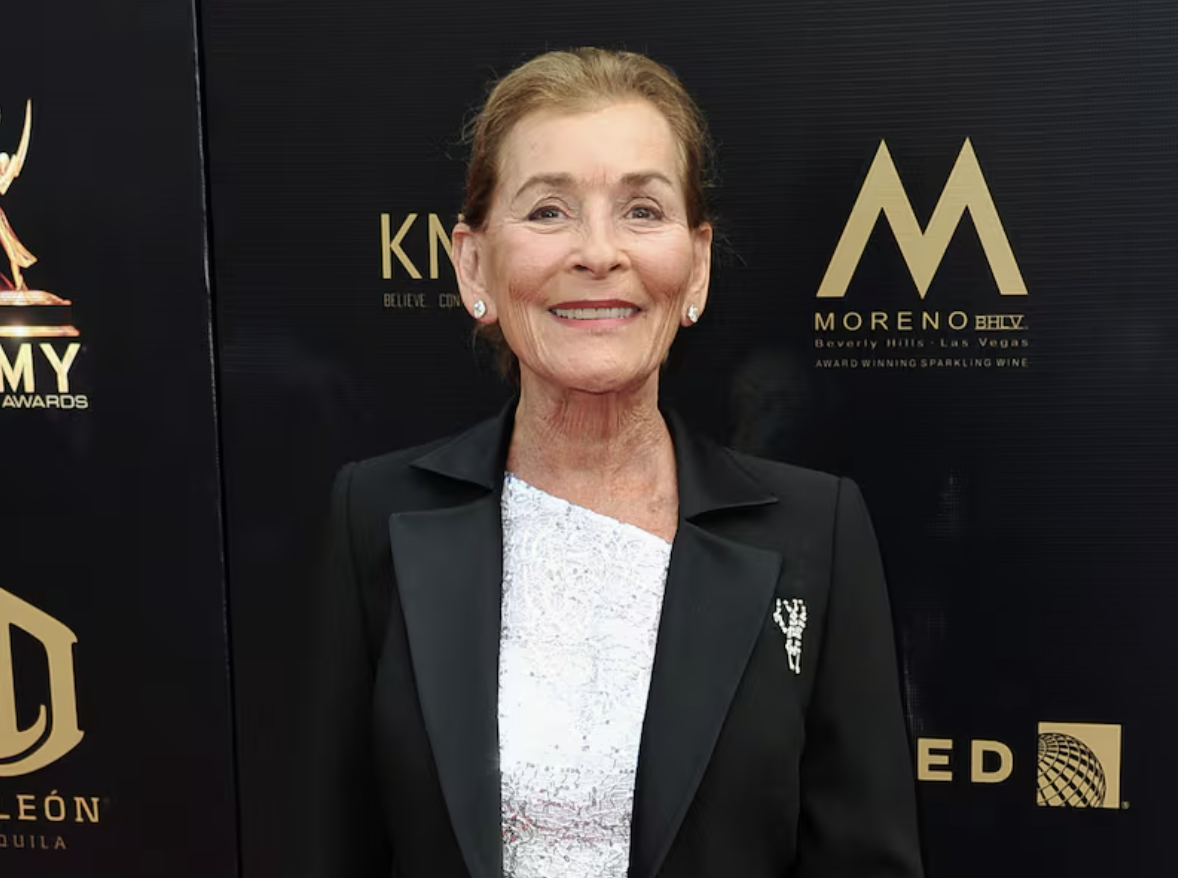
Judge Judy’s judgment awarded Johnson $2,000, and Galliano a total of $0.50.

The Neighbors episode shows Johnson and his wife celebrating outside the court room, while Galliano silently drives out of the studio lot.

Redford and Fishman made sure to show the lives of Johnson and Galliano outside of the dispute.

Growing up in Philadelphia, Johnson said he was kicked out of middle and high school. He, along with his three brothers, faced incarceration in his youth. In the years since, he has transformed into a dedicated family man and the owner of a clothing line. During the episode, he pulled out a rack of his custom designs; shirts with the words “God Bless Whoever Hating On Me.” He also spoke about how meaningful it was for him to buy his three bedroom house; he wanted to give his family the kind of life he and his siblings never experienced.

Galliano, on the other hand, lives a very different lifestyle.

When she’s not praising a Jesus Christ hologram, or absorbing “life-enhancing energy” from a nearby Quantum Healing Room, the screenwriter attempts (and often fails) to collaborate on films with the likes of Mel Gibson and producer Paul Michael Ruffman.

“If our show was just doing funny gag stuff, it would be no different than any other prank show or TikTok video,” Redford said. “Part of what defines our show against all that is that we provide the kind of emotional context that makes people understand why someone cares about their home or neighborhood so much.”

Now back from the West Coast, Johnson and his daughter are able to play in their front yard, for the first time in six years. As is evident from the episode, there is now a pergola and fence around Johnson’s yard that keep Galliano’s cats out.

“As weird as it may sound, blessings are coming out of something that felt like a curse at one time,” Johnson says in the show.

Galliano, standing just outside the fence’s barriers in the episode, says Judge Judy’s ruling won’t stop her from feeding cats or from getting them into her house.

“Wood fences can’t keep cats out. Cats climb wood,” she says with absolute certainty.

Fishman, who recently spoke to Galliano, said she now feeds cats less frequently, and that her colony of strays has dwindled in size.

“It sounds like the [dispute] has completely died down from [Galliano’s] perspective,” said Fishman, who is hopeful that the show shines a brighter light on Galliano’s screenwriting career and Johnson’s clothing brand.

As for season two of Neighbors, which was renewed last month, he wants to include more stories of Philly neighbors, who, like Galliano and Johnson, will embody the “berserk” qualities that make his hometown folks so unique.

– The Philadelphia Inquirer
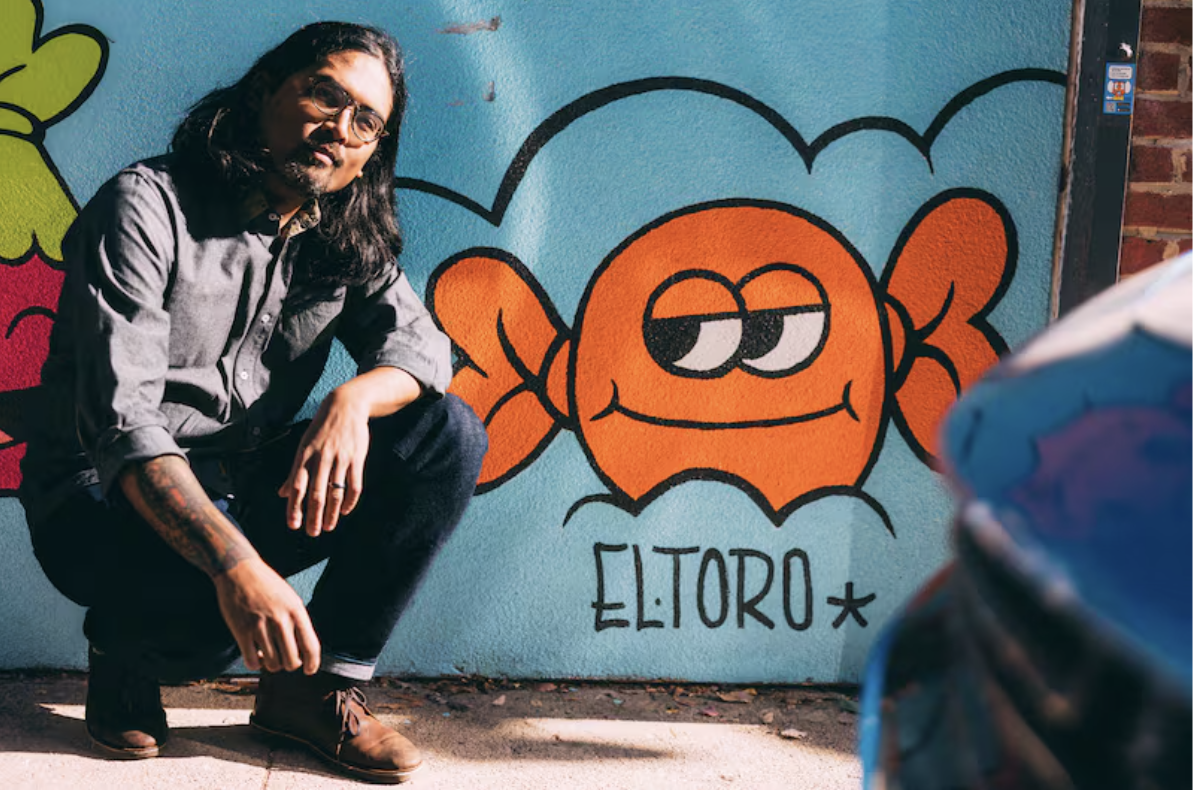
Justin Nagtalon aka El Toro, a beloved sticker artist and muralist, has died at 43

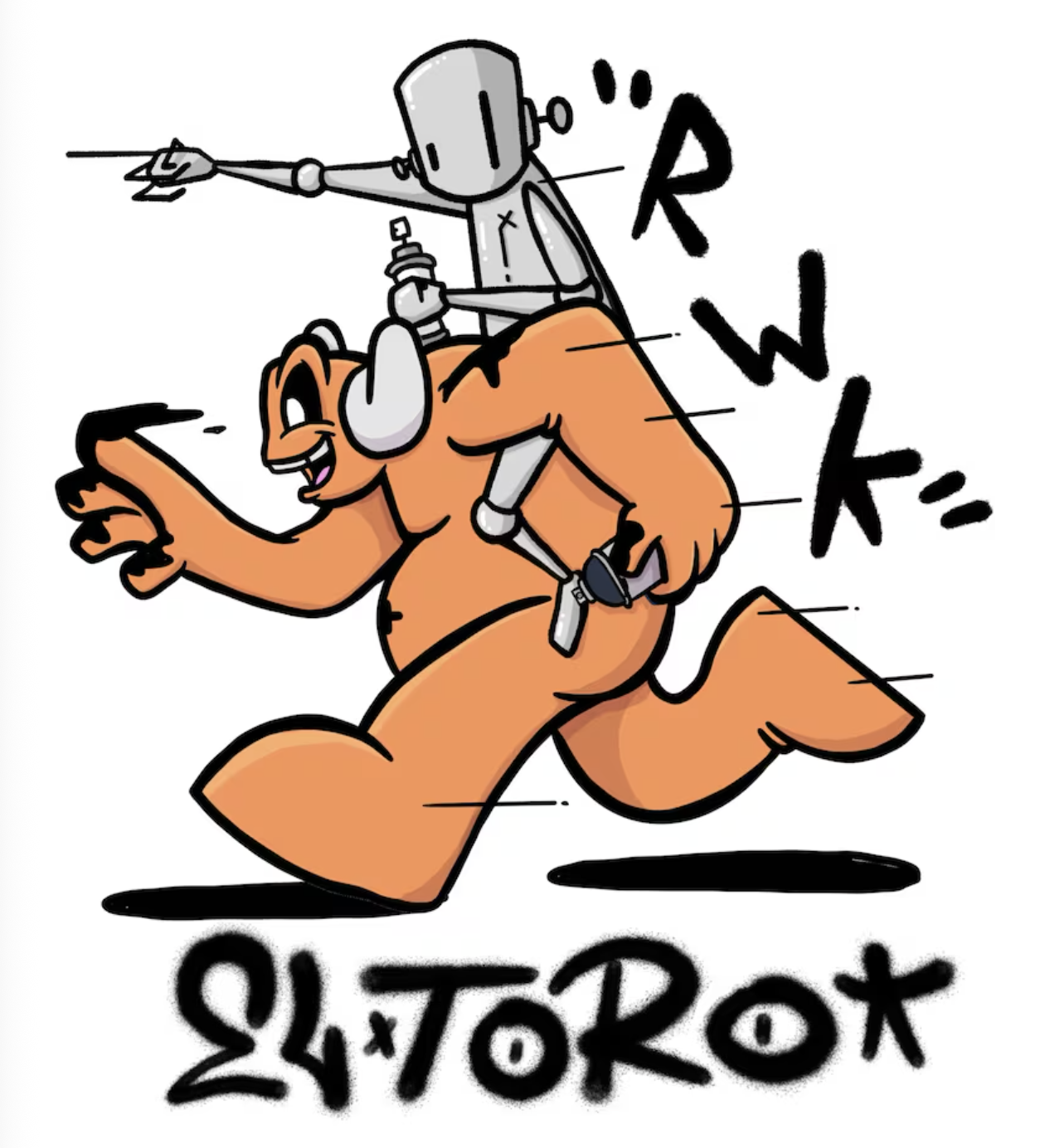
If you walk around Philly, there’s a high chance you’ve been smiled at by a Filipino water buffalo drawn on an USPS sticker label; be it in the back room of the South Street bar Tattooed Mom, on a newsstand on 15th and Walnut Streets, or stuck on street signs, buildings, cement barricades, and lamp posts around the city.

The buffalo and its creator are named El Toro, the pseudonym used by sticker artist Justin Nagtalon, who passed away at the age of 43 on March 7. The cause, confirmed by the family, was a heart attack.

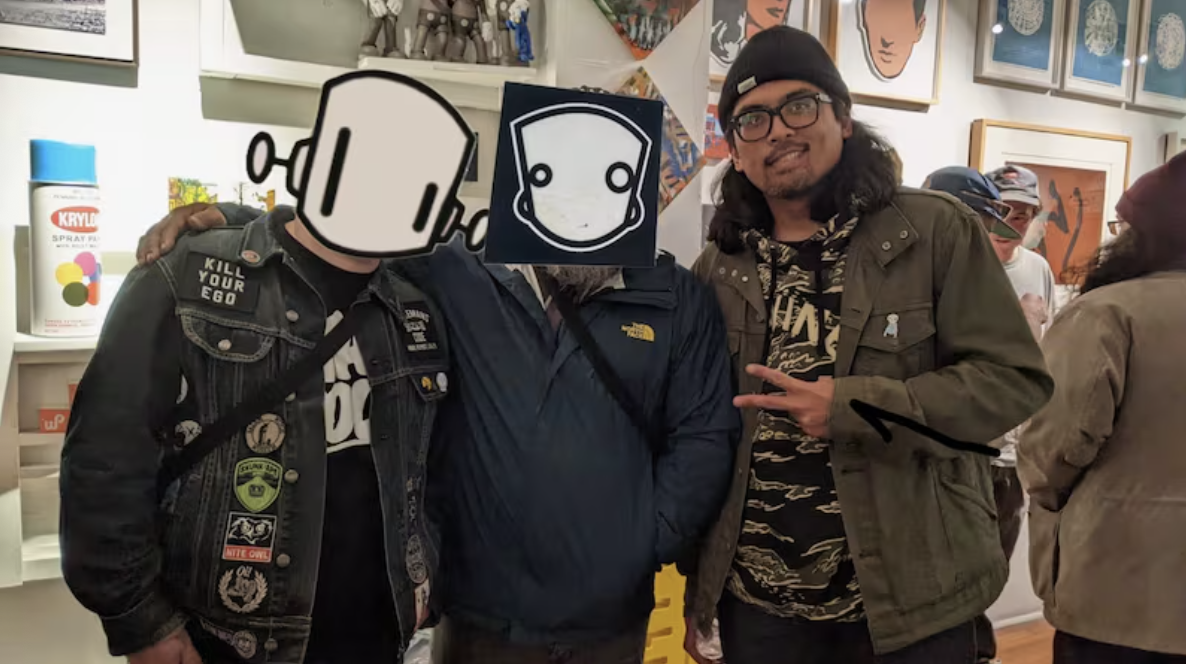
Through a career that spanned more than 20 years, Nagtalon left a trail of multi-colored stickers across Philadelphia. With street artist Bob Will Reign, Nagtalon’s iterations of the two-legged buffalo brought the New York City and Western European culture of sticker art to Philly’s street corners.

In 2021, he shed his pseudonym and went from drawing on postage labels to turning the walls of restaurants like Baby’s Kusina + Market, Manong, and Tabachoy into his canvas. He also created the logo for WHYY’s Art Outside podcast series, and was commissioned to create an official game day poster for the Philadelphia Eagles in 2025.

His art inspired a generation of street artists to create sticker art and slap them onto surfaces all over Philly, “My heart hurts,” Nagtalon’s mother Jennifer wrote to The Inquirer in a text message. “[He was] such a loving husband ... a loving brother to his big sister and to his younger brother. A fun uncle to his nephews and nieces. Most of all, a very sweet and loving son to me.”

The joyous buffalo he created two decades ago was reflective of the artist himself, a man who is remembered for his radiant smile, vast imagination, and playful personality.

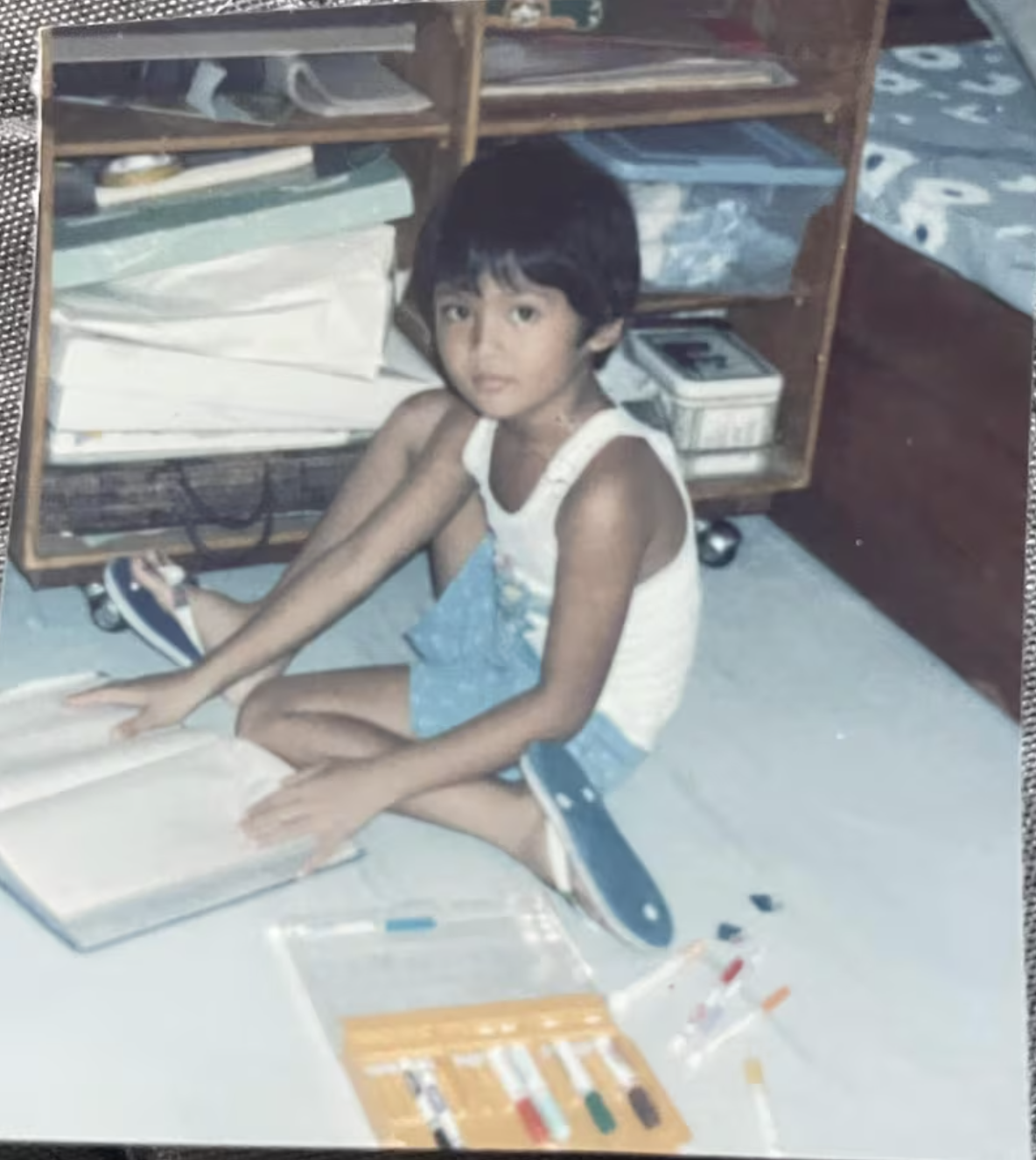
As a child growing up in in Quezon City, Philippines, Nagtalon spent days scribbling in his black moleskin notebook. By the time he was 7, he filled pages with hand-drawn images, using markers he stole from his older sister, Jamille Nagtalon-Ramos.

“Whenever I would attend one of his shows, I used to joke with him and say, ‘OK, you did good. I’m not mad at you for stealing my markers anymore,’” said Nagtalon-Ramos.

When Nagtalon was 10, he, with the rest of his family, moved from the Philippines to join their mother in Paterson, N.J., where she was recruited to fulfill a nurse shortage. Nagtalon’s father worked for the Bureau of Fisheries.

While the move was a significant cultural shift, Nagtalon found comfort in watching 1980s cartoons such as He-Man and the Masters of the Universe, ThunderCats, and The Simpsons, and reading comic strips like Calvin and Hobbes.

Those early interests inspired the friendly alter ego, El Toro, later in Nagtalon’s life.

“All of my core interests are because of my brother,” Jethro David “JD” Nagtalon, Justin Nagtalon’s brother, said. “He’s the one that influenced me with cartoons, anime, and certain art that I like. He got me into skateboarding, too. We both skateboarded, badly. But we skateboarded badly together.”

While his sister followed his mother’s career footsteps, Nagtalon opted for a career in the arts. In 2001, he enrolled at the former Art Institute of Philadelphia to study graphic designing.

In a 2020 interview with Streets Dept, Nagtalon said he developed an interest in graffiti while growing up in New Jersey. He started writing graffiti in college, but soon focused his attention on sticker art after discovering the fast-rising European scene in the early days of the Internet.

“He found his medium. He just wanted to spread love and happiness and positivity through the world,” JD Nagtalon said.

Before landing on El Toro, which was inspired by Carabao, a swamp-type water buffalo native to the Philippines, Nagtalon told Streets Dept that his stickers featured “weirder characters.” He even considered adopting a “poop monster” before settling on the cartoon water buffalo.

“Every time I saw one, I felt like I was a kid again,” said Conrad Benner, the founder and editor of the art blog Streets Dept and a friend to Nagtalon.

‘You were naturally happy to be around him’

By the time they met at the Art Institute, long-time friend Andrew Witter said Nagtalon’s artistic ambitions were in full bloom.

Witter recalled the two of them listening to MF Doom and playing Need for Speed: Underground on the Playstation 2. As early as 2003, Witter recalled, Nagtalon was putting up stickers throughout the city, Witter said.

“It was the path he wanted to take, and he never stopped,” he said.

Witter and fellow sticker artist Dana Williams watched as El Toro went from being one of Nagtalon’s many doodles, to a recognizable symbol of a burgeoning street art movement in Philadelphia. .

Williams called Nagtalon the “bigger visionary.”

“He saw the forest for the trees, as they say,” he said.

With frequent collaborator Bob Will Reign, Nagtalon forged connections with local gallerists, and soon drew the attention of early art sites such as Robots Will Kill (RWK).

ChrisRWK, who launched the site to spotlight underground artists, said Nagtalon and Bob “revolutionized the sticker scene” in Philadelphia.

Nagtalon worked anonymously for most of his arts career and collaborated with early sticker artists like Ticky 33, Underwater Pirates, and Noségo. He also played a significant role in transforming Tattooed Mom into an epicenter for street art. Not only by contributing his own work, but by connecting owner Robert Perry to other artists.

Nagtalon, ChrisRWK said, “was always smiling, and he had a positive feeling or attitude to any situation. You were naturally happy to be around him.”

‘I’m no longer afraid of who I am’

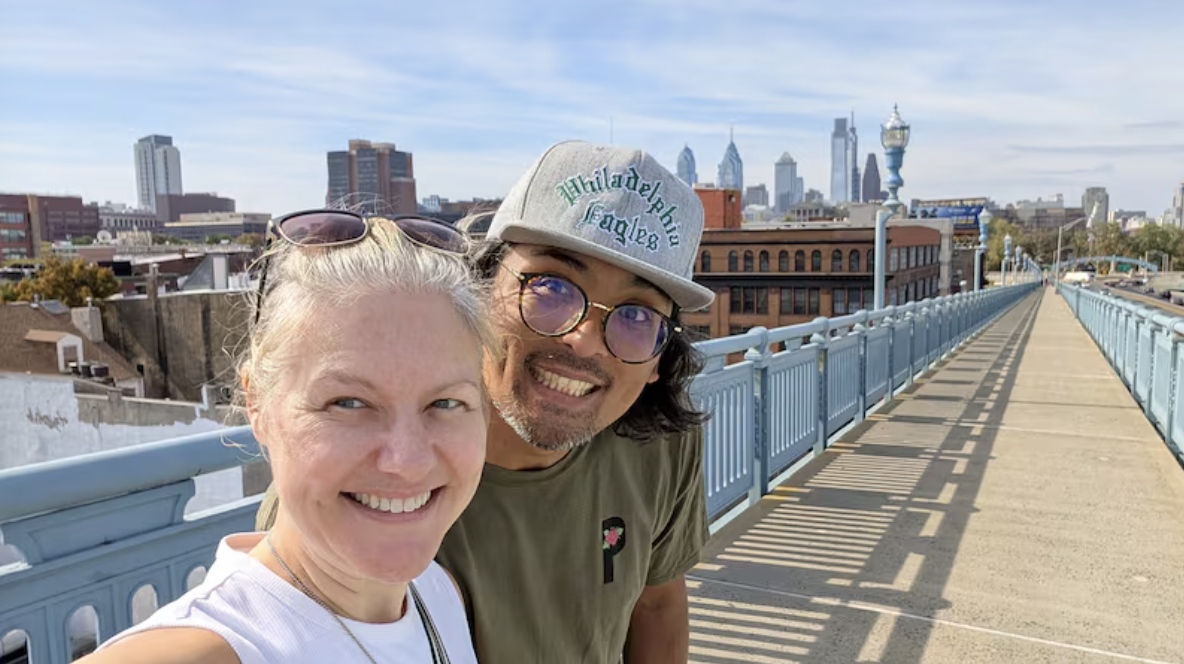
Nagtalon met his wife Amanda Benson outside of Good Dog Bar in 2007. Benson said he flashed an “adorable smile,” which made her walk toward him.

And “that’s when [Nagtalon] said he panicked,” she joked.

The two bonded over their love for vinyl toys, pop-surrealist artwork, and First Friday events in Old City. A year before they met, Benson had attended an art show that featured the work of El Toro. On their first date, she noticed his tattoo and asked if he was the man behind El Toro. He said yes with no hesitation.

Five years later, in 2012, they were married at the Valley Green Inn along the Wissahickon Creek. The couple then took a cross-country roadtrip and moved to Los Angeles.

There, Benson said, Nagtalon drew El Toro nearly every day.

Benson and Nagtalon moved back to Philly in February 2021 to be closer to friends and family.

Upon his return, Nagtalon decided to shed his anonymity and reveal his true identity.

He initially hesitated, fearing his “illegal” graffiti practices would result in an arrest, but he wanted a more formidable presence in the city’s street art scene. He also wanted his nieces and nephews to be proud of the legacy he had carved out.

“I’m no longer afraid of who I am. And I think that’s it’s such a big leap to connect, and also to understand my art more,” Nagtalon said in a 2023 interview on WHYY’s Art Outside. “I think bridging that gap before wasn’t important. But now it is. And I think I have a lot more things to say because of it.”

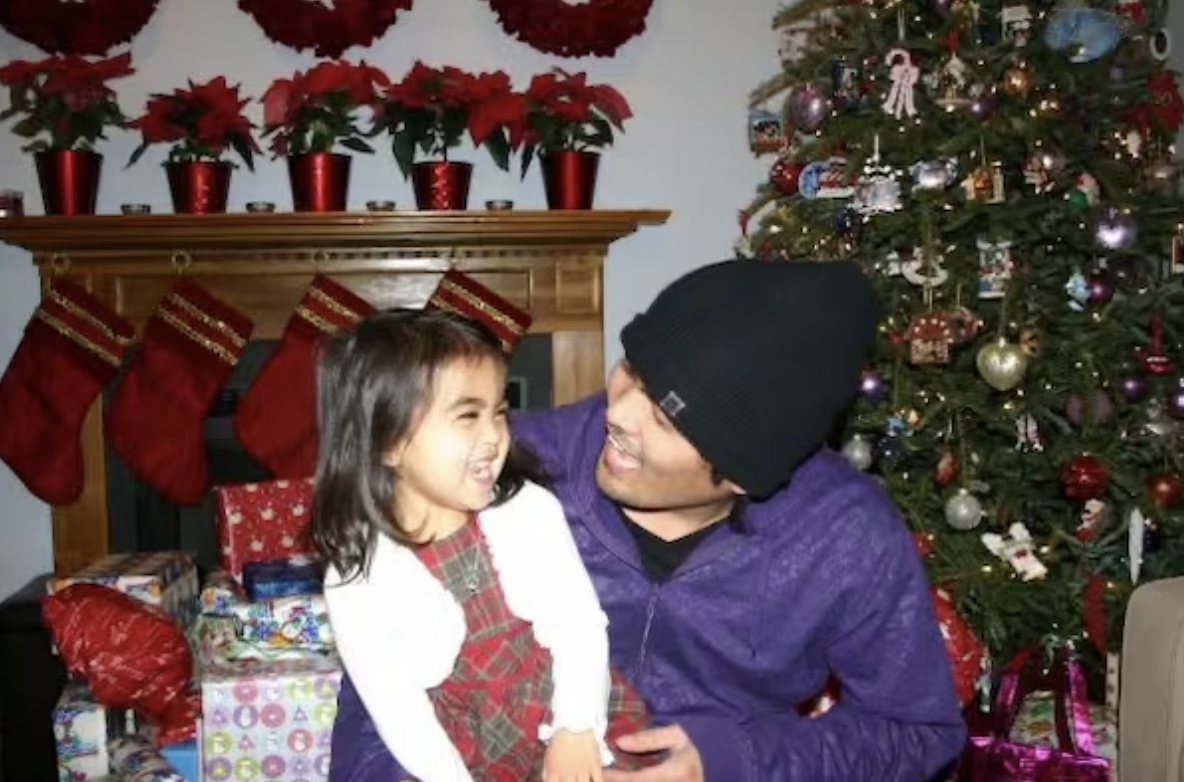
While they didn’t have children of their own, Benson said her late husband loved kids, and spoiled his nieces and nephews.

Nagtalon’s nephew Leo Ramos, 21, said he and his sister Leilani looked forward to playing video games, riding bikes, and baking cookies with their Uncle Justin on all the holidays.

“You didn’t really think about those moments that we had growing up in the moment,” said Leilani, 19. “And then when you realize that person is gone, those memories suddenly flood back into your mind. And for me, they were all very sweet and vivid memories.”

It was Leo who rushed to his uncle’s home in Philadelphia on March 7, after receiving an emergency call from his mother. Nagtalon was taken to a nearby hospital, where he was pronounced dead from a heart attack.

Nagtalon-Ramos said her brother’s death, and the call she made to her son Leo, were eerily similar to the one she received from Nagtalon when their father died at age 44, also from a heart attack.

“I’m really going to miss his youthfulness,” Nagtalon-Ramos said. “I’m going to miss his interactions with my children. I’m going to miss that playful side of him. And I’ll really miss how he interacted with the world.”

JD said he’s going to miss their hilarious phone calls, shared Instagram posts, and the time they spent with one another.

“He was the happiest and most living person I ever met,” he said.

With Nagtalon’s passing, Bob Will Reign said he had lost his “partner in crime.”

He plans to continue posting stickers across Philly’s street corners as a way to carry on his friend’s legacy, both as El Toro and the kind-hearted soul he first met more than 20 years ago.

Dozens of Philadelphia street artists took to social media to post Nagtalon’s stickers, past El Toro collabs, and their photos with the beloved sticker artist. Others have made their own renditions of Nagtalon’s iconic character to honor him and his work.

“It’s been incredible to see the outpouring of grief, but also the support that’s been in his direction,” Benson said. “I just want to thank the people who have reached out. I’m so grateful for it.”

El Toro sightings on her walks, Benson said, will always remind her of the “joyful, playful, and hilarious” man she fell in love with nearly 20 years ago.

No public memorial is planned at this time. A Meal Train to support Benson was started by Nagtalon’s friends.

– The Philadelphia Inquirer
‘Chappelle’s Show’ alum Donnell Rawlings is all right with being called mild

This year has been one of the most triumphant for comedian and Chappelle’s Show alum Donnell Rawlings.

Back in February, 30 years into his career, the D.C. comedian delivered his first comedy special, Chappelle’s Home Team - Donnell Rawlings: A New Day, in collaboration with friend Dave Chappelle.

“I think every time I did [the routine] I was the funniest I could be in the moment,” Rawlings said. “But [Chappelle] being so critical and understanding, this was a big deal. He thought a little deeper than I did.”

Chappelle, whose own Netflix show has been criticized for jokes perceived to be transphobic, scrapped the show’s initial version, claiming it was too outdated for a post-COVID release. The second attempt was marred by production issues. But after shooting the final iteration in November 2023, Rawlings said it was worth the wait.

But not everyone was pleased. Fellow comic Corey Holcomb called A New Day “mild” on his podcast, 5150.

Inspired by the discourse, Rawlings named his new comedy tour “Black and Mild.”

“People try to use the word ‘mild’ as an insult. But I’m over 50 years old, I don’t even like hot sauce. I get heartburn,” Rawlings joked. “There’s nothing wrong with walking the line, but not pushing it. That’s where my comedy is.”

Before the comedian takes the stage at Helium Comedy Club this weekend, we talked to Rawlings about hot sauce, his famous phrase “I’m rich b—” , and the makings of a successful comedian in the social media age.

The interview has been lightly edited for length and clarity.

You’re a bigger star than you’ve ever been before. How’s life been for you lately?

It’s good and it’s going to continue. The only thing that we can do is try to evolve, especially as a standup and artist. We have to be the best we can and give the people what they want. And I don’t think I’ll ever hit the max. I’m always going to try to go to the next level.

How has life in Springfield, Ohio, been?

It’s just like my special, A New Day. Like the Nina Simone song “Feeling Good,” I came out to in the special. As long as you can get up, you have the opportunity to be a better person. I have been doing it for 30 years, and it just feels like I’m constantly evolving and testing myself to be good.

It seems like you’ve been on a constant path of growth. Have you taken notes from Dave Chappelle and Chris Rock on the process?

The notes that I’ve taken from Chris Rock and Dave Chappelle are that anything is possible. And if you work hard enough, you can be in a situation where you can say, “I’m rich, b—!” and fill arenas.

That phrase, “I’m rich, b—!” has to be one of the most recognizable quotes from ‘Chappelle’s Show.’

There’s been some good and some bad. The good is people recognize my voice from that phrase, but the bad is when I go with my friends to dinner, they don’t even open their wallets. They look at me like, “I thought you were rich, b—.”

How was it to have your first special, especially with Dave Chappelle attached to it?

If it happened 20 years ago with me not having a name and trying to introduce myself to the world as a good standup, it would have been like a calling card. But [this time] it felt more like a reward for the people who felt like I deserved [a special]. One of those people is [Chappelle]. Of course, I’ll reap the benefits of the special, but I felt it was more for my fans and my people.

You filmed the special three times. What was missing in the first two?

I don’t think anything was missing. I think every time I did it I was the funniest I could be in the moment. But [Chappelle] being so critical, and understanding this was a big deal, he thought a little deeper than I did. The first time I did it I knew it was funny, but [Chapelle] told me, “Donnell, you’re one of the funniest guys I know. You’d rip any room, but it doesn’t make it a great special.” The second time we did it, I took his notes. But then we had issues with the production of it. But there was never a high level of frustration. I knew as long as I stayed in the game, I had an opportunity. A lot of times people don’t get multiple opportunities to do that, but [Chappelle] believed in me enough and the product I could produce. And we got it together. I have no regrets.

Have you and Corey Holcomb patched things up since your brief feud?

The last time I was in L.A., I went to this club and [Holcomb] was there. The first thing I asked him was how I could be on his podcast. He said, “Yo D, why do you have something against me?” I said, “Bro, you can’t say that. I have always shown you love.” My only issue was why he felt the need to put down some of the people who are moving the culture of comedy. He agreed with me, so I’m going to do his show.

What do you think about the current state of comedy? There is a lot of tension among comedians today.

It’s unfortunate because a lot of this discourse is in the Black community. For some reason, the Black comedy community thinks [only] one comic can make it at a time. And a lot of times they don’t support each other. There’s room for everybody. There are different styles and genres of comedy.

One of the hottest things now is social media influencers transitioning to stand-up. They have the platform because people want to see them. Then you have [their] crowd work, which I’m not a huge fan of. It’s a muscle in itself, but it was shunned back when I was coming up because it usually meant a comic didn’t have an act. But I don’t knock it.

How can Black comedians rally together versus going against each other?

We can try to save the world and save the hood all we want, [but] you’re not going to do it. Take care of yourself and take care of your family. There’s nothing you can do to change the mentality. It’s always going to be there. All you can do is not let it affect you and to do what you feel is right for you.

How has stand-up changed since you started?

A lot of people my age think, “These young guns coming up don’t respect the art.” But when I started, if you wanted to be rich or famous off of this, you had to be good. That was the only way you could get noticed. But nowadays, these kids are making hundreds of thousands of dollars a month, and have no incentive to be good. You can’t tell them to work on that joke. They are like, “I heard what you said. But I just made one click and made $10,000.” But if you’re a real comic, you can protect the craft by being good and evolving.

In some way, could that also help draw more eyes to the comedy world?

It all depends. One of the comedians that I came up with hated shows when a YouTube guy would come on behind him. He wouldn’t go to these shows. But I told him, “Get your money, go to the show, and teach him a lesson.” Things change.

What’s it like doing comedy in Philly?

It’s a little rougher. This is a tough city. And one thing about a tough city is they give you a hard time. But when they love you, they love you. I give them every reason to love me. I have always performed well in Philly. Philly has always been a great audience for me. I’m a tough comic who’s built for a tough city.

– The Philadelphia Inquirer
After many viral clips, teacher-turned-comic Chip Chantry is ready for a special

His Philly patriotism has made standup comedian Chip Chantry a favorite on social media.

Bite-sized videos revealing his undying love for the 6abc Action News theme — where he famously says “If you’re in my home, you better stand for the Action News theme song” — and his aversion to heroin and wearing Crocs because he’s afraid he’d enjoy them too much, have garnered millions of views on Instagram.

After 21 years as a standup, Chantry, wanting to capitalize on his newfound virality, has decided to bring together all his searing Philly-isms and hilarious confessions for his debut comedy special, Move Closer.

The special, which he is releasing himself, is named in honor of the Action News theme song “Move Closer to Your World” and is set to drop on YouTube at 8 p.m. on Tuesday. And while Chantry already has two comedy compilations under his belt, this release will mark the biggest moment in the Montgomery County native’s comedy career.

“It feels legitimate,” said Chantry, who filmed the special at Helium Comedy Club. “This is the next level, for better or worse, where I put my hour out there with the best comedians in the world and see where it falls. It’s kind of terrifying, but it also feels good to have the world see what I’ve been doing.”

Long before he became a mainstay in Philly’s comedy circuit, Chantry was a fourth-grade teacher for the Montgomery County’s Methacton School District, juggling life in the classroom and on the comedy stage. He performed in bars and restaurants in the city until 2 a.m., then woke up at 5:30 a.m. to get to school.

“For a decade, I was exhausted at all times. I was living a double life,” he said. “I was flailing around in comedy, not knowing what I was doing, and just creating open mics and doing shows wherever anybody would have me.”

Finally, it was time to choose between the two worlds. After 14 years as an educator, Chantry was committed to changing course despite the “blinding fear” of failure.

In 2015, he landed a TV writing gig on the NBC Studios comedy-talk series Crazy Talk. Ever since, Chantry has opened for comics like Dave Chappelle, Tig Notaro, and Bob Saget, and went on to write for other shows like Whacked Out Sports and National Geographic’s Howie Mandel’s Animals Doing Things.

He recently appeared in the Shane Gillis-led Netflix series Tires as the character Kyle.

Philly comedian Mary Radzinski thinks Move Closer will show Chantry’s growing audience what he’s made of. “He’s such an amazing performer and joke writer, and it’s time for him to get the recognition he deserves,” she said. “It’s been a long time coming.”

Chantry’s journey to his debut special was riddled with second guesses. He passed up earlier opportunities to release a special in fear it was too early. And in the months leading up to the release of Move Closer, he considered leaving out the word special altogether.

“I almost felt guilty saying the word special because there are so many specials out there,” Chantry said. “Everybody has one right now, and that’s why I turned down a special I was offered a couple of years ago. I turned it down because I felt I wasn’t ready.”

Releasing a comedy special isn’t quite as special as it used to be, he said. The power of cable networks like HBO and Comedy Central has dwindled, which has led to fewer barriers for budding comics. It’s easier for performers to finance and produce their own “hours” and release them on streaming platforms like YouTube.

The shift, Chantry said, has led to an overabundance of bad specials. Young comics are bypassing the growing pains of the comedy stage and prematurely releasing projects in hopes of meteoric fame. Chantry didn’t want his work to be lost in the shuffle.

Philly comic Blake Wexler believes Chantry is the kind of talent who can thrive in this format.

“He’s been worthy of a special from any of these major streaming platforms and TV networks, but it just so happens that he did it himself, which makes it that much cooler,” Wexler, a Chester County native, said. “We’re obviously really good friends, but I’m really a fan of his comedy.”

In spite of those thoughts of self-doubt, Chantry is confident his experience and material is worthy of a project like Move Closer. He hopes it broadens his audience and breeds more opportunities to showcase his comedic talent.

“The biggest reward for a comedian is just more work,” he said. “Whether it’s on stage doing standup, doing writing, making more videos, or whatever it may be. I just want to do more work.”

– The Philadelphia Inquirer
‘Tommy and Me’ at People’s Light is the perfect playoff season treat

A sure way to win over Philadelphians is through undying Eagles loyalty and dissing the Dallas Cowboys. Famed sportswriter Ray Didinger uses both these tactics in a theatrical retelling of his lifelong connection with late Eagles legend Tommy McDonald.

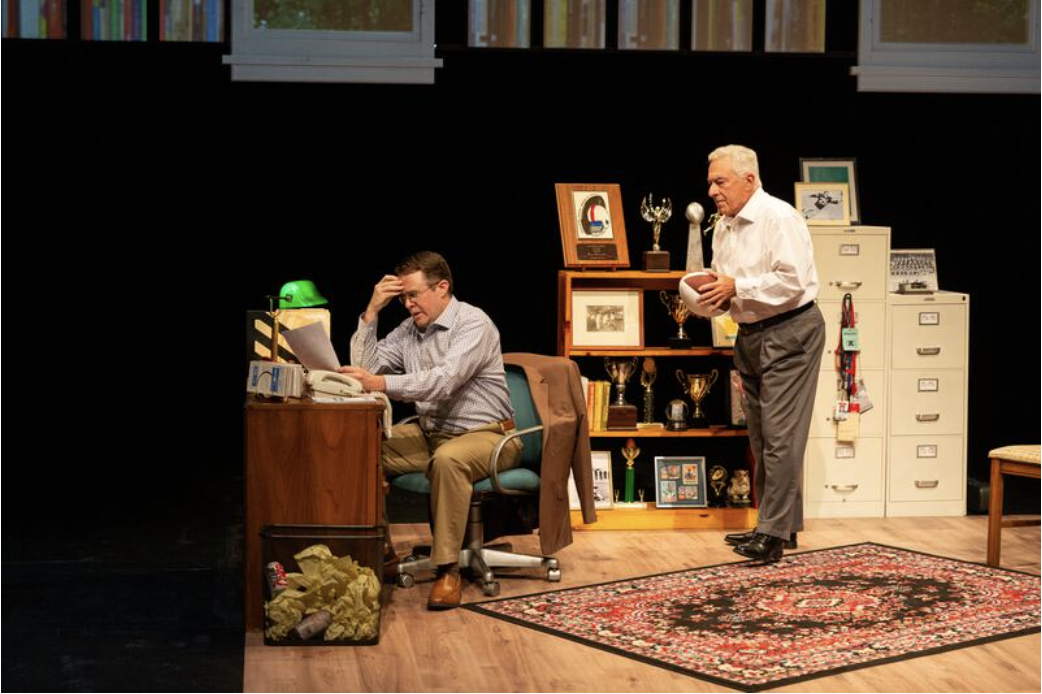
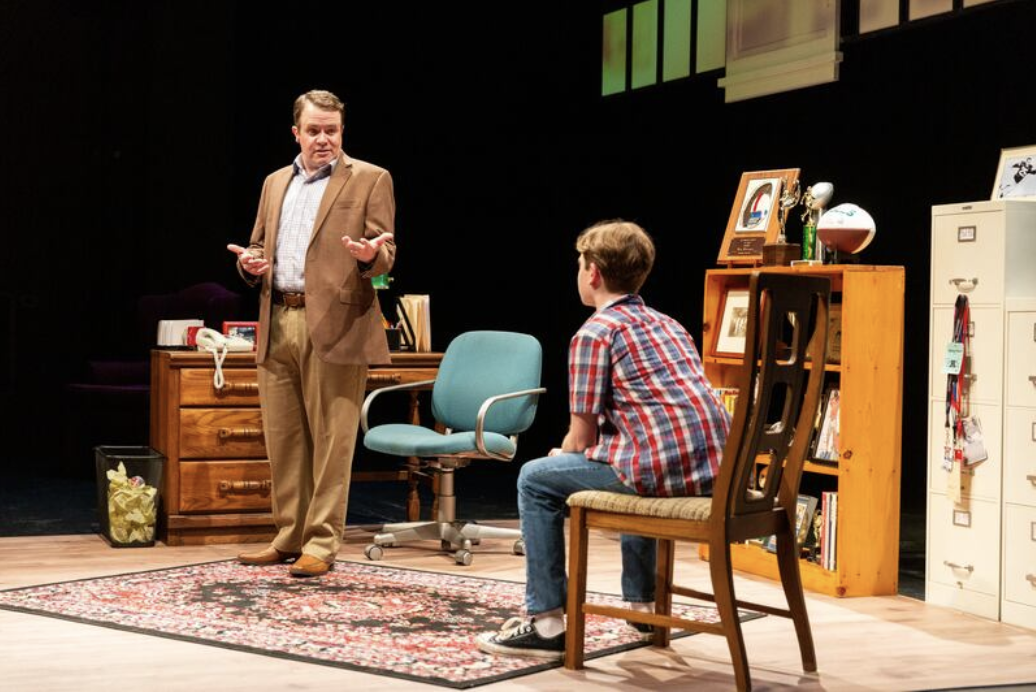
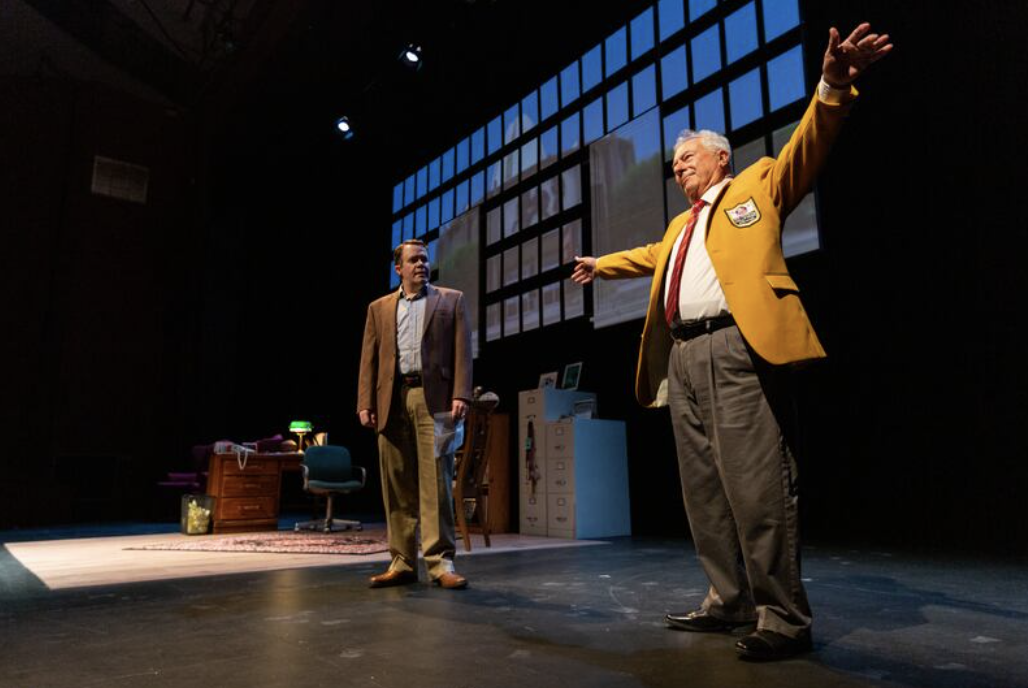
Didinger’s Tommy and Me, which runs at People’s Light, through Feb. 1, opens with Ray (Matt Pfeiffer) reading a handwritten speech by Tommy (Tom Teti), who restlessly paces back and forth across the single-set stage. “You’re not laughing,” Teti’s character notes with disappointment.

Then Pfeiffer’s Ray looks to the crowd at the intimate Steinbright Stage. “I can’t do this to my childhood hero,” he says.

The play, directed by Joe Canuso, then flashes back to a young Ray, played by a charismatic Christian Giancaterino. At 8, he sits in his grandfather’s Southwest Philly bar, glued to Eagles football games and answering team trivia for soda refills. It’s an obsession that would later blossom into a career covering the NFL.

The 5-foot-9 and 175-pound McDonald was his favorite player. While Didinger’s friends were headed to the Jersey Shore for summer, his family drove to Hershey, Pa., to watch McDonald at the Eagles training camp.

Every time he sees a young Tommy (Frank Nardi Jr.), Giancaterino’s bright-eyed Ray runs over to carry his helmet, then walks back to admire the speedy receiver from afar.

The Eagles selected the wiry halfback in the third round of the 1957 NFL draft. And by McDonald’s fourth season, the Pro Bowl receiver caught the go-ahead touchdown to seal the team’s 17-13 NFL Championship victory over Vince Lombardi’s Green Bay Packers.

The winning catch marked Lombardi’s only playoff defeat and cemented McDonald in Eagles lore for eternity. But McDonald’s name never made it to the Hall of Fame ballot. That was until Didinger, who later became an award-winning sports writer and broadcaster, started lobbying for his childhood idol.

When McDonald was finally called to the Pro Football Hall of Fame in Canton, McDonald (then 64) asked Didinger to be his presenter, not knowing his long history of fandom. And that’s where the production dials up the emotional and entertainment factors.

All the flashbacks pay off in heartwarming exchanges and frustrating arguments between the two protagonists.

Pfeiffer’s Ray finally tells Tommy that he was the kid who carried his helmet back in Hershey. The same kid, who Tommy affectionately called a “walking encyclopedia,” is now the man telling him not to read out his wacky speech.

Didinger’s script has the details expected from a sports journalist of his caliber. But the story and the lively performances from the four-person cast are entertaining enough to maintain the attention of viewers unfamiliar with McDonald’s career.

The hook is the universal frustration of nonrecognition, and the subsequent triumph that comes with years of hard labor being rewarded, both as a fan and as an idol.

Didinger’s immersive storytelling, Canuso’s poignant direction, and the believable performances from Pfeiffer, Teti, Giancaterino, and Nardi bring the many layers of the play alive.

Like McDonald’s 35-yard catch in the 1960 NFL Championship Game, Didinger’s play clinches a win.

– The Philadelphia Inquirer
Corn is popping in Philly’s top restaurants

The summer heat is upon us, and for Philly-area restaurateurs, it’s a sign that a beloved regional produce is at its peak.

From mid-July through late August, New Jersey corn is a favored ingredient in Philly’s dining scene. From charred corn ravioli to corn- and crab agnolotti, local eateries are incorporating the veggie in savory pasta dishes, hearty salads, and luscious desserts.

Jansen’s general manager, Zachary Brown, said the grain’s versatility and natural sweetness make it the perfect summer ingredient. “New Jersey corn is very good and very sweet, which allows it to be used in many different ways,” he said. “And right now we’re coming into the season where it’s at its best.” If the climate is too cool or wet, corn can suffer, but a healthy balance of summer heat and sparse rainfall helps concentrate the flavors, yielding that simple, beloved flavor.

“Between now to the end of August, this is the time you want to eat corn,” Brown said.

Restaurateur Aimee Olexy, who owns the Love, Talula’s Garden, and other area restaurants, said when it comes to corn, she has always gone by the motto: By the time it’s knee-high in July, it’s time for a roadside pickup in Lancaster County. A versatile grain with a subtle, sweet flavor and smooth texture, corn lends itself to a variety of dishes, from pasta and soup, to creamy desserts.

And it’s a veggie that’s almost universally beloved for its simplicity. “Food is my life, and I don’t always like complexity,” Olexy said. “It’s just nice to have a piece of grilled salmon and corn, versus convincing people to try a complex and unusual vegetable like a turnip, eggplant, or radish. People just love corn.”

With corn season in full bloom, Philly chefs are going all in, taking advantage of its availability, ease-of-use, versatility, and freshness before the end of the summer. Here’s where to indulge in the Philly area.

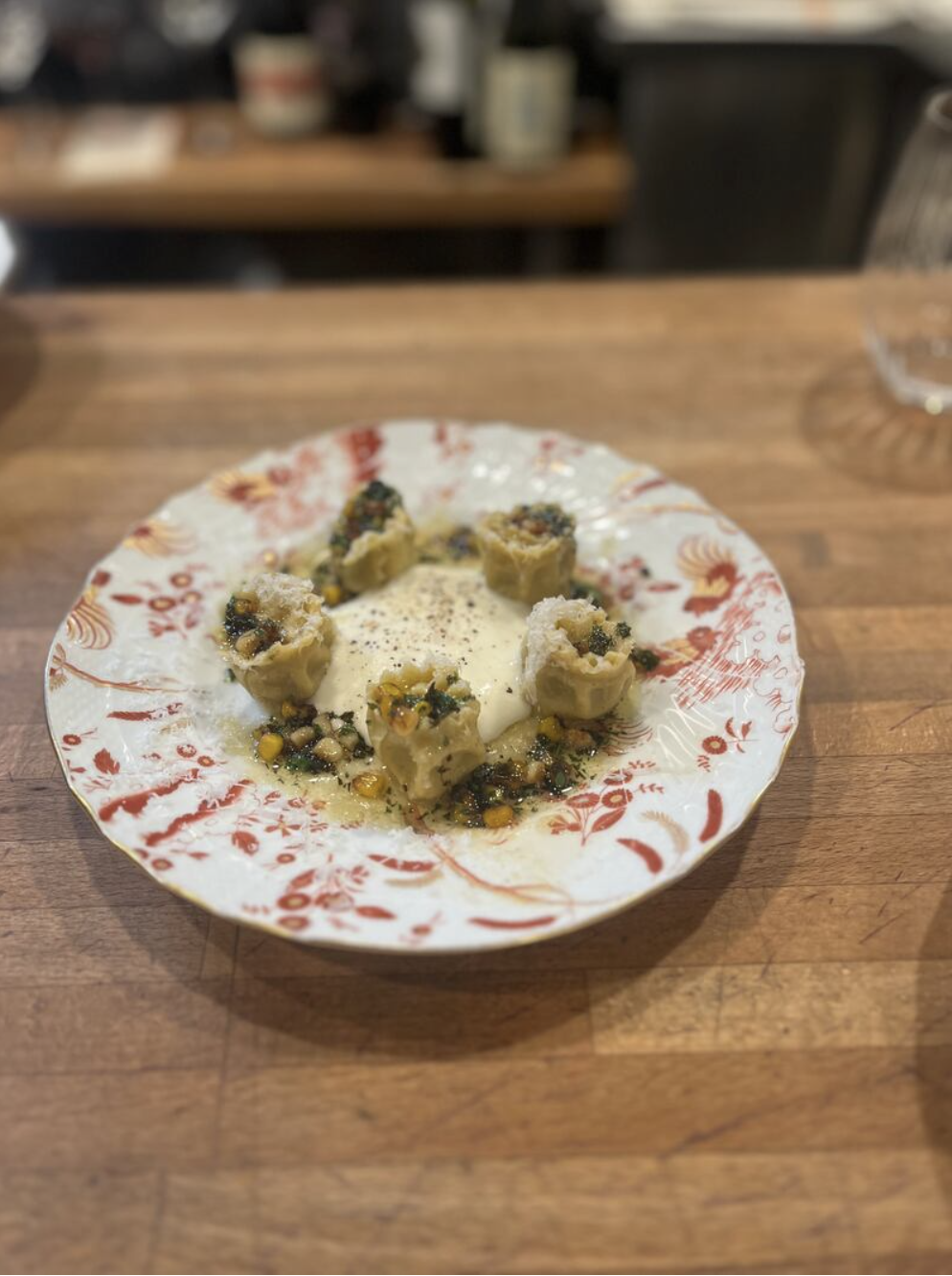
Fishtown’s Tulip Wine Bar is serving up corn and crab ravioli ($30) made with Chesapeake Bay crab, torpedo onion, and pickled green coriander seeds. Think crab-stuffed pasta dough folded into a sweet corn puree, available through summer.📍2302 E Norris St, 📞 267-773-8189, 🕒 Tuesday to Thursday 5 p.m. to 9 p.m., Friday to Saturday 5 p.m. to 10 p.m. 🌐 tulippasta.com

Darling Jack’s Tavern has corn agnolotti on its summer menu, featuring handmade pasta filled with corn and marscapone, summer squash, shaved corn, and ramp butter for $22. 📍104 S 13th St, 📞 215-546-4200, 🕒 Monday to Thursday 4 p.m. to 10 p.m., Friday 4 p.m. to 11 p.m., Saturday 10 a.m. to 11 p.m.. Sunday 10 a.m. to 10 p.m. 🌐 darlingjacks.com

At upscale French restaurant June BYOB, chef Richard Cusack offers two savory corn dishes on the summer menu. The first is a corn cavatelli ($36) made with crabmeat, tomato, basil, and zucchini squash. The second swaps out the crab for seared scallops ($45); both will be offered through the summer. 📍690 Haddon Ave, Collingswood, 📞 856-240-7041, 🕒 Wednesday to Saturday 5 p.m. to 9 p.m., Sunday 4:30 p.m. to 8:30 p.m. 🌐 junebyob.com

For the summer, the Love, in Rittenhouse Sqaure, has a ricotta ravioli with sweet corn sauce, roasted poblano, vinaigrette, breadcrumbs, and parmesan for $28.Courtesy of The Love and Starr Restaurants

Attico is serving up a corn tubettini ($31), tiny tube pasta tossed in a silky sauce of sautéed corn, garlic, shallots, and butter simmered in a corn stock and pureed. The pasta is topped with smoked mozzarella, blue crab, and charred shishito peppers. 📍219 S Broad St, inside the Cambria Hotel, 📞 267-536-5725, 🕒 Wednesday to Thursday 4 p.m. to 11 p.m. (kitchen closes at 9 p.m.), Friday 4 p.m. to 2 a.m. (kitchen closes at 10 p.m.), Saturday 10:30 a.m. to 2 a.m. (kitchen closes at 10 p.m.), Sunday 10:30 a.m. to 11 p.m. (kitchen closes at 9 p.m.) 🌐 atticorooftop.com

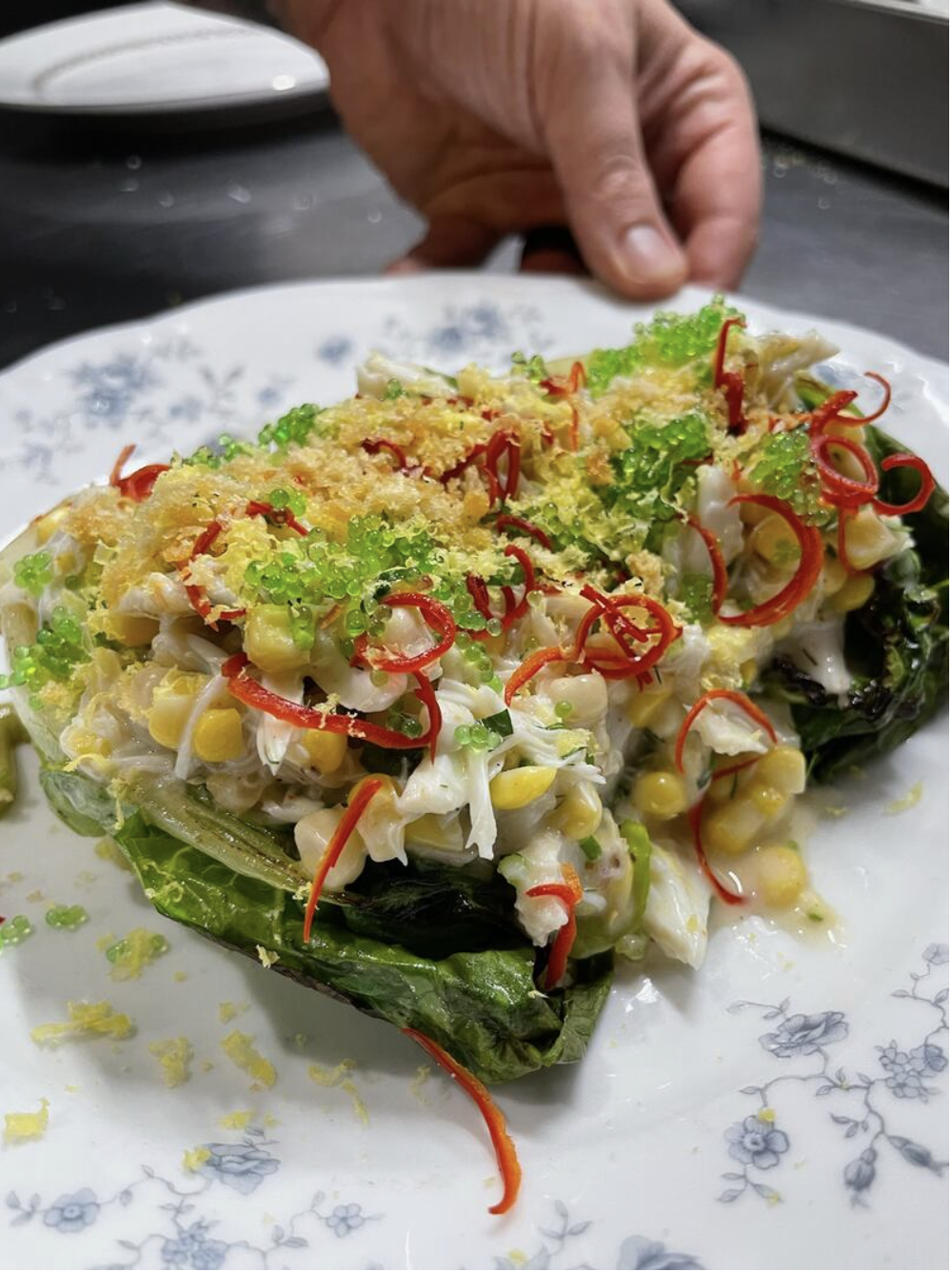
At Messina Social Club, chef Edmund Konrad added a roasted corn and hake salad to a $95 tasting menu. The salad is made with flaked slow-roasted hake and corn, a corn buerre blanc uni, and Old Bay seasoning. The dish includes smashed and fried marble potatoes, nori bread crumbs, wasabi tobiko, cured egg yolk, and fresh herbs. The restaurant also has a charred baby gem lettuce and brown butter roasted corn salad on the à la carte menu. The $20 dish includes crab and avocado.📍1533 S 10th St, 📞 267-928-4152, 🕒 Wednesday to Thursday 6 p.m. to 11 p.m. (kitchen closes at 10 p.m.), Friday to Saturday 6 p.m. to 3 a.m. (kitchen closes at 11 p.m.) 🌐 messinasocialclub.com

Italian eatery Giuseppe & Sons added a campanelle and corn pasta ($17) with a broccoli rabe pesto to its list of summer offerings, available until September. 📍1523 Sansom St, 📞 215-399-9199, 🕒 Sunday to Thursday 4 p.m. to 10 p.m., Friday to Saturday 4 p.m. to 11 p.m. (bar open one hour after kitchen closes), Friday to Saturday 6 p.m. to 3 a.m. (kitchen closes at 11 p.m.) 🌐giuseppesons.com

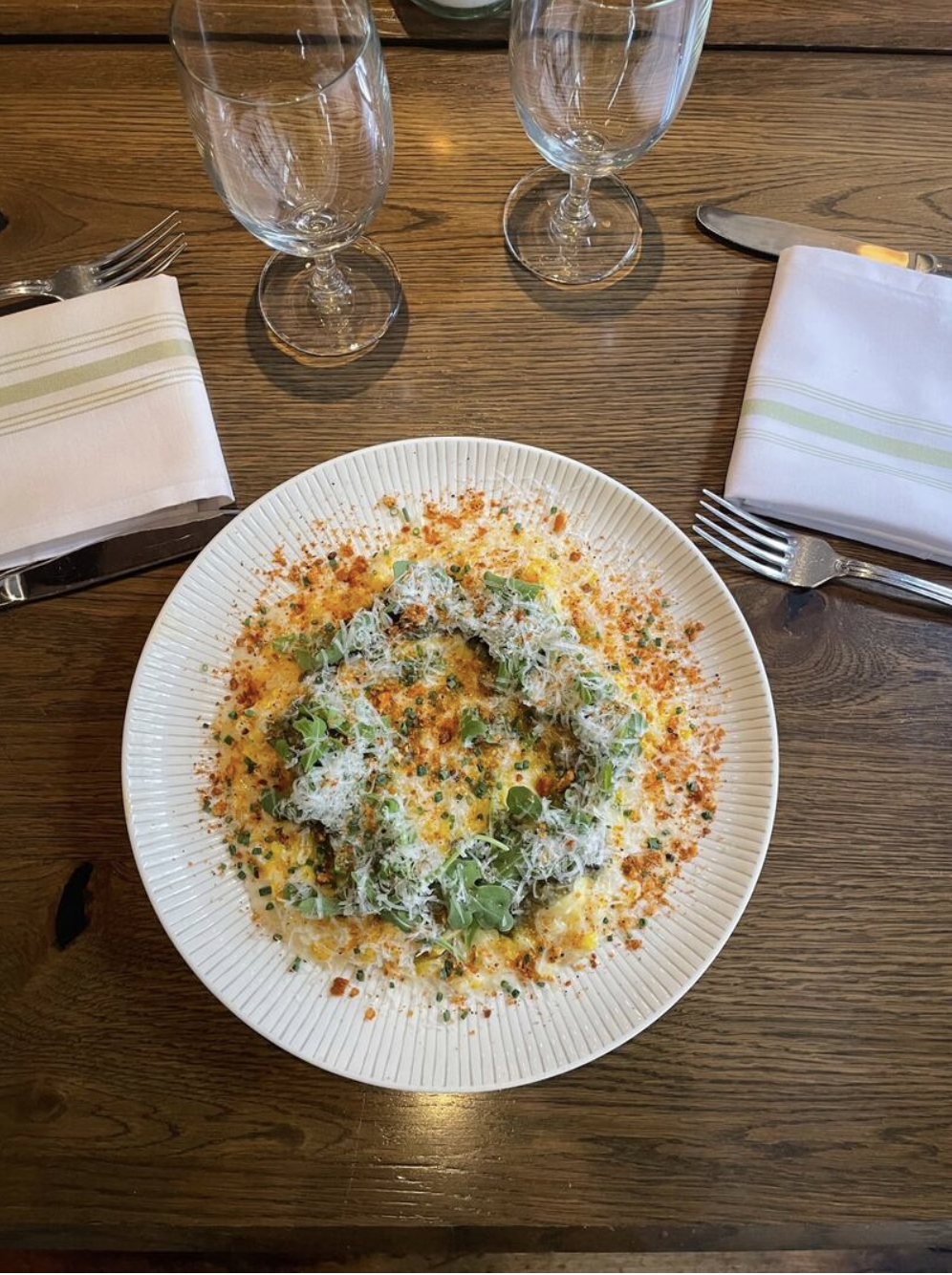
Lark, the coastal Mediterranean eatery, offers a corn and ricotta cappelletti with small clams ($19) in a creamy butter sauce and garnished with chili bread crumbs. 📍 611 Righters Ferry Rd, Ironworks at Pencoyd Landing, 📞 484-434-8766, 🕒 Tuesday to Saturday 5 p.m. to 10 p.m., Sunday 4:30 p.m. to 9 p.m. 🌐 larkpa.com

For a sweeter offering, Jansen added a corn panna cotta ($12), a balance of creamy, salty, and sweet, with a sweet corn cookie, caramel and corn honey tying in all the flavors. 📍7402 Germantown Ave, 📞 267-335-5041, 🕒 Tuesday to Thursday 5 p.m. to 8 p.m., Friday to Saturday 5 p.m. to 9 p.m. 🌐 jansenmtairy.com

Marc Vetri’s South Philly pasta bar, Fiorella, will serve a crepe sacchetti, a stuffed pasta with a bufala ricotta filling, corn crema butter, and Calabrian chili oil to garnish the plate. Through August, Vetri Cucina will serve a charred corn ravioli with smoked buttermilk crema and brown butter corn, and find a corn and crab corzetti dish at Fiore Rosso through the summer. Fiorella:📍817 Christian St, 📞 215-305-9222, 🕒 Sunday to Thursday 4 p.m. to 9 p.m., Friday to Saturday 4 p.m. to 10 p.m. 🌐 fiorellaphilly.com

At Talula’s Garden, find a ricotta cavatelli with sweet summer corn and truffle, lemon-herb bread crumbs, Parmesan, and “perky and bright” pickled corn relish, said Olexy — the truffle gives the $22 entrée an “earthy foil.” At both Talula’s Table and Talula’s Daily, you can order elote corn salad (made with roasted poblano peppers, black beans, and shucked corn) and a decadent, creamy corn soup. Talula’s ingredients are sourced from the Oxford Produce Auction, Green Meadow Farm, and the Headhouse Farmers Market. Talula’s Garden:📍210 W Washington Square, 📞 215-592-7787, 🕒 Monday to Friday 5 p.m. to 10 p.m., Saturday 4 p.m. to 10 p.m., Sunday 10 a.m. to 2 p.m. (brunch), 4 p.m. to 10 p.m. 🌐 talulasgarden.com; Talula’s Table:📍102 W State St, Kennett Square, 📞 610-444-8255, 🕒 Monday to Sunday 7 a.m. to 6 p.m. 🌐 talulastable.com; Talula’s Daily:📍208 W Washington Square, 📞 215-592-6555, 🕒 Monday to Sunday 8 a.m. to 6 p.m. 🌐 talulasdaily.com

Chef Edmund Konrad added a charred baby gem lettuce and brown butter roasted corn salad to Messina Club's à la carte menu. The $20 dish includes crab and avocado.Courtesy of Messina

The Love in Rittenhouse serves up a ricotta ravioli with sweet corn sauce, roasted poblano, vinaigrette, bread crumbs, and Parmesan for $28. The ricotta ravioli is made on-site daily; for the dish’s corn blanquette, cobs are steeped for hours with fresh herbs and cream. 📍130 S 18th St, 📞 215-433-1555, 🕒 Monday to Friday 11:30 a.m. to 2 p.m. (lunch), 5 p.m. to 10 p.m. (dinner), Saturday to Sunday 10 a.m. to 2 p.m. (brunch), 5 p.m. to 10 p.m. (dinner) 🌐 theloverestaurant.com

At Bloomsday , patrons can enjoy a sausage and corn cavatelli. The entrée is made with grilled corn, zucchini, sausage, pecorino, and pickled fresno chilies. The $25 dish is on the menu through the summer. 📍414 S 2nd St, 📞 267-319-8018, 🕒 Wednesday to Thursday 5 p.m. to 9 p.m., Friday to Saturday 10 a.m. to 2 p.m. (brunch), 5 p.m. to 9 p.m. (dinner), Sunday 10 a.m. to 2 p.m. 🌐 bloomsdaycafe.com

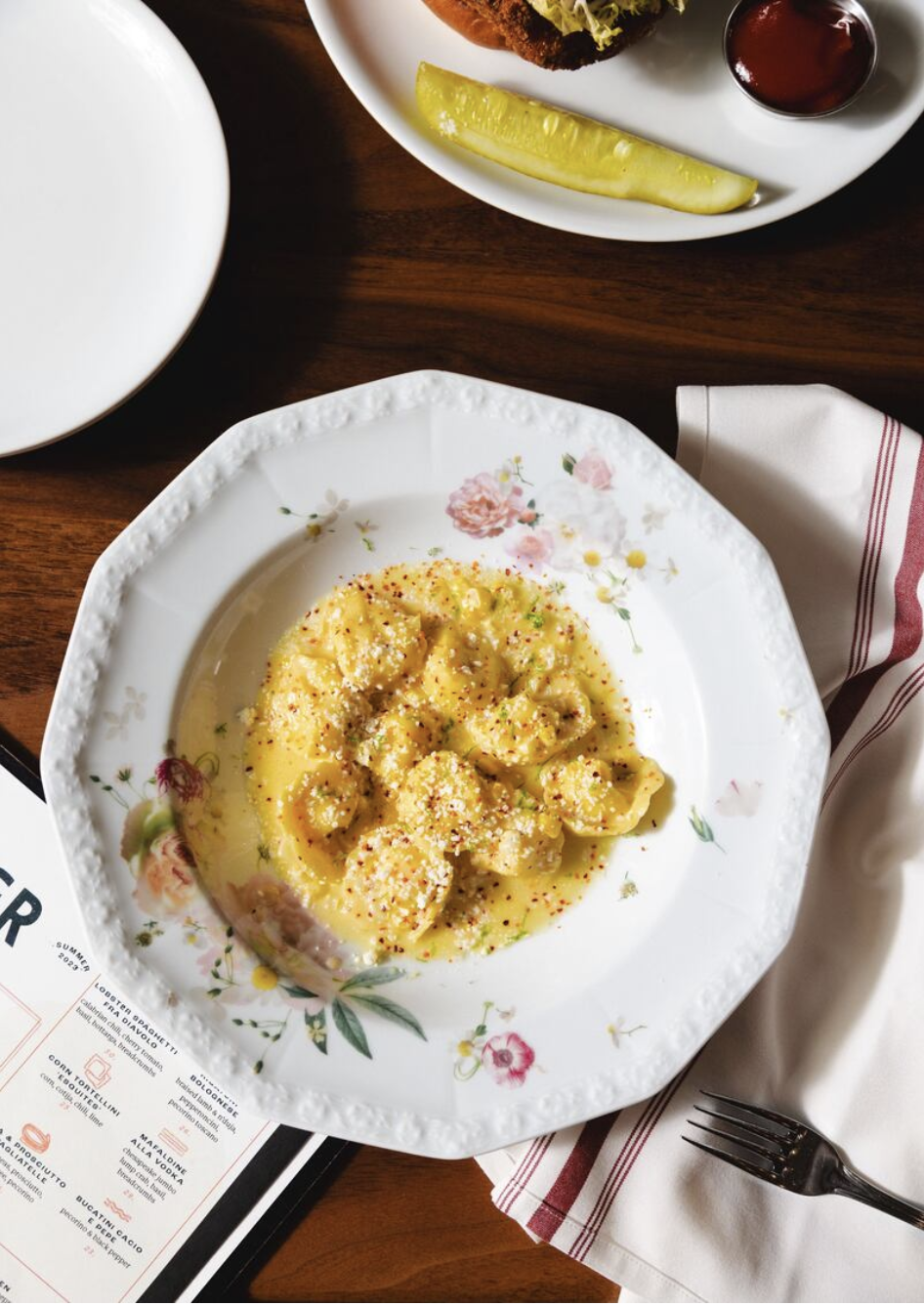
Wilder dishes out corn tortellini “esquites” on its list of seasonal additions. The Jersey corn-adorned meal has ricotta filling and house-extruded pasta. The $25 corn tortellini, available through mid-September, is finished with cotija cheese, chili powder, and lime juice and zest for a sharpened edge. 📍2009 Sansom St, 📞 215-309-2149, 🕒 Monday to Thursday 11:30 a.m. to 2:30 p.m. (lunch), 5 p.m. to 10 p.m. (dinner), Friday 11:30 a.m. to 2:30 p.m. (lunch), 5 p.m. to 11 p.m. (dinner), Saturday 11 a.m. to 3 p.m. (brunch), 5 p.m. to 11 p.m. (dinner), Sunday 11 a.m. to 3 p.m. (brunch), 5 p.m. to 9 p.m. (dinner) 🌐 wilderphilly.com

At Cicala, house-made tagliatelle with crispy guanciale and corn is on the menu for $26 through September. 📍699 N Broad St, at the Divine Lorraine Hotel, 📞 267-886-9334, 🕒 Tuesday to Thursday 5 p.m. to 10 p.m., Friday to Saturday 5 p.m. to 11 p.m., Sunday 5 p.m. to 9 p.m. 🌐 cicalarestaurant.com

Starting Aug. 9, Hearthside plans to serve a charred corn agnolotti, with ingredients like green onion, tajin, and jalapeñom —a play on Mexican street corn. The meal will be included in $115 family-style tasting menu through Aug. 19. 📍801 Haddon Ave, Collingswood, 📞 856-240-1164, 🕒 Wednesday to Saturday 5 p.m. to 9 p.m. 🌐 hearthsidebyob.com

– The Philadelphia Inquirer
Philly’s Wing Bowl competition is getting a documentary

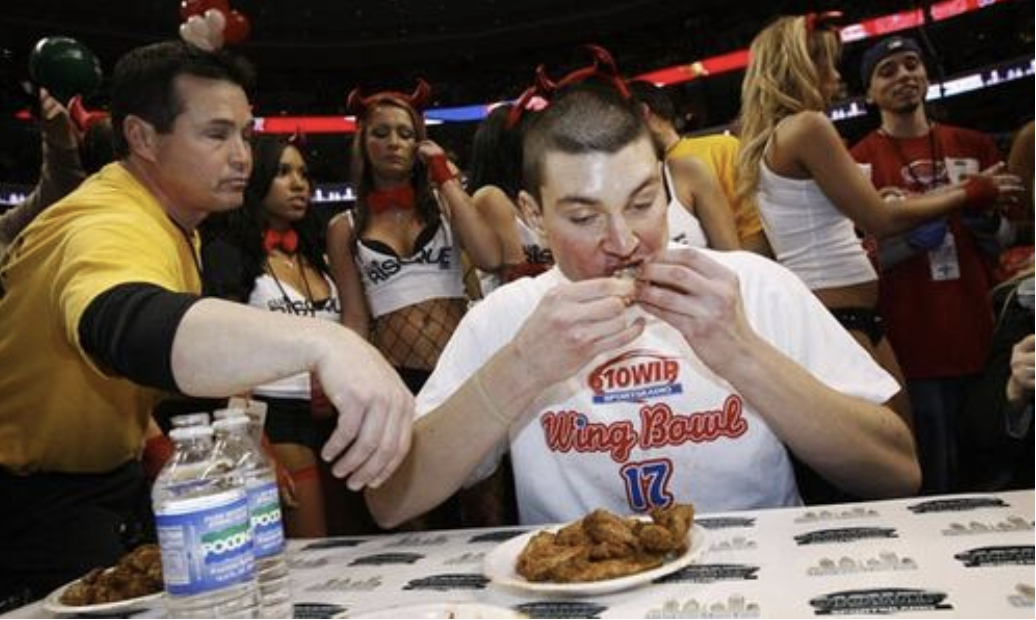
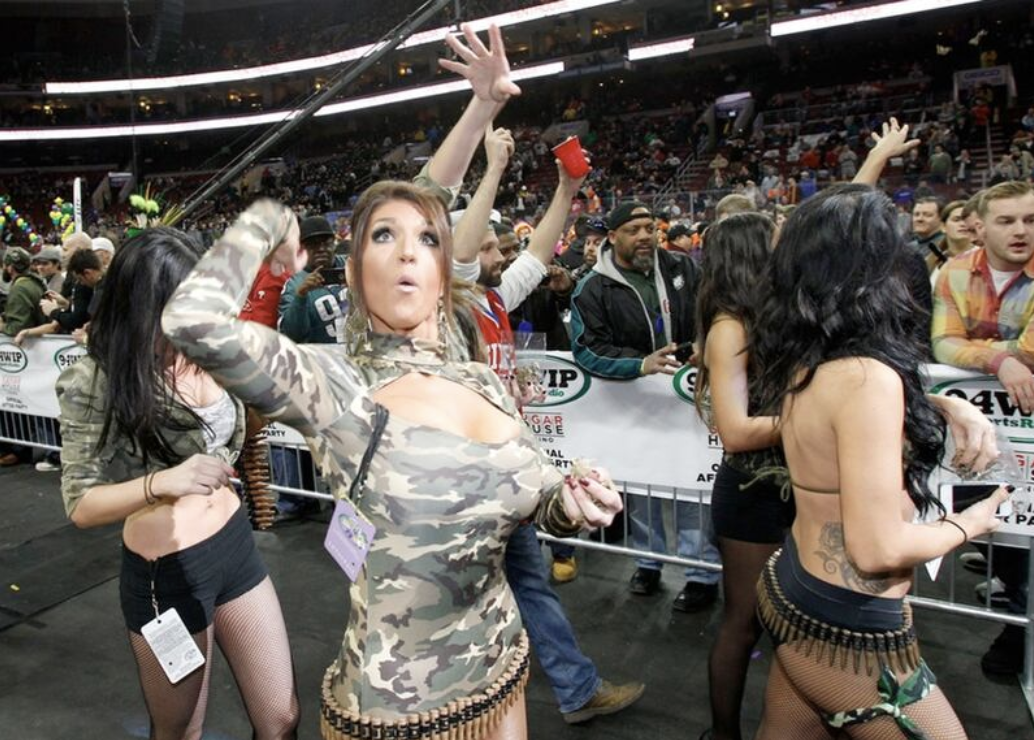
Starting in 1993, the Wing Bowl was a Friday-before-Super-Bowl-Sunday Philly tradition known for its endless flow of booze, arena-erupting antics, scantily clad “Wingettes,” and wildly competitive chicken wing eaters seeking gluttonous gold. But after 26 years of often-rowdy entertainment, fans and cocreator Angelo Cataldi were left with a sour taste.

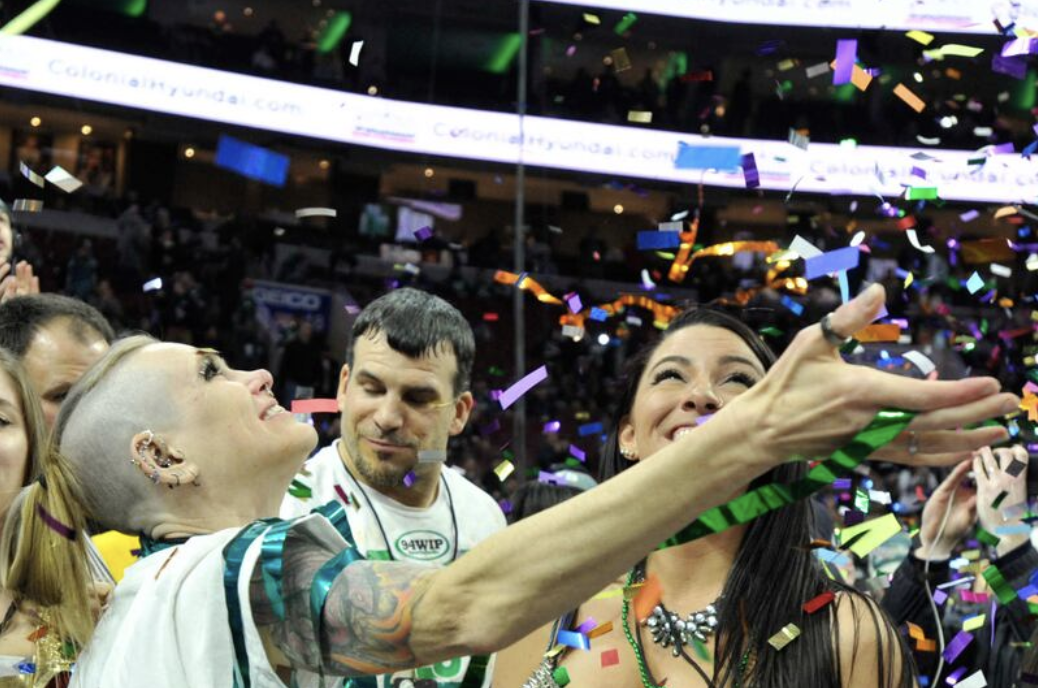
In 2018, Cataldi and fellow Wing Bowl creator Al Morganti celebrated the final wing-eating competition at the Wells Fargo Center. By the end, Cataldi said there were too many scantily clad women and drunk fans “acting up” in the stands, and skeptics were growing more critical of its direction — including his wife, Gail.

“The last few years were a little sleazy,” Cataldi said. “It didn’t go the way we wanted it to. It wasn’t politically correct enough for where the world had gone in the 26 years [since] when we started it. There were a lot of critics of it, and for good reason.”

Now, documentarians Frank Petka and Pat Taggart of Owl Town Productions are shopping around a film that re-examines this uniquely Philly extravaganza.

Their documentary, No One Died: The Wing Bowl Story, chronicles the origins of the radio promotion and its evolution into a stunt. The name is a nod to Cataldi and Morganti saying “nobody died” as a barometer for the event’s success.

“It was never really about chicken wings,” Petka said. “It was about all the other things that went along with it — the pageantry and that yearning for fame. It was also a party, and Philly embraced it.”

Back in 1993, the Philadelphia Eagles lost to the Dallas Cowboys in the divisional round of the playoffs. The mounting disappointment inspired Cataldi and Morganti, then sports radio hosts at WIP, to start their own pre-Super Bowl tradition.

“It works mostly because the people of Philadelphia wanted to have this party,” Morganti said to The Inquirer in 2004, alluding to the fact that the Eagles hadn’t made it to the Super Bowl since 1981. “It’s fun. It’s kind of like the party we’re never going to have unfortunately.”

The inaugural event started out as a small show in what is now the Sheraton Philadelphia Downtown before expanding to the Wells Fargo Center in 2000. And every year, contestants arrived on floats or were escorted by the Wingettes, a group of women who often worked at the gentlemen’s clubs that sponsored the event.

The early years were mostly filled with novice competitors, who took stage names like Bill “El Wingador” Simmons (who ended up winning the bowl five times), “Rob the Slob,” and “Pot Pie the Sailor.” But eventually, professional eaters stepped in and the original 100-wing winning count got bigger and bigger, with the last winner, Molly Schuyler, eating 501 wings in 2018.

In 2018, the Eagles won the Super Bowl against the New England Patriots. By that point, WIP had been owned by Audacy for about two years. That year, the Wing Bowl hosted its final edition against the backdrop of a victorious football team — and mounting criticism about the event itself.

Taggart and Petka’s documentary will chronicle the bowl’s 26-year journey as narrated by Cataldi, who agreed to the project after seeing the duo’s film Billboard Boys. Neither WIP nor Morganti participated in the documentary.

Impressed by their work in the Allentown-based Billboard Boys, which followed three men who lived on a billboard for 261 days to win a house in a radio contest, Cataldi met Petka and Taggart in Sea Isle City, N.J., in August last year. And two weeks later, the filmmakers recorded the first interview with Cataldi.

“My fear for the whole thing was that someone from L.A. who didn’t understand the contest would come in and do a slam piece,” Taggart said. “You have to understand what it was.”

Petka and Taggart interviewed 40 past organizers, contestants, and attendees, including former Eagle Jason Kelce, former Wing Bowl commissioner and Eagles long snapper Jon Dorenbos, and competitive eaters Eric “Badlands” Booker and Schuyler.

WIP, which still employs Morganti, refused to share archival footage. But through Cataldi, who retired from the radio station in 2023, Petka and Taggart were able to collect old images and videos.

WIP did not respond to a request for comment.

aggart said he aimed to show an unfiltered depiction of the Wing Bowl story — including the raunchier and unappetizing elements.

“You have to show the good, the bad, and the ugly,” he said. “We didn’t go into it with an agenda. It was important for me to find out what it meant to the people that were part of Wing Bowl. Like it or not, for some people this was a huge part of their identity.”

Cataldi said he hopes the film will “give people more of an appreciation for how strange it was.”

“It took everyday guys who were driving trucks and working hard for a living and put them in the middle of an arena where they got applause and attention,” Cataldi said. “They got to sample what it was like for them to be sports stars, and that’s a great thing for so many people. And we forgot that because of how it ended.”

Petka said the self-funded documentary forced him to dip into his savings account. But he and Taggart are shopping the documentary in hopes of making a splash at a film festival close to home.

“I don’t know what road this will take us, but it’s a truly unique Philadelphia thing,” Petka said. “We think it’s the greatest radio promotion of all time, or the worst event depending on who you talk to.”

– The Philadelphia Inquirer
A film about Philly’s mightiest ‘Underdogs,’ brought to you by Jason Kelce and Connor Barwin

Following the success of the Prime Video documentary Kelce, former Philadelphia Eagles Connor Barwin and Jason Kelce continue to dip their toes into filmmaking. But instead of the grit of the gridiron, they captured a different kind of Philly sports story.

They’re focusing on South Philly’s Vare Gymnastics Team in the short documentary Underdogs, which premieres at the Philadelphia Film Festival on Oct. 22.

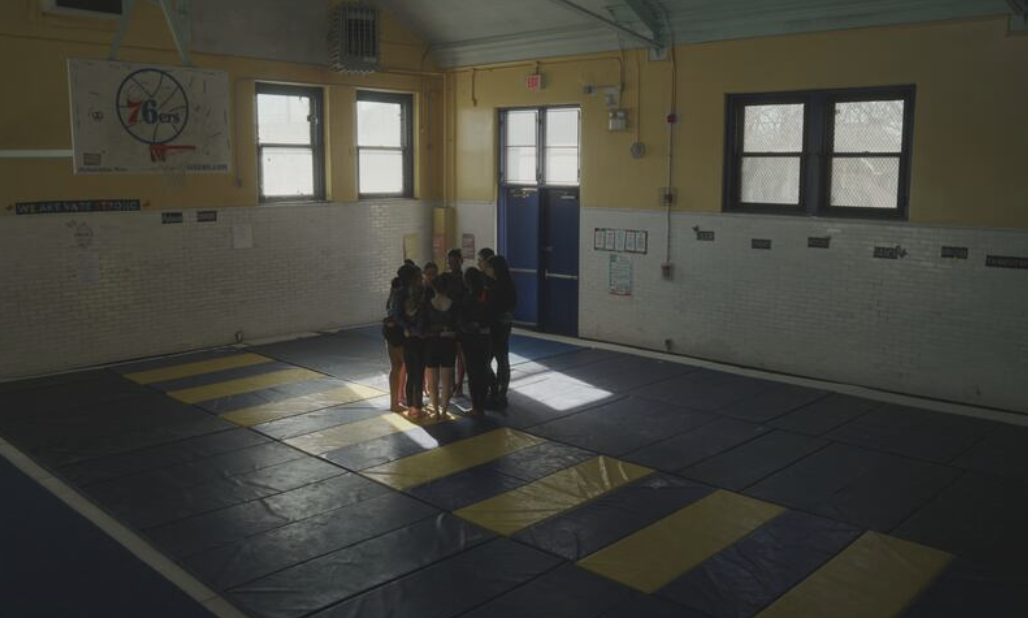
The 26-minute film spotlights the triumphs of an underfunded gymnastics squad, who leap past the challenges they faced after the closing of the historic but dilapidated Vare Recreation Center in 2022.

Director Maria Vattimo said the Vare Gymnastics Team’s resilience and the City of Philadelphia’s plans for a new recreational facility felt like the “perfect story.”

“What stuck out to me is the opportunity to tell a female story about young gymnasts living in this community, who otherwise would have never had the opportunity to partake in a sport like this,” said Vattimo.

Executive producer Kris Mendoza said the documentary was originally slated to be a 10-minute fundraising video about the Make the World Better Foundation, which aids the development of rec centers in Philly’s urban enclaves. In partnership with the City of Philadelphia, the organization developed the nearly $20 million center that the Vare Gymnastics Team would later move into after using multiple temporary practice facilities.

But after meeting with Mendoza and Vattimo, foundation founder and former Philadelphia Eagles linebacker Connor Barwin decided a documentary would be a better showcase for their community-based efforts.

“We wanted to bottle up all the good that we do, and Vattimo thought we should show the impact, rather than tell people,” Mendoza said. “Vattimo found this gymnastics team, which really embodies the spirit of what the Make the World Better Foundation does to create spaces that let these young kids in the inner city feel valued.”

Vattimo, whose award-winning film Kim chronicled the life of a ballet dancer overcoming domestic abuse, said the female-dominated sport of gymnastics presents its own unique barriers.

“Gymnastics is a very expensive sport to be a part of, and it’s only really seen in wealthy communities where young girls can partake in something like that,” she said. “So we looked to see how we could tell this story and to find the right voices.”

Vattimo started filming the team’s hard-fought competitions and the young gymnasts’ late-night practices on a pad-covered basketball court floor.

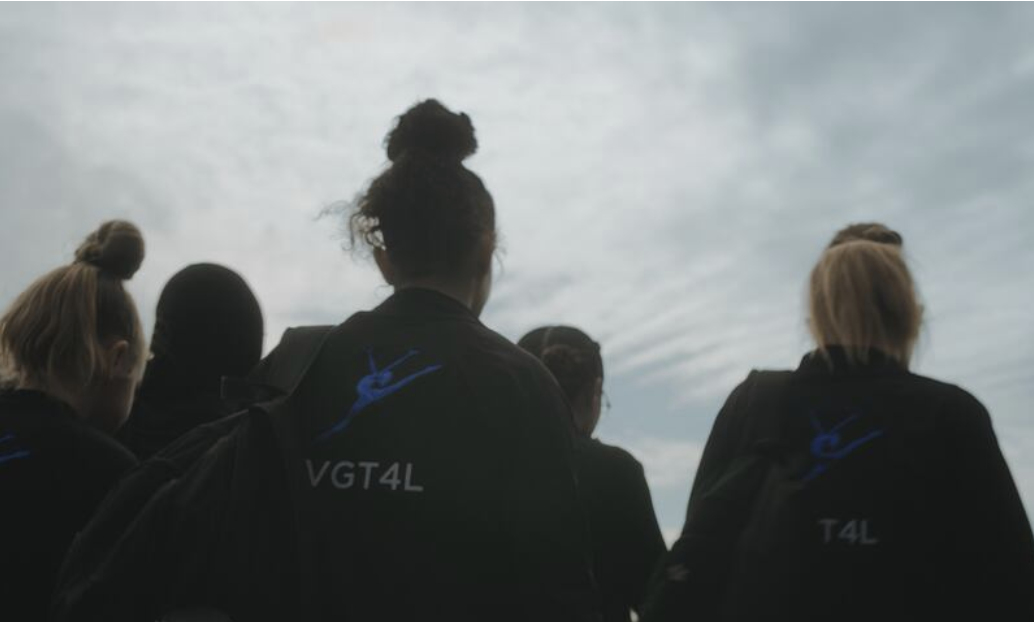
Despite the challenges, head coach Kristin Smerker said the girls continued to rack up competition wins and proudly don the “Vare Gymnastics Team 4 Life” symbol on their backs. And she’s “grateful” Vattimo and others were able to capture their resilience for others to see.

“We loved every minute of filming,” said Smerker, who’s coached the Vare Gymnastics Team since 1998. “The gymnasts felt like superstars and were so happy to be a part of all of this.”

Barwin, who was a gymnast before transitioning to football in his youth, brought Kelce onto the project as an executive producer. Their 2023 Kelce documentary became the No. 1 movie on Prime Video in the United States.

“The story is only about those girls, those coaches, and about how important coaches and public community spaces are for young kids,” said Barwin, who cofounded an entertainment company with Kelce. “That’s the story, but I think me and Kelce’s background playing youth sports understand that and are proud to tell that story.”

The film, starring gymnasts Cherokee Guido, Elianna Olsen, and Su’Adaa “Susu” Muhammad, will premiere at 6:15 p.m. on Oct. 22 at the Film Society Center. A second screening is at 5:45 p.m. on Oct. 27 at the Film Society East theater.

For more information, visit filmadelphia.org.

– The Philadelphia Inquirer