After many viral clips, teacher-turned-comic Chip Chantry is ready for a special

His Philly patriotism has made standup comedian Chip Chantry a favorite on social media.

Bite-sized videos revealing his undying love for the 6abc Action News theme — where he famously says “If you’re in my home, you better stand for the Action News theme song” — and his aversion to heroin and wearing Crocs because he’s afraid he’d enjoy them too much, have garnered millions of views on Instagram.

After 21 years as a standup, Chantry, wanting to capitalize on his newfound virality, has decided to bring together all his searing Philly-isms and hilarious confessions for his debut comedy special, Move Closer.
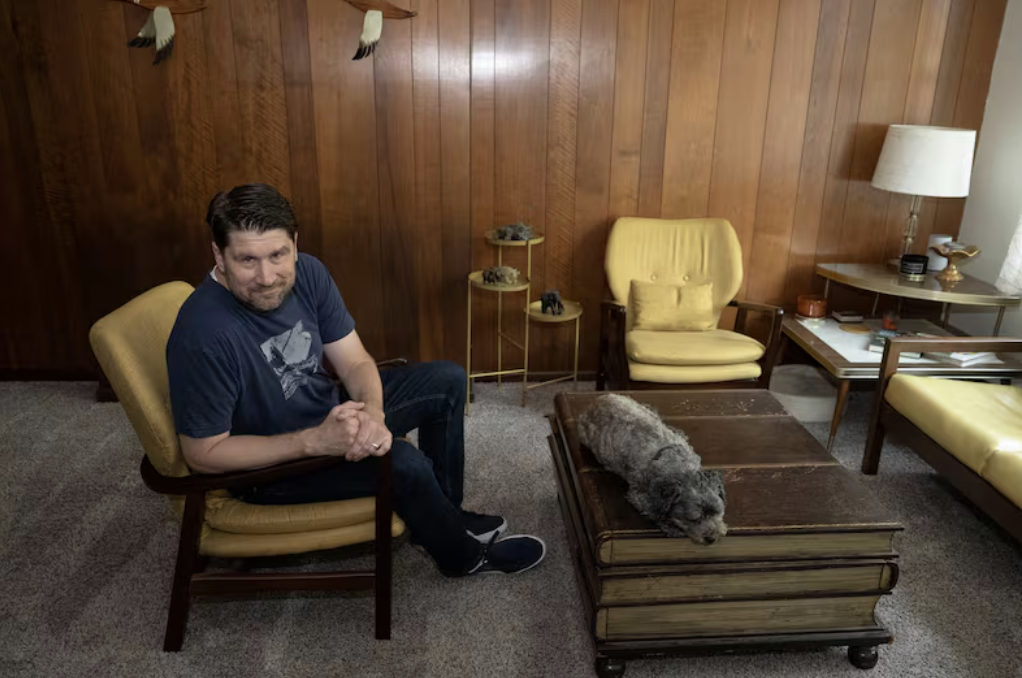
The special, which he is releasing himself, is named in honor of the Action News theme song “Move Closer to Your World” and is set to drop on YouTube at 8 p.m. on Tuesday. And while Chantry already has two comedy compilations under his belt, this release will mark the biggest moment in the Montgomery County native’s comedy career.

“It feels legitimate,” said Chantry, who filmed the special at Helium Comedy Club. “This is the next level, for better or worse, where I put my hour out there with the best comedians in the world and see where it falls. It’s kind of terrifying, but it also feels good to have the world see what I’ve been doing.”

Long before he became a mainstay in Philly’s comedy circuit, Chantry was a fourth-grade teacher for the Montgomery County’s Methacton School District, juggling life in the classroom and on the comedy stage. He performed in bars and restaurants in the city until 2 a.m., then woke up at 5:30 a.m. to get to school.

“For a decade, I was exhausted at all times. I was living a double life,” he said. “I was flailing around in comedy, not knowing what I was doing, and just creating open mics and doing shows wherever anybody would have me.”
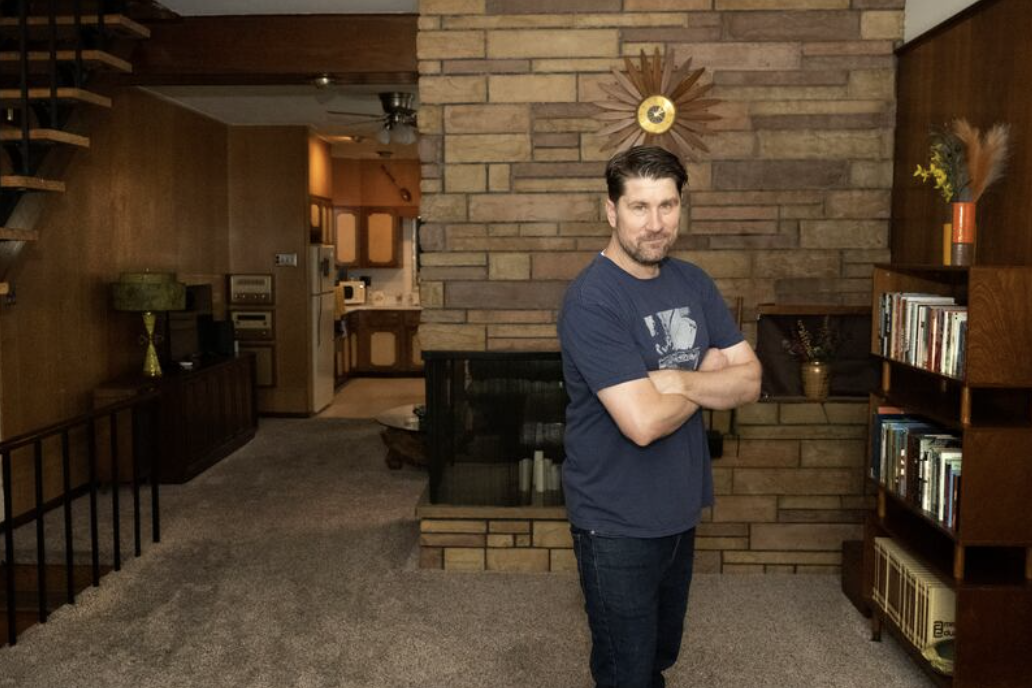
Finally, it was time to choose between the two worlds. After 14 years as an educator, Chantry was committed to changing course despite the “blinding fear” of failure.

In 2015, he landed a TV writing gig on the NBC Studios comedy-talk series Crazy Talk. Ever since, Chantry has opened for comics like Dave Chappelle, Tig Notaro, and Bob Saget, and went on to write for other shows like Whacked Out Sports and National Geographic’s Howie Mandel’s Animals Doing Things.

He recently appeared in the Shane Gillis-led Netflix series Tires as the character Kyle.

Philly comedian Mary Radzinski thinks Move Closer will show Chantry’s growing audience what he’s made of. “He’s such an amazing performer and joke writer, and it’s time for him to get the recognition he deserves,” she said. “It’s been a long time coming.”

Chantry’s journey to his debut special was riddled with second guesses. He passed up earlier opportunities to release a special in fear it was too early. And in the months leading up to the release of Move Closer, he considered leaving out the word special altogether.

“I almost felt guilty saying the word special because there are so many specials out there,” Chantry said. “Everybody has one right now, and that’s why I turned down a special I was offered a couple of years ago. I turned it down because I felt I wasn’t ready.”

Releasing a comedy special isn’t quite as special as it used to be, he said. The power of cable networks like HBO and Comedy Central has dwindled, which has led to fewer barriers for budding comics. It’s easier for performers to finance and produce their own “hours” and release them on streaming platforms like YouTube.

The shift, Chantry said, has led to an overabundance of bad specials. Young comics are bypassing the growing pains of the comedy stage and prematurely releasing projects in hopes of meteoric fame. Chantry didn’t want his work to be lost in the shuffle.
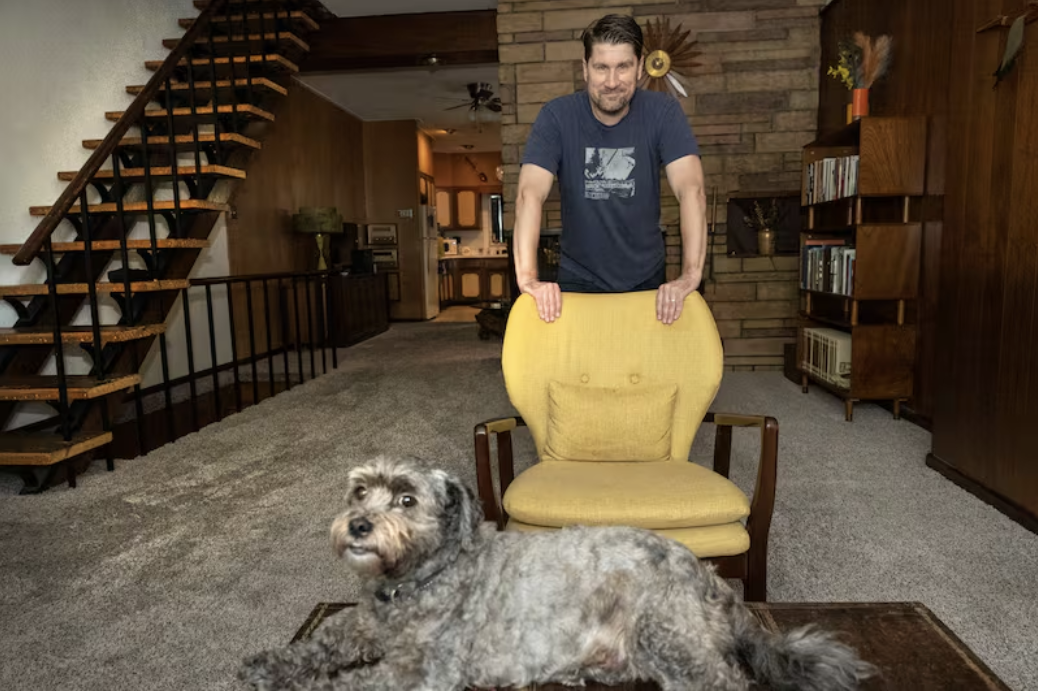
Philly comic Blake Wexler believes Chantry is the kind of talent who can thrive in this format.

“He’s been worthy of a special from any of these major streaming platforms and TV networks, but it just so happens that he did it himself, which makes it that much cooler,” Wexler, a Chester County native, said. “We’re obviously really good friends, but I’m really a fan of his comedy.”

In spite of those thoughts of self-doubt, Chantry is confident his experience and material is worthy of a project like Move Closer. He hopes it broadens his audience and breeds more opportunities to showcase his comedic talent.

“The biggest reward for a comedian is just more work,” he said. “Whether it’s on stage doing standup, doing writing, making more videos, or whatever it may be. I just want to do more work.”

– The Philadelphia Inquirer

Philly comedians find more laughs with an expanding indie stand-up scene

It’s hard to ignore Philly’s influence in the comedy world.

Superstars like Kevin Hart and Quinta Brunson have broken barriers in Hollywood, while Upper Darby native Tina Fey shined for years as a Saturday Night Live cast member and writer. Late comedy legends Bob Saget and David Brenner helped establish the city’s signature raw, cheeky, and unfiltered comedic style. But comics Tyler Wolf and Manny Brown say the city has yet to fulfill its potential.

For years, Wolf said, Philly has had fewer opportunities for comedy compared to cities like Boston, San Francisco, Washington, and Chicago. The Mount Airy native, who started Next in Line Comedy shows with Brown in 2021, said there aren’t enough shows, open-mic events, or paid gigs for many local performers to pursue full-time careers as comics.

“The weekends, which is ideally when shows are taking place, are pretty barren in Philly outside of the comedy clubs, but those other mid-major cities might have five-plus independent shows on any weekend night,” Wolf, 30, said.

Brown said there’s still much to be desired, but the rise of independent shows and small, DIY-style comedy stages are filling the void. Along with established clubs like Helium Comedy Club and Punch Line Philly, the West Chester native said comedians are renting out local restaurants, cafes, breweries, and bookstores for more stage time, consistent pay, and a longer leash of creativity.

“We’re moving toward this larger independent comedy scene,” Brown, 34, said. “That’s a win-win for the comics because they get more stage time and become better comics, and it’s also a way for audience members to see really good comics for not a lot of money.”

Many independent comedy shows in Philadelphia cost between $5 and $20, and expose audiences to observational, deadpan, dark, or slapstick wit.

Part-time performer Kinjal Dave — who has produced shows in the backyard of Bindlestiff Books — said hosting events at venues like Tattooed Mom, Fergie’s Pub, and Second District Brewing also gives more Philly comedians an outlet to sharpen their skills when other comedy shows have full lineups.

“[These spaces] are really important if you want to get diverse voices, perspectives, and life experiences on stage,” Dave, 27, said. “I think in mainstream comedy, a lot of it is about stereotypes, and you have little time to get the audience’s attention. But if you have your own show, you have a chance to have a different conversation or opportunity to express yourself.”

Kristen Scopino, who has organized comedy shows at Stir Lounge, Dahlak Paradise, and other venues in town, said the comedy scene has opened up, and is offering more women-led and LGBTQ-centered events since she first began hosting shows in 2018.

“There were so many lineups with all men, but there’s been a few different LGBTQ showcases around the city in the last few years,” Scopino, 31, said. “A lot more people around the city are more open to putting on different comedy events, some even for the first time, and checking out how it works in their place.”

Comedian Jay Yoder, 39, said the rise of independent shows and small-scale events is a product of the pandemic. Many comedy clubs closed, leaving performers without a creative outlet, and unsatisfied in a genre that relies on a live audience.

When the switch to virtual performances flattened their hopes, Yoder said, he and other comics turned to whatever spaces were willing to host weekly nights of comedy, which continued for three years. The once makeshift stages have become routine comedy stops, and helped Yoder, a part-time teacher in Chester County, jumpstart his comedic career.

“Restaurants were primed for it,” said Yoder, who hosts monthly comedy shows at Tuned Up Brewing. “They had space that needed to be filled and it was just another reason to get people back into the building. It was sort of natural, and it worked out beautifully.”

Since the pandemic, Prateekshit Pandey, a regular performer at ComedySportz Philadelphia and Philly Improv Theater, said some comics have begun producing small shows inside their apartments as a way to cut costs and provide more intimate settings.

“In Philadelphia, especially after the pandemic, people have been doing that a lot because it’s cheaper to get those audiences, set it up, and perform for a smaller audience,” Pandey, 28, said. “You don’t have to pay for the price of renting out a bookstore or a cafe or anything like that.”

Alongside the rise of DIY-comedy shows, long-standing clubs are welcoming changes in the local scene.

Amanda Kyser, who oversees comedy operations for Live Nation, said Punch Line Philly is focused on drawing in different brands of comedy beyond typical stand-up.

“This is a moment where our definition of comedy is changing,” she said. “We’re embracing more types of comics from traditional stand-up comedians to podcasters and YouTube stars which are bringing new voices and new perspectives. It’s exciting.”

While the comedy scene is expanding, Pandey said there’s still a lack of diversity at local improv theaters, and certain comedy clubs are harder to break into than others, especially for comics of color.

“There are spaces and venues in Philly that are hard to get into because the gatekeeping comes into play,” he said. “Some are either geared to who knows who, and sometimes they don’t feel very comfortable going to regularly, at least not enough to be able to become part of the community.”

Dave said independent shows, open mics, and pop-up stages are creating more opportunities for comics of color.

“I want different immigrant communities that are in Philly to be represented in the comedy scene because there’s just a little bit more breathing room and hopefully the communities turn up and show out for these kinds of experiences,” she said.

With more outlets available, Wolf is confident the city will become a more viable spot for comedians to shine.

“This is not a zero-sum game,” he said. “More comedy just breeds better comedy, and there’s a big appetite in this city.”

– The Philadelphia Inquirer