How Future & Metro Boomin Became Trap Music's Greatest Duo

The musical bond between Future and Metro Boomin blazed new paths in Atlanta's rap scene, and transformed trap music into one of music's most expansive exports. The duo first connected on the cult "Karate Chop" back in 2013, and have been on an unrelenting hit streak ever since.

Future's auto-tune-soaked melodies and Metro's ominous trap production has formed an inseparable linkage and some of the biggest records of the past decade. From "Honest" to "Jumpman" and 2024's "Type S**t," the pair have blossomed into music's most in-demand hitmakers and influencers. 

Metro, born Leland Wayne, went from aimlessly sending beats as a teenager from his St. Louis home, to becoming one of the industry's most versatile music producers and a GRAMMY-nominated solo artist. Meanwhile Future, born Nayvadius Cash, has evolved into an international draw with a myriad of No. 1 records, multi-platinum albums, and GRAMMY wins under his belt. 

The two stars have continued to ascend in lock-step, with a new medley of booming street hits and club anthems arriving with each collaboration. But 2024 was their most expansive year to date. The duo cranked out We Don't Trust You in March, and the sequel, We Still Don't Trust You, just weeks later. 

Backed by the Kendrick Lamar-assisted hit "Like That," — and the seismic rap feud it ignited— We Don't Trust You debuted atop the Billboard 100, marking Future's second-largest opening week and Metro's biggest ever. Its follow-up, the more melodic-leaning We Still Don't Trust You, also claimed the No. 1 spot. Together, the joint projects earned the duo four nominations at the 2025 GRAMMYs, including Best Rap Album (We Don't Trust You) and Best Rap Song ("Like That"). 

Future and Metro have hit an artistic zenith unmatched by most rap duos, and it doesn't appear their streak is slowing down any time soon. As their legacy continues to grow, look back at the genesis of their artistic union over the years, and the series of hits that have formed in their wake:

2013

Before Metro became a top-end producer, he was a 17-year-old beatmaker with hopes one of his beats would fall into the hands of a mainstream artist. One faithful email to Brick Squad rapper OJ da Juiceman got him an invite to his Atlanta studio. With permission from his late mother Leslie Wayne, Metro made the eight and a half-hour voyage from St. Louis to the trap music capital. She continued to chaperone him almost weekly until Metro moved to Atlanta full-time to attend Morehouse College in 2012. 

The first-year college student split his time in the classroom and in the studio with Juiceman's mentor Gucci Mane. He eventually crossed paths with Future, who ascended from the disbanded Atlanta group Da Connect and became his own musical entity. Future started meeting up with the teenage producer daily, and the "Tony Montana" rapper hopped on one of Metro's zippy trap beats. He laid down drug-sunken lyrics to the thunderous, heavy-synth instrumental that became 2013's "Karate Chop," but Metro wasn't convinced it was a worthy single. 

"I had no clue from all the records we've done, that [that] s**t just sitting in the studio would be the one. But these days, the people and the streets produce the singles and they was fuckin' with it," Metro said in a 2013 interview with XXL.

Despite Metro's initial hesitancy, the remix featuring Lil Wayne became the lead single of Future's 2014 album, Honest, which featured three other songs from Metro, including the title track and "I Won" with Kanye West. The success of "Karate Chop" convinced Metro to drop out of college and capitalize on the rising momentum. And the musical alchemy between the rapper and producer only strengthened over time.

2015

By 2015, Metro and Future were no longer fighting for attention. The spotlight was keenly focused on the two artists, who, along with figures like Young Thug and Rich Homie Quan, were at the forefront of a booming, melody-infused trap sound. The proof of their collective powers was Future's trap masterwork DS2 and What a Time to Be Alive, an entertainingly disjointed mixtape with Canadian-born superstar Drake

Following the release of 2014's Honest, Future dropped a trilogy of album-quality mixtapes. The first was Monster, a darker and more brooding project that saw Future return to his previous form. Metro executive produced the mixtape, and was credited for crafting "Radical," "Mad Luv," "Wesley Pressley" and other tracks.

The duo carried the momentum of Monster into Future's DS2, widely considered the rapper's masterstroke of bleak, self-medicated drug tales and fiery trap hits. Metro, alongside fellow Atlanta trap architects Southside, Zaytoven, and Sonny Digital, handled the bulk of the project. Some of the tracks he produced included the strip club anthem "Freak Hoe," the tranquilizing "Rich Sex," and "Where Ya At" with Drake. 

After the recording session for "Where Ya At" wrapped, Drake and Future began working on the collaborative mixtape, What a Time to Be Alive.  Drake flew to Atlanta for six days with the hopes of recording a handful of songs, but Future's relentless work ethic prompted the Toronto native to match his tenacity. 

The 11-song mixtape surprisingly dropped in September 2015, and fans immediately swarmed to Metro-produced tracks like "Digital Dash," "Big Rings," and "Jumpman." The latter became a top 20 Billboard hit, and Metro's Future-assisted producer tag, "If Young Metro don't trust you I'm gon' shoot you," became the industry's most recognizable calling card.

2017

Just when it felt Future's smoldering hit streak was beginning to cool, he released back-to-back albums FUTURE and HNDRXX in February of 2017. The two projects teetered between pop-inspired tunes and heavy-handed street records, and Metro was the unsurprising maestro behind the biggest song from the two records. 

The Metro-produced "Mask Off" peaked at No. 5 on the Billboard Hot 100, making it Future's highest charting single at the time of its release. A remix of the track, which samples Carlton Williams' "Prison Song" from the 1978 Selma musical, featured Kendrick Lamar. 

The massive hit encouraged generations of hip-hop fans to chant the song's drug-filled hook "Percocets (ya), molly, Percocets (Percocets)." And while Future's HNDRXX takes a more R&B and bright-eyed musical approach compared to the dreadful trap sound of his previous works, Metro was credited for the album opener "My Collection" and closer "Sorry."

2022

After five years without a collaboration, the super-duo linked back up for Metro's "Superhero (Heroes & Villains)." Future's gravelly and unpolished delivery contrasted the song's more cinematic and orchestral production. It was the first single off the producer's comic book-themed album, Heroes & Villains, which echoed an evolutionary turn for the producer-turned-solo artist. 

His transition from rugged trap sounds to grander production was first demonstrated on 2018's Not All Heroes Wear Capes, but his second album and expansion into film showcased it at a larger scale. Metro went on to produce Sony's Spider-Man: Across the Spider-Verse soundtrack, which featured A$AP Rocky, NAV, Travis Scott, Don Tolliver, Lil Uzi Vert, 21 Savage, and his other frequent collaborations.  

In the years since their last record, Future was also expanding his musical reach. He cranked out joint projects with Young Thug, Zaytoven, Juice WRLD, and Lil Uzi Vert, and released another collection of projects while taking a few momentary breaks in between. "​That's because I'm happy," Future said of his occasional hiatuses in a 2022 interview with GQ. "I'm genuinely happy with life. And there was a time where I was only happy when I was on the stage, and in the studio. Like it was my escape." After an album-less 2021, he followed up the next year with I Never Liked You, which earned the rapper his eighth chart-topping album and a GRAMMY win for the mega hit "Wait For U" with Drake and Tems

Metro wasn't credited on I Never Liked You, but the "Puffin On Zootiez" emcee circled back with his musical companion later that year. The two reunited on other tracks from Metro's Heroes & Villains album, including "Too Many Nights," "I Can't Save You (Interlude)," and ""Lock On Me." And while it may have seemed like Future and Metro disbanded during the five-year stretch, the producer said they never stopped working together.

 "It's crazy, public perception makes it look like we went our separate ways," Metro said in a 2023 interview with Gangsta Grills Radio. "But neither one of us really went nowhere. It's just about the right moment, and I feel like God just brought this moment together."

2024

More than a year before the release of their joint albums, Future hinted at a potential project with his long-time collaborator. In January 2023, the rapper reshared an Instagram post that read, "Future x Metro OTW with the album of the year." But the subtle endorsement failed to highlight how big the joint effort the following year would be. 

In March 2024, Future and Metro confirmed a two-part album release in a 44-second trailer. The duo is seen hopping out of luxury SUVs in the desert, with the late Mobb Deep rapper Prodigy providing the video's contentious narration.  "A lot of f**king garbage ass rappers running around. These n****s ain't supposed to be rapping, man. This game is meant for a select few." 

The first in the series was We Don't Trust You, a 17-song project that combined Metro's cinematic production with Future's street poetics. Kendrick's verse on the single "Like That" sparked a series of diss records between Lamar, Cole, and Drake, with the Comtpon rapper declaring, "Motherf**k the big three, n***a, it's just big me." 

The result was weeks of musical exchanges between the three artists, including a Drake-directed instrumental from Metro called "BBL Drizzy," which the producer encouraged fans to rap over for a chance to win a free beat. The hotly-contested battle, paired with songs like "Type S**t" and The Weeknd-assisted "We Still Don't Trust You," pushed both albums atop the sales and music charts. 

The pair capped off the year with a 27-date North American tour and a handful of nominations at the 2025 GRAMMYs.

2025

While Metro and Boomin went home from the 2025 GRAMMYs empty handed, the duo’s influence remains undeniable. Between the No. 1 records and recognition redefining modern trap music, they have influenced a new generation while staying true to their signature sound. With undeniable chemistry, their legacy is already cemented — but their reign is far from over.

– Grammy.com

Keke Palmer and Tierra Whack bonded over a secret pregnancy

Keke Palmer met Tierra Whack over a game of spades at Jackie Chan’s house in South Philly.

Trust me, the story gets even better.

They started arguing with Rihanna when Eddie Murphy showed up to diffuse the situation.

And if all this sounds too good to be true, that’s because, well, it is.

“All right, we play too much,” Palmer joked to the Fitler Club crowd. The newly published author stopped by on Thursday for an event presented by Harriett’s Bookshop and sponsored by the Fitler Club and The Inquirer. Whack interviewed Palmer about her book, Master of Me: The Secret to Controlling Your Narrative.

The real story? The actress, singer, and KeyTV founder met Whack at Alicia Keys’ house in 2023, bundled up in a puffer coat, which she took off to reveal a baby bump. She was months away from giving birth to her son, Leodis “Leo” Jackson.

Whack kept her lips sealed on the secret pregnancy, and the two multi-hyphenates have built a special bond over the past two years. “I love you girl,” Palmer said as she walked over to hug the North Philly native. “I love you, too,” Whack said.

“I’m here, no payment or nothing,” Whack said to the crowd in the Fitler Club ballroom. “This is my girl.”

Palmer’s memoir delves into her days as a child actor, and the lessons she’s learned on her journey to becoming an Emmy-winning entertainer, entrepreneur, and mom of one.

“Kids bring perspective,” she said. “I have to make sure this baby is good, and then I have the rest of the day. It’s helping me understand what’s really important.”

Palmer and Whack spoke of their love-hate relationship with musicals and their fondness for ’90s and early 2000s sitcoms like The Jamie Foxx Show and The Parkers. And like the rest of us, Palmer can’t get enough of the Apple TV+ thriller Severance. “It’s so good, I had to go back and re-watch season one,” she said.

By the end of the evening, Whack had seemingly found a name for her next project.Whack of All Trades.

“If that’s the next album, I need a feature,” Palmer said.

– The Philadelphia Inquirer

An in-the-works UArts documentary will show what led to the school’s collapse

Amid the thousands of emails that filled his inbox, former University of the Arts professor Kyle Crichton never expected to receive a message like the one delivered at 6:19 p.m. on May 31.

Crichton froze as the news broke — president Kerry Walk said the school was closing in a week. And on June 7, the historic arts college officially shuttered its doors, leaving hundreds of students and educators wondering how and why the university suddenly collapsed.

Administrators blamed declining enrollment and unexpected financial challenges as the source of the dismay, while some UArts employees and union members pointed to alleged mismanagement. The closure sparked days of protests and class-action lawsuits filed by dozens of ex-staffers.

‘I started filming it’

With uncertainty still looming,Crichton grabbed his camera and began capturing student-led protests on the steps of Dorrance Hamilton Hall on June 5. The award-winning filmmaker had another project on the books, but he decided to chronicle the story he was experiencing and watching unfold.

“As it happened, I started filming it,” said Crichton, who received a Mid-Atlantic Regional Emmy for his work on the 2023 documentary Angel Dose. “I was disappointed financially, but I was also disappointed I wasn’t going to be teaching these kids.”

In need of a cinematographer and co-director, Crichton tapped fellow UArts graduatesKatie Supplee and Michelle Rose Goodwin, who agreed to be a part of the project, still in early stages and currently titled “Reckless Education.”

Along with capturing the devastation of the June 7 announcement, the three filmmakers have interviewed UArts students, staff, and faculty about the lasting affects of the shut down over the past four months.

Goodwin, the co-director and producer of the film, is hopeful the documentary will fully capture the frustrations, anger, and heartbreak felt among the UArts community in the days and months after the unforeseen closure.

“The school dissolving in the fashion that it did shook a lot of people’s foundations, took a lot of control from their lives, and made a lot of people feel powerless,” Goodwin said. “And I think this documentary is a way to try to give them that power back.”

Why did UArts close so suddenly?

Goodwin said they aren’t shying away from the school’s missteps, which ultimately led to its dissolution and Chapter 7 bankruptcy filing. But a goal of the documentary is to figure out what happened.

To unveil the full wreckage of UArts, Crichton said it’s a “multi-pronged” approach that requires the voices of city officials.

Crichton, Supplee, and Goodwin are hoping to land interviews with city council members and attorney general Michelle Henry.

“Art is such a good vessel for spreading ideas, and I feel like that’s what we’re doing here,” Supplee said. “We don’t want to just impact the Philly arts scene with the film. We want to speak to the shuttering of educational institutions as a whole.”

Next steps for production

Supplee, whose fiancé worked at UArts before the university closed its doors, said the small production crew is now following “displaced UArts students who were forced to transfer schools to pursue their creative arts career.”

With filming in full swing, Crichton said the team is aiming for a 2026 release. The next step is to add more interview subjects, researchers, and filmmakers to bolster up the production, and score additional funding to piece the self-funded project together.

The three filmmakers are funding the independent venture while balancing their daily work as documentarians and content creators.

Crichton is confident they can produce the film “rag-tag style” for $100,000. And as they bring on more contributors, preferably UArts alums, he believes the nearly two-year process will be worth the wait.

“It feels like we have lightning in a bottle, and we want to continue pursuing it,” Crichton said. “Things will unfold, and we’ve come to the realization that it’s going to be a little bit of time, but we’re prepared for it.”

For more information, visit recklesseducationfilm.com.

– The Philadelphia Inquirer

Eagles super fan sports a 72-inch custom wig in the team’s colors

Lifelong super fan Tina McIntosh, 52, has taken her love of the Eagles to new lengths.

For Monday’s game against the Atlanta Falcons (which the Eagles lost in a late-game rally by Falcons quarterback Kirk Cousins) the Southwest Philly native wore a custom kelly green Eagles shirt, green high-top Nikes, white crew socks with the Eagles logo, and a 72-inch long, team-themed wig to match.

“When the Eagles play, I usually look for a lime green wig, but this time I wanted something different,” said McIntosh, who worked as a cleaner at Veterans Stadium in the early 1990s and is now a home health aide. “I had to think outside the box and that was it right there.”

The $300 braided wig is almost like a tapestry with a reimagined Eagles logo from the 1960s: a green eagle carrying a football with yellow talons against a white background. The top and bottom is black and green.

McIntosh shared her outfit on Instagram before watching the NFC matchup with her cousin and grandchildren in North Philly, where she now lives. When CBS Philadelphia posted a video of McIntosh in her Eagles regalia, she caused quite a stir.

“I feel like she deserves a walk-on role in Abbott Elementary for this wig alone,” one Instagram user wrote before tagging actor Quinta Brunson.

McIntosh purchased the wig from part-time hairstylist Shana Everson of Braidedbyshana. The Syracuse-based wig maker has made Green Bay Packers and Kansas City Chiefs-themed wigs over the years.

McIntosh had seen Everson’s work on TikTok and went to her website to place her custom Eagles order. After exchanging images and ideas, Everson delivered a “butt length” wig adorned with Eagles colors within a week.

Everson is surprised by the attention the wig has received, but she’s happy for McIntosh who has been lapping it all up. “She’s such an animated character and she really rocked it,” said Everson, a Buffalo Bills fan. “I was satisfied, and I can’t wait to see the reactions when she wears the wig at the game.”

Ahead of the Eagles Sunday matchup against the New Orleans Saints, McIntosh has already mapped out her Eagles day outfit — another custom kelly green top, a pair of Eagles-themed jeans, and, of course, her new wig.

This time, she wants the Eagles to soar to victory.

“We win some, we lose some. I just pray that we win this Sunday,” she said.

– The Philadelphia Inquirer

Wallo267 doesn’t want you to count yourself out

Two decades of incarceration and a lifetime of hardship made Wallace Peeples realize his greatest defense was a loaded mind, not a loaded gun.

Peeples, better known as Wallo267 on social media, is a motivational speaker, podcaster, and influencer. Growing up in Nicetown, he bounced in and out of juvenile centers, before being arrested and convicted for a string of armed robberies and served a total of 20 years in the Pennsylvania prison system. But instead of faltering under the strain of imprisonment, Wallo reprogrammed his mind and vowed to change course. If he didn’t, he knew there would be no breaking away from the continuous cycle of incarceration.

While incarcerated, Wallo learned the inner workings of social media from friends and family who made the two-hour commute to visit him in state correctional institutions across the state. He built a following by posting motivational pictures on a contraband phone.

On Feb. 18, 2017, Wallo walked out of the State Correctional Institution of Coal Township with a renewed sense of purpose and over 50,000 Instagram followers.

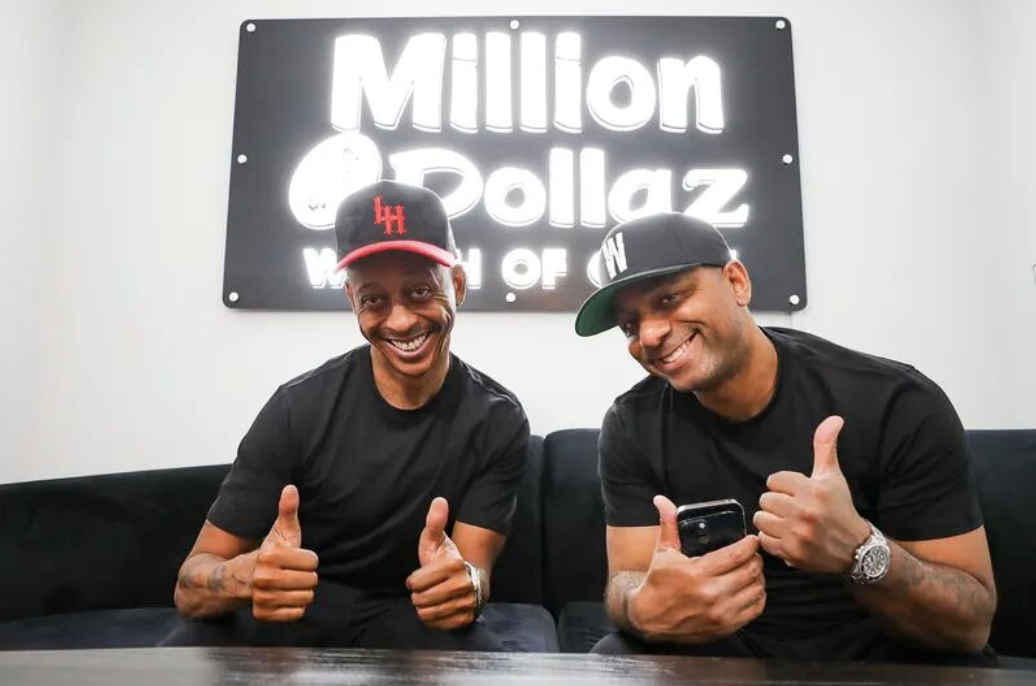
Now, he has millions of social media followers and a hit podcast, Million Dollaz Worth of Game, with his cousin Gillie Da King, where he has hosted cultural figures like 50 Cent, Alicia Keys, and Mike Tyson. And this week, his new memoir, Armed with Good Intentions, hits the shelves.

“When you come from the ghetto, sometimes you find yourself trying to steal the American dream, and it’s a lot you have to go through,” he said. “It’s just a journey trying to make it out of the jungle. Most of the homies and the people I grew up with didn’t make it out. They died as teenagers. For me to be 45 years old and still operating within culture and society, that’s major.”

We talked to the social activist and motivational speaker about his evolution from life in incarceration to being a social change-maker, the nostalgia of hot scrapple and grits in the morning, and the power of vulnerability. His memoir, Armed with Good Intentions (Simon & Schuster), releases Sept. 10.

This interview has been edited for length and clarity.


How does it feel to have your life story on bookshelves?

It feels good to open up to people who have supported me for so many years. I think it’s great to see that I’m just like everybody else. I go through ups and downs in life. I cry, I hurt, and I laugh. Some people would think once success happens that you’re not normal like everybody else. This book is about human connection. It’s bringing people into my world, with all the struggles, ups and downs, and just trying to win coming out of the ghetto.

Why did you write the book now?

I put out a motivational book that was self-published [in 2020], but I felt like there was more. As you start to level up, you have to time-stamp some things. When you’re dealing with big-time publishing houses like Simon & Schuster, it’s not always about when you want it. You have to always think like, “Man, I guess it’s meant to happen when it’s meant to happen.” Some things we just can’t control.

What was it like?

I have a lot of stuff going on in my mind based on my journey and my experiences because I’ve been in these streets since birth. And for me to be operating in a different world now, there’s just so much that people don’t know. It will take a lifetime to tell them though. Sometimes you can show somebody something, but you have to go through it in order to feel it. I try to share what I can, but sometimes it’s not that easy.

Was looking back difficult?

I look at my life differently than most people. From the time I was 11 years old, I was never free for more than a year before getting out of prison at 37. Being out this time is the longest of my life. I spent all that time incarcerated, getting out, and then getting arrested at 17 and spending all that amount of time. I’ve only been out seven years, so I’m living that life.

It was an emotional roller coaster. When you’re reminiscing about these moments, you have to live in them sometimes. Nobody remembers your life how you remember your life. You remember how you were feeling, and the emotions that came with the ups and downs. The wins and the falls. It’s really deep and just wild.

You were labeled a kid who lacked ‘self-confidence, accountability, and discipline’ during one of your stints at a juvenile facility. What inspired you to add it to the book?

So many people are going to look at this book who have been labeled by society, family, coworkers, or whoever. But it’s important to never count yourself out. The majority of the time, it doesn’t matter what someone says about you. But as much as it doesn’t matter, it can paralyze you for life. Somebody can sit there and judge you, and they don’t even operate in your circumstances. They don’t know anything about you.

You start the book by saying quotes like ‘The road to hell is paved with good intentions’ didn’t mean anything to you when you were young. What does it mean now?

I always had a good heart somewhere, but my environment had me on a different mission because I had to be a part of what was going on.

You grew up eating scrapple and grits. Is that still a go-to?

Nah, that was a long time ago when I was a kid. My grandma used to make it and it was unbelievable. But if you look up scrapple, it’s like a bunch of parts from an animal mixed up. Man, it’s like ear, tongue, and feet. When I was young, it was everything. It tasted good back then.

– The Philadelphia Inquirer

The Philly photographer who spent decades photographing the beauty and majesty of Black cowboys

More than 30 years ago, Pulitzer Prize-winning photographer Ron Tarver began photographing Black cowboys, rodeo queens, and ranchers across the southern plains of east Texas, the low hills of Oklahoma, and the urban pathways of Philadelphia.

On assignment for National Geographic and The Philadelphia Inquirer, Tarver captured generations of cowboys and cowgirls working in their stables, strutting in small-town parades, or cooking breakfast inside their ranch-style homes. After failed attempts to thread the detailed portraits and textured landscapes into a book project, Tarver put away nearly 20,000 pictures in a storage container.

In the years since, Tarver published a book about the experiences of African American war veterans and became an associate art professor at Swarthmore College after a 30-plus-year career in photojournalism.

His new book The Long Ride Home: Black Cowboys in America finally releases on Saturday. A week later, Tarver will be doing a book signing, sponsored by the Print Center, at the 20 / 20 Photo Festival Photo Book Fair at Cherry Street Pier on Sept. 7. The book photos will also be on display at InLiquid Gallery as part of their Brotherly Lens: A Portrait of Philadelphia exhibition, which is also part of the 20 / 20 festival.

“This is one of those projects that wouldn’t leave me alone for the longest time,” said Tarver. “It’s always been on my mind because it’s such an important project to get out into the public.”

Black cowboy culture’s recent renaissance in pop culture may have started with the 2020 North Philadelphia-set western Concrete Cowboy, starring Idris Elba. Musicians from Lil Nas X to Beyoncé have also straddled horses and donned bolo ties for songs honoring the Old West.

For Tarver, the timing is perfect. “It’s out in the zeitgeist now,” he said. His book’s 110 images showcase the deep roots of the country’s Black cowboys and cowgirls.

Tarver’s The Long Ride Home isn’t the act of an outsider looking into Black cowboy culture. He lived it.

Tarver grew up in Fort Gibson, Okla., where he rode horses bareback, attended rodeo shows, and spent his summers working on local farms and his cousin’s ranch.

His grandfather, Thomas Wilson, was a working cowboy in the 1940s. His father, Richard, introduced Tarver to the world of documentary-style photography.

It wasn’t until Tarver, now an Elkins Park resident, moved to Philadelphia in 1983 that he realized how unacquainted people were with the Black West.

“The bottom line was people didn’t think there was such a thing as a Black cowboy. I got all kind of strange feedback [on the book] from people literally saying, ‘I don’t think there’s an audience for this. I don’t think there’s any kind of thing or entity as a Black cowboy.’ So, that’s why I put this thing in a box and just said, ‘Forget about it.’”

According to Smithsonian Magazine, one out of every four cowboys who were “trailblazing, sharpshooting, and horseback-riding” on the American frontier were Black. And with the release of The Long Ride Home, Tarver plans to paint a vivid picture of the culture’s history and grandeur.

Liz Spungen, executive director of the Print Center, said Tarver faced many roadblocks with the book’s release. But she’s thrilled to see the decades-long project come to life, and to have the capacity to showcase his work in a planned exhibition in fall 2026.

“I think there’s probably a more receptive audience for it now … people are now more eager, I hope, to understand the larger contributions of Black Americans in the West. We are more attuned to hearing these stories now, so I’m hoping it will receive a fabulous audience.”

With renewed interest in his Black Western project, Tarver was tasked with cutting down his 20,000-image collection to a book-size number. He focused on the years between 1992 and 1996, and zeroed in on photos of everything from the rodeo shows to the after-hour hangs.

“I wanted to show that this isn’t a fad,” Tarver said. “I wanted to show the broad spectrum of Black Western lifestyle, and its vibrance even as far back as then.”

Tarver narrowed it down to 250 photos, and then tapped longtime friend and former NatGeo magazine photo editor Elizabeth Krist to pare the project down even further.

Through the editing process, Krist was impressed by the stark contrast between Tarver’s detail-rich portraits and “visceral action shots.”

A founding member of the Visual Thinking Collective, Krist is hopeful the book opens people’s eyes to the lived culture of Black cowboys, both then and now. “It’s an ongoing culture. It’s not something you look back and think, ‘OK, that was the 1800 or 1900s.’ This is something that is still going on. I hope people really understand it on a deep level when they see his work.”

Once the final lineup of photos was selected, New Mexico-based designer David Skolkin stepped in. He was in awe of Tarver’s ability to meld his journalistic practices with his creative nuance.

The two men connected on long phone calls and Zoom meetings for months to finalize the layout and photo sequencing for The Long Ride Home. “It was like figuring out a puzzle,” Tarver said.

“The images felt very real to me. I could feel the people, sense their emotions, and could even sense how things smelled in the environment of the photographs. They had a texture that was very accessible to me,” Skolkin said of the final book.

As Tarver prepares for the book’s release, he’s reminded of the people he connected with throughout his career. Many of the children he photographed in the early 1990s have carried on their family’s legacy of farming and cowboy culture.

He hopes to develop another book that’s dedicated to the families he first photographed. He also wants his images to be placed in national museums and global showcases to continue sharing the story of the Black West for people to celebrate its largely undocumented glory.

“We all built this country,” Tarver said, “and to remind people that we were in this culture and have been for a long time is important. I hope this book carries out that idea, as well as the beauty and majesty of it.”

After years of decorating parties with balloons, this artist is now making art with them

North Philly artist Brian Ward grew up in the events industry. His family’s kitchen had three refrigerators and he ate Cheerios every morning with drapes, linen cloth, and other party decor hanging from both ends of the dining room table.

His parents, a baker and an event coordinator, brought him into the family business at age 14. He thought about being a part-time magician, party clown, or face painter to earn extra money for school clothes, but none of them stuck. The only one that did was balloon art.

Ward started out making inflatable hats, swords, and balloon animals at kids’ parties. Then he graduated to shaping archways and columns for prom send-offs, birthday bashes, weddings, and other celebrations.

After working as a balloon artist for a decade, Ward, now 26, is pursuing a different kind of art. Instead of contorting balloons into party-ready pieces, he is crafting sculptures and artwork with them. Only this time, they’d all be deflated.

“I wanted to create something that lasted longer with balloons as my medium,” Ward said. “Balloon decor doesn’t have much life expectancy, and I didn’t want to jump to painting or carpentry. People know me as a balloon artist, so I wanted to merge the two.”

With pencils, markers, paint, glue, and deflated balloons, he has made sculptures of basketballs and small dogs. He has also reimagined one of Evelyne Axell’s paintings, whose work inspired Ward to explore vibrant colors.

It’s a tedious process, Ward said. The materials are a small cost, but a typical art piece can take anywhere between 18 hours to three weeks to complete. But he’s found his rhythm and grown more confident in his artistic pursuits.

He went from selling $300 balloon decor packages to $2,000 art pieces bought by a big-name entertainer. And now he’s ready to show his work to a wider audience.

Ward has been a part of hundreds of events, but on Saturday he is putting on his first art show, for nearly 400 attendees at the Bridge Studio in Philly. The self-funded exhibition, titled “Who is Brian Ward?” will be filled with interactive art pieces and installations, including a play pit full of balloon-made balls.

Kamaya Jackson, a friend who has watched Ward evolve as an artist, said he’s always had the ambition to go big, and she’s happy others will get to see his art and know his story.

“I want [Ward] to feel the love the community has for him,” Jackson said. “I hope he can soak up that moment and see how much of an impact he’s made on that community. Just all the good things that can happen, that’s what I want it to be.”

Ward’s first canvas painting will be a highlight of the show.

His father, Brian Ward Sr., gifted him a canvas in July 2023. Ward used it to craft a balloon-filled collage that was inspired by the last painting his grandfather, John Ward Sr., made before his death in 2013.

Ward gifted the canvas back to his dad, who loved it. His father’s reaction gave Ward the confidence to fully pursue his new artistic journey.

“I knew my dad would be proud,” Ward Sr. said. “He was already proud of his grandkids, but he didn’t get a chance to see Brian do the art that he’s doing now. I know he would be proud to see it, and I think that was reassurance for [Ward].”

While the art world is relatively new ground for Ward, he’s establishing himself as an ascending talent. His first and most notable collector is Grammy-nominated artist Smino, who purchased a balloon-made painting of Mickey Mouse during the 2024 Roots Picnic weekend.

The transaction, Ward said, was nothing short of motivational. “[Smino] was like, ‘I’ll Zelle you the money right now. Just ship to L.A.,’ and I’m like, ‘Bro, I’ll carry this jawn on my back and bring it to you.’ I was on my cloud nine after that.”

His new venture hasn’t been without its detractors. Longtime friend Alissa Smith said Ward has encountered naysayers throughout his artistic journey. But the entrepreneurial spirit his parents embedded in him continues to push him forward.

“People didn’t believe in his vision,” Smith said. “He overcame doubt and slower [business] seasons as a balloon artist. People told him it’s not really a normal job. But I think he took that adversity and used it as motivation. He’s created so many different connections, and I’ve seen him push past people not believing in him or trying to slow him down.”

While Ward is still developing his artistic style, he has never questioned whether he had a story to tell. The Strawberry Mansion resident said his upbringing is one of the pillars of his creativity, and he’s driven to inspire others to create their own art — whatever medium they may choose.

“I always tell people I’m inspired by life,” he said. “Some people may say that’s cliché, but I’m inspired by the possibilities of the things that you can do. And I’m just continuing to write my story.”

– The Philadelphia Inquirer

Lisa Ann Walter wants some Philly restaurant recommendations

After decades of acting in theater, film, and TV, Lisa Ann Walter is settling into stardom.

That’s thanks to Melissa Schemmenti, the hilarious and ever-resourceful second grade teacher she plays on the ABC hit Abbott Elementary. Now, with her star on the rise — she’s appearing in the new reboot of Who Wants to be a Millionaire, which launched earlier this month — Walter is recording her comedy show in Philly.

Starting Thursday, Walter will be in Philly for a three-night stint at Helium Comedy Club with a gift in mind. After a decade of headlining live shows, the actor will record her debut comedy special at the Center City venue. Her Abbott Elementary costar and “work-wife” Sheryl Lee Ralph will coproduce and codirect the project with Walter.

“I think anyone who’s been to a Philly sports event knows that Philadelphians don’t hold back,” said Walter, who slipped in and out of Schemmenti’s South Philly accent during a Zoom interview. That passion, she says, makes Philly the ideal spot to record. “[People in the audience] are loud, but they’re not trying to heckle. They love being at the show, they love being enthusiastic, and they’re smart. That is the perfect combination for a great comedy audience, and Philly has really embraced me.”

Ahead of her shows, we talked to Walter about her disco dancing, the weeks she spent studying Bradley Cooper’s Philly accent, and her love of Dalessandro’s Steaks.

This interview has been lightly edited for length and clarity.

Is Philly your favorite city to do comedy?

I did a show last year, and I never felt more at home in a place that wasn’t where I grew up. One person came up to me and said, “You know, we didn’t even want to like you.” They were very conscious of the fact I was coming to the city as a newbie. But they said, “You’re one of us.” People hugged me, kissed me, and gave me food everywhere I went. If you do those things, then I’m home.

You’re from Maryland. How did you master the South Philly accent?

When Bradley Cooper did an Abbott Elementary episode, I told him I studied his videos. When he was first coming up, he went on talk shows and they would make him do the accent — almost like it was a circus trick or something. But he was so good at it that I would find those interviews and study them. I can’t tell you the number of hours, days, and weeks I spent making sure the accent was perfect. I tell people from Philly all the time, “Let me know if I can do it better. Hook a girl up.”

You brought a flask to the 30th SAG Awards. How much more Philly can you get?

My favorite part of that was how they had me hand the flask to Sheryl Lee Ralph, and she didn’t know it was coming. And the look on her face was so pure. Like, “If you don’t put that away … we are in public.” It was so Sheryl, but also [her Abbott Elementary character] Barbara.

The chemistry you and Sheryl Lee Ralph have is incredible. No wonder you’re working on this special together.

We’ve all heard stories about TV actors who played lovers for over 10 years, but it turned out they hated each other. Like, “Oh, he had bad breath or body odor and wooden teeth.” Right? But I think it’s very hard to act the kind of chemistry she and I have.

We fell in love as “workwives” on day one because we had so much in common. We were single moms raising our kids in Los Angeles. All the ways we connected were so pure, and we loved hanging out. We immediately started going shopping together because there were so many events we had to go to. We were outside a Zara dressing room while she threw clothes at me for like three hours. She dressed me for the next five events. We truly are that close. I adore her.

If you ever meet someone like her, you have to keep them in your life. She’s blessed from the moment she gets up in the morning.

What is it about stand-up that keeps you coming back on stage?

I think it’s connecting with people. It gives me immediate gratification, and it’s exactly what I intended to do when I was on stage as an actress in high school and I started doing dinner theater.

In my first professional show at 16, I made the audience laugh and cry. And I said, “I always want to do this.” Then I started doing stand-up and connecting with different audiences. That kind of experience in one room has chemistry. Comics know this, which is why I didn’t want to do the special in a big theater. I want to do it the way I came up in comedy. On a small stage at the level of the front tables, watching as the laughter travels from the front to the back of a room. It’s the closest thing to me knowing why God put me here on Earth.

You were also a disco dance instructor, right?

When I was coming up in D.C. as a kid, disco was huge. In D.C., they invented the hustle, and all my high school friends could dance. One of my best girlfriends was Colombian and she had four sisters, and they all had guys that could dance. I learned how to dance and they would yell at me “gringa,” and I learned how to move my hips. I started competing in disco competitions and I would win them. My mom, a crazy Sicilian, would drive me downtown to these clubs while I did these competitions. And then I got a job at 16 at Arthur Murray teaching old businessmen how to do the hustle, which is really just the salsa. I taught them the cha-cha, the waltz, and all these ballroom dances. And my grandfather, the old Italian, he taught me all those. And then when I turned 17, people wanted me to go to disco competitions in Rio de Janeiro, and my mom was like, “No, you are not.” So I had to quit Arthur Murray.

In the past, you’ve talked about the L.A. dating scene. How’s your dating life now?

Listen, I could always find a fella — and they found me. I’ve always had young guys slide into my DMs. Always. But you don’t want to date people because you’re famous. You want to be with people who are down with you for who you are. Having said that, every relationship is transactional.

My first husband [Sam Braun] is my buddy, and I have a joke on stage about him. He was a lovely Jewish man, but turns out we had too much in common — we both like men. The second husband was a cheater, and while cheating is not technically a religion, he practiced it like it was. But my first husband, I adore. We spend every Sunday night together watching our favorite show, 90 Day Fiancé.

I’ve already had my babies and I’m making money. What dating app am I going on?

Have you had a Philly cheesesteak?

People have sent me to some really good places. In fact, I want to go back to a couple of them. Cheesesteaks and hoagies aren’t the only good things that Philly has to offer. I know you got water ice and everything else, but what else do I need to know? I have a list of a few places.

The last time I asked on [social media], people were being very lovely and helpful at first. But then it took a hard left turn. Someone was like, “If you don’t go to Dalessandro’s, then you’re a dick.” OK, I guess I better go. I went and it was worth the trip. You should have seen my hotel room — it was disgusting. I had half-eaten cheesesteaks and hoagies all over the place.

– The Philadelphia Inquirer