Meet the Philly artist who counts Shaq, Kevin Hart, and Brooke Shields among his fans

Long before the work of Justin Wadlington was placed in world-renowned gallery spaces, and he had Shaquille O’Neal, Brooke Shields, Kevin Hart, and other celebrities on his client list, the Philadelphia-bred artist learned to master another medium: the art of perseverance.

By 2009, Wadlington was worn by the grind of his 9-5 airline job, and it had been five years since he picked up a pencil and sketchpad. But a trip to Cancun reignited his artistic flame. Inside his job’s break room, he began sketching an image of a figure enjoying a beachfront, with a photograph of himself in the Mexican city as a guide.

His coworkers glanced at his work and were in awe of his abilities. That was enough for Wadlington to renew his pursuit of making it as an artist. “I made a promise to myself: get back into this and see what you can do with it. And ever since then, I kept trying to push the limits.”

As a kid, Wadlington submitted sketches of X-men characters to his school’s drawing competition. His high school teachers were some of the first to spot his artistic talents, and they placed his work in the building’s auditorium for a mini art show. “Back then, I knew I could draw, but I didn’t think it was special,” Wadlington said. “I just knew I could draw cartoons, but I never knew it was something beyond a hobby. I didn’t look at it as a passion, but it was.”

Growing up in Southwest Philly, survival was his main focus. His artistic pursuits fell to the background.

At 5, he accidentally ran into a piece of metal sticking out from a wall, and the devastating blow left him blind in his left eye. Wadlington’s mother struggled with mental illness and was later murdered in 2004. His father, a Vietnam War veteran, died by suicide when Wadlington was 2 years old. His grandmother raised him, but when she could no longer care for him, he was in and out of group homes until he was old enough to live on his own.

He enrolled in the Community College of Philadelphia in 2001 but dropped out after one semester. “Nobody was around as successful artists, so I felt like I had to get a job,” he said. “I looked around, but I knew Disney wasn’t going to hire me.” He worked up to two jobs a week to make ends meet, and over time, the desire to become a sought-after painter disappeared.

That moment in the American Airlines break room led him back to his creative path. Wadlington, inspired by England-based hyperrealist artist Kelvin Okafor, began sharing his detailed drawings of hip-hop artists and cultural figures on social media. Soon, he would put down the drawing stencil for a painting brush.

He was “self-conscious” about his left eye for a while, but the 40-year-old artist says it’s become one of his “strengths.”

“When I was younger, sometimes people would make fun of [my eye], and I used to feel some type of way about it,” he said. “But once I got older, started taking life into my own hands, and embracing the negativity, I began to show it more. I no longer hid it behind sunglasses.”

He took on the moniker Blind Eye Artist as a “reminder that I’m embracing something I was once ashamed of.”

As he refined his style on canvas — detailed images of pop culture icons, athletes, and artists against a Renaissance-style backdrop — Wadlington began gifting his work to high-profile entertainers, including Amber Rose, Joe Budden, and others. In 2017, one of his friends said they could get him in touch with Kevin Hart, so the artist worked on a portrait of the comedian for weeks, and was able to send him a large-scale painting.

Struck by the detail of Wadlington’s work, Hart posted the portrait on his Instagram. “Your talent in your craft is ridiculous man. I’m humbled by your gesture. ...This is the true definition of a #DopePic,” his caption read.

The post caught the attention of Shaquille O’Neal, who asked Wadlington to draw a portrait of him. In February 2018, the artist flew out to Los Angeles to hand the 7-foot NBA Hall of Famer the portrait, and another painting that paid tribute to the late Notorious B.I.G. Impressed by Wadlington’s talents, Shaq introduced him to New York-based art investor Glenn Fuhrman.

“I got the sense pretty quickly that he was a pretty special guy and definitely different and also a super talented artist,” Fuhrman said, “and that was really the beginning of a great relationship.” He and Wadlington quickly formed a mentor and mentee relationship.

With Fuhrman’s guidance, Wadlington began showcasing his abstract paintings in New York gallery spaces, schools, and museums, including the New York Academy of Art and the South Hampton Art Center in Long Island. His life and artistic journey soon struck Philly filmmakers Ashwin Chaudhary and Jonathon Korn of Juice Groove Films.

The two filmmakers wanted to make a short film around the Philly-based artist, but, Chaudhary said, the film quickly turned into a full-length feature. “He was larger than life when I first met him,” Chaudhary said. “Off the bat, his journey and how he got to where he is was just so compelling.”

The documentary, titled Blind Eye Artist, was primarily filmed between 2020 and 2022 and captured Wadlington’s roots in Southwest Philly. The film was released on Amazon Prime in October. “To witness the power of his art in transforming his life, it’s a story that will motivate anyone who wants to accomplish anything in a creative medium of any kind,” Korn said.

In the years he’s been in the art world, Fuhrman said many have fallen to their vices and life traumas. Wadlington, he said, could have easily fallen in the same trap. But because of his hard work and dedication to the craft, he’s never let it happen. “He’s got a great combination of talent, passion, and belief in himself that I think the sky’s the limit for him,” Fuhrman said. “I think he can go very, very far on this path that he’s taking.”

While he’s still carving his path, Wadlington said he wants to continue expanding as an artist and push the boundaries on all creative levels.

“I want to do impossible stuff, and I want people to see that they can do impossible stuff, too, regardless of where they come from or if they’re blind in one eye,” he said. “This is bigger than me, and I’d be doing people a disservice if I stopped going.”

– The Philadelphia Inquirer

Nothing To F With: How 'Enter The Wu-Tang' Established One Of The Greatest Rap Groups Of All Time

In the early 1990s, hip-hop was on the verge of being its broadest. 

Hip-hop had grown far beyond its origins in the Bronx, as acts like Public Enemy, A Tribe Called Quest, and De La Soul drew listeners outside New York’s five boroughs. Elsewhere, a legion of MCs from L.A., the Bay, and the South were cementing their legacies. 

Amidst the plethora of sonic riches of hip-hop's golden age, Staten Island’s Wu-Tang Clan stands out. Comprised of lyrical spartans GZA, Method Man, Raekwon, Masta Killah, Ghostface Killah, Inspectah Deck, later Cappadonna, U-God, master producer RZA, and the late, charismatic force Ol’ Dirty Bastard, the group laid the ground for hardcore hip-hop acts to follow. 

Their weapon of choice: 1993’s Enter The Wu-Tang (36 Chambers) — which celebrates 30 years on Nov. 9. Enter The Wu-Tang sparked a new brand of hardcore, gritty street rap that transported listeners with its dark sonic landscape. 

Filled with martial arts and comic book references, loogie-spitting posse cuts, and mystifying street tales, Enter The Wu-Tang drew audiences to the borough of "Shaolin." The album's darkly-brewed beats and mixes had an amateurish charm, but all nine tracks were laced with RZA’s early musical wizardry and ear for ominous, hard-hitting instrumentals. 

For every musical or budgetary limitation, Enter The Wu-Tang boasted some of the best lyrical assaults the genre has ever heard. Now-classic songs like "Da Mystery of Chessboxin’" and "Protect Ya Neck" and conjured visions of the Shaolin streets, and added to New York’s stronghold on the genre. 

Unlike the more socially conscious and jazz-influenced sounds of New York rap at the time, the influential album was marked with soundbites from kung-fu flicks and sped up soul samples with an eerie, grudgeful echoe. Among the gallery of inspiring cuts, "C.R.E.A.M. (Cash Rules Everything Around Me)" features a sample of the Charmels’ 1967 song "As Long As I’ve Got You." 

Despite the group’s size, every member had a stand out moment on the project. And most, with the exception of Masta Killa, have several. Method Man goes full nuclear on his self-titled track, Raekwon and Ghostface show early flashes of their collaborative magic on "Can It All Be So Simple," and the infectious charm of Ol' Dirty Bastard runs wild on "Protect Ya Neck." 

The album was off-kilter in design, but Wu-Tang carved a path for hard-edged acts to follow. The album even inspired New York instrumental soul group El Michels Affair, which released their own version of the album, Enter The 37th Chamber, in 2007 in echo of the legendary beats sampled on Wu-Tang's the classic project. 

Since its release, Enter The Wu-Tang has sold more than 3 million records and landed on countless all-time best album rankings. As of June 2023, the album is at the No. 27 spot on Rolling Stone’s 500 Greatest Of All Time list. For its relatively short length, Wu-Tang Clan's debut has had an outsized impact on hip-hop — both in terms of influence and the trajectory of its members. 

With Enter The Wu-Tang and their subsequent releases, Wu-Tang cornered the rap market in the 1990s. Before Wu-Tang, there were no other notable rap acts from Staten Island. While Brooklyn, Queens, Manhattan and the Bronx held most of the industry’s grip, Wu-Tang helped blaze the path for acts outside of those regions to flourish. 

While groups like Public Enemy, A Tribe Called Quest, N.W.A. and Run-D.M.C. are certainly influential, the star power within Wu-Tang is unique. Between the group’s debut and follow-up album Wu-Tang Forever — which was nominated for Best Rap Album at the 1998 GRAMMYs — GZA, Method Man, Raekwon, Ghostface Killah, Ol' Dirty Bastard, and others released critically acclaimed solo albums.

Method Man even received a Best Rap Performance by a Duo or Group GRAMMY for Tical’s "I'll Be There For You/You're All I Need To Get By" at the 1995 GRAMMYs. Outside the accolades, Raekwon’s Only Built For Cuban Links and Ghostface’s Ironman lit up the New York streets in 1995, and GZA’s Liquid Swords remains one of the more acclaimed outings from the group’s more withdrawn characters.

While some were more commercially successful than others, they all added to the group's influence and arguably proved its distinction for best rap group of all time. 

Method and New Jersey legend Redman brought their comedic chops to the big screen in How High. The pairing was like a hip-hop Cheech and Chong, and the film went on to become a cult weed movie classic. Like Meth, RZA and other members appeared in TV shows and films for decades. 

In 1995, Wu-Tang Clan established the apparel brand Wu Wear, one of the first artist-inspired lines in music history. It opened the doors for hip-hop culture in retail, and inspired a global interest in Wu-Tang's simple, raw style. The group and the apparel line helped usher in the militant street style of the era, complete with baggy jeans, oversized t-shirts, Timberland boots, durags, gold fronts, sports jerseys, and puff jackets. 

As the group grew in popularity, the members joined forces with business partner Oliver "Power" Grant and opened four Wu Wear stores across the country, including one on Victory Boulevard in Staten Island. The line was carried by retail giants such as Macy’s and renamed Wu-Tang Brand in 2008, and Grant discontinued the Wu-Wear line. But after RZA joined hands with Live Nation Merchandise, the brand was relaunched in 2017. 

The cult interest in Wu-Tang's image continued. In 1999, Powers developed a video game centered on the group, called Wu-Tang: Shaolin Style. The 3D fighting game for PlayStation featured characters based on the group members’ stage personas and mirrored the martial arts themes in their music. They also provided voiceover work and music contributions to the four-player game. 

Other artists followed Wu-Tang's blueprint in the decades since the group debuted. Acts like Mobb Deep, Nas, the Notorious B.I.G. and others adopted the hardcore rap style mastered by Wu-Tang — but none harnessed the same manpower or presence as the group over the decades. But the 2010s saw the re-emergence of rap supergroups. 

In Harlem, the Diplomats and ASAP Mob captured the same collaborative and entrepreneurial spirit of Wu-Tang, but with a more varied musical approach. Out West, the Tyler, The Creator-led Odd Future surpassed the 11-member group in scale, but their work and impact haven’t matched that of the Staten Island collective. 

The closest to mirror Wu-Tang was Pro Era, which adopted the classic, boom-bap sound of the '90s. The mega group also pursued an assortment of branding and entertainment ventures, and one of the group’s founders, Joey Bada$$, even played Inspectah Deck in the Hulu biographical series "Wu-Tang: An American Saga." The group’s presence also inspired future Staten Island products like Killarmy, G4 Boyz, and Cleotrapa.

Given the group’s accolades and cultural impact in the decades since their debut, it’s true: "Wu-Tang Clan ain’t nothing to f— with." Its members have redefined longevity in rap by continuing to have a hand on the pulse of popular culture, both in music, film, TV, and entertainment. Few other groups have matched their successes, and as the collective continues to etch its path, there’s no telling how many more barriers they will break. 

At night, he’s laying down verses. By day, rapper Anthony ‘Dappa’ Samuels runs a day care in West Philly

Electrifying performances, late-night studio sessions, and endless tour stops: The lifestyle is second nature to Philly rapper Anthony “Dappa” Samuels, whose connections and lyrical prowess have landed him on stages with some of the biggest names in the industry.

Equipped with charisma and punchy lyrics to match, the 30-year-old has performed with the likes of Fabolous, Machine Gun Kelly, Action Bronson, and Ty Dolla $ign. He’s collaborated with Westside Boogie, Stalley, Benny the Butcher, and other notable hip-hop stars.

But that’s only half his story.

Between the late nights in the studio and the days traveling from one tour stop to the next, Samuels happily embraces his role as “Mr. Anthony,” the owner of West Philly’s Young With Options Academic Center.

After quitting a job in accounting back in 2017, Samuels was encouraged by one of his mentors to pursue his love for child care and open the learning center. That year, he began operating out of a rowhouse at 53rd and Market Streets. “My overall vision was to have a creative arts program or creative art school,” he said. “That’s been a passion of mine for a long time, and we’ve been able to incorporate it here.”

The day care’s multicolor marquee hangs outside a powder blue rowhouse adorned with painted clouds. The space is a wonderland for young kids with bright eyes, endless energy, and an insatiable appetite for learning.

As Samuels walks through the day-care doors, kids look up from their cots with smiles as bright as the center’s crayon-colored walls. “Hey, Mr. Anthony,” they yell out in cheer.

Samuels and assistant director Dinnelle Jordan help organize poetry, music, and acting classes in the multi-floor space. Last month, they started a dance studio on the top floor, where they teach majorette, hip-hop, ballet, and other dance and exercise courses.

Most of the children hail from low-income families from West Philly.

Janelle Walls has been bringing her 7-year-old daughter to Young With Options since she was 1. Walls continues to send her child because of Samuels’ influence and willingness to support her family, even when she couldn’t afford the fees.

“One word I use when speaking about [Samuels] is ‘alignment,’” she said. “He isn’t at the school preaching positive behavior to the kids and then going into the studio and pushing a different message. Everything about him and what he does is consistent with the Young With Options brand. To me, it’s a message to kids that you can be yourself and still be successful.”

In the five years she’s worked with Samuels, Jordan said he’s been a consistent light of positivity. While other rappers dive into fast food chains and clothing lines on the side, his venture into child education speaks to his love for the youth, she said. “The fact [that] he helps other families go to work while looking after their children was a brilliant idea,” Jordan said. “It just goes to show how much he cares about his community.”

As a kid growing up in the Strawberry Mansion section of North Philly, Samuels said he seldom saw Black men with legitimate businesses, especially those revolving around childcare. “I love being able to be there and be hands-on,” he said. “I take a lot of pride in that, and it actually helps me with music and in life. I know I have to be that mentor and can’t do anything illegal, snap out, or make bad decisions. I have to stay solid.”

Samuels said being a day-care owner has had an impact on his music. He’s made a conscious effort to veer away from lyrics heavily revolving around street life. He knows his students are listening to his music, and their parents are keeping a watchful eye.

“I’ve seen and been through a lot,” he said. “I’m from the same environment that the kids in my day-care are from. I was one of those little kids, too. That’s what I love about being here. A lot of these kids, especially the little boys here, look like me and act like I did at one point in time.”

Samuels performed at the 2023 Roots Picnic Music Festival and acted alongside Danielle Macdonald in the film Patti Cake$. He was a stand-in for Michael B. Jordan in 2015′s Creed.

Legendary Philly artist Freeway said Samuels’ rap skills alone were enough to connect the two artists. But after hearing about Young With Options and the rapper’s other endeavors, he knew Samuels was cut from a different cloth.

“He’s always trying to go to the next level and push the envelope,” the “What We Do” artist said. “I feel like he’s going to have a long career and branch off into movies and different things outside of music every once in a while.”

Samuels said he wants to continue expanding as an artist and entertainer. But in that pursuit, he plans to open more academic centers so more children have a place to hone their creative arts skills.

“It’s all about me making a difference,” Samuels said. “I’m really big on the people, so I’m working to get bigger and have more day cares in the future.”

– The Philadelphia Inquirer

Essential Hip-Hop Releases From The 2010s: Ye, Cardi B, Kendrick Lamar & More

Few genres have evolved as remarkably as hip-hop over the past five decades, and the eerily recent, yet, distant 2010s saw the genre at its most progressive. Legendary acts and fresh-faced stars pushed rap’s cultural and musical bounds, opening a pathway for a new class of artists to emerge, and for overlooked regions to gain their deserved recognition. 

With the expansion of hip-hop’s mediasphere, artists that would’ve been confined by their locale crossed the invisible barriers of rap music to establish themselves as mainstream success. Canada-born stars PartyNextDoor, The Weeknd and Drake took over rap the same way the Brits took over rock music in the 1960s, and it was made possible by the boundless nature (and unprecedented sonic access) of today’s rap fan. 

The emergence of SoundCloud elevated lesser-known talents including Playboi Carti, Lil Uzi Vert, 21 Savage, the late Juice Wrld to superstardom at a rapid pace. The era also marked a sonic turn in the industry, which saw artists merge their styles with those of other regions. That’s why artists like Asap Rocky adopted elements of Houston’s chopped-and-screwed sound in his early discography, despite his Harlem origins. 

Legacy acts like Jay-Z, Kanye West, Eminem, and Nicki Minaj continued their reign as rap heavyweights, with record sales and award wins showcasing their influence. The period also saw the emergence of hip-hop’s three horsemen – Drake, J. Cole and Kendrick Lamar – who carved their legacies with chart-topping hits and groundbreaking albums throughout the 2010s. Their contributions, as well as those from Future, Big Sean, Travis Scott, and Chance the Rapper, set the stage for the decade. 

Read on for 10 of the most consequential releases of the 2010s.

Ye - My Beautiful Dark Twisted Fantasy (2010)

Just a year removed from interrupting Taylor Swift on stage during the 2009 MTV Video Music Awards, Kanye West, now known as Ye, produced arguably the best rap album of the decade, My Beautiful Dark Twisted Fantasy. 

It was a career turn that’s more familiar to rap fans in recent years, but the Chicago rapper snapped back with a glossy, epic-level album that was a culmination of his best work to that point — or maybe ever. From "Dark Fantasy" to "So Appalled" and "Gorgeous," West was at the peak of his lyrical powers, with the rapper-producer exchanging sharp-tongued lyrics with wordsmiths like Pusha T, CyHi The Prynce and Raekwon.  

The album also set the stage for one of the best collaborations of the year, with West, Rihanna and Kid Cudi merging their creative powers to create the wondrously rhythmic, GRAMMY-winning hit, "All of The Lights. And Nicki Minaj fans still reference the star’s verse on "Monster," which saw the Jamaica Queens native rise above rap titans Jay-Z and Rick Ross on the smash-mouth track. 

Wiz Khalifa -"Black and Yellow" (2010)

After making his name in the mixtape circuit with classic projects Kush & Orange Juice and Flight School, Wiz Khalifa’s  mainstream breakthrough came in the form of 2010’s "Black and Yellow." The hit song bolstered the Pittsburgh rapper’s profile in time for his debut studio album, Rolling Papers, and put his hometown and Taylor Gang crew on the hip-hop map.

With the Pittsburgh Steelers making it to the Super Bowl in 2011, the Stargate-produced hit became the team’s unofficial anthem and spawned other remixes in the same vein. "Black & Yellow (G-Mix)" featuring Snoop Dogg, Juicy J, and T-Pain, Brooklyn rapper Fabolous honored the New York Yankees with "White and Navy" and Lil Wayne paid homage to the Green Bay Packers with  "Green and Yellow."

The success of "Black and Yellow" opened the doors for Khalifa and his stable of Taylor Gang talent to flourish, namely artists like Ty Dolla $ign, Chevy Woods, and Three 6 Mafia legend Juicy J. The song also placed a brighter spotlight on Rostrum Records and recent signee Mac Miller, who was months removed from releasing his acclaimed K.I.D.S. mixtape and would later become a star before his unexpected death in 2018. 

Chief Keef - "I Don’t Like" (2012)

The city of Chicago was set ablaze with the release of Chief Keef’s "I Don’t Like." The Young Chop-produced track popularized the city’s drill sound, which established a new influx of talent bred from the Windy City and a subgenre later adapted by UK and New York rappers like Fivio Foreign and the late Pop Smoke

The impact of the street hit led to its inclusion on the G.O.O.D. Music compilation project, Cruel Summer, featuring artists Pusha T, Kanye West, Big Sean, and Jadakiss. "I Don’t Like" was later placed on Keef’s debut release, Finally Rich, helping further catapult the Chicago artist to mainstream notoriety. The song is still credited as the launching pad for the drill movement, with Keef viewed as the forefather of the subgenre as a whole. 

Kendrick Lamar - Good Kid, M.A.A.D City (2012)

For many hip-hop fans, Kendrick Lamar’s Good Kid, M.A.A.D City reestablished the West Coast’s grip on the rap game, which for years, was singularly held by The Game. 

After the release of Lamar’s independent album Section.80, his second turn took more of a mainstream approach while chronicling his teenage years in the gang and crime-ridden streets of Compton. He enlisted artists like Drake for the flowy, Janet Jackson-sampling hit, "Poetic Justice," and drew in legends like Dr. Dre for "Compton" and Jay-Z for "Bitch, Don’t Kill My Vibe - Remix." 

The multi-platinum project was produced by Dj Dahi, Sounwave, Hit-Boy, Scoop DeVille, Just Blaze, and others, who delivered atmospheric and tight-bass beats for Lamar’s narrative-driven concept album to flourish. Good Kid, M.A.A.D City earned Lamar four GRAMMY nominations at the 2014 GRAMMY Awards, including Album Of The Year. And while he didn’t take a gramophone home during that night, his major label made him the face of West Coast rap for years to come. 

Future and Drake - What a Time to be Alive (2015)

After cranking out moderate hits like "Tony Montana" and "Never Satisfied," Drake and Future linked up for an Avengers-level collaboration, which culminated into 2015’s What a Time to be Alive. 

The project came together after Drake met with Future in Atlanta for six days. Their first recording was "Digital Dash," and from there, the two artists merged their respective sounds together for a hyper-trap mixtape filled with hits like "Jumpman" and "Big Rings." On the production side, What a Time to be Alive was largely handled by executive producer Metro Boomin, who produced or co-produced eight of the project’s 11 songs, alongside fellow beatmakers Noah "40" Shebib, Allen Ritter, Southside, Boi-1da, and others. 

The 2015 release also foreshadowed Future and Drake’s later collaborations. Future enlisted artists like fellow Atlanta rapper Young Thug for Super Slimey and Lil Uzi Vert for Pluto x Baby Pluto, and Drake linked up with 21 Savage for 2022’s Her Loss.  

Rae Sremmurd - "Black Beatles" (2016)

After scoring hits like "No Flex Zone" and "No Type,"  brothers Swae Lee and Slim Jxmmi literally had the world in suspension with the 2016 hit "Black Beatles" featuring Gucci Mane.  The "SremmLife 2" single sparked the viral mannequin challenge, which saw social media users stand frozen in time as a camera filmed their surroundings with their song playing in the background.  

Internet trends aside, the song was a massive hit that landed the group and Gucci Mane their first No. 1 song on the Billboard Hot 100. The Mike Will-produced track also pushed additional sales of the duo’s second album, which went from selling 30,000 equivalent units in the first week to eclipsing one million sales by November 2017. 

Jay-Z - 4:44 (2017)

With a resume as stacked as Jay-Z’s, his claim as the greatest MC of all time was viable long before the release of 4:44. But the late-career release did more than just add to his illustrious discography; it was one of the most complete and transparent bodies of work Hova has ever produced. 

On tracks like "Kill Jay-Z," the Brooklyn rapper stripped his ego-fueled moniker to give listeners a snapshot of his upbringing and past failures as Shawn Carter the man. He takes a step back to reflect on his mother’s sexuality on "Smile," and the challenges he faced in his marriage to Beyoncé on the title track. 

While many viewed 4:44 as a response to Bey's Lemonade album, the project also touched on the importance of shared success on "Legacy" and the push for generational wealth on "The Story of O.J." 4:44 garnered three nominations at the 60th GRAMMY Awards, including Song Of The Year and Album Of The Year. 

Migos - "Bad and Boujee" (2016)

During the 2017 Golden Globe Awards, rapper and Emmy-winning actor Donald Glover had a confession: Migos’ "Bad and Boujee" was the "best song ever." By then, the 2016 single was already a popular viral hit, with memes surrounding the lyrics "rain drop, drop top" bubbling up online. But Glover’s shoutout helped the G Koop and Metro Boomin-produced hit to reach the top spot on the Billboard Hot 100, a first for the Georgia-born rap group and featured artist Lil Uzi Vert.

"Bad and Boujee" established the Migos as the hottest rap group of the era, and spearheaded each member’s solo projects and business ventures. The multi-platinum single was even nominated for Best Rap Performance at the 2018 GRAMMY Award. 

Drake - "God’s Plan" (2018)

With countless across the 2010s, it’s hard to choose which Drake record made the biggest splash during the era, but 2018’s "God’s Plan" has a case when it comes to global reach. Produced by Cardo, Young Exclusive, Boi-1da, and long-time collaborator Noah "40" Shebib, the GRAMMY-winning single topped the charts in 14 countries while posting record-setting streaming numbers.

Though the pop-trap hit was met with mixed reviews upon its release, "God’s Plan" shattered Apple Music and Spotify first-day streaming numbers with 14 million and 4.3 million, the most of any song that year on both platforms. By the first week, the song climbed to 82.4 million total streams. 

"God’s Plan" was the lead single for Drake’s EP Scary Hours and fifth studio album Scorpion, and notched the Toronto artist Best Rap Song at the 2019 GRAMMYs. The song’s music video, which showed the rapper giving out a million dollars to people in Florida, also made waves online, amassing countless social media memes and over 1.5 billion views on YouTube as of July 2023.

Cardi B - Invasion of Privacy (2018)

The story of Cardi B, who rose from reality TV star to GRAMMY-winning artist, proved there could be more than one Queen ruling over the rap game. And her groundbreaking debut, Invasion of Privacy, inspired a new legion of women artists with dreams of occupying their own respective thrones. 

With street anthems like "Bodak Yellow," "Bartier Cardi," and the reggaeton-inspired "I Like It" featuring J Balvin and Bad Bunny, Cardi showcased her knack for catchy hooks, sharp lyrics, and the colorful personality found beneath the brash, aggressive flow. Producers DJ Mustard, Allen Ritter, Benny Blanco, Boi-1da, and others elevated the project to album of the year consideration. 

Along with winning Rap Album Of The Year at the 2019 GRAMMYs, Invasion of Privacy took the No. 1 spot on the Billboard 200 upon its release, making Cardi only the fifth female rapper to reach the top of the charts at the time. Even in the years after its release, the album continues to make history for the "WAP" artist, who became the first woman to have all of her album’s songs reach platinum status when Invasion of Privacy reached the milestone in 2022, according to Billboard

– The Recording Academy/GRAMMY.com

Who is Keke Palmer’s boyfriend, and does he prove that men from Philly are ‘embarrassing’? We investigate.

If you’ve scoured the internet the past few days, you’ve likely seen the drama between Keke Palmer and her boyfriend Darius Jackson.

Jackson made headlines after he slammed the actress on Twitter for wearing a fitted outfit for an Usher concert in Las Vegas, where Palmer was seen being serenaded by the R&B star. Many Palmer fans claimed the comments were motivated by insecurity or jealousy. But a local TikToker has another theory.

On Thursday, Philly native Cierra Williams took to the video-sharing app, claiming Jackson’s “embarrassing” antics are because of his ties to Philly.

“That man is from Philadelphia County, Pennsylvania,” she said in the video, which has amassed nearly 500,000 views and over 90,000 likes.

“It’s nothing we can do but send Ms. Palmer some love, light, and prosperity because if there’s one thing a man from Philly is going to do, it’s be embarrassing. They can’t help it. They don’t got no impulse control.”

(While news outlets have reported that Jackson is from Philadelphia, The Inquirer wasn’t able to confirm that. His family does have close ties to the city and his social media is filled with displays of Phillies and Eagles fandom. The fitness instructor even has a tattoo of the Love sculpture!)Also worth noting: Jackson briefly deleted his instagram but has reinstated it, without pictures of Palmer, leaving their relationship status unclear.

The Inquirer spoke to Williams and asked if men from Philly (Jackson included) are really as bad as she claims. The conversation has been edited for brevity and clarity.

What’s your perspective on the drama between Palmer and her boyfriend Darius Jackson?

It’s just a control thing. If she’s the breadwinner and powerful one in the relationship, then he’s probably thinking, ‘Where does that leave me?’ I feel like that’s something men struggle with a lot times. Instead of bringing it up with her, he decided to tell us on Twitter like it was our business. And that was his first mistake.

But why drag Philly men into this? What makes them embarrassing?

I feel like it’s twofold. On one hand, their brains only have capacity for sports, like “Go Birds,” the Eagles, the Phillies, and the Sixers. That’s one part of it, and the other part is a lot of times they don’t have the space to be themselves. So, it just makes them very strange because they have a different persona than who they are.

Who would you say is the perfect example of an embarrassing Philly man?

I feel like the main thing everyone needs to know is that Meek Mill took a picture with fries on his lap at the pool. I don’t know what else we need to talk about. He also posted a video of him [on Instagram] about to throw up in a toilet, and put the caption, ‘Too much liquor smh...’ with his hands crawling and grasping for life. There’s nothing else we need to discuss.

Why do you think people dragged Jackson’s tweets?

[Palmer] has always had a real positive image. She’s never really been in drama, so it was really weird that he would try to tarnish her image that she’s worked so hard to build. She’s been a child star and now an adult star, so trying to ruin that is insane.

Do you think Jackson tweeted that out to gain attention. Or, was he unsure how to address the situation?

It was that small percentage of the Philly in him that decided, ‘I’m not in a good mood, so you won’t be in a good mood.’ I think that was really it. I don’t think there was even that much of a thought process. I don’t think he’s that vindictive in that sense. I think he just woke up and wanted her to have a bad day because she was having fun with Usher.

What do Philly guys have to say about the theory that they are just embarrassing? One Philly-based male on Twitter put it best when retweeting Williams:

“That’s right Go Birds.”

– The Philadelphia Inquirer

Philly nightlife takes a hit as noise complaints force relocations, unexpected shutdowns

Philly nightlife is an ever-revolving door of happy hour hangs, lavish soirees, laid-back beer gardens, and weekend stay-puts. The city is also home to niche party cultures, intimate music venues, and stylish speakeasies.

Philly DJ David Pianka, better known as Dave P, believes these spaces make the city’s nightlife more vibrant than most. But in recent years, noise complaints have diminished much of its allure.

“Nightlife brings so much to cities, culturally and economically, and it needs to be prioritized more here in Philadelphia,” said Pianka, who founded the electronic music festival Making Time ∞. “So many other cities around the world celebrate and support nightlife and understand its value. Philadelphia needs to do the same.”

Noise complaints, Pianka said, have crippled many of Philly’s outdoor music experiences through the last few years. Fellow DJs and party promoters have been forced to relocate, or even cancel entire events, due to the stockpile of protests brought on by disgruntled residents and nearby establishments.

These complaints often come from neighborhoods with nightclubs and music venues, and newly constructed residential buildings. As, Pianka said, more people and businesses move into these neighborhoods, there is a growing divide between partygoers and residents looking for a quiet place to lay their head.

As new condominiums and high-end apartments are built, more buildings and residents are being squeezed closer together. The city’s growing infrastructure leaves little room for outdoor parties and events to happen without disturbing local residents.

On Memorial Day weekend, DJ Joshua Lang hosted a day party at Cherry Street Pier’s back garden. The event, on Saturday from 3 to 9 p.m., was “before the city’s ‘quiet hours,’ ” Lang said. He hired a sound engineer to monitor the volume, “to make sure it didn’t go over a certain decibel level — which we didn’t.”

The event was a success, Lang says, with over 5,000 people attending. He has hoped it would turn into a series, but in June he posted on Instagram that he would not be returning to the venue “due to neighbor’s complaints about sound.”

A representative from the Cherry Street Pier said they were not aware of any noise complaints, and that while the event was well received, it was only every planned as one-off.

In his Instagram story, Lang added: “it’s frustrating that we already don’t have many options in this city when it comes to venues.”

The city, “is in dire need of an event like this” Lang told the Inquirer. “Philadelphia is an amazing city and what’s happening right now is beautiful between different industries and scenes, but there’s just a ceiling here that seems to keep creatives at a certain level due to city restrictions.”

According to the Philadelphia Department of Public Health, noise complaints are considered a health risk and commercial properties are prohibited from creating sounds that exceed five decibels above the “background level” at a property’s boundary line. The penalty for an initial violation is between $100 and $300, and the fee increases with subsequent violations.

Based on data from the department, there hasn’t been a dramatic rise in amplified music complaints in the past five years. But as of July 27, there were 10 amplified music complaints directed at Philly bars, restaurants, and nightlife spaces in 2023, which matches the total reported in all of 2022.

Pianka said it’s hard to blame a specific group for the noise complaints, but he said new developments are likely the cause of the issue. “The city needs to make culture and community more of a priority over development,” he said. “...[And] there needs to be more communication between nightlife promoters and city officials.”

“We need more venues, nightclubs, and diverse festivals. We need people who understand culture to be in these rooms where they’re making these decisions,” added Lang, who is also the music director for the W Hotel Philadelphia.

Disputes between residents, party promoters, and business owners in the Philly area are not new. Back in 2012, the New Tavern Bar Restaurant, then known as Watusi Pub II, drew complaints from West Philadelphians about the bar’s rowdy patrons and live music performances.

“I hear from people who have had bars in certain areas forever,” said Sara Walker, general manager of the Khyber Pass Pub. “And now that there’s some development next door, all of a sudden people are angry.” Walker, who recently revived Khyber’s live performance space after the longtime music venue was turned into a New Orleans-inspired eatery, believes that “in order for this city to be successful and have people come here to spend money, these [venues] need to be successful.”

She agrees that there are certain “nuisance bars,” but residents often blame establishments for little noise, or even rumblings generated outside their walls.

Public outcry has even forced outdoor restaurant and music venues to shut down operations.

In an Instagram post, Terra Philly announced on July 19 that it would shut down for the season due to increased noise complaints. “We worked both quickly and openly with both city and state officials to update our facility in a way that would allow us to continue operations. However, it seems a compromise could not be reached with our neighbors,” the post stated.

Health Department spokesperson James Garrow said a “warning letter” was issued to the Fishtown garden restaurant and outdoor music space after noise complaints were filed. The letter outlined the city’s noise and vibration law and noted a potential noncompliance fee of $300. But after an inspection was conducted on June 28, no violation was found, Garrow said. “Terra was not given a notice of violation or asked to close. If they have closed for the season, it was not due to Health Department action.”

Terra staff declined to make further statements, but confirmed there will be measurements in place to address the noise complaints ahead of the restaurant’s reopening next year.

Raheem Manning, the city’s first director of nighttime economy, said he doesn’t have economic data to illustrate how noise complaints affect nightlife revenue, and it’s not known if it does. But having met with nightlife mayors and directors in Austin, Pittsburgh, Amsterdam, and Berlin, he’s confident Philadelphia can be an international destination for its nightlife.

For Philly to contend with global nightlife destinations and minimize noise complaints, Manning, who was appointed nightlife mayor by Philadelphia’s Commerce Department in July 2022, said there needs to be a soundproofing fund, like in Berlin, which will shield venues from receiving noise complaints from new neighbors.

“An agent-of-change policy basically makes it so that whoever is new to the block is responsible for mitigating the sound,” Manning said. “If a club has been on the block for 20 years and a developer wants to build an apartment building across the street, it is on the developer to either soundproof the apartment building or they could soundproof the club, because the club was there first, the burden is not on the club.”

– The Philadelphia Inquirer

Philly stylists look back at boldest (and tackiest) suits from the 2003 NBA Draft

A lot has changed in the NBA over the last two decades.

There’s no longer a team in Seattle, despite the outcry from grieving Supersonic fans. A generation of “big men” have morphed into position-less perimeter threats, and the Denver Nuggets are NBA champions for the first time in franchise history. Oh, and there’s a new all-time leading scorer in LeBron James, who passed Kareem Abdul-Jabbar’s record back in February.

In the past 20 years, records have been shattered, new superstars have emerged, and college prospects are landing million-dollar brand deals before stepping into an NBA arena. But the hype around the NBA draft has remained. And on Monday, it will be 20 years since James, Carmelo Anthony, Chris Bosh, and Dwyane Wade’s names were called on draft night.

The 2003 NBA Draft is considered one of the greatest draft classes in league history. Not only were there four future Hall of Famers picked in the first five slots, but All-Star players Chris Kaman, Josh Howard, David West, Kyle Korver, and Mo Williams were also among the crop. But for all its glory, fans are convinced the ‘03 class is the worst-dressed group ever seen on draft night.

From the mountainous shoulder pads, overly buttoned suit jackets, curtain-length pants, and bulky silhouettes, Philly style blogger Sabir Peele said that year’s draft reminds him of Sunday service in the 1990s.

“The suits looked okay, but they had 16 buttons and a regular shirt collar on their jacket,” Peele said. “It was like people were dressing for what their perceived size was or something their grandfather might have worn, but not for their actual body. I don’t know who let them walk out the door thinking this was hot.”

While some fashion choices appeared inexcusable, Peele said, there were other layers worth considering: Hip-hop had a big influence in fashion during that era, and the presence of social media was largely nonexistent at the time. Neither Facebook, Twitter or Instagram existed in 2003, which likely forced the incoming rookies to rely on family members or friends for guidance. The result: “Just some big a** clothes.”

“Some of it has future application, but in terms of the actual design and cyclical-ness of the fashion, I don’t think this is going to come back,” Peele said. “Back then, there was no silhouette or shape.”

In an interview with Bleacher Report, Wade said players like Allen Iverson influenced his decision on draft night. “At the time, hip-hop culture was baggy jeans, Sean John jeans, hats to the side — that was the Allen Iverson culture,” the former Miami Heat star said. “That’s where the NBA was when we first got in.”

Even No. 10 pick Jarvis Hayes, who Peele said was dressed like a Baptist deacon, regretted the size of his draft suit. “It was the baggy suit era,” he told Bleacher Report. “I got (my suit) from a close family friend out in Georgia. I doubt if they’re still in business now if they’re still making suits like that. You wouldn’t catch me dead in a suit that size.”

Philly stylist Wayne Glassman, who owns Wayne Edwards Workshop, said the relaxed tailoring of the early 2000s was vastly different from the stylings of today, which favor more cropped, form-fitting looks with softer, more complementary colors.

“The players were just following the trends at the time,” Glassman said. “They had wide lapels with lower gorges. The pants were high-waisted, which allowed for a lot of drape, and there was fullness throughout the entire silhouette. Compared to today’s silhouettes, the trim is so much nicer.”

Looking back, Glassman said it’s easy to laugh at the suits worn by James and Anthony, but he’s seen younger athletes like Trae Young make similarly head-scratching fashion choices for the draft. “When he got drafted, (Young) wore a suit with cropped pants I’m not sure came down below his knees,” Glassman said. “He had on leather shoes and no socks.”

Glassman said certain athletes dress on the “costumey” side, while others take calculated risks to stand out. Then there are players and ex-hoopers who completely abandon the rules of fashion, he said.

“Guys like Reggie Miller are pretty dapper, but if you look at someone like Charles Barkley, apparently others don’t care,” Glassman said. “Even sports broadcasters like Jeff Van Gundy, his suits look terrible. It’s really up to these athletes to put in the effort.”

With the presence of social media, and the popularity of tunnel walk photo ops, Peele said more athletes are leveling up their fashion sense. Instead of hiding their physiques under oversized jackets and lengthy trousers, players are opting for more natural-fitting garments. Some still pull out traditional suits, but the “blazer 2.0″ has become a more popular choice, he said.

“More guys want to be known as the ‘well-dressed athlete,’” Peele said. “Some come out suited, but others don’t want to be buttoned up, so they’re not wearing ties anymore. They’re thinking, ‘How can I flex and show that I’m still put together.’ I feel like that has become the thing.”

Players are trading in classic suit pieces for tailored pants and trucker jackets, and exchanging neckties for flashy necklaces and diamond-studded pendants. And as cyclical as the fashion industry can be, Peele doesn’t see the parachute suit pants or six-button jackets making a return.

– The Philadelphia Inquirer

New Balance Basketball Stars Tyrese Maxey, Zach LaVine, and Dejounte Murray Talk Street Ball Origins

From its inception to today’s game, generations of basketball stars have conjured their hoop dreams on neighborhood blacktops, rec center gym floors, and makeshift home courts. Others made their name in different sports before discovering their on-court talents during gritty pickup games and street ball tournaments.

Those moments on the hardwood or cement floors defined their future play styles. They learned how to flick their wrist on their jump shots; kiss the top of the backboard on reverse layups, dunk over contested hands, and meld their skills and passions together to create their legacy – the same tireless pursuit of perfection that  New Balance has applied to decades in the footwear game.

Since 1906, New Balance has focused on being makers rather than marketers. They’ve  prioritized craftsmanship and impact over hollow accolades and fleeting moments of recognition and engagement. With the quality of its products, materials and partnerships, the brand has established an independent voice in the conversation of sports and culture, while inspiring a growing community of patrons proudly donning the letter “N” on their kicks. 

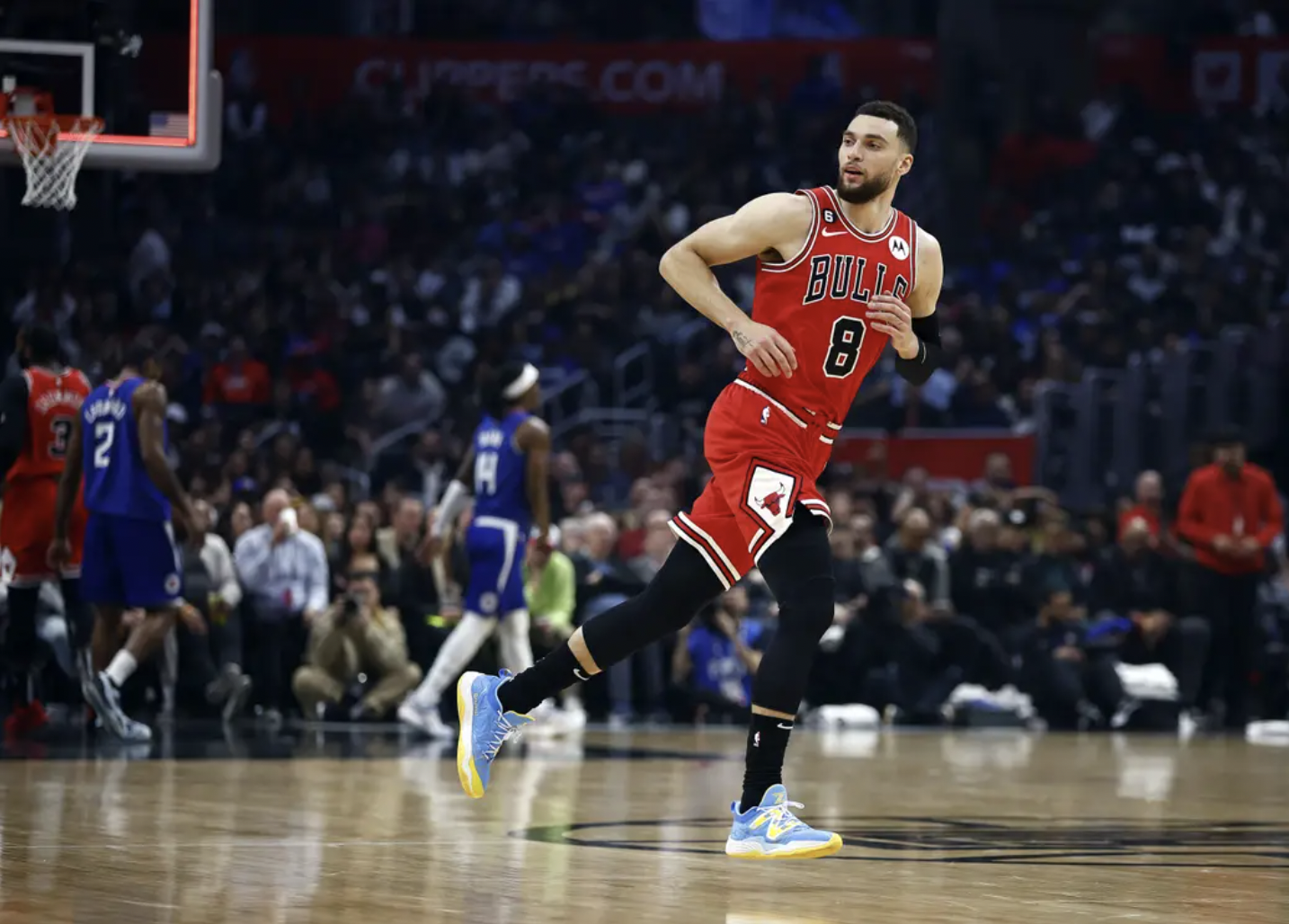
From the playground to arenas, big-name talents like Tyrese Maxey, Zach LaVine and Dejounte Murray have been drawn to the New Balance brand and its connection to street basketball culture. These hoopers talked to Complex about their early experiences on their hometown courts and how those memories inspired their game and style today. 

Tyrese Maxey

Getty Images

Before Tyrese Maxey became a first-round draft pick, the Dallas native was outplaying hoopers his own age. He was running the baselines as early as 4 years old, and there wasn’t a place in the world with a ball and a hoop he didn’t want to showcase his basketball talents. “My father was a head boys’ basketball coach, and I would go to practice with him and play. If I couldn’t go with him, I would go to the park in my neighborhood and play or force my uncle to play with me,” he says. 

Under his father and uncle’s wing, he began learning the nuances of the game, and the two men shaped Maxey’s fast-paced and creative playmaking style and instilled his confidence off the court. That growing conviction allowed him to embrace the resistance of elevated competition, and it opened his mind to the benefits of street and recreational ball. “Pickup games and structure-free basketball teach you how to improvise and give you a better feel for the game,” Maxey says. “Pickup games bring out a different level of competition; guys are going at you, and they have much to prove.” 

Now, the 22-year-old scorer wants to give aspiring hoopers in Philly the same experience he had in his youth. By pouring into the city’s parks and recreational centers, he feels it will increase community engagement, round out young players’ games and inspire others to capture the grit and relentless attitude he adopted on Dallas’ outdoor courts. “It’s extremely important; it’s the blueprint of basketball; it connects you with the people from all walks of life within the basketball community,” the University of Kentucky product says. “It builds a different layer of toughness. I’ve recently started to connect with some of the public park leagues here in Philadelphia; I’m looking forward to working with them and seeing what I can do to help push and keep the culture moving forward.”

Dejounte Murray

Basketball always came easy to Dejounte Murray. He dropped 35 points in his first rec league game, and did so well, he was convinced the rims were too low. Fortunately, he was wrong, and that day foreshadowed his future career as a professional athlete. 

Like Maxey, the Seattle native’s coronation into the sport was through his uncles, who made a hoop out of laundry baskets to play basketball indoors. Outside the house, Murray says they played on two hoops with missing backboards, and he followed his uncles wherever else they spotted a suitable court and competition. “I played everywhere my uncles played, which was our house, school, churches, and local outside courts,” Murray says. 

By competing in outdoor pickup games and rec leagues, the former University of Washington star found his love for organized ball and street hoops, and recognized the need for both forums. Murray said it toughens the skin of players. “Streetball is so important because it allows you to fall in love with the game of basketball, hooping freely and competing harder than ever, so I definitely believe it’s really important and it produces the best hoopers,” he says.

Between pro ball and streetball, Murray almost prefers the freedom he felt on the playgrounds and rec gyms he played on as a kid. The 26-year-old defensive stopper says he’s excited to see the best streetballers between Seattle and Atlanta, and his plans to return to the blacktop might be in the cards this off-season. “Streetball is the real deal. I prefer that hoop more than anything, and the league is the league; [it] turned my dreams into reality, and [me] proudly representing my family,” he continues. “In the off-season, I’m training and playing with my teammates at our practice facility and even outside too. But sooner rather than later, I want to take my 5 and go play against some of the local best in Seattle and Atlanta.”

Zach LaVine

For player Zach LaVine, his early streetball days didn’t begin on an actual street. In fact, not even above ground. Instead of a nearby park, rec center, church or playground, his professional athlete aspirations first bloomed in the basement of his childhood home. Before the high-flying scorer was in Pre-K, his dad set up a hoop and backboard inside the underground space. 

From an early age, the two-guard was destined for a career in sports. His mom was a softball player in college and his dad played football professionally as a linebacker. But after trying his hand at different sports, basketball quickly rose up the leaderboard, and he traveled wherever his newfound passion took him. “I played everywhere, from local parks and rec centers to high school tournaments,” the two-time All Star says. “On weekends my mom, dad, and sister would drive around looking for different parks that had different nets and rim heights.”

As he traveled around and beyond the suburb of Renton, Washington, LaVine said the experiences sharpened his game and focus, and prepared him for the physicality he would later face in his college and pro career. “Whenever you’re a young athlete, it’s good to learn how to compete in a team sport; It teaches leadership, toughness, and sportsmanship,”“ he says.

LaVine said the playground and local rec centers are where the game feels the purist, so it’s no surprise most players cite their hometown courts as the place they found their passion for basketball. Some of his fondest memories were playing alongside his dad in pick up games, who would elevate over YMCA hoopers long before LaVine was posterizing power forwards and centers. Looking back, the former UCLA standout says those experiences are valuable for any young basketball player. There are people of all different sizes and various skills when playing pickup games. Not only did that enhance the versatility of my game, but it taught me always to stay ready,”LaVine says. 

– COMPLEX for New Balance