Benjamin Franklin’s oldest surviving letter is on display for the first time, thanks to a former Flyers president

In 1738, Benjamin Franklin wasn’t yet the revolutionary history remembers him to be. It had been 10 years since he had set up a printing house and nine since he began to publish the Pennsylvania Gazette, which often carried a list of his stock of imported books.

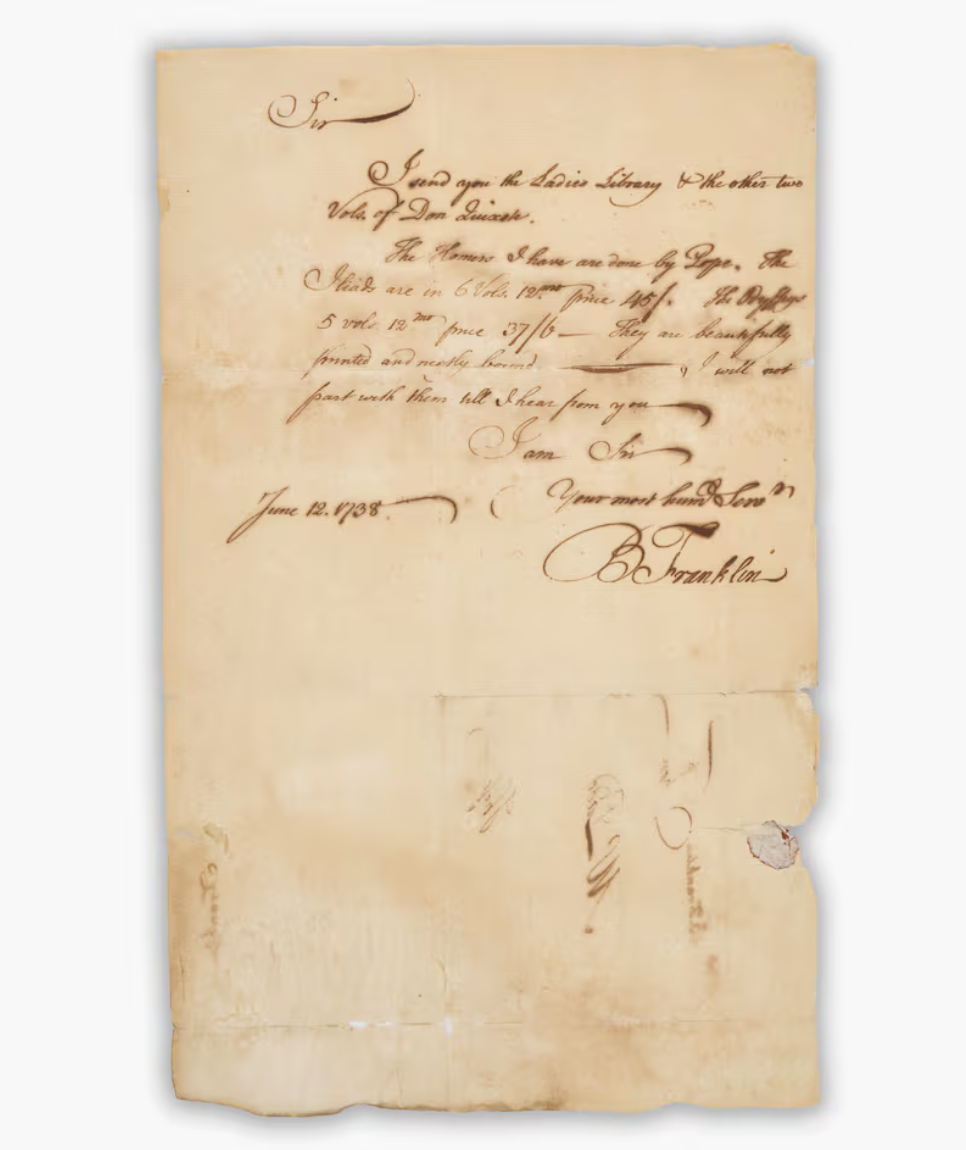
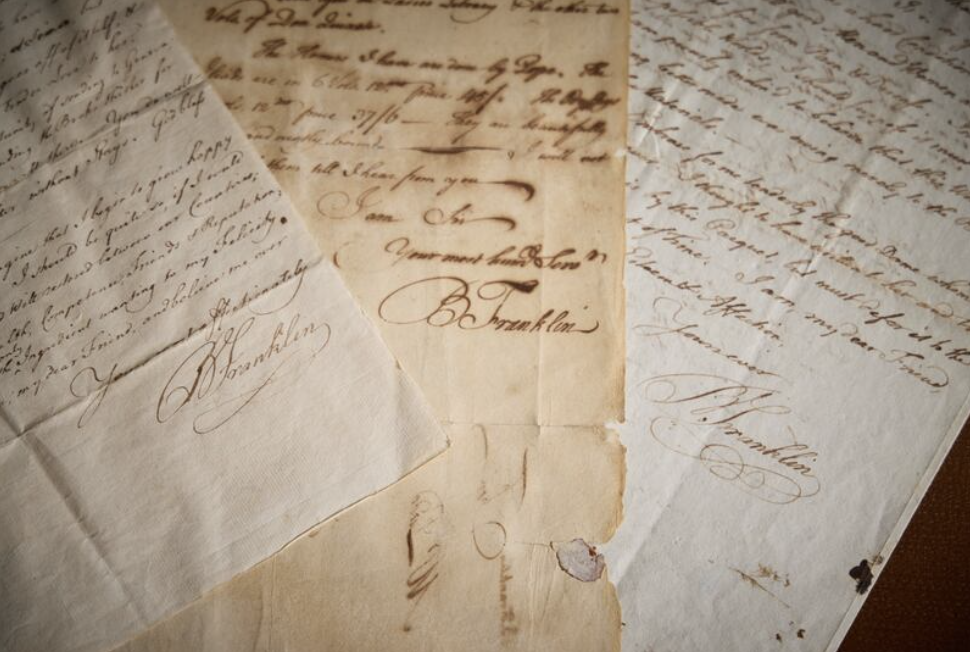
On June 2, 1738, he wrote a letter to John Ladd, a 17th century surveyor who helped fellow Quaker William Penn map out the city of Philadelphia, confirming Ladd’s book purchase. Ladd had bought The Ladies Library and the balance of a set of Cervantes, assumed to be John Ozell’s revision of Peter Motteux’s English translation.

Franklin also used the letter to advertise a “beautifully printed” five-volume set of The Odyssey.

“I send you the Ladies Library & the other two Vols. of Don Quixote,” it reads. “The Homers I have are done by Pope. The Iliads are in 6 vols. 12mo price 45/. The Odysseys 5 vols. 12mo price 37/6. They are beautifully printed and neatly bound. I will not part with them until I hear from you.”

This letter of receipt and everyday business, offering a glimpse into Franklin’s career as a prosperous Philadelphia bookseller and printer, belongs to the collection of Jay T. Snider, the former president of the Flyers and Spectacor.
For Snider, who purchased the centuries-old letter from a Los Angeles-based academic nearly a decade ago, Franklin is “an endlessly fascinating human being.”

Two hundred and eighty-eight years after it was written, that letter — along with other highlights from Snider’s extremely valuable private collection of Franklin memorabilia – will be displayed at Library Company of Philadelphia, the institution that the author of the letter founded in 1731.

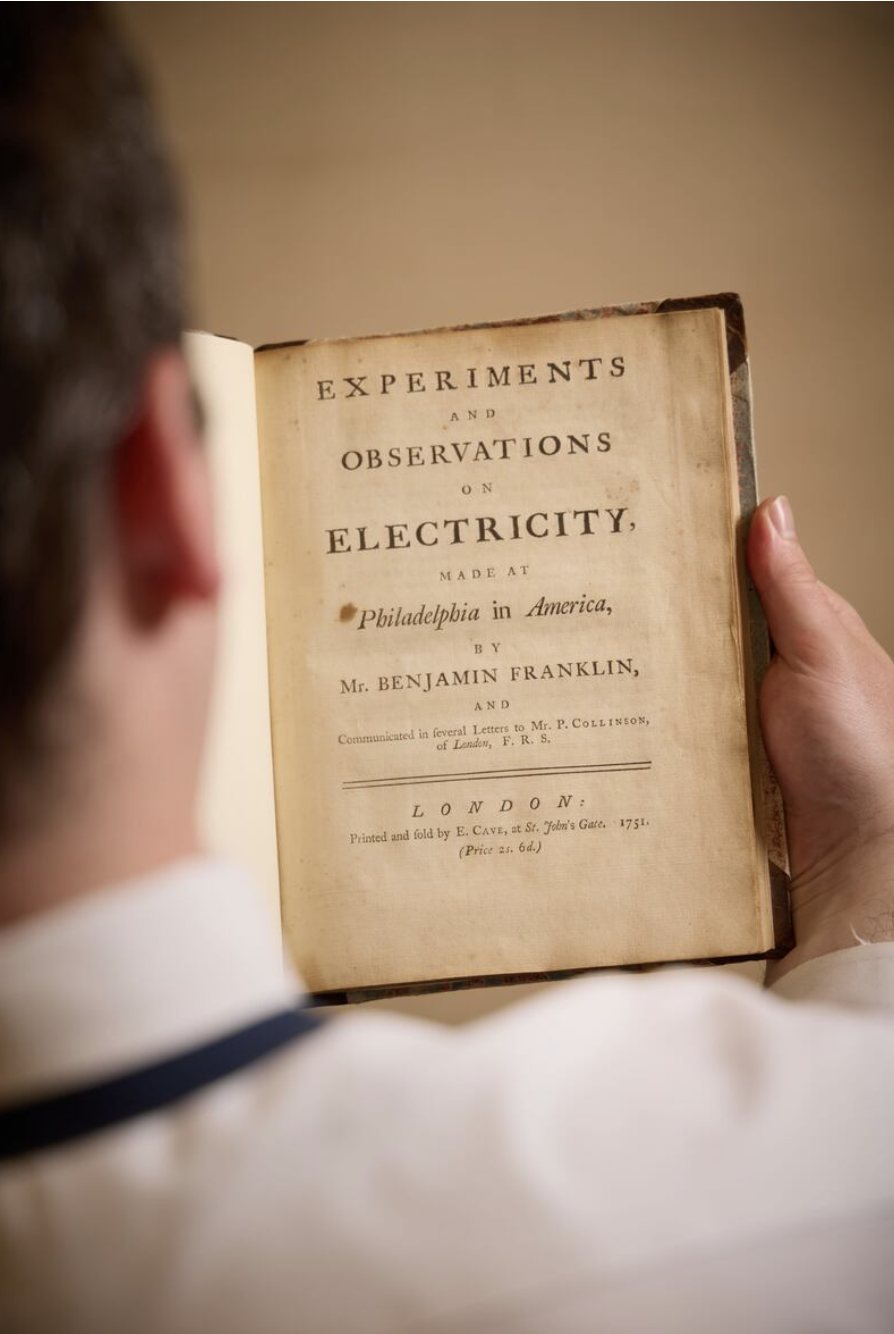
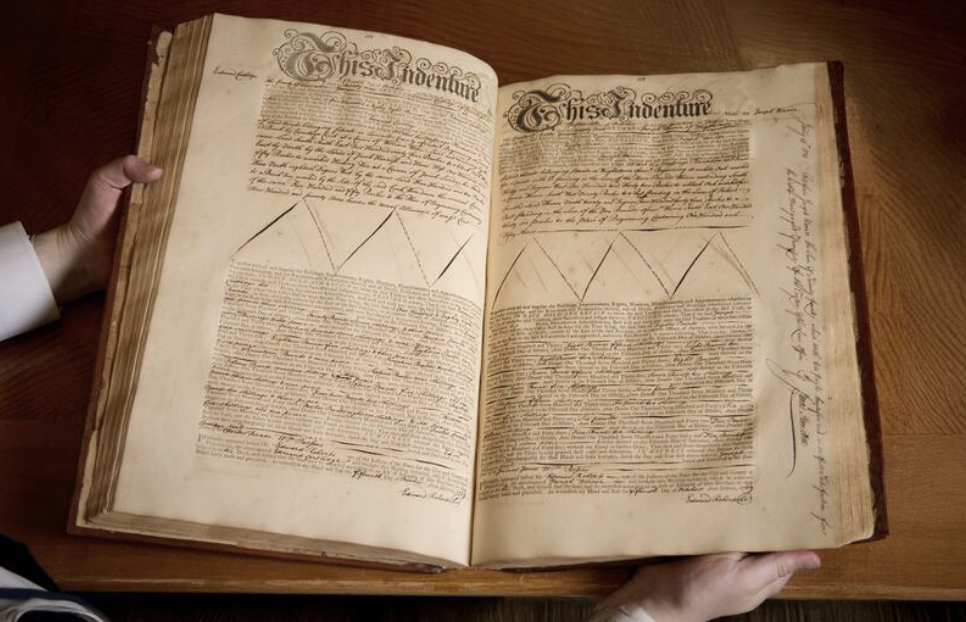
“The Jay T. Snider Collection of Benjamin Franklin” also includes a first edition of Benjamin Franklin’s Experiments and Observations on Electricity, 347 of Franklin’s promissory notes for the Pennsylvania Hospital, and the mortgage register that Franklin made during his first government printing job in 1729, among others.

The 1738 letter to Ladd is one of Franklin’s earliest letters to survive, and the earliest to ever come to auction, per the auction house Sotheby’s which will be auctioning parts of Snider’s collection next month.

“It’s the earliest Franklin letter I’ve ever seen. There hasn’t been an earlier one in the market since I’ve been collecting,” said Snider, whose collection, Sotheby’s calls “the best assemblage of Frankliniana offered for sale at auction in over 120 years.”

“Franklin’s letters turn up with some regularity. But to find one from the 1730s is essentially impossible,” said Selby Kiffer, senior international specialist for books and manuscripts at Sotheby’s.
A childhood passion to an adult collection

Like many kids growing up in the late 1950s, Snider was enamored with stories of cowboys and Native Americans, a passion that carried over into adulthood.

After graduating from the Wharton School in 1979, he began to collect books about American’s Western expansion. He started with Astoria by Washington Irving, which detailed Germany-born, American businessman John Jacob Astor’s failed attempt to establish a fur trading empire in the Pacific Northwest.

He read through dense bibliographies and bought more books on the subject, eventually finding an interest in the nation’s formation.

“Philadelphia is critical to that [history],” Snider said. “Philadelphia was central to our revolution and also the history before that. And then of course, I’m from Philadelphia.”

He soon narrowed his collection’s focus to Philadelphia, and eventually Franklin, after meeting Martin P. Snyder, who was a life-long Philadelphian who collected rarities such as the first edition of William Birch’s Views of Philadelphia, and other 19th century maps, engravings, and lithography.

Snider purchased the late collector’s materials in 2004 and auctioned several artifacts from it in a 2005 Christie’s auction, but held back Franklin’s items.

“That really became the greatest passion I’ve had in this,” he said.

His collection, Snider said, has included items he purchased for $10, and others — like George Washington’s letter to Benjamin Franklin, introducing him to the French military officer, Marquis de Lafayette — that Sotheby’s sold for over $1 million earlier this year.

“And I love them both equally,” Snider said.
‘Not a checklist collection’

The Library Company exhibition will mark the first time this material will be displayed for public view in Philadelphia. It will then travel to New York for an exhibition at Sotheby’s between June 20-24 before the auction.

Kiffer said Snider’s isn’t a “checklist collection,” but traces Franklin’s story as a book and almanac publisher to his life as a civic leader and scientist, postmaster, and diplomat.

Given Franklin’s connection to Philadelphia, Kiffer said it was important to bring the exhibition to the city before the New York auction.

“Philadelphia was the only possibility,” Kiffer said. “[Franklin] is in the city’s DNA, and to have the sale and exhibition limited to New York City, Franklin and Philadelphia deserve more.”
While the ultimate goal is to attract buyers for the collection, projected to total anywhere between $3 to 4.5 million, Snider said he hopes the highlights from his collection rekindle visitors’ interest in American history, and show them a side of Franklin that isn’t widely known.

“It’s always been my feeling that too many things end up on shelves somewhere, or in drawers. Somewhere that no one ever gets to see again. I’m hoping people just enjoy connecting with Philadelphia.”

“Highlights of the The Jay T. Snider Collection of Benjamin Franklin” is on view from May 5-7 at the Library Company of Philadelphia, 1314 Locust St. sothebys.com
– The Philadelphia Inquirer

A Penn State inventor brought the world’s first double Dutch machine to Philly

At 8 years old, Tahira Reid Smith drew the one thing she wished she owned: A double Dutch machine in never-ending motion.

As an only child growing up in the Bronx, Reid Smith dreamed of enabling someone to endlessly enjoy the the high-intensity jump-roping game.

“Jumping double Dutch is like being a part of a club,” Reid Smith said. “It’s culture. It’s a part of our history. It’s part of our heritage.”

For her school’s drawing competition, the then-third grader sketched two poles with three push buttons, and a girl jumping in the middle. Her drawing won first place in the competition, but decades later, she brought the invention she dreamed of as a child to life.

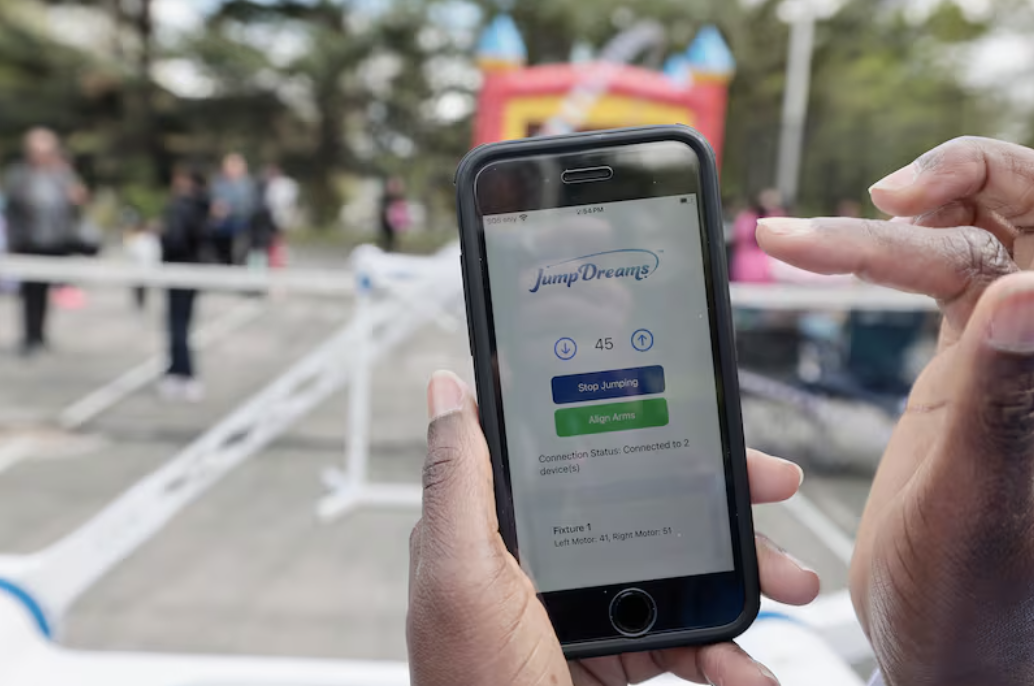
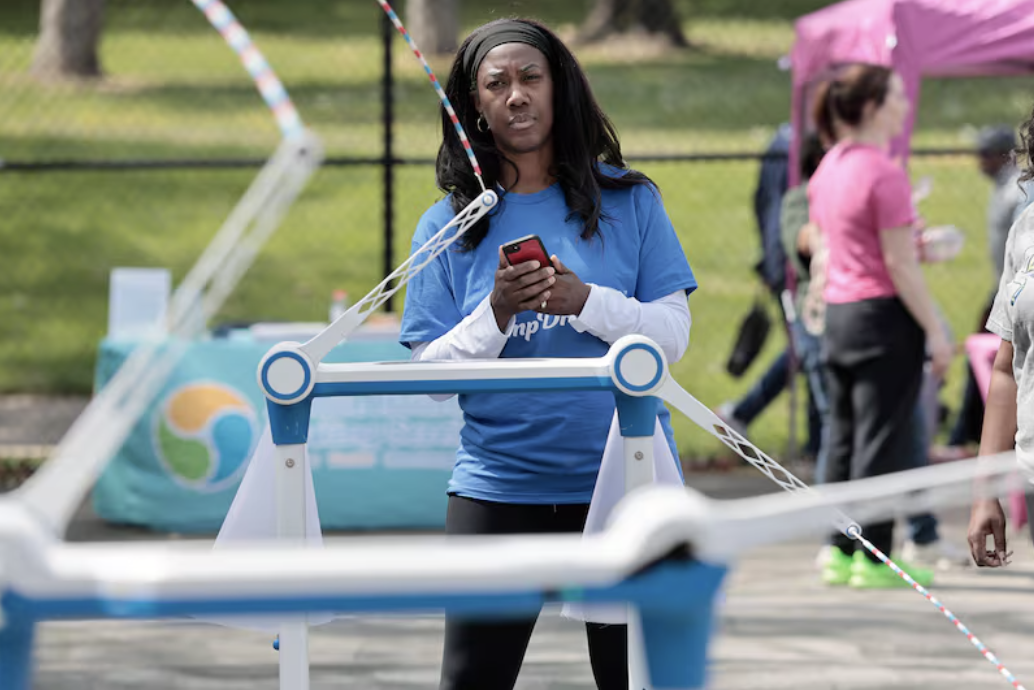
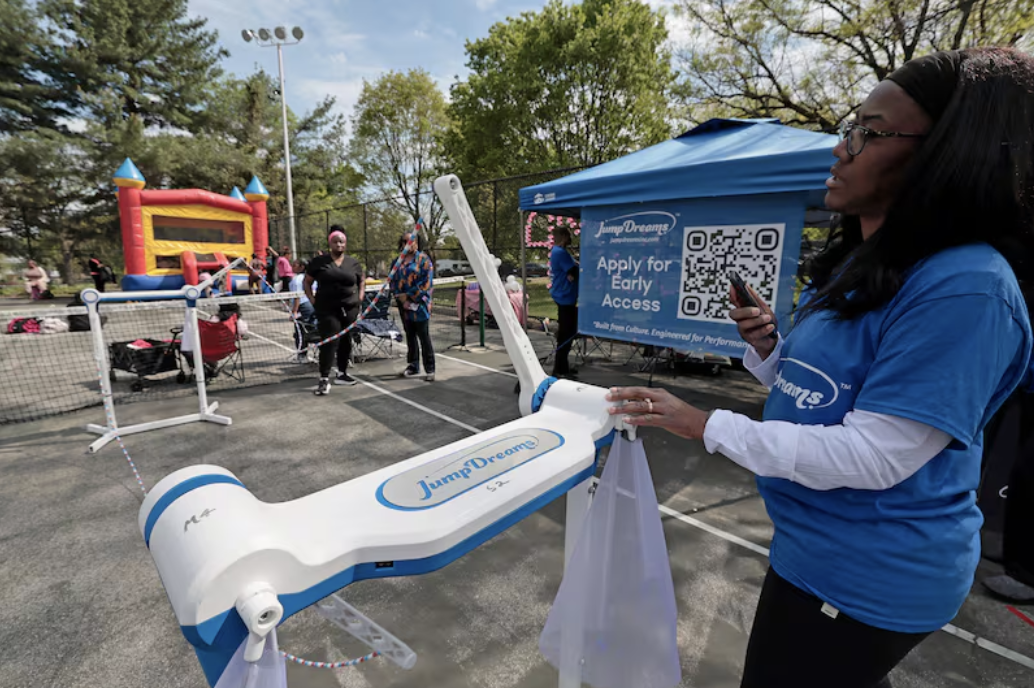
Nearly 40 years after submitting her class drawing, the mechanical engineer and Pennsylvania State University professor showcased a prototype of the world’s first automated double Dutch machine in Philadelphia on Saturday.

Reid Smith traveled from State College to bring the prototype of Jump Dreams to Awbury Park for Double Dutch Day, a community event led by Philly Girls Jump.

“It was important to be here,” Reid Smith said. “I love Philly Girls Jump’s mission, and what they are doing.”

It was another class project that rekindled her interest in double Dutch. While she was studying at Rensselaer Polytechnic Institute in 1997, her late professor Burt Swersey, who served with her as co-inventor of the machine, tasked her with a design class assignment that focused on sports and recreational activities.

It was then she thought about the double Dutch machine for the first time since making the sketch. After a long development, she has a prototype.

At Double Dutch Day, hundreds of participants, ranging vastly in age and skill, met at Awbury Park’s tennis courts to jump rope, dance, and enjoy local vendors.

Others stopped by Reid Smith’s booth to try out the app-controlled double Dutch machine.

Swan Fleming said, after a friend pointed her to the machine, “Well, I have to try it out.”

Fleming, who traveled from Atlanta to attend Saturday’s event, said the ropes moved a bit slower than she was accustomed to. But within seconds, she adjusted to the synchronized arms that whipped the beaded rope in motion.

“I think it’s great because sometimes it’s hard to find a good turner,” Fleming said. “And turners really matter. I think it’s awesome that this was so invented.”

Sarina Hudson, who jumped in to experience the mechanized double Dutch for herself, said it requires added skill to get comfortable.

“[The experience] was different,” the North Philly native said. “I’m used to turners who can adjust, but you had to adjust yourself.”

Hudson said she could see the invention being inside people’s homes, including her own.

“I want to see if I can buy it,” she said.

While the machine is not for sale, Reid Smith said the goal of having participants like Hudson and Fleming try out Jump Dreams was to get feedback for future iterations of the machine that could become widely available.

Among the current design’s challenges is the use of double-handed arms, which can lead to off-rhythm turns.

Reid Smith said a new version of her evolving invention, which she first constructed in 2000, will be easier to use for jumpers of varying skill. Not just experienced double Dutch athletes.

“The next design iteration is going to work out the kinks that we learned, and all the imperfections,” Reid Smith said. “The next iteration will make it so novices can do this.”

She’s hoping to launch the new design as part of a larger marketing push under her company Jump Dreams Inc. by February 2027.

Reid Smith said the aim is to place the double Dutch machine in schools, recreational facilities, and youth development centers. But she’s not ruling out other possibilities.

For now, she’s continuing to build up her early access list, expand her professional network, and market the forthcoming product at events like Double Dutch Day.

– The Philadelphia Inquirer

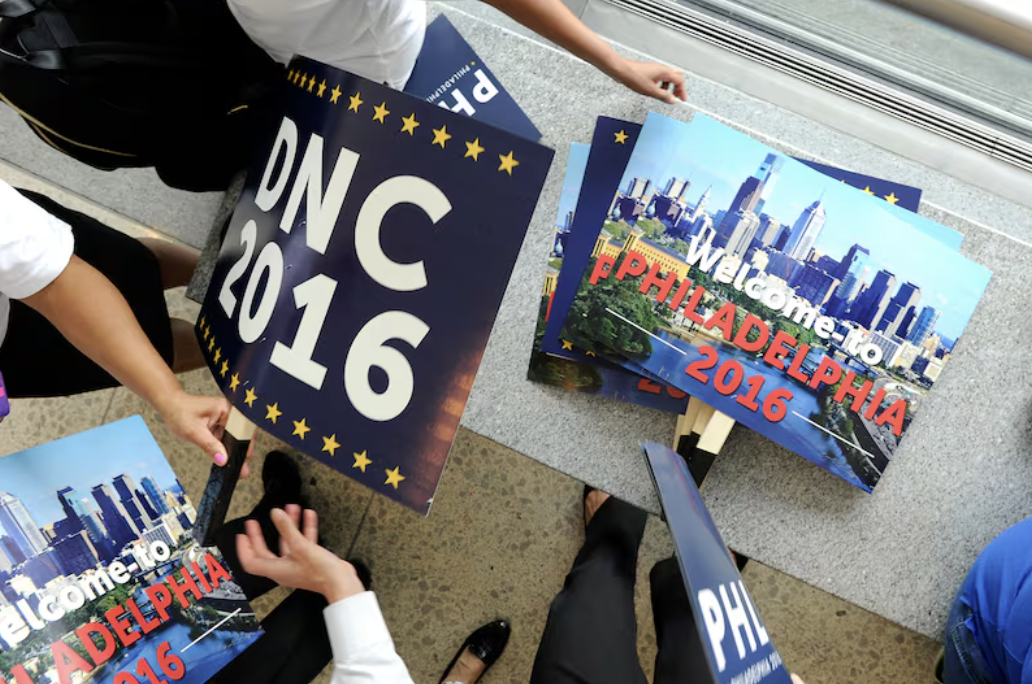
How to lure the DNC into picking Philly for its convention? With Patti LaBelle, Rival Bros. coffee, and Tastykake treats

The stakes are high for Philadelphia’s bid to host the 2028 Democratic National Convention.

In a battle against other host city hopefuls like Atlanta, Denver, Chicago, and Boston, the city is pulling out all the stops, including tapping an iconic singer for its promotional push.

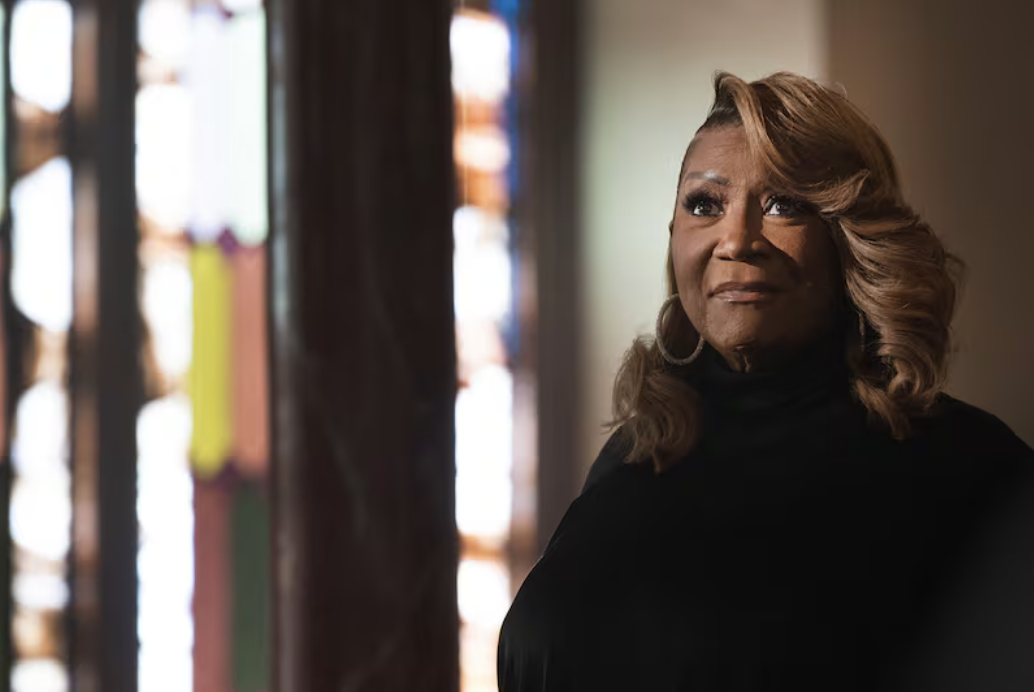
Last week, as reported first by Axios, Patti LaBelle made an appearance at the Democratic National Committee’s annual spring meeting in New Orleans. The “Godmother of Soul” joined Pick Pennsylvania, the city’s official host committee, to convince DNC officials that Philly is perfectly suited to take on hosting duties.

While the Philly native didn’t perform her soulful classics, she happily snapped photos and chatted with guests at the event.

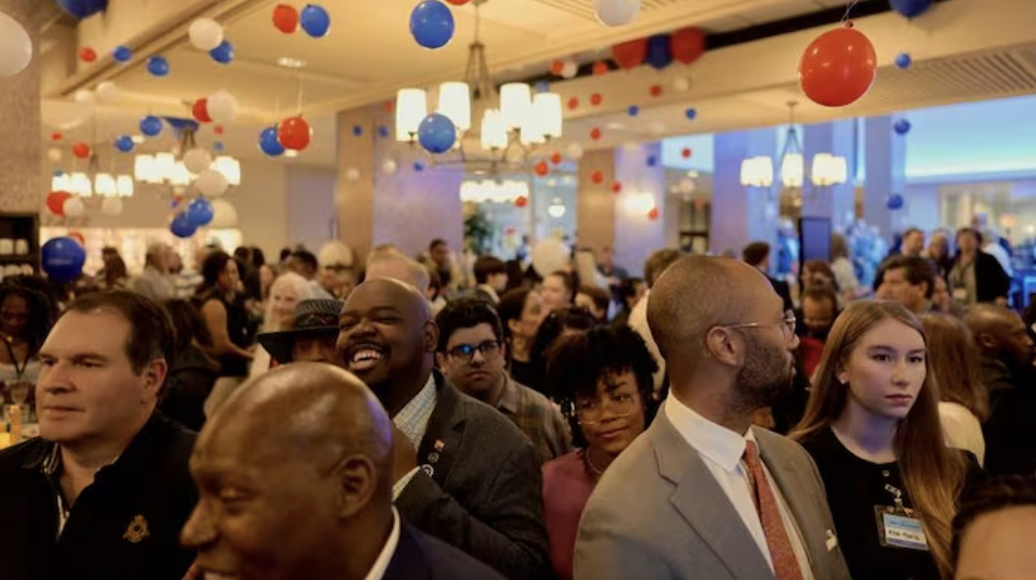
Other host city finalists also sent contingents to the spring meeting, along with free merch, coffee, and treats central to the city ‘s identity. Among Philly’s offerings were Pick Philadelphia-branded hats and shirts, free cups of Rival Bros. coffee, and center pieces with Tastykake snacks.

“Everyone who had a cup of Rival Bros. coffee and a Tastykake loved it,” Aren Platt, a senior adviser for the city host committee, wrote in an email to The Inquirer.

It’s too early to claim victory, though. There are still several steps before DNC chair Ken Martin and other committee leaders decide which city gets to call itself the host.

“We have a lot more we’re looking forward to sharing and showcasing as the bid process moves forward,” said Platt.

After the city submitted a confidential proposal last month, which included details about the city’s hotels and the voltage capacity of Xfinity Mobile Arena, the DNC is preparing to conduct a site visit from April 29 to May 1 as part of the selection process.

If the city is selected, the convention would take place Aug. 7-10, 2028, at Xfinity Mobile Arena.

Philadelphia isn’t new to being at the epicenter of political celebration, discourse, or debate.

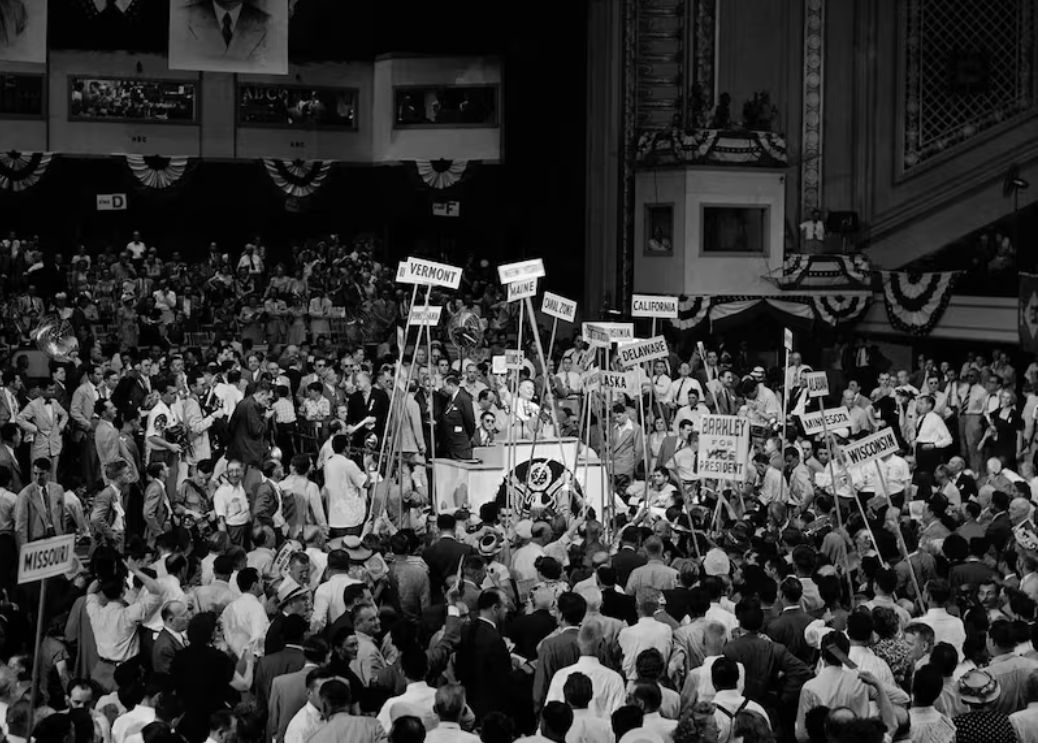
In 1948, the city hosted three major political conventions in a matter of five weeks: the DNC, the Republican National Convention, and the convention for the Progressive Party, a then-popular upstart group led by former U.S. Vice President Henry A. Wallace.

It would be more than 50 years until the next political convention rolled into Philadelphia.

The Republican National Convention in 2000 marked Philadelphia’s return as a political convention hub. The city went on to host the DNC again in 2016.

While it’s been a decade since Philly last hosted a major political convention, the region has maintained a political presence for decades.

Philly and its suburbs were among the most visited regions for Donald Trump and Kamala Harris during the 2024 presidential race. The two debated at the National Constitution Center in September 2024, then dropped into locations in and around Philadelphia.

With LaBelle — and local treasures like Rival Bros. coffee and Tastykake snacks — already impressing Democratic Party members, what more does Philly need to do to inch closer to landing the deal?

Platt said the next step is to show the Martin-led DNC everything the city has to offer, from Xfinity Mobile Arena’s technical capacities to the dining, nightlife, and other cultural experiences that make Philly special.

The story has been updated to reflect that Patti LaBelle’s appearance in New Orleans was first reported by Axios.

– The Philadelphia Inquirer