Legendary artist Cornbread wants people to stop defacing Philly murals

Philadelphia is called the “Mural Capital of the World” — a reputation it owes in part to the legendary street artist Darryl McCray, who’s regarded as the “Godfather of graffiti.”

McCray, better known as Cornbread, began inscribing his name onto the walls of his juvenile center in the mid-1960s, becoming a living landmark to those who later celebrated his contributions to hip-hop and the world of street art.

The Brewerytown native built his reputation as the “king of the walls” as a teenager. He tagged stone-covered buildings, construction sites, a police car, the hind side of a Philadelphia Zoo elephant, and even a jet owned by the Jackson 5.

More often than not, his insignia would be buffed from the city’s walls, but his imprint inspired a wave of artists in Philly and New York City during the 1960s and ‘70s — and later the hip-hop revolution.

McCray said Philly’s artistic movement helped spark the genre, with former graffiti writers eventually transitioning to the art of rhyme. The two intersect like North Philly cross streets, with each discipline influencing the other over the decades.

“I don’t like when they say graffiti isn’t hip-hop,” McCray said. “There would be no hip-hop without graffiti. There are a lot of original pioneers of hip-hop culture, but a big percentage were already street artists who were doing other things. Graffiti is a world culture with a small community that still makes a big impact.”

At 70, McCray is no longer “bombing” his signature across the city, but the pride he takes in Philly’s graffiti culture remains intact. He’s now a mural ambassador on a mission to stop random vandals from defacing the murals that define his beloved hometown.

“It’s the vandals that ruin the art,” McCray said. “We have renegades who just don’t care. They’re even putting their names on the defaced murals,” he said when The Inquirer caught up with him on his way to the mural My Life, My Path, My Destiny by artist Cesar Viveros, which was sullied by a series of graffiti tags.

It’s a fight that is hardly new for McCray.

Back in 2013, he put together the Graffiti Summit, which was attended by a “lot of city officials, writers, and barbers.” Together, they conjured ideas to stop the destruction of murals, which included a local taskforce to regularly maintain and clean the public artworks. But in the years since the event, McCray fears the issue may have worsened.

“Every time a mural is destroyed, it becomes a hurt piece,” he said. “This is an issue that’s been overlooked for some years. For the most part, the general public isn’t aware of the ongoing sabotage. The only thing we can do is try [to fix it].”

McCray suspects there were a few vandals who attended the Graffiti Summit, but “they didn’t make themselves known,” he said. But someone who stepped in as an ally was Mural Arts executive director Jane Golden, who’s been friends with McCray since her first days at the arts organization, then known as the Philadelphia Anti-Graffiti Network.

“She’s a real good close friend of mine, and she’s the reason why Philadelphia looks the way it does,” McCray said of Golden. “I love [her]. We share legacies and have changed Philadelphia together.”

Golden said the summit was a success. Several spray and brush-made murals came out of the event, all of which went untouched.

Like the use of mosaic, fresco, acrylic, oil, and other artistic mediums, spray is another “tool in the creative toolbox.” It just requires permission, which she feels current graffiti writers are too often ignoring.

“Many writers today have different values and that is too bad,” Golden said. “By sharing techniques and learning from each other, there is great mutuality. Destroying art is a lose-lose proposition. Nobody wins.”

Most of the city’s murals had gone untouched since the Graffiti Summit, and even as far back as Golden’s start at Mural Arts 40 years ago. But she said there’s been an uptick in defacements since the COVID-19 pandemic.

Golden said past graffiti writers had an unspoken agreement to avoid churches, private homes, and murals, but it seems today’s artists don’t operate by the same accord.

Last year, Golden said Mural Arts spent $60,000 to remove graffiti, and the recent spike in vandalism is “eating away the soul of the city.”

“Murals in the city of Philadelphia are civic assets and it is an insult to the artists, to the community, to Mural Arts, to everyone who was part of the experience of bringing the work of art to life,” she said.

To stop the desecration, McCray said he has his eyes on a second summit, which would also honor the legacies of pioneering artists like Dr. Cool, Sank, Mutt, Kool Kev, Cupcake, and other influencers.

This summit, he hopes, will inspire further advocacy, community-wide collaboration, and deter vandals from spraying their tags over these public works. “There needs to be artists talking about the destruction of the murals, and how much some people want to see the beauty and jewels of our city destroyed,” McCray said.

With McCray at the helm, Golden is hopeful a second Graffiti Summit will encourage current and future graffiti writers to embrace the same values once held by past artists. And by offering creative development and collaboration through Mural Arts programs, a lasting impact can be made in the Philly arts community.

“When we avoid judgment and open up doors for opportunity, that provides our society with so much richness,” Golden said. “I’m not saying every graffiti writer has a desire to be an artist. But for those that do, and have the energy to build on their creativity, I think we can give it a try.

– The Philadelphia Inquirer

One Phillies superfan’s standing ovation inspires another superfan’s film

Kyle Thrash was destined to be a Phillies fan.

Just hours before he was born, his mother asked nurses to turn on the Phillies vs. Cincinnati Reds game on the delivery room TV. “I don’t think you can become a fan any sooner than me getting born into a game going on,” Thrash, 35, said.

The Lehigh Valley native grew up making the hour-long commute to Phillies home games with his grandfather and learning to weather the heartbreak that comes with being a Phillies fan.

During the 2023 baseball season, the Phillies and newly-signed shortstop Trea Turner desperately needed a midseason spark. The ball club’s 25-32 start and Turner’s lackluster play routinely drew frustration and boos from Citizens Bank Park crowds. Thrash, like other fans, was looking to Turner to live up to the expectations of his $300 million signing. Months of disappointment finally transformed to a surge of fanly reinvigoration after Thrash saw a fan’s video circulating on X.

The video was from Aug. 4, 2023, when, instead of booing Turner, nearly 42,000 fans at Citizens Bank Park gave him a standing ovation during a game against the Kansas City Royals.

The action was a result of efforts by several Phillies fans, including Jack Fritz, a producer at 94.1 WIP, whom Turner later called in to thank. It was also egged on by Phillies superfan Jon McCann, who goes by the Philly Captain on his YouTube channel.

“The fans tried tough love, but I think everyone was thinking something else had to be done,” said Thrash, who also codirected the Palm Springs Film Festival Award-winning documentary, The Sentence Of Michael Thompson. “And [McCann] came up with the idea that had the spark that took off, went viral, and obviously the fans responded.”

The video, which racked up millions of views on social media, reached Thrash on X and made its way into the Phillies locker room. Turner batted .338 over the final 48 games, with the fourth-highest on-base plus slugging in the league during that span. The Phillies finished with 90 wins and reached the National League Championship Series against the Arizona Diamondbacks.

The transformation inspired Thrash to collaborate with two-time Oscar winner Ben Proudfoot on the short documentary, The Turnaround. The film, set to premiere on Netflix today, tells the story of McCann, a devoted Phillies fan who inspired his team and city.

“It’s a human story. [McCann] is from Kensington, and he’s had his struggles. And I think the spark he started was worth telling,” Thrash said. “And I know [the Phillies] didn’t get the ending to the season we wanted, but I’m still proud of what the city did and excited for people to hear [McCann’s] story.”

Thrash and Proudfoot followed McCann as he talked about his hardened upbringing, bipolar disorder, and past suicidal thoughts. The Phillies superfan recognized the power of having support in times of darkness, and wanted to administer a dose of “Philly love” to cure Turner’s uncharacteristic slump.

The film starts with McCann describing the historic crack in the Liberty Bell and reciting a prayer to the 271-year-old Philly landmark: “Dear Liberty Bell, please let the Phillies win the World Series. Amen.”

His hopes, like the historic bell, have been weathered by his experience. But by the end of the 25-minute short, McCann is inspired by a renewed sense of self.

“This is so much more than a sports story,” said Proudfoot, who has previously directed the Oscar-winning short documentaries, The Queen of Basketball and The Last Repair Shop. “This is about someone who’s dealt with mental health and took a moment to give grace to someone who was dealing with their own issues. That’s what this story is about.”

Proudfoot, a Halifax, Nova Scotia, native, who’s been wearing Phillies jerseys throughout film festival season, admits his baseball knowledge is fairly pedestrian. But he and Thrash felt McCann’s story was tailor-made for the screen.

“We could’ve interviewed thousands of other die-hard fans,” Proudfoot said, “but [McCann] did the golden rule — treat others as you want to be treated.”

The documentary closes with McCann being invited to the Phillies’ 2024 season opener. And as the camera zooms out for a wide shot of the team’s South Philly ballpark, he says, in his thick Philly accent, “Come on boys, it’s unfinished business. This is our year. Come on, Trea Turner. This is our season. You’re going to win it for us.”

While the “Fighting Phils” didn’t make it to the World Series, they clinched the National League East title for the first time in 13 years. For Thrash, the story is characteristically Philly — “even when we lose, the city wins.”

“People forget Rocky didn’t win the heavyweight title in the first film,” Thrash said. “You don’t have to win for Philadelphia to rally behind you. You just have to put up a fight, and that’s what this film is about.”

Starting Oct. 18, “The Turnaround” streams on Netflix. The film is also screening at the Philadelphia Film Festival at 7 p.m. on Saturday at the PFS - Bourse Theater 3. filmadelphia.org.

– The Philadelphia Inquirer

Legendary CHOP cancer researcher Audrey Evans’ life is the subject of a new film

Philly-based writer and producer Julia Fisher Farbman has interviewed notable figures like former first lady Michelle Obama, NASA systems engineer Farah Alibay, and former youth softball star Mo’ne Davis. But her most popular interviewee has been Audrey Evans, the British physician and subsequent Philadelphian who became a force in pediatric cancer research at the Children’s Hospital of Philadelphia and founded Ronald McDonald House Charities.

In 2017, Farbman’s award-winning Prime Video series Modern Hero featured the then-92-year-old oncologist, and the episode has amassed upward of 17 million views.

Evans talked about her childhood in York, England, her battles with sexism in the medical field, her journey to becoming CHOP’s first female chief of oncology, and her continued push to improve pediatric cancer treatment. “I came to Philadelphia to take care of children with cancer because at the time I came, there wasn’t much else you could do but care,” Evans said to Farbman on the show.

What began as a series of interviews at Evans’ Rittenhouse apartment blossomed into a friendship between the two women. Now, that one-off episode has evolved into Audrey’s Children, a feature film starring Natalie Dormer as the iconic oncologist.

“It was special to hear her life story and distill it into a screenplay, and it just all came to life,” Farbman said. “We know, or at least we hope, this film matters to a lot of people and a lot of families. And we really hope it continues [Evans’] legacy of caring for people and inspiring others to do the same.”

The 110-minute-long film, directed by Ami Canaan Mann and written and produced by Farbman, is set to premiere at the Philadelphia Film Festival on Sunday. It chronicles Evans’ pathway to becoming a marvel of medical advancement and philanthropy during the late 1960s and 1970s.

Mann, who directed the 2014 romance drama Jackie & Ryan, said Evans’ legacy of advocacy and her sure-fire desire to make people’s lives better, is what drew her to the project. And it’s a story, she felt, was a necessary one for filmgoers, especially with the “chaos” surrounding today’s social and political climate.

“I don’t underestimate the power and responsibility that storytellers have, and I felt like if we could tell this woman’s story in a way that could touch even a handful of people who have been through the same experience, or a parallel experience,” she said. “It just felt like doing that would be important.”

During a time when cancer research was limited and families were forced to withdraw their terminally ill children from CHOP due to high health-care costs, Evans founded CHOP’s Children’s Cancer Center, and she opened the first Ronald McDonald House on Oct. 15, 1974. After retiring from CHOP in 2009, Evans went on to cofound Philadelphia’s St. James School, a private, tuition-free, Episcopal middle school.

The film also chronicles Evans’ groundbreaking research and medical findings. In 1971, she developed what is now known as the Evans Staging System, which determines the best cancer treatment plans for kids battling neuroblastoma — one of the most common solid cancerous tumors in children. Her work in reducing mortality rates for this cancer type earned her the title, the “Mother of Neuroblastoma.”

Dormer, who met Evans before Evans’ death in 2022 at age 97, has brought the late oncologist “back to life” on screen, Farbman said, perfectly capturing Evans’ dry British humor and fiery spirit. “[Dormer] was perfection,” she said. “It was a dream come true for her to read the script and love the film. And when she came on set, she just took everything to another level with her professionalism, her talents, and dedication to the story.”

From the way she walked and fixed her shoulders upright, Dormer fully channeled Evans, Mann said. The actor also captured the “graceful” way Evans described mortality to her young patients, telling them they “float” when they pass.

“That’s a task I wouldn’t wish on anybody,” Mann said. “And for her to have done that daily with such conviction to help children frame their own mortality, and do it with good cheer while trying to save their lives, I was really compelled by that story and that woman. I felt it was important to share that with as many people as possible.”

“The whole film was a labor of love for every single one of us. We always said that the right people would come to the film at the right time, and that’s been true,” Farbman said. “And I’m so grateful for the people who have joined the ‘Audrey Army’ to bring her story to life.”

“My goal is to have the audience walk away with a sense that they, too, can make a difference to somebody. No matter how small, it will have a ripple effect and it will have value,” Mann said.

“Audrey’s Children” screens on Oct. 20, 5:30 p.m. and 8:15 p.m. And Oct. 27 at 8 p.m. Film Society Center, 1412 Chestnut St., Phila. For tickets, visit filmadelphia.org.

– The Philadelphia Inquirer

A new Christopher Reeve documentary uncovers the actor’s real superpower

Princeton, N.J.-raised actor Christopher Reeve was best known for playing Superman. But his superpower was his fight for advancements in spinal cord injury research and better quality of life for those with paralysis.

It was a cause deeply personal to Reeve, who was paralyzed from the neck down after a near-fatal horse-riding accident in 1995. At 42, he was restricted to a wheelchair and forced to breathe through a ventilator.

At the Kessler Institute for Rehabilitation in Marlton, N.J., Reeve learned to embrace the challenges his new life presented and established a foundation with his wife Dana to improve the lives of others facing the same obstacles.

He remained resolute in his mission until his death in 2004, due to heart failure.

A new documentary by filmmakers Ian Bonhôte and Peter Ettedgui, Super/Man: The Christopher Reeve Story, explores Reeve’s life as a father, husband, film star, and world changer.

Ahead of Friday’s release, The Inquirer spoke to two of Reeve’s children, Alexandra Reeve Givens and Matthew Reeve, about their father’s upbringing in South Jersey, his love of extreme sports, and the intimate moments they shared during his recovery.

This interview has been lightly edited for clarity and length.

he film didn’t really explore your dad’s upbringing much. Did you visit Princeton, N.J., as kids?

Alexandra Reeve Givens: Yes. Our grandmother lived in Princeton until a few years ago, so we grew up visiting there. Dad always felt connected there, and Dana was part of the New Jersey Shakespeare Festival for a long time. We both performed in it, and I think Dana was involved on the board. So that always felt like a deep part of our community and our history.

How was it seeing this film for the first time with all your home videos?

ARG: It was amazing to suddenly see your family’s story told in this beautiful, artistic way. Looking back on our dad and [Dana Reeve’s] life in totality was really powerful. The other thing that’s been amazing is seeing how people are connecting to the film. People are having fun revisiting the Superman adventure, and they’re connecting with it because they’ve suffered loss in their own lives. They’re seeing themselves in this story, and that’s really a beautiful thing.

Matthew Reeve: It triggered memories we might have forgotten, like a certain Halloween, Christmas, or family trip. We were lucky that we had video cameras at home, and even luckier they were used. Dana was certainly the family documentarian when we were younger, and I did a lot of filming later on.

ARG: I loved seeing the footage of him auditioning for Superman when he was still super skinny, with big sweat stains under his arms and shoe polish on his head to make him look the part. And an actress, who’s not Margot Kidder, playing opposite him as [Lois Lane].

How was it looking back at his days at the Kessler Institute for Rehabilitation?

ARG: Kessler is one of the premier rehabilitation centers in the country. We still work with them through the Christopher & Dana Reeve Foundation. We chose it because it was close to home and we had all these family ties to New Jersey.

There’s no sugarcoating it. It was an incredibly difficult time in our lives coming to grips with his new reality. It was difficult learning about the limitations and strategies needed to overcome those limitations. But what was powerful about it was that he was surrounded by people who were doing the same thing.

He started hearing from people who were going through similar circumstances, who rebuilt their lives, were back working, and were being strong for their families. And that was incredibly inspiring for him. He realized his circumstances had changed, but he was indeed the same person, and our family still needed him. It was physical rehabilitation, but it was really mental rehabilitation.

It was nice seeing that footage because dad and Dana were conscious about us feeling comfortable with his accident and feeling physically close to him even though his body worked differently. ... Our dad and the people at Kessler really encouraged that a lot, even in a hospital setting.

The Reeve family has been approached for films before. Why did you agree this time?

MR: It usually didn’t feel like the right people were approaching us. Most of them wanted to explore a narrative version of this story, which could have become a cheesy, tearjerky drama. We weren’t interested in doing that.

We’re excited to get his story to a whole generation of people who may not know who he was, or reintroduce him to people who remember him. And hopefully, they will come away with a deeper understanding of who our dad was and all the things that he could do.

What overarching message are you hoping the film conveys?

MR: I don’t know if I can pinpoint a singular thing. We wanted to show a complete 360 view of who Christopher Reeve was. And for me, I think that included some of the things that he could do before the accident, like flying a plane, playing the piano, scuba diving, and all these other things. And his determination, resilience, and spirit to do more for a wider community.

I think his larger message was that you don’t have to be Superman. The definition of a hero is an ordinary individual who perseveres despite overwhelming obstacles. And I hope people understand that revelation and the meaning of it, which is that everyone can do this.

Super/Man: The Christopher Reeve Story opens in theaters on Friday. The film will be available on Apple TV at a later date.

– The Philadelphia Inquirer

An in-the-works UArts documentary will show what led to the school’s collapse

Amid the thousands of emails that filled his inbox, former University of the Arts professor Kyle Crichton never expected to receive a message like the one delivered at 6:19 p.m. on May 31.

Crichton froze as the news broke — president Kerry Walk said the school was closing in a week. And on June 7, the historic arts college officially shuttered its doors, leaving hundreds of students and educators wondering how and why the university suddenly collapsed.

Administrators blamed declining enrollment and unexpected financial challenges as the source of the dismay, while some UArts employees and union members pointed to alleged mismanagement. The closure sparked days of protests and class-action lawsuits filed by dozens of ex-staffers.

‘I started filming it’

With uncertainty still looming,Crichton grabbed his camera and began capturing student-led protests on the steps of Dorrance Hamilton Hall on June 5. The award-winning filmmaker had another project on the books, but he decided to chronicle the story he was experiencing and watching unfold.

“As it happened, I started filming it,” said Crichton, who received a Mid-Atlantic Regional Emmy for his work on the 2023 documentary Angel Dose. “I was disappointed financially, but I was also disappointed I wasn’t going to be teaching these kids.”

In need of a cinematographer and co-director, Crichton tapped fellow UArts graduatesKatie Supplee and Michelle Rose Goodwin, who agreed to be a part of the project, still in early stages and currently titled “Reckless Education.”

Along with capturing the devastation of the June 7 announcement, the three filmmakers have interviewed UArts students, staff, and faculty about the lasting affects of the shut down over the past four months.

Goodwin, the co-director and producer of the film, is hopeful the documentary will fully capture the frustrations, anger, and heartbreak felt among the UArts community in the days and months after the unforeseen closure.

“The school dissolving in the fashion that it did shook a lot of people’s foundations, took a lot of control from their lives, and made a lot of people feel powerless,” Goodwin said. “And I think this documentary is a way to try to give them that power back.”

Why did UArts close so suddenly?

Goodwin said they aren’t shying away from the school’s missteps, which ultimately led to its dissolution and Chapter 7 bankruptcy filing. But a goal of the documentary is to figure out what happened.

To unveil the full wreckage of UArts, Crichton said it’s a “multi-pronged” approach that requires the voices of city officials.

Crichton, Supplee, and Goodwin are hoping to land interviews with city council members and attorney general Michelle Henry.

“Art is such a good vessel for spreading ideas, and I feel like that’s what we’re doing here,” Supplee said. “We don’t want to just impact the Philly arts scene with the film. We want to speak to the shuttering of educational institutions as a whole.”

Next steps for production

Supplee, whose fiancé worked at UArts before the university closed its doors, said the small production crew is now following “displaced UArts students who were forced to transfer schools to pursue their creative arts career.”

With filming in full swing, Crichton said the team is aiming for a 2026 release. The next step is to add more interview subjects, researchers, and filmmakers to bolster up the production, and score additional funding to piece the self-funded project together.

The three filmmakers are funding the independent venture while balancing their daily work as documentarians and content creators.

Crichton is confident they can produce the film “rag-tag style” for $100,000. And as they bring on more contributors, preferably UArts alums, he believes the nearly two-year process will be worth the wait.

“It feels like we have lightning in a bottle, and we want to continue pursuing it,” Crichton said. “Things will unfold, and we’ve come to the realization that it’s going to be a little bit of time, but we’re prepared for it.”

For more information, visit recklesseducationfilm.com.

– The Philadelphia Inquirer

Yo Philly, we did it! The Visitor Center announces the city’s first Rocky festival

Nearly 50 years after the release of Rocky, Sylvester Stallone’s iconic Rocky Balboa remains an integral part of Philly lore. And this December, tourists and longtime fans will get to celebrate the first-ever RockyFest.

Following the success of last year’s Rocky Day, which drew thousands of spectators and fans dressed as their favorite boxer, the Philadelphia Visitor Center on Tuesday announced the first RockyFest. The center made the announcement atop the very Philadelphia Museum of Art steps made famous by Stallone in the 1976 Academy Award-winning film.

Visitor Center president and CEO Kathryn Ott Lovell said the weeklong celebration, which runs Dec. 3-8, will feature a series of free and ticketed events, including a 90-minute bus tour. The Rocky Bus Tour will take fans to Mighty Mick’s Gym, the Italian Market, and Adrian Balboa’s fictional grave site at Laurel Hill Cemetery, among other filming locations.

“We’re just excited to give people the opportunity to celebrate Rocky,” Lovell said. “Visitors want to run the steps and get a picture in front of the statue, but this is giving people a much more comprehensive experience.”

The festival aims to expand the fan experience that is already served by the Rocky Shop, located at the bottom of the Philadelphia Museum of Art steps, and Rocky Day, which Stallone attended along with his family and friend, actor Chevy Chase.

During his visit last year, Stallone called residents of Philly the true heroes.

“I want to thank you from the bottom of my heart — and Rocky’s, too, because we’re very close — to all of you who, believe it or not, are the real-life Rockys, because you live your life on your own terms, you try to do the best you can, and you keep punching,” he said.

Through partnerships with Visit Philadelphia, the Philadelphia Film Society, Philly PHLASH, and other organizations, RockyFest will help recreate Rocky and Adrian’s date nights at the University of Pennsylvania’s Class of 1923 Ice Rink and the Philadelphia Zoo. There’ll also be a Rocky marathon at the Philadelphia Film Center.

The Kennel Club of Philadelphia will host the “Southpaws at the Docks: Pugs and Mugs Yappy Hour” at the Cherry St. Pier on Dec. 5 to celebrate the bond between Rocky and his bullmastiff, Butkus. And historian Paul Farber, director of Monument Lab and host of The Statue podcast, will lead a discussion about the significance of the Rocky statue on Dec. 6.

“We’re excited about this year’s lineup of events and look forward to welcoming all who journey here to celebrate this cultural icon,” Visit Philadelphia president and CEO Angela Val said in a statement.

RockyFest guests will be offered free hotel parking and vouchers to the Rocky Shop, Val added.

Jennifer Nagle, vice president of special projects at the Philadelphia Convention and Visitors Bureau, is confident the festival will draw Philly natives in addition to out-of-towners. “I’m from South Philly myself, and there’s nothing more South Philly than what we just put together with this RockyFest, Nagle said. “It’s long overdue.”

For more information and tickets to the inaugural festival, visit phlvisitorcenter.com/rockyfest.

– The Philadelphia Inquirer

Eagles super fan sports a 72-inch custom wig in the team’s colors

Lifelong super fan Tina McIntosh, 52, has taken her love of the Eagles to new lengths.

For Monday’s game against the Atlanta Falcons (which the Eagles lost in a late-game rally by Falcons quarterback Kirk Cousins) the Southwest Philly native wore a custom kelly green Eagles shirt, green high-top Nikes, white crew socks with the Eagles logo, and a 72-inch long, team-themed wig to match.

“When the Eagles play, I usually look for a lime green wig, but this time I wanted something different,” said McIntosh, who worked as a cleaner at Veterans Stadium in the early 1990s and is now a home health aide. “I had to think outside the box and that was it right there.”

The $300 braided wig is almost like a tapestry with a reimagined Eagles logo from the 1960s: a green eagle carrying a football with yellow talons against a white background. The top and bottom is black and green.

McIntosh shared her outfit on Instagram before watching the NFC matchup with her cousin and grandchildren in North Philly, where she now lives. When CBS Philadelphia posted a video of McIntosh in her Eagles regalia, she caused quite a stir.

“I feel like she deserves a walk-on role in Abbott Elementary for this wig alone,” one Instagram user wrote before tagging actor Quinta Brunson.

McIntosh purchased the wig from part-time hairstylist Shana Everson of Braidedbyshana. The Syracuse-based wig maker has made Green Bay Packers and Kansas City Chiefs-themed wigs over the years.

McIntosh had seen Everson’s work on TikTok and went to her website to place her custom Eagles order. After exchanging images and ideas, Everson delivered a “butt length” wig adorned with Eagles colors within a week.

Everson is surprised by the attention the wig has received, but she’s happy for McIntosh who has been lapping it all up. “She’s such an animated character and she really rocked it,” said Everson, a Buffalo Bills fan. “I was satisfied, and I can’t wait to see the reactions when she wears the wig at the game.”

Ahead of the Eagles Sunday matchup against the New Orleans Saints, McIntosh has already mapped out her Eagles day outfit — another custom kelly green top, a pair of Eagles-themed jeans, and, of course, her new wig.

This time, she wants the Eagles to soar to victory.

“We win some, we lose some. I just pray that we win this Sunday,” she said.

– The Philadelphia Inquirer

Wallo267 doesn’t want you to count yourself out

Two decades of incarceration and a lifetime of hardship made Wallace Peeples realize his greatest defense was a loaded mind, not a loaded gun.

Peeples, better known as Wallo267 on social media, is a motivational speaker, podcaster, and influencer. Growing up in Nicetown, he bounced in and out of juvenile centers, before being arrested and convicted for a string of armed robberies and served a total of 20 years in the Pennsylvania prison system. But instead of faltering under the strain of imprisonment, Wallo reprogrammed his mind and vowed to change course. If he didn’t, he knew there would be no breaking away from the continuous cycle of incarceration.

While incarcerated, Wallo learned the inner workings of social media from friends and family who made the two-hour commute to visit him in state correctional institutions across the state. He built a following by posting motivational pictures on a contraband phone.

On Feb. 18, 2017, Wallo walked out of the State Correctional Institution of Coal Township with a renewed sense of purpose and over 50,000 Instagram followers.

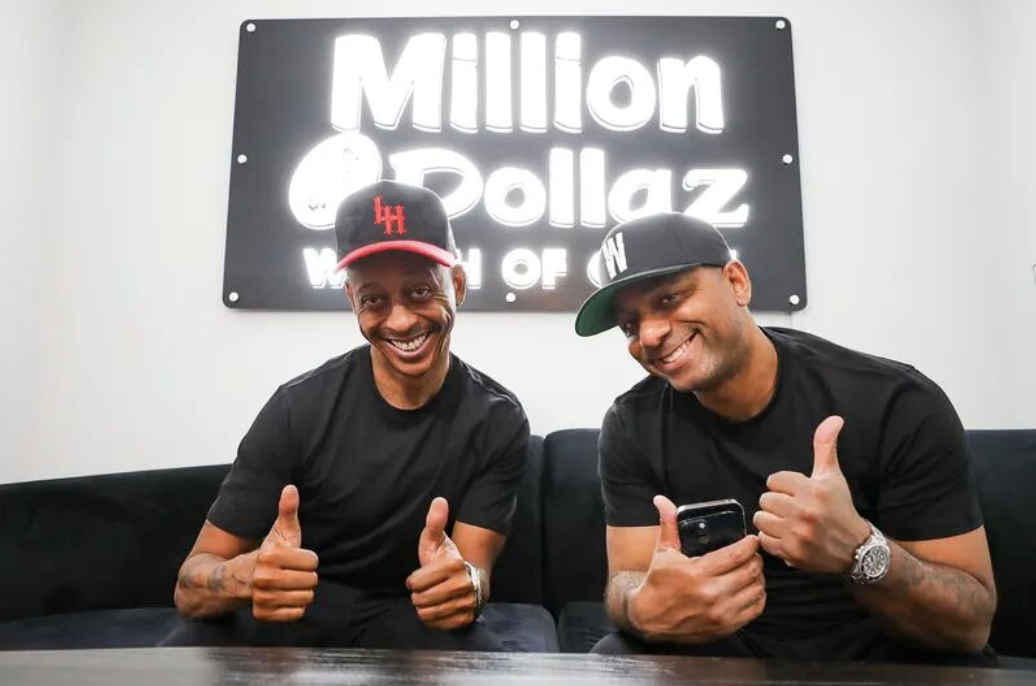
Now, he has millions of social media followers and a hit podcast, Million Dollaz Worth of Game, with his cousin Gillie Da King, where he has hosted cultural figures like 50 Cent, Alicia Keys, and Mike Tyson. And this week, his new memoir, Armed with Good Intentions, hits the shelves.

“When you come from the ghetto, sometimes you find yourself trying to steal the American dream, and it’s a lot you have to go through,” he said. “It’s just a journey trying to make it out of the jungle. Most of the homies and the people I grew up with didn’t make it out. They died as teenagers. For me to be 45 years old and still operating within culture and society, that’s major.”

We talked to the social activist and motivational speaker about his evolution from life in incarceration to being a social change-maker, the nostalgia of hot scrapple and grits in the morning, and the power of vulnerability. His memoir, Armed with Good Intentions (Simon & Schuster), releases Sept. 10.

This interview has been edited for length and clarity.


How does it feel to have your life story on bookshelves?

It feels good to open up to people who have supported me for so many years. I think it’s great to see that I’m just like everybody else. I go through ups and downs in life. I cry, I hurt, and I laugh. Some people would think once success happens that you’re not normal like everybody else. This book is about human connection. It’s bringing people into my world, with all the struggles, ups and downs, and just trying to win coming out of the ghetto.

Why did you write the book now?

I put out a motivational book that was self-published [in 2020], but I felt like there was more. As you start to level up, you have to time-stamp some things. When you’re dealing with big-time publishing houses like Simon & Schuster, it’s not always about when you want it. You have to always think like, “Man, I guess it’s meant to happen when it’s meant to happen.” Some things we just can’t control.

What was it like?

I have a lot of stuff going on in my mind based on my journey and my experiences because I’ve been in these streets since birth. And for me to be operating in a different world now, there’s just so much that people don’t know. It will take a lifetime to tell them though. Sometimes you can show somebody something, but you have to go through it in order to feel it. I try to share what I can, but sometimes it’s not that easy.

Was looking back difficult?

I look at my life differently than most people. From the time I was 11 years old, I was never free for more than a year before getting out of prison at 37. Being out this time is the longest of my life. I spent all that time incarcerated, getting out, and then getting arrested at 17 and spending all that amount of time. I’ve only been out seven years, so I’m living that life.

It was an emotional roller coaster. When you’re reminiscing about these moments, you have to live in them sometimes. Nobody remembers your life how you remember your life. You remember how you were feeling, and the emotions that came with the ups and downs. The wins and the falls. It’s really deep and just wild.

You were labeled a kid who lacked ‘self-confidence, accountability, and discipline’ during one of your stints at a juvenile facility. What inspired you to add it to the book?

So many people are going to look at this book who have been labeled by society, family, coworkers, or whoever. But it’s important to never count yourself out. The majority of the time, it doesn’t matter what someone says about you. But as much as it doesn’t matter, it can paralyze you for life. Somebody can sit there and judge you, and they don’t even operate in your circumstances. They don’t know anything about you.

You start the book by saying quotes like ‘The road to hell is paved with good intentions’ didn’t mean anything to you when you were young. What does it mean now?

I always had a good heart somewhere, but my environment had me on a different mission because I had to be a part of what was going on.

You grew up eating scrapple and grits. Is that still a go-to?

Nah, that was a long time ago when I was a kid. My grandma used to make it and it was unbelievable. But if you look up scrapple, it’s like a bunch of parts from an animal mixed up. Man, it’s like ear, tongue, and feet. When I was young, it was everything. It tasted good back then.

– The Philadelphia Inquirer