Sixers fan and ‘The Boogeyman’ actor David Dastmalchian has never had a Philly cheesesteak

Actor David Dastmalchian is no stranger to darkness.

He has explored the shallow and lonesome depths of mental health as a disturbed henchman in The Dark Knight and as an escaped, maze-obsessed captive in Denis Villeneuve’s Prisoners. But his latest turn as Lester in Disney’s new bone-chilling thriller The Boogeyman was one the Bethlehem, Pa.-born actor didn’t envision.

In fact, he almost turned down the offer when he was sent the script. ”It was good, but too scary for me. I wasn’t interested in making myself as vulnerable as I knew I needed to be to help this film.”

Read More

8 Exciting Sets From The 2023 Roots Picnic: Usher, Lil Uzi Vert, Lauryn Hill & More

For 15 years, The Roots have gathered the music’s brightest and fastest-rising talents to perform in Philadelphia for their annual Roots Picnic, and this year’s lineup was nothing short of star-studded. 

After kicking off the weekend with Dave Chappelle’s comedy show at the Wells Fargo Center on Friday, the action moved to the Mann Center in Fairmont Park where fans witnessed surprise crew reunions, unexpected cameos, and a taste of the Las Vegas strip across three performance stages. 

On Saturday, legendary rap group State Property reunited for the first time in years, Lil Uzi Vert rocked out with the Park Stage crowd for his third picnic appearance. Supported by the Soulquarians, legends the Isley Brothers and Roy Ayers lit up the Park stage. Lauryn Hill closed out day two by commemorating her GRAMMY-winning album, The Miseducation of Lauryn Hill, and bringing out Pras and Wyclef Jean for a Fugees reunion. 

Sunday featured high-powered performances from soulful songstress Ari Lennox, former Ruff Ryders first lady Eve, and the devastating femmes of South Florida, the City Girls. Philly’s own DJ Drama drew out home-grown talents like D-Surdy, Armani White, and Bronx legend Fat Joe on the Presser stage. 

To close out the weekend, Usher brought the magic of his Vegas residency to West Philly for a string of era-defining hits in the twilight of the festival. Read on for some of the most captivating moments and exciting sets from the 2023 Roots Picnic. 

GloRilla Shines In Roots Picnic Debut

Unapologetic rebel GloRilla may have just one EP under her belt, but her growing fandom came alive during her Roots Picnic performance.

The Presser Stage crowd swooned along with femme-empowering smashes like "Phatnall," as well as more provocative songs like "Nut Quick" and "Lick or Sum." Legions of newly single fans  screamed the lyrics to crunk hit "F.N.F. (Let’s Go)." 

Big Glo kept the momentum going at high speed, loosening the relatively stiff crowd. And while Cardi B wasn’t present for her part in "Tomorrow 2," GloRilla brought out an energized and visibly pregnant Chrisean Rock for a twerk-worthy cameo. 

GloRilla truly embraced her rowdy nature and southern charm, which has helped her earn garner recognition from her peers and even notch her first GRAMMY nod for Best Rap Performance. 

Usher Brings Sultry And Sin To The City, With A Few Special Guests

Before Usher had even closed out the festival, radio and podcast personality Charlamagne and comedian Jess Hilarious talked about wrapping up their own event early to snag a close seat to watch the R&B star in action.

Though decades into his musical career, Usher hasn't missed a step. Dressed in leather, the eight-time GRAMMY winner delivered his classic, slow-burning album cuts and glossy radio hits under the glimmering lights of the open air Park stage. 

Usher put on an electrifying performance that covered hits from various eras in his catalog. Songs like "Love in This Club," "U Don’t Have to Call," and "Lil Freak" had Sunday’s crowd staring in awe, even for those looking to get ahead of the departing traffic. He also brought The Roots on stage before Philly natives Jazmine Sullivan, Eve and Black Thought joined the singer to perform "U Got Me." 

Lauryn Hill (And Some Famous Friends) Took The Crowd Way Back 

Lauryn Hill’s reputation precedes her. Some fans joked about her tardiness — or even potential absence — but the legendary vocalist arrived about 30 minutes past her scheduled set time and put on a performance that was met with shockwaves of cheers.

Hill's headlining performance coincides with a big milestone: the 25th anniversary of her groundbreaking album The Miseducation of Lauryn Hill. "Even though it's been 25 years, everything is still everything," she told the enlivened crowd. 

She performed tracks from the masterful GRAMMY-winning album, including "Everything Is Everything" and "When It Hurts So Bad," but perhaps the biggest surprise throughout the weekend was the reunion between her, Pras and Wyclef Jean. The trio came together as the Fugees to perform hits "Ready Or Not" and "Killing Me Softly" for a spirited celebration of the group’s 1996 album The Score. 

"We’re out here doing 25 years of Miseducation. But there’s another 25 years we didn’t do a couple of years ago because of COVID," Hill said of the group’s project. The group closed out with "Fu-Gee-La," with Hill switching from her soothing alto to her "L-Boogie" persona of old, bringing the joyous crowd to its knees. 

City Girls Bring The Twerkers Out To Play

The City Girls brought headliner energy to Sunday’s picnic, with JT and Young Miami inciting a twerkathon with hot summer girl anthems like "Act Up" and "Do It On The Tip" playing out center stage. 

The Miami duo kept the energy high with on-stage twerk moves, pulsating hits like "Twerkulator," and efforts to draw out the crowd’s inner act-bad attitude by screaming: "If you’re a bad bitch, say, ‘Hell, yeah!’" And by the end of the group’s performance, fans were left with a racing heartbeat or sweating from the constant flow of high-powered hits and go-get-him-girl records. 

Lil Uzi Vert Knows What The City Wants

Now in their third appearance since 2016, Philly native Lil Uzi Vert took to the Park stage on Saturday, bringing enough bass and adoring screams that could be heard across Fairmont Park. 

 "I ain’t going to do too much talking. Let’s do it," they said to the roaring crowd. While Lil Uzi’s voice occasionally drowned in a song’s instrumental, their effortless magnetism and signature shoulder roll dance brought excitement to the growing crowd. 

The rumblings of hits like "444+222" and "Sauce It Up" rang in fans’ ears, and songs like "Money Longer," and the Diamond-selling smash "XO Tour Llif3" nearly turned portions of the crowd into mosh pits. Lil Uzi’s performance came to a welcomed halt when fans were invited to the stage to dance to the massively popular "Just Wanna Rock," which has become an unofficial anthem in their hometown. "I’m in the city, this they s—."  Fans pulled out their phones as the rap star capped off the set with the viral hit. 

Lucky Daye Drips In Allure

Only a year removed from his breakthrough album, Candydrip — a genre-drifting and soul-stirring project riddled with pop and R&B hits — Lucky Daye has risen to star status. And with songs like "Real Games" and "Late Night," it’s easy to be drawn to the New Orleans-born artist. 

While initially draped in glimmering red garments, it didn’t take the artist long to strip down (well, shirtless, that is), and render impassioned vocals over the cheers and screams of his admirers. He dove into songs across his various albums and fell to his knees to deliver a burningly passionate rendition of "F—kin’ Sound" before the 37-year-old vocalist exited the Mann’s amphitheater stage.

Ari Lennox Conjures Soul In Comforting Fashion

It’s unclear if Ari Lennox still has plans to step away from the touring circuit for good, but if her Sunday evening performance is any indication,  her presence would be sorely missed. The "Shea Butter Baby" vocalist conjured every fragment of her soulful and poetic artistry, bringing vibes despite having a slight cold.   

The DC-born R&B singer danced to the flowy breeze setting over the stretched-out crowd while singing favored tracks like "New Apartment," as well as "Waste My Time" and "Pressure" from last year’s Age/Sex/Location. Lennox encouraged fans to close their eyes and sway their hips, and many raised drinks as Lennox’s soothing voice and sultry lyrics wrapped around their bodies.

Busta Rhymes And Eve Come To Devastate

Joined by The Roots’ Black Thought, Busta Rhymes and Spliff Star tore down the Park stage, even with distracting audio woes hindering the early part of their set. Shot mic or not, Busta’s lion-like voice could be heard from yards away as he spewed the lyrics to "Put Your Hands Where My Eyes Could See" and A Tribe Called Quest’s "Scenario" to a cheering audience. 

Eve arrived during the latter part of the DJ J. Period curated set. The former First Lady of Ruff Ryder burst onto the stage and held her own alongside the fellow hip-hop heavyweights. As she swayed the crowd with songs like "Tambourine" and her verse on the late DMX’s "Ruff Ryders Anthem (Remix)," it harkened back to her days as a lyrical wild card in the early 2000s before she ventured into acting and hosting gigs. 

– GRAMMY.COM

New Balance Basketball Stars Tyrese Maxey, Zach LaVine, and Dejounte Murray Talk Street Ball Origins

From its inception to today’s game, generations of basketball stars have conjured their hoop dreams on neighborhood blacktops, rec center gym floors, and makeshift home courts. Others made their name in different sports before discovering their on-court talents during gritty pickup games and street ball tournaments.

Those moments on the hardwood or cement floors defined their future play styles. They learned how to flick their wrist on their jump shots; kiss the top of the backboard on reverse layups, dunk over contested hands, and meld their skills and passions together to create their legacy – the same tireless pursuit of perfection that  New Balance has applied to decades in the footwear game.

Since 1906, New Balance has focused on being makers rather than marketers. They’ve  prioritized craftsmanship and impact over hollow accolades and fleeting moments of recognition and engagement. With the quality of its products, materials and partnerships, the brand has established an independent voice in the conversation of sports and culture, while inspiring a growing community of patrons proudly donning the letter “N” on their kicks. 

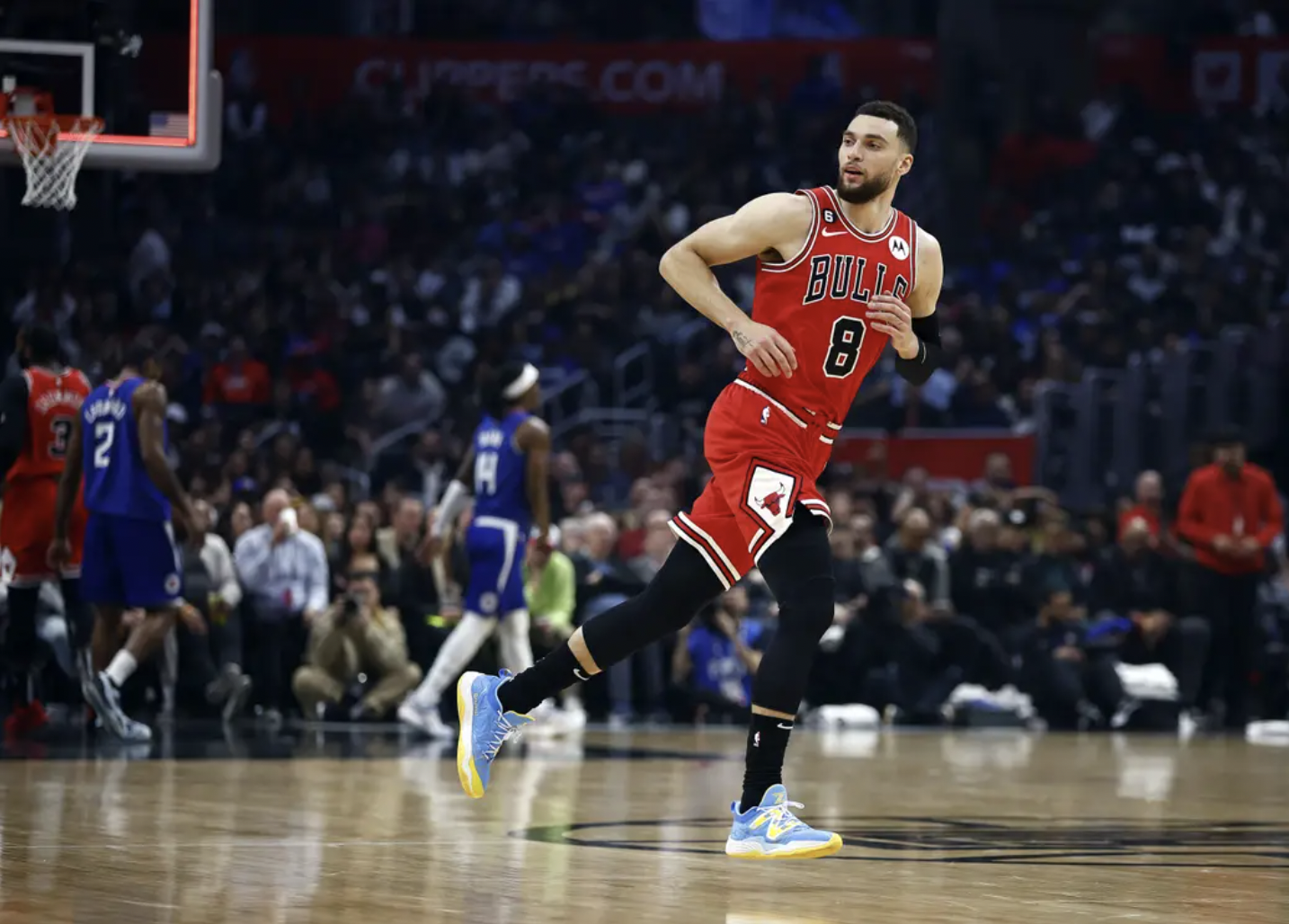
From the playground to arenas, big-name talents like Tyrese Maxey, Zach LaVine and Dejounte Murray have been drawn to the New Balance brand and its connection to street basketball culture. These hoopers talked to Complex about their early experiences on their hometown courts and how those memories inspired their game and style today. 

Tyrese Maxey

Getty Images

Before Tyrese Maxey became a first-round draft pick, the Dallas native was outplaying hoopers his own age. He was running the baselines as early as 4 years old, and there wasn’t a place in the world with a ball and a hoop he didn’t want to showcase his basketball talents. “My father was a head boys’ basketball coach, and I would go to practice with him and play. If I couldn’t go with him, I would go to the park in my neighborhood and play or force my uncle to play with me,” he says. 

Under his father and uncle’s wing, he began learning the nuances of the game, and the two men shaped Maxey’s fast-paced and creative playmaking style and instilled his confidence off the court. That growing conviction allowed him to embrace the resistance of elevated competition, and it opened his mind to the benefits of street and recreational ball. “Pickup games and structure-free basketball teach you how to improvise and give you a better feel for the game,” Maxey says. “Pickup games bring out a different level of competition; guys are going at you, and they have much to prove.” 

Now, the 22-year-old scorer wants to give aspiring hoopers in Philly the same experience he had in his youth. By pouring into the city’s parks and recreational centers, he feels it will increase community engagement, round out young players’ games and inspire others to capture the grit and relentless attitude he adopted on Dallas’ outdoor courts. “It’s extremely important; it’s the blueprint of basketball; it connects you with the people from all walks of life within the basketball community,” the University of Kentucky product says. “It builds a different layer of toughness. I’ve recently started to connect with some of the public park leagues here in Philadelphia; I’m looking forward to working with them and seeing what I can do to help push and keep the culture moving forward.”

Dejounte Murray

Basketball always came easy to Dejounte Murray. He dropped 35 points in his first rec league game, and did so well, he was convinced the rims were too low. Fortunately, he was wrong, and that day foreshadowed his future career as a professional athlete. 

Like Maxey, the Seattle native’s coronation into the sport was through his uncles, who made a hoop out of laundry baskets to play basketball indoors. Outside the house, Murray says they played on two hoops with missing backboards, and he followed his uncles wherever else they spotted a suitable court and competition. “I played everywhere my uncles played, which was our house, school, churches, and local outside courts,” Murray says. 

By competing in outdoor pickup games and rec leagues, the former University of Washington star found his love for organized ball and street hoops, and recognized the need for both forums. Murray said it toughens the skin of players. “Streetball is so important because it allows you to fall in love with the game of basketball, hooping freely and competing harder than ever, so I definitely believe it’s really important and it produces the best hoopers,” he says.

Between pro ball and streetball, Murray almost prefers the freedom he felt on the playgrounds and rec gyms he played on as a kid. The 26-year-old defensive stopper says he’s excited to see the best streetballers between Seattle and Atlanta, and his plans to return to the blacktop might be in the cards this off-season. “Streetball is the real deal. I prefer that hoop more than anything, and the league is the league; [it] turned my dreams into reality, and [me] proudly representing my family,” he continues. “In the off-season, I’m training and playing with my teammates at our practice facility and even outside too. But sooner rather than later, I want to take my 5 and go play against some of the local best in Seattle and Atlanta.”

Zach LaVine

For player Zach LaVine, his early streetball days didn’t begin on an actual street. In fact, not even above ground. Instead of a nearby park, rec center, church or playground, his professional athlete aspirations first bloomed in the basement of his childhood home. Before the high-flying scorer was in Pre-K, his dad set up a hoop and backboard inside the underground space. 

From an early age, the two-guard was destined for a career in sports. His mom was a softball player in college and his dad played football professionally as a linebacker. But after trying his hand at different sports, basketball quickly rose up the leaderboard, and he traveled wherever his newfound passion took him. “I played everywhere, from local parks and rec centers to high school tournaments,” the two-time All Star says. “On weekends my mom, dad, and sister would drive around looking for different parks that had different nets and rim heights.”

As he traveled around and beyond the suburb of Renton, Washington, LaVine said the experiences sharpened his game and focus, and prepared him for the physicality he would later face in his college and pro career. “Whenever you’re a young athlete, it’s good to learn how to compete in a team sport; It teaches leadership, toughness, and sportsmanship,”“ he says.

LaVine said the playground and local rec centers are where the game feels the purist, so it’s no surprise most players cite their hometown courts as the place they found their passion for basketball. Some of his fondest memories were playing alongside his dad in pick up games, who would elevate over YMCA hoopers long before LaVine was posterizing power forwards and centers. Looking back, the former UCLA standout says those experiences are valuable for any young basketball player. There are people of all different sizes and various skills when playing pickup games. Not only did that enhance the versatility of my game, but it taught me always to stay ready,”LaVine says. 

– COMPLEX for New Balance

The mother whose loss inspired Taylor Swift’s ‘Ronan’ sought care at CHOP. Now she’s Taylor’s guest at Friday’s Philly show.

Taylor Swift gifted tickets to Friday’s show at Lincoln Financial Field to a mother and friend whose inspired one of the most heartfelt songs in Swift’s catalog.

In “Ronan,” Swift channels the emotions of a grieving mother who just lost her young son.

I can still feel you hold my hand, little man/And even the moment I knew/You fought it hard like an army guy/Remember I leaned in and whispered to you?/Com on, baby, with me/We’re gonna fly away from here/You were my best four years.

The song captures the real-life experience of Maya Thompson, an Arizona mother who lost her son Ronan on May 9, 2011, three days before his 4th birthday. He died after being diagnosed with Stage IV neuroblastoma in 2010, a deadly form of childhood cancer.

Read More

From South Philly to Broadway to addiction and back again

As early as 6 years old, dance was everything to James T. Lane. He used to break-dance on the sidewalks of his South Philadelphia neighborhood streets, and was so enthralled in his first dance class at Meredith Elementary School, he forgot to take a bathroom break — and ended up needing an extra pair of pants as a result.

“Dance was my first language,” said Lane, who went on to study jazz and ballet. “I could express myself as a little Black gay boy, and I had a talent that kept the bullies away. I knew I could express myself and I can have feelings, be emotional and ride the rhythm of the music. That was very attractive to me, and it was a bright light in a very dark world.”

Those days led Lane to pursue a career in acting, and after seeing Robert Guillaume become the first Black actor to play the title role in The Phantom of the Opera, he knew his dreams of reaching the Broadway stage were possible.

In the nearly 20 years since making his Broadway debut, Lane, 45, has starred in productions such as The Scottsboro Boys, Roundabout’s revival of Kiss Me Kate, King Kong The Musical, and he wrapped up his turn as Billy Flynn in Chicago earlier this month.

Now, instead of being a vessel for others’ stories, Lane said he’s ready to share a deeply personal story of his own and show audiences the failures, tragedies, and triumphs that shaped his identity and, ultimately, saved his life.

In his one-man-show Triple Threat, Lane will chronicle his life growing up in the notorious Southwark housing projects in South Philly, and detail how his love for the stage led to his Broadway stardom, and helped him overcome the darkness and isolation of drug and alcohol addiction.

Lane will play a total of 20 characters in a solo production that draws back to his formative years at Meredith Elementary School and Philadelphia’s Girard Academic Music Program (GAMP).

The actor will embody the spirit of his mother, police officers, teachers, fellow drug addicts, and other loved ones he encountered during that period of his life.

Before starring in three Tony Award-nominated musicals, Lane was a fresh-faced 19-year-old actor who declined full theater scholarships at Carnegie Mellon and Pennsylvania State University to pursue an early career start in the Big Apple.

Upon moving to New York, Lane landed a starring role as Tyrone Jackson in Fame. But after tearing his Achilles tendon, he turned to drugs and alcohol, which led to a four-year battle with substance abuse.

“It was a far fall from grace,” he said, “from a 19-year-old traveling the world and being in Switzerland to not being able to get out of their four-block radius in South Philly because I had a drug and alcohol problem. My world got very, very small.”

Lane moved back to his mother’s home in South Philadelphia with hopes of regaining his footing. At the time, Lane said he was a “garbage head,” dabbling in any drug he could get hands on, including ecstasy and crack cocaine.

The support from his mother, Starletta Smith, ultimately led to his recovery.

“I begged him to change,” Smith said. “I didn’t know the man he had become. When he tore his Achilles, he was sad because it stopped him from performing, and that was him. [Lane] lived for the stage, and when he couldn’t do it, one drug led to the other and it just got out of control.”

After entering a local outpatient center in 2004, Lane vowed to refrain from drugs and to work his way back up the theater ranks. But first, he needed to tighten his frame, regain his confidence, and embrace his past missteps.

“I could always dance and act, but back then, I just couldn’t do it anymore,” Lane said. “I just couldn’t muster up the conviction. I didn’t have any connections, and the talent wasn’t showing up anymore. I couldn’t keep rhythm or keep timing, so I decided to get my act together and started talking about being Black, gay and being an addict. I started to really give voice to that shame, and interestingly enough, I was able to breathe a little easier and walk a little lighter.”

Along with his mother’s guidance, Lane leaned on his faith to blaze a path toward personal and artistic salvation.

Before moving back to New York, Lane took a job at the Walnut Street Theatre and began stringing together local performances. After resharpening his skills in a production of Aida, his name began to circulate again in the theater world. In 2006, he landed his first Broadway role as Richie Walters in the Tony-nominated musical A Chorus Line.

In the years since the production’s run, Lane has become a notable name in New York City theater, and has even transitioned to the silver screen as a recurring character in NBC’s The Amber Ruffin Show.

With Lane’s one-man show just months from its New York debut, Dorina Morrow, his former music teacher at Meredith Elementary, said his story will encourage audiences to conquer any obstacles in their guard.

“He can talk the talk, but he can walk the walk,” she said. “I don’t see him ever stopping, and I think the overcoming of his troubles will be such an inspiration.”

Lane’s “Triple Threat” will make its off-Broadway debut at Theatre Row, 410 W. 42nd St., in New York. There will be a preview for Pride Month on June 17, followed by its official opening on June 23. For more information on the show, visit bfany.org.

– The Philadelphia Inquirer

Who is ‘irregular’? Meet the artist behind the tag showing up all over the city.

On the face of eroded barricades, rotting alleyway dumpsters, dark under-passes and window-sized wood panels, the word “irregular” has become an increasingly regular sight for Philadelphians — and a mark of artist Sean Hassett’s growing presence.

Hassett, who goes by the moniker “Irregular” or “Irregular Sean,” has spray painted and penned his graffiti tag across the outskirts of West Philly to Chinatown, Spring Gardens, Brewerytown to the beating heart of Center City. Yet, his identity and motive are largely cloaked in mystery.

“I have no backing and there’s no system that I’m part of that’s helping generate what I’m putting out,” Irregular said to The Inquirer.

“I’m trying to show people that you don’t have to take the normal route, you can do it on your own.”

While he was drawn to the word “irregular” as a kid growing up in Darby, he didn’t put his talents to the canvas until he was released from George W. Hill Correctional Facility after a one-year stint in 2013.

While incarcerated, Irregular befriended an inmate who used to draw images on the letters he wrote to his loved ones in exchange for soup cans. Before the man was released, he gave Irregular all of the stencils and art tools he used to craft his work. That moment, he said, opened the door for his own artistic pursuits.

“Coming home with that record and no college degree, (it) pushed me to devote myself to my craft,” Irregular said.

Over the years, Irregular started creating acrylic paintings and mosaic-style works made from fragmented mirror pieces.

In 2020, the now-33-year-old artist began spraying his graffiti tag across Philly. He was partly inspired by the protests following George Floyd’s murder and the work of Germantown artist Nomad and Ghuls creator Lami Tolla. and he says his style and approach is influenced by Banksy and Basquiat.

Though he documents his art on Instagram, Irregular does not post pictures of himself on social media. (He did not agree to be photographed by The Inquirer.) He says he usually only leaves home for daily necessities and to sell and make his street art.

“I’m very withdrawn, and I’ve been very solo in what I’ve done over the years,” he said. “I’ve stuck to myself, and I don’t get into politics or institutions of the art scene... I try to contain my energy as much as I can. I think what I’m doing has some power to it, and I’m not trying to withhold it.”

When he peeks his head outside his home studio, he’s usually decked in paint-spotted garments, riding his bike with a spray paint can and white-out pen stashed inside a mid-sized pouch in pursuit of a new location for his work. In a matter of minutes, he coats the nine letters of “irregular,” and ducks off slyly without drawing attention.

“I just move with common traffic,” he said. “I like to say I move with the wind.”

He still sells his work in Rittenhouse Square, but tries to stay in the background and doesn’t approach onlookers until he sees a “magic moment” happen.

“I always wanted to create things that sell themselves on the street,” he said. “I don’t say, ‘Hey, look at this,’ or have a sign telling people to buy my work. I just stand a couple feet away, lean up against a pole and observe.”

Along with graffiti and mirrored artwork, Irregular sells mystery boxes, deep profile canvas and wooden-framed paintings on his website, with pieces ranging between $100 to $2,000.

It’s impossible to know how many tags he’s placed in the city. He stopped counting years ago but still feels a rush of leaving his mark. It’s like psychotherapy, he said, motivating him to satiate his appetite for more artistry and self-expression.

He views his work as a source of reflection, with the mirror pieces and word “irregular” serving as a symbol of self-identity and a magnet that draws a connection between him and the viewer. But rather than being packaged as a “street artist,” he prefers no title at all. “You can’t put a spotlight on a star. I’m just doing the work. Irregular is a statement, (and) the work emits a light of its own.”

Some Philadelphians view his tags as playful breadcrumbs. Some see it at as a link to a thought-provoking series, and others — especially on social media — see it as vandalism. “Artfully committing vandalism is still vandalism,” a Twitter user said.

I take objection to the term “artist”. He’s a criminal. Artfully committing vandalism is still vandalism.

— JohnsCow (@johns_cow) April 10, 2023

I dunno. Ask the “artist” to tag your front door.

— TappahannockName (@Allfortime0503) April 10, 2023

Resident Peter Gambino, however, welcomes this art.

“Philly has such a big and diverse art scene, so we might as well have a few mystery people working in that space,” said Gambino who first spotted Irregular’s tags six months ago. “[His work is] like little easter eggs placed along the infrastructure of our city.”

Other onlookers aren’t too fond of Irregular’s work . “I hate their tags,” says Philly resident Alex Fredericks. “(They’re) too long and aggressively style-less.”

Despite the mixed responses from passers-by, Irregular has become a sought-after talent in Philly’s art scene. He created two projects with Mural Arts Philadelphia. The first was a temporary mural for last year’s Wawa Welcome America; his work Mural Magic is irregular was featured at the 2023 Flower Show.

He was also tapped by Hyatt Centric Center City to be a part of the hotel’s monthly Maker Series back in January. Elizabeth Fricke, director of sales and marketing at HCCC, said Irregular’s approach to street art made him a natural fit for the series that spotlights the work of local artists.

Photo blogger Conrad Benner, who worked with Irregular on the Mural Arts projects, called Hassett an innovator. “He’s at this point in his career where all the doors are open to him, and he’s jumping through them,” he said. “That’s to say, he’s driven and taking advantage of this lane he’s made for himself.”

An “irregular” tag along 11th St. by Spring Garden in Philadelphia.Heather Khalifa / Staff Photographer

As more opportunities come along, Irregular said he will continue to etch his path as an independent artist, and break down barriers that may be in his or other artists’ way.

There’s no set direction in mind, he said. For now, he plans to sell more of his artwork and hopes to expand his brand globally.

“I’m not a starving artist, I’m a hungry artist, and myself and others know there’s much more potential past these walls,” he said. “I’m continually pushing myself, trusting my evolution and allowing everything to come my way. I want to stay on my trajectory and see Irregular grow 10 times bigger.”

– The Philadelphia Inquirer

6lack Feels Good To Be Back In Motion

In the five years since his last album, 6lack has been on a voyage of rediscovery. While hits like “Ex Calling” and “Prblms” established his penchant for moody and atmospheric tales of heartbreak and loss over mid-tempo jams, the East Atlanta artist has taken on a new creative direction.

Veering from his grayscale vocals and mellow-tone raps, his new album, Since I Have a Lover, unlocks a chamber of new inspiration both musically and on his own personal journey.

“Time has been a little bit of a loop,” 6lack tells MTV News over Zoom. “It was a lot to learn. It was a lot to handle in my personal life. It was a lot to mature and grow from. And I think that the weight of having people waiting on you is something that you can't really ignore. It's not like it doesn't exist, so it feels great to have that weight off and to just be back in motion.”

On Since I Have a Lover, the airy vocals of the artist, born Ricardo Valdez Valentine Jr., float over breezy, pop and acoustic-driven instrumentation on “Chasing Feeling” and “Wunna Dem,” and 6lack flirts with dance (“Temporary”) and wallows with Caribbean, beach-front tunes on “Decatur,” allowing his artistry to roam free.

“I think it's been super important to grow in between each project, and not even just musically, but personally,” he said, referencing the “moody” tenor of his 2016 debut, Free 6lack. “It felt like somebody trying to figure their way out of the situation, and East Atlanta Love Letter started to peek at where we could go with it within the realms of R&B. I think this album production-wise allowed me to express every feeling that I feel. Some days I might feel more pop or [alternative], and some days I might feel more traditional R&B or rap. It varies and it kind of plays to how relationships vary — everything isn't just one feeling or one color.”

The 19-track offering is an exercise of 6lack’s versatility. He melds inklings of his Atlanta trap roots with guitar-strumming and flowy tracks, all revolving around themes of self-healing (“Spirited Away”), positivity, and the mystifying powers of love on “Preach” and “SIHAL.”

For 6lack, this new direction was a “gradual blossom.” While there were cookie crumbs on 2020’s 6pc Hot EP that pointed to this more immersive effort, the Baltimore-born artist said the new album’s title, partly inspired by his relationship with R&B singer Quin, helped spark a new flame. It also drove him to create an open letter to his fans, which he hopes answer the questions that have loomed in his musical absence.

“I feel like the title more than anything it’s a response,” 6lack said. “It kind of serves to answer every question. Like, ‘Where have you been? What have you been doing? What's the theme? What's been inspiring you the most? Why haven't you been outside?’ Any question that you could possibly ask me, I think ties back to the title Since I Have a Lover. Having to be accountable for yourself is one thing, but having somebody next to you who can really look at you and see you for what you do right and what you don't do right and tell you just a hundred percent straight up, that helped me really hone in on where I wanted to be in my personal life and where I wanted to be creatively. It was like, ‘OK, I got to get my shit together. And once my shit is together in my personal life, then I know that will help inspire what I make music-wise.’”

But the shift was no easy feat. To embrace his new sound, he had to let go of the sorrow, regret, and heartache he internalized for Free 6lack and his romantic skepticism and stories of failed love quests that bled into his second effort. Once those thoughts were steered, once he focused on the treasures of his newfound relationship, and once he waived his past transgressions and mental blocks, 6lack sank into a new music-making paradigm, and the album poured out and turned into sonic gold. On “Spirited Away,” he says: “You know I got my vices, on the real / No, I ain't always nice, but I’m always real / It’s gonna take me some time to break off my pride / But I’m learning to show up, learning to slow up.”

“The process was only hard when I was resistant to change and to acknowledge that my life is different now,” he said, referencing how he’s stopped letting others’ perception define his personal and artistic growth. “I’m not sulking, I’m not depressed, and I’m not going through what I went through in 2016. If you even try to start a song that way, you might as well stop because that's just not it. And if you continue, that's what we call perpetrating, and I'm not here to portray anything for a specific award or category. I just want to make what's true to me.”

6lack’s sonic transformation was one he felt both he and his fans needed. In a world where negativity draws headlines and tilts the algorithm on its scale, the 30-year-old artist said it’s his responsibility to share notes of positivity. And on Since I Have a Lover, he never falls short of his mission.

On “Preach,” he raps: “Who am I to capitalize without giving back? / We all human but I can’t go a day not feeling Black / I made my money, but to my audience, I’m still attached / It’s like I know the whole world just wants that feeling back.”

“I think that the toxic theme has been populated and I think that it is honestly a lot easier to pull from depression, from heartbreak and breakups. And to me, that's easy,” he said. “It's harder to talk about good things. It's harder to make that translate or resonate with people. It is harder to make that sound cool. The world is only getting crazier, so if I can be at least a portion of the good that's coming out, then that's my job.”

His exploration doesn’t end with SIHAL. Along with feeding his current inspirations, the “Float” artist plans to collaborate with Quin, the very lover that inspired the new album title, and possibly lock in with Spillage Village group-mate JID for an upcoming collab project.

“I'm just going with the process, but I hope it continues to be something different,” he said. “I don't ever want to make the same album twice. I don't want to be in the same bag twice. I'm not telling the same story twice. There will never be a Free 6lack 2 unless I end up in a situation that puts me there, and let’s hope I don’t have to because that’s not what we’re looking forward to at all.”

– MTV News

Breaking barriers and opening doors: Philly artists are finding new spaces to showcase their creations

Few spaces are as essential to Philly arts as the city’s history-rich museums and art galleries. The institutions house some of the most prized artifacts and antiquities in the country, and serve as a domain for unknown artists to become international fixtures.

But for Lauren Fiasconaro and other Philly-based creatives, the barrier to entry is often too steep, forcing many artists to turn to local cafés, restaurants, bars, and other alternative spaces to showcase their artwork.

“This is definitely something that’s been cropping up more and more,” said Fiasconaro, 30, who’s currently displaying her cyanotype photography at Northern Liberties’ Mammoth Coffee. “More than half of my ideas came from seeing artwork in places that I wasn’t expecting, and there’s some amazing work in places and venues you wouldn’t expect.”

Philly sculptor Jonathan Santoro, 39, said local artists have taken matters into their own hands.

“Groups of artists are growing tired of white cube galleries and rejecting the status quo while being intentionally anti-commercial,” he said. “More artists are taking the reins and displaying their artwork how they want.”

Rather than wait for spots to open at established art institutions, artist Sue Moerder began hosting small showcases in hair salons, restaurants, bars, and even pet shops under the group philacitywithart. She started the 500-member Facebook page to forge more opportunities for local artists to display and sell their work without having to jump through hoops to get into galleries and museums.

Moerder, who makes sculptures from animal skulls, said the city is flooded with local talent, but the exclusivity of certain spaces has led many artists to seek other ways to sell their work and make ends meet.

“Galleries are great, but they’re very hard to get into,” Moerder, 62, said. “I think one of the harsh realities of being an artist in Philadelphia is that many people can’t survive solely doing their art. Most have to work to support it, which is a shame because there are too many talented artists. And when you’re exhausted and you’re mentally drained, it’s hard to create. It’s frustrating.”

Recognizing the shortage of accessible art spaces, Gleaner’s Cafe owner Stephen Hencheck fills the shop’s walls with the work of local artists as a way to spotlight the city’s talent and build the confidence of newer creatives hesitant to display their designs.

With the cafe’s name partially inspired by Jean-François Millet’s painting The Gleaners, Hencheck said the decision to add these works was an important one. Not only has the move drawn more eyes to local artwork, it’s helped struggling artists fully profit from their creations, rather than fight for higher commission splits in more traditional spaces.

Hencheck allows creatives to fully profit from their work, while more notable galleries have commission splits that teeter between 30% and 50%, he said.

“We just try to keep a starving artist from starving so we can look at their work,” Hencheck, 44, said.

“If your business is your community, you should make it your business to support that community. That doesn’t apply to everyone, and it doesn’t have to. If creativity and culture are what you believe your base is and what makes the neighborhood your business is in, why wouldn’t you try to support that?”

Through partnerships with nearby galleries, the Fitler Club is combining the influence and resources of established spaces to fuel its own alternative venue.

The urban social club has Philly-made pieces throughout its center, a move Visual Arts Director Tricia Maloney said has connected the club’s members to the city’s creative forces, and given more local artists a platform to spread their wings.

“Our hope is that there may be a lower barrier to entry to engage with the art in a place like the Fitler Club,” Maloney, 41, said. “It’s not a gallery — we tried to take that intimidation factor out of the equation, even to the extent that I coordinate the program and I don’t have an arts background. It’s really about relationship building.”

Fitler Club cofounder Michael Forman said the addition of alternative art spaces doesn’t diminish the importance of established art institutions in Philly. It’s an added way to support local creatives and place a brighter spotlight on the work they produce.

Along with the Gleaner’s Cafe and Fitler Club, Fiasconaro said venues and organizations like Persimmon Coffee, Underground Concepts, and Feminist Flea are opening doors for artists in the LGBTQ and Asian American and Pacific Islander communities, as well as others that have been marginalized by their race, ethnicity, sexuality, and identity.

Having these spaces, Fiasconaro said, is key to a more inclusive and well-rounded arts scene.

“Historically, gallery spaces are and can be very inaccessible for a lot of people,” she said. “I have definitely encountered that as well. But I’m seeing more inclusivity in this trend of alternative spaces, which is amazing. It’s been a long time coming.”

Fiasconaro is hopeful more opportunities for artists of all creeds will open up in museums and galleries. And as Philly creatives continue to carve out nontraditional platforms, the artists and businesses receive the support they deserve.

– The Philadelphia Inquirer