One Phillies superfan’s standing ovation inspires another superfan’s film

Kyle Thrash was destined to be a Phillies fan.

Just hours before he was born, his mother asked nurses to turn on the Phillies vs. Cincinnati Reds game on the delivery room TV. “I don’t think you can become a fan any sooner than me getting born into a game going on,” Thrash, 35, said.

The Lehigh Valley native grew up making the hour-long commute to Phillies home games with his grandfather and learning to weather the heartbreak that comes with being a Phillies fan.

During the 2023 baseball season, the Phillies and newly-signed shortstop Trea Turner desperately needed a midseason spark. The ball club’s 25-32 start and Turner’s lackluster play routinely drew frustration and boos from Citizens Bank Park crowds. Thrash, like other fans, was looking to Turner to live up to the expectations of his $300 million signing. Months of disappointment finally transformed to a surge of fanly reinvigoration after Thrash saw a fan’s video circulating on X.

The video was from Aug. 4, 2023, when, instead of booing Turner, nearly 42,000 fans at Citizens Bank Park gave him a standing ovation during a game against the Kansas City Royals.

The action was a result of efforts by several Phillies fans, including Jack Fritz, a producer at 94.1 WIP, whom Turner later called in to thank. It was also egged on by Phillies superfan Jon McCann, who goes by the Philly Captain on his YouTube channel.

“The fans tried tough love, but I think everyone was thinking something else had to be done,” said Thrash, who also codirected the Palm Springs Film Festival Award-winning documentary, The Sentence Of Michael Thompson. “And [McCann] came up with the idea that had the spark that took off, went viral, and obviously the fans responded.”

The video, which racked up millions of views on social media, reached Thrash on X and made its way into the Phillies locker room. Turner batted .338 over the final 48 games, with the fourth-highest on-base plus slugging in the league during that span. The Phillies finished with 90 wins and reached the National League Championship Series against the Arizona Diamondbacks.

The transformation inspired Thrash to collaborate with two-time Oscar winner Ben Proudfoot on the short documentary, The Turnaround. The film, set to premiere on Netflix today, tells the story of McCann, a devoted Phillies fan who inspired his team and city.

“It’s a human story. [McCann] is from Kensington, and he’s had his struggles. And I think the spark he started was worth telling,” Thrash said. “And I know [the Phillies] didn’t get the ending to the season we wanted, but I’m still proud of what the city did and excited for people to hear [McCann’s] story.”

Thrash and Proudfoot followed McCann as he talked about his hardened upbringing, bipolar disorder, and past suicidal thoughts. The Phillies superfan recognized the power of having support in times of darkness, and wanted to administer a dose of “Philly love” to cure Turner’s uncharacteristic slump.

The film starts with McCann describing the historic crack in the Liberty Bell and reciting a prayer to the 271-year-old Philly landmark: “Dear Liberty Bell, please let the Phillies win the World Series. Amen.”

His hopes, like the historic bell, have been weathered by his experience. But by the end of the 25-minute short, McCann is inspired by a renewed sense of self.

“This is so much more than a sports story,” said Proudfoot, who has previously directed the Oscar-winning short documentaries, The Queen of Basketball and The Last Repair Shop. “This is about someone who’s dealt with mental health and took a moment to give grace to someone who was dealing with their own issues. That’s what this story is about.”

Proudfoot, a Halifax, Nova Scotia, native, who’s been wearing Phillies jerseys throughout film festival season, admits his baseball knowledge is fairly pedestrian. But he and Thrash felt McCann’s story was tailor-made for the screen.

“We could’ve interviewed thousands of other die-hard fans,” Proudfoot said, “but [McCann] did the golden rule — treat others as you want to be treated.”

The documentary closes with McCann being invited to the Phillies’ 2024 season opener. And as the camera zooms out for a wide shot of the team’s South Philly ballpark, he says, in his thick Philly accent, “Come on boys, it’s unfinished business. This is our year. Come on, Trea Turner. This is our season. You’re going to win it for us.”

While the “Fighting Phils” didn’t make it to the World Series, they clinched the National League East title for the first time in 13 years. For Thrash, the story is characteristically Philly — “even when we lose, the city wins.”

“People forget Rocky didn’t win the heavyweight title in the first film,” Thrash said. “You don’t have to win for Philadelphia to rally behind you. You just have to put up a fight, and that’s what this film is about.”

Starting Oct. 18, “The Turnaround” streams on Netflix. The film is also screening at the Philadelphia Film Festival at 7 p.m. on Saturday at the PFS - Bourse Theater 3. filmadelphia.org.

– The Philadelphia Inquirer

A new Christopher Reeve documentary uncovers the actor’s real superpower

Princeton, N.J.-raised actor Christopher Reeve was best known for playing Superman. But his superpower was his fight for advancements in spinal cord injury research and better quality of life for those with paralysis.

It was a cause deeply personal to Reeve, who was paralyzed from the neck down after a near-fatal horse-riding accident in 1995. At 42, he was restricted to a wheelchair and forced to breathe through a ventilator.

At the Kessler Institute for Rehabilitation in Marlton, N.J., Reeve learned to embrace the challenges his new life presented and established a foundation with his wife Dana to improve the lives of others facing the same obstacles.

He remained resolute in his mission until his death in 2004, due to heart failure.

A new documentary by filmmakers Ian Bonhôte and Peter Ettedgui, Super/Man: The Christopher Reeve Story, explores Reeve’s life as a father, husband, film star, and world changer.

Ahead of Friday’s release, The Inquirer spoke to two of Reeve’s children, Alexandra Reeve Givens and Matthew Reeve, about their father’s upbringing in South Jersey, his love of extreme sports, and the intimate moments they shared during his recovery.

This interview has been lightly edited for clarity and length.

he film didn’t really explore your dad’s upbringing much. Did you visit Princeton, N.J., as kids?

Alexandra Reeve Givens: Yes. Our grandmother lived in Princeton until a few years ago, so we grew up visiting there. Dad always felt connected there, and Dana was part of the New Jersey Shakespeare Festival for a long time. We both performed in it, and I think Dana was involved on the board. So that always felt like a deep part of our community and our history.

How was it seeing this film for the first time with all your home videos?

ARG: It was amazing to suddenly see your family’s story told in this beautiful, artistic way. Looking back on our dad and [Dana Reeve’s] life in totality was really powerful. The other thing that’s been amazing is seeing how people are connecting to the film. People are having fun revisiting the Superman adventure, and they’re connecting with it because they’ve suffered loss in their own lives. They’re seeing themselves in this story, and that’s really a beautiful thing.

Matthew Reeve: It triggered memories we might have forgotten, like a certain Halloween, Christmas, or family trip. We were lucky that we had video cameras at home, and even luckier they were used. Dana was certainly the family documentarian when we were younger, and I did a lot of filming later on.

ARG: I loved seeing the footage of him auditioning for Superman when he was still super skinny, with big sweat stains under his arms and shoe polish on his head to make him look the part. And an actress, who’s not Margot Kidder, playing opposite him as [Lois Lane].

How was it looking back at his days at the Kessler Institute for Rehabilitation?

ARG: Kessler is one of the premier rehabilitation centers in the country. We still work with them through the Christopher & Dana Reeve Foundation. We chose it because it was close to home and we had all these family ties to New Jersey.

There’s no sugarcoating it. It was an incredibly difficult time in our lives coming to grips with his new reality. It was difficult learning about the limitations and strategies needed to overcome those limitations. But what was powerful about it was that he was surrounded by people who were doing the same thing.

He started hearing from people who were going through similar circumstances, who rebuilt their lives, were back working, and were being strong for their families. And that was incredibly inspiring for him. He realized his circumstances had changed, but he was indeed the same person, and our family still needed him. It was physical rehabilitation, but it was really mental rehabilitation.

It was nice seeing that footage because dad and Dana were conscious about us feeling comfortable with his accident and feeling physically close to him even though his body worked differently. ... Our dad and the people at Kessler really encouraged that a lot, even in a hospital setting.

The Reeve family has been approached for films before. Why did you agree this time?

MR: It usually didn’t feel like the right people were approaching us. Most of them wanted to explore a narrative version of this story, which could have become a cheesy, tearjerky drama. We weren’t interested in doing that.

We’re excited to get his story to a whole generation of people who may not know who he was, or reintroduce him to people who remember him. And hopefully, they will come away with a deeper understanding of who our dad was and all the things that he could do.

What overarching message are you hoping the film conveys?

MR: I don’t know if I can pinpoint a singular thing. We wanted to show a complete 360 view of who Christopher Reeve was. And for me, I think that included some of the things that he could do before the accident, like flying a plane, playing the piano, scuba diving, and all these other things. And his determination, resilience, and spirit to do more for a wider community.

I think his larger message was that you don’t have to be Superman. The definition of a hero is an ordinary individual who perseveres despite overwhelming obstacles. And I hope people understand that revelation and the meaning of it, which is that everyone can do this.

Super/Man: The Christopher Reeve Story opens in theaters on Friday. The film will be available on Apple TV at a later date.

– The Philadelphia Inquirer

Wallo267 doesn’t want you to count yourself out

Two decades of incarceration and a lifetime of hardship made Wallace Peeples realize his greatest defense was a loaded mind, not a loaded gun.

Peeples, better known as Wallo267 on social media, is a motivational speaker, podcaster, and influencer. Growing up in Nicetown, he bounced in and out of juvenile centers, before being arrested and convicted for a string of armed robberies and served a total of 20 years in the Pennsylvania prison system. But instead of faltering under the strain of imprisonment, Wallo reprogrammed his mind and vowed to change course. If he didn’t, he knew there would be no breaking away from the continuous cycle of incarceration.

While incarcerated, Wallo learned the inner workings of social media from friends and family who made the two-hour commute to visit him in state correctional institutions across the state. He built a following by posting motivational pictures on a contraband phone.

On Feb. 18, 2017, Wallo walked out of the State Correctional Institution of Coal Township with a renewed sense of purpose and over 50,000 Instagram followers.

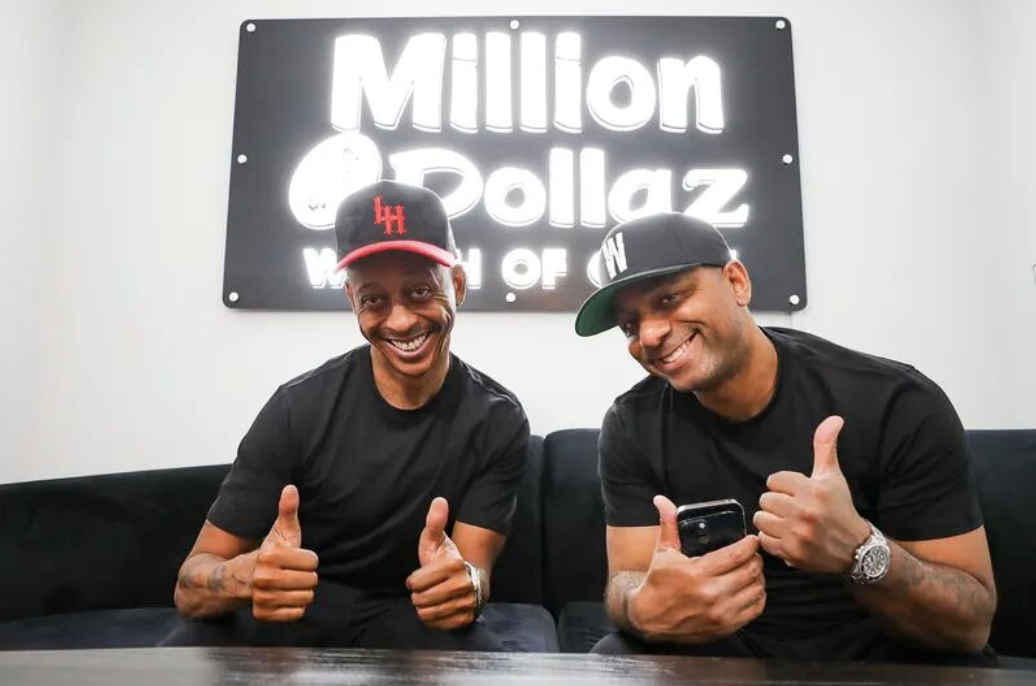
Now, he has millions of social media followers and a hit podcast, Million Dollaz Worth of Game, with his cousin Gillie Da King, where he has hosted cultural figures like 50 Cent, Alicia Keys, and Mike Tyson. And this week, his new memoir, Armed with Good Intentions, hits the shelves.

“When you come from the ghetto, sometimes you find yourself trying to steal the American dream, and it’s a lot you have to go through,” he said. “It’s just a journey trying to make it out of the jungle. Most of the homies and the people I grew up with didn’t make it out. They died as teenagers. For me to be 45 years old and still operating within culture and society, that’s major.”

We talked to the social activist and motivational speaker about his evolution from life in incarceration to being a social change-maker, the nostalgia of hot scrapple and grits in the morning, and the power of vulnerability. His memoir, Armed with Good Intentions (Simon & Schuster), releases Sept. 10.

This interview has been edited for length and clarity.


How does it feel to have your life story on bookshelves?

It feels good to open up to people who have supported me for so many years. I think it’s great to see that I’m just like everybody else. I go through ups and downs in life. I cry, I hurt, and I laugh. Some people would think once success happens that you’re not normal like everybody else. This book is about human connection. It’s bringing people into my world, with all the struggles, ups and downs, and just trying to win coming out of the ghetto.

Why did you write the book now?

I put out a motivational book that was self-published [in 2020], but I felt like there was more. As you start to level up, you have to time-stamp some things. When you’re dealing with big-time publishing houses like Simon & Schuster, it’s not always about when you want it. You have to always think like, “Man, I guess it’s meant to happen when it’s meant to happen.” Some things we just can’t control.

What was it like?

I have a lot of stuff going on in my mind based on my journey and my experiences because I’ve been in these streets since birth. And for me to be operating in a different world now, there’s just so much that people don’t know. It will take a lifetime to tell them though. Sometimes you can show somebody something, but you have to go through it in order to feel it. I try to share what I can, but sometimes it’s not that easy.

Was looking back difficult?

I look at my life differently than most people. From the time I was 11 years old, I was never free for more than a year before getting out of prison at 37. Being out this time is the longest of my life. I spent all that time incarcerated, getting out, and then getting arrested at 17 and spending all that amount of time. I’ve only been out seven years, so I’m living that life.

It was an emotional roller coaster. When you’re reminiscing about these moments, you have to live in them sometimes. Nobody remembers your life how you remember your life. You remember how you were feeling, and the emotions that came with the ups and downs. The wins and the falls. It’s really deep and just wild.

You were labeled a kid who lacked ‘self-confidence, accountability, and discipline’ during one of your stints at a juvenile facility. What inspired you to add it to the book?

So many people are going to look at this book who have been labeled by society, family, coworkers, or whoever. But it’s important to never count yourself out. The majority of the time, it doesn’t matter what someone says about you. But as much as it doesn’t matter, it can paralyze you for life. Somebody can sit there and judge you, and they don’t even operate in your circumstances. They don’t know anything about you.

You start the book by saying quotes like ‘The road to hell is paved with good intentions’ didn’t mean anything to you when you were young. What does it mean now?

I always had a good heart somewhere, but my environment had me on a different mission because I had to be a part of what was going on.

You grew up eating scrapple and grits. Is that still a go-to?

Nah, that was a long time ago when I was a kid. My grandma used to make it and it was unbelievable. But if you look up scrapple, it’s like a bunch of parts from an animal mixed up. Man, it’s like ear, tongue, and feet. When I was young, it was everything. It tasted good back then.

– The Philadelphia Inquirer

After years of decorating parties with balloons, this artist is now making art with them

North Philly artist Brian Ward grew up in the events industry. His family’s kitchen had three refrigerators and he ate Cheerios every morning with drapes, linen cloth, and other party decor hanging from both ends of the dining room table.

His parents, a baker and an event coordinator, brought him into the family business at age 14. He thought about being a part-time magician, party clown, or face painter to earn extra money for school clothes, but none of them stuck. The only one that did was balloon art.

Ward started out making inflatable hats, swords, and balloon animals at kids’ parties. Then he graduated to shaping archways and columns for prom send-offs, birthday bashes, weddings, and other celebrations.

After working as a balloon artist for a decade, Ward, now 26, is pursuing a different kind of art. Instead of contorting balloons into party-ready pieces, he is crafting sculptures and artwork with them. Only this time, they’d all be deflated.

“I wanted to create something that lasted longer with balloons as my medium,” Ward said. “Balloon decor doesn’t have much life expectancy, and I didn’t want to jump to painting or carpentry. People know me as a balloon artist, so I wanted to merge the two.”

With pencils, markers, paint, glue, and deflated balloons, he has made sculptures of basketballs and small dogs. He has also reimagined one of Evelyne Axell’s paintings, whose work inspired Ward to explore vibrant colors.

It’s a tedious process, Ward said. The materials are a small cost, but a typical art piece can take anywhere between 18 hours to three weeks to complete. But he’s found his rhythm and grown more confident in his artistic pursuits.

He went from selling $300 balloon decor packages to $2,000 art pieces bought by a big-name entertainer. And now he’s ready to show his work to a wider audience.

Ward has been a part of hundreds of events, but on Saturday he is putting on his first art show, for nearly 400 attendees at the Bridge Studio in Philly. The self-funded exhibition, titled “Who is Brian Ward?” will be filled with interactive art pieces and installations, including a play pit full of balloon-made balls.

Kamaya Jackson, a friend who has watched Ward evolve as an artist, said he’s always had the ambition to go big, and she’s happy others will get to see his art and know his story.

“I want [Ward] to feel the love the community has for him,” Jackson said. “I hope he can soak up that moment and see how much of an impact he’s made on that community. Just all the good things that can happen, that’s what I want it to be.”

Ward’s first canvas painting will be a highlight of the show.

His father, Brian Ward Sr., gifted him a canvas in July 2023. Ward used it to craft a balloon-filled collage that was inspired by the last painting his grandfather, John Ward Sr., made before his death in 2013.

Ward gifted the canvas back to his dad, who loved it. His father’s reaction gave Ward the confidence to fully pursue his new artistic journey.

“I knew my dad would be proud,” Ward Sr. said. “He was already proud of his grandkids, but he didn’t get a chance to see Brian do the art that he’s doing now. I know he would be proud to see it, and I think that was reassurance for [Ward].”

While the art world is relatively new ground for Ward, he’s establishing himself as an ascending talent. His first and most notable collector is Grammy-nominated artist Smino, who purchased a balloon-made painting of Mickey Mouse during the 2024 Roots Picnic weekend.

The transaction, Ward said, was nothing short of motivational. “[Smino] was like, ‘I’ll Zelle you the money right now. Just ship to L.A.,’ and I’m like, ‘Bro, I’ll carry this jawn on my back and bring it to you.’ I was on my cloud nine after that.”

His new venture hasn’t been without its detractors. Longtime friend Alissa Smith said Ward has encountered naysayers throughout his artistic journey. But the entrepreneurial spirit his parents embedded in him continues to push him forward.

“People didn’t believe in his vision,” Smith said. “He overcame doubt and slower [business] seasons as a balloon artist. People told him it’s not really a normal job. But I think he took that adversity and used it as motivation. He’s created so many different connections, and I’ve seen him push past people not believing in him or trying to slow him down.”

While Ward is still developing his artistic style, he has never questioned whether he had a story to tell. The Strawberry Mansion resident said his upbringing is one of the pillars of his creativity, and he’s driven to inspire others to create their own art — whatever medium they may choose.

“I always tell people I’m inspired by life,” he said. “Some people may say that’s cliché, but I’m inspired by the possibilities of the things that you can do. And I’m just continuing to write my story.”

– The Philadelphia Inquirer

5 Best Moments From Megan Thee Stallion’s Twerk-Fueled Lollapalooza 2024 Headlining Set

With Lollapalooza 2024 marking the final stop on the Hot Girl Summer tour, Megan Thee Stallion closed out the first day of the festival with an electrifying performance — and a timely message — on Thursday night (Aug. 1). 

After performing at Vice President Kamala Harris’ first presidential campaign rally in Atlanta earlier this week, Megan continued a stellar week by headlining Lollapalooza on Thursday night, three years after her first main stage appearance at the festival and a few weeks after replacing Tyler, The Creator at the top of the Lolla bill. The combination of political statements and twerk-ready hits made sense in the context of her high-wattage show, and went over well with festival-goers, who were equally in awe of her candid stances and catalog of rapid-fire records.

Decked out in a pink sequence jumpsuit and cowboy boots, Meg started her hour-long set with the venomous “Hiss” before transitioning to her more salacious club anthems. The rap star went on to play records like “Thot S**t” and “Megan Piano,” encouraging the crowd to join her as she twerked in the evening drizzle. And with a black towel in hand and a roaring crowd on its feet, she rolled through fan-favorite bangers like “WAP” and “Wanna Be.” “Tonight, I’m not giving y’all my lightest twerk,” she said. “I’m giving y’all my hardest twerk in the motherf–king rain, because I want the hotties to have a good-ass time.” 

Despite the weather and the wrapping-up of her summer tour, Meg made her return to Chicago worth fans’ while. She even brought a special hometown guest to the stage, and played a new viral hit in front of thousands.

Here are five of the best moments from the Meg Thee Stallion’s headlining Lollapalooza performance. 

The ‘Hotties for Harris’ Campaign

Days after her campaign rally appearance, the “Houston Hottie” paused her Lolla show to double down on her support of the presumptive Democratic nominee. “Let me pop my s**t real quick, because [people] were fake mad that I was popping it for Kamala,” Megan said to the crowd at Grant Park’s T-Mobile stage. “I don’t think they heard what she said. Kamala said she wants a ceasefire. Kamala said she supports women’s rights. And she said she’s tired of those high-ass gas prices … It’s ‘Hotties for Harris,’ goddammit!” There were no audible rejections from the audience — the campaign is in full effect. 

The Twerk Encouragement

It isn’t enough for Megan to simply twerk on her own — she’s a masterful hype woman who encourages her backup dancers to shine during brief intermissions in her set. She even had one of her dancers shine with a solo moment while she performed “Gift & A Curse.” The same courtesy was given to the crowd, as fans broke out into twerk circles and hyped each other up from across the park.

The Newest Hit

In short time, Megan has established herself as one of the biggest rappers in hip-hop, as her catalog of trap-infused hits, sharp-tongued diss records and femme-powered jams have elevated her to superstardom. The international appeal of the viral hit “Mamushi,” featuring Tokyo’s Yuki Chiba and given a TikTok dance, has broadened her horizons as well, and went off like a firecracker during her Thursday night set. But overall, her Lallapooloza performance was evidence of her ascension and rightful place as a headliner. 

The Special Guest

While GloRilla was sadly absent from Meg’s Lollapalooza performance after a rumored appearance, the Houston-born rapper invited a familiar face for Chicago sports fans to the stage. The special guest was WNBA all-star forward Angel Reese, who danced with Megan as she rapped “Where Them Girls At.” The Chicago Sky star mostly stood toward the back half of the stage, but she and Meg shared several videos and hugs during the must-see moment. 

The Day-One Hotties

After playing songs from her recent album Megan and Traumazine, Megan traveled back in time, and fully morphed into her alter ego Tina Snow, for stomping hits like “Hot Girl” and night club anthems like “Big Ole Freak.” And while her newly initiated hotties were welcomed with open arms, Megan acknowledged the festival-goers who supported her as she ascended the rap music ladder. 

– Billboard

5 Best Moments From Chappell Roan’s Jam-Packed Set at Lollapalooza 2024

Even with the unforgiving heat looming over the crowd during the opening afternoon at Lollapalooza 2024, seemingly every fan in attendance left their pockets of summer shade on Thursday (Aug. 1) for a clear view of Chappell Roan’s entrance. The vertically challenged climbed their partners’ shoulders; others slipped through gaps in the tightly packed parkway in Chicago’s Grant Park. 

As the clock struck 5 p.m., the exploding pop star rose onto the T-Mobile Stage, and was welcomed with cheers that stretched across the southern section of Grant Park. Roan came out to the anthem “Femininomenon” while dressed in a cotton-candy-colored outfit with a luchador-style mask covering her face, but once she dove into dance-pop tunes like “Naked in Manhattan” and “Red Wine Supernova,” she unveiled the face that has quickly become a mainstream fixture, and let her fiery amber hair loose. She swooned the crowd with her theatrical moves and striking vocal runs, as flashing lights and fireworks helped turn Lollapalooza into a 1980s-style music video. 

Roan’s command of an audience as large as Lolla’s shouldn’t be a surprise. The self-proclaimed “Midwest Princess” has sprinkled her musical fairy dust across continental lines on her global tour, and her enchanting stage presence was on full display during the opening day of the festival. Roan transitioned from sultry tunes like “After Midnight” to campy dance jams like “Good Luck, Babe!,” giving license to sequenced fist pumps, dance moves and percussive chants among the crowd. “Thank you for having me Lolla!” she screamed — although on Thursday afternoon, Lolla was no doubt thankful to have the ascendant star on its main stage.

Here are five of the best moments from Roan’s Lollapalooza set. 

The Slower Moments

While the sonic potpourri of Roan’s 2000s-inspired pop records garnered the biggest receptions at Lollapalooza, Roan fell to her knees to deliver tales of past hookups on “Casual” and the emotionally rich heartbreaker “Subway.” These setlist entries brought balance to Roan’s high-powered performance, which prompted shared hugs and kisses among festival-goers. 

The Vocal Shapeshifting

Roan has amassed a sprawling fan base for several reasons, but those not paying close attention may not expect the breadth of her vocal ability. At Lollapalooza, Roan continued to prove she’s a musical acrobat who can seamlessly leap from whimsical pop tunes to roaring ballads on a dime. Her vocal power allows for such versatility — and part of the fun of attending a Chappell Roan show is watching the audience try to match it, howling and bellowing in charming attempts to match her flowing harmonics.  

The Outfit

Roan, whose aesthetic is often influenced by glittery drag style, chose to go with a (relatively) muted outfit choice at Lollapalooza: the artist dressed in a wrestling-inspired short-sleeved bodysuit, with colors bursting in blue and pink highlights, lots of fringe and a silver star belt. Despite the 90-degree heat, she sported a luchador mask — but only for a few minutes. Once she settled on stage, Roan turned to the crowd to let her strawberry-colored hair and silver face paint grace the sun. 

The Welcomed Theatrics

Long before she rose to pop stardom, Roan was a theater kid whose Hollywood dreams first bloomed in her hometown of Springfield, Mo. Her Lollapalooza set was full of flashes of her dramatic training, as she twirled on stage, belted out ballads with Broadway fervor and often grabbed her chest to further emphasize the emotional notes. Then she made a full split halfway through her set, leading to some of the loudest audience roars of the day.

The Global Fandom

While she’s crowned the “Midwest Princess,” Chappell Roan’s fandom stretches far and wide, beyond the confines of Lollapalooza. Festival-goers ventured from around the world to attend Chicago’s annual music festival, and shots of the crowd size started going viral before the set had concluded. Roan’s mountainous vocals and crowd-pleasing tunes forged one of the better performances on day one, and with her global success in full bloom, it’s safe to say Roan has graduated from “Midwest Princess” to international star.

– Billboard

Lisa Ann Walter wants some Philly restaurant recommendations

After decades of acting in theater, film, and TV, Lisa Ann Walter is settling into stardom.

That’s thanks to Melissa Schemmenti, the hilarious and ever-resourceful second grade teacher she plays on the ABC hit Abbott Elementary. Now, with her star on the rise — she’s appearing in the new reboot of Who Wants to be a Millionaire, which launched earlier this month — Walter is recording her comedy show in Philly.

Starting Thursday, Walter will be in Philly for a three-night stint at Helium Comedy Club with a gift in mind. After a decade of headlining live shows, the actor will record her debut comedy special at the Center City venue. Her Abbott Elementary costar and “work-wife” Sheryl Lee Ralph will coproduce and codirect the project with Walter.

“I think anyone who’s been to a Philly sports event knows that Philadelphians don’t hold back,” said Walter, who slipped in and out of Schemmenti’s South Philly accent during a Zoom interview. That passion, she says, makes Philly the ideal spot to record. “[People in the audience] are loud, but they’re not trying to heckle. They love being at the show, they love being enthusiastic, and they’re smart. That is the perfect combination for a great comedy audience, and Philly has really embraced me.”

Ahead of her shows, we talked to Walter about her disco dancing, the weeks she spent studying Bradley Cooper’s Philly accent, and her love of Dalessandro’s Steaks.

This interview has been lightly edited for length and clarity.

Is Philly your favorite city to do comedy?

I did a show last year, and I never felt more at home in a place that wasn’t where I grew up. One person came up to me and said, “You know, we didn’t even want to like you.” They were very conscious of the fact I was coming to the city as a newbie. But they said, “You’re one of us.” People hugged me, kissed me, and gave me food everywhere I went. If you do those things, then I’m home.

You’re from Maryland. How did you master the South Philly accent?

When Bradley Cooper did an Abbott Elementary episode, I told him I studied his videos. When he was first coming up, he went on talk shows and they would make him do the accent — almost like it was a circus trick or something. But he was so good at it that I would find those interviews and study them. I can’t tell you the number of hours, days, and weeks I spent making sure the accent was perfect. I tell people from Philly all the time, “Let me know if I can do it better. Hook a girl up.”

You brought a flask to the 30th SAG Awards. How much more Philly can you get?

My favorite part of that was how they had me hand the flask to Sheryl Lee Ralph, and she didn’t know it was coming. And the look on her face was so pure. Like, “If you don’t put that away … we are in public.” It was so Sheryl, but also [her Abbott Elementary character] Barbara.

The chemistry you and Sheryl Lee Ralph have is incredible. No wonder you’re working on this special together.

We’ve all heard stories about TV actors who played lovers for over 10 years, but it turned out they hated each other. Like, “Oh, he had bad breath or body odor and wooden teeth.” Right? But I think it’s very hard to act the kind of chemistry she and I have.

We fell in love as “workwives” on day one because we had so much in common. We were single moms raising our kids in Los Angeles. All the ways we connected were so pure, and we loved hanging out. We immediately started going shopping together because there were so many events we had to go to. We were outside a Zara dressing room while she threw clothes at me for like three hours. She dressed me for the next five events. We truly are that close. I adore her.

If you ever meet someone like her, you have to keep them in your life. She’s blessed from the moment she gets up in the morning.

What is it about stand-up that keeps you coming back on stage?

I think it’s connecting with people. It gives me immediate gratification, and it’s exactly what I intended to do when I was on stage as an actress in high school and I started doing dinner theater.

In my first professional show at 16, I made the audience laugh and cry. And I said, “I always want to do this.” Then I started doing stand-up and connecting with different audiences. That kind of experience in one room has chemistry. Comics know this, which is why I didn’t want to do the special in a big theater. I want to do it the way I came up in comedy. On a small stage at the level of the front tables, watching as the laughter travels from the front to the back of a room. It’s the closest thing to me knowing why God put me here on Earth.

You were also a disco dance instructor, right?

When I was coming up in D.C. as a kid, disco was huge. In D.C., they invented the hustle, and all my high school friends could dance. One of my best girlfriends was Colombian and she had four sisters, and they all had guys that could dance. I learned how to dance and they would yell at me “gringa,” and I learned how to move my hips. I started competing in disco competitions and I would win them. My mom, a crazy Sicilian, would drive me downtown to these clubs while I did these competitions. And then I got a job at 16 at Arthur Murray teaching old businessmen how to do the hustle, which is really just the salsa. I taught them the cha-cha, the waltz, and all these ballroom dances. And my grandfather, the old Italian, he taught me all those. And then when I turned 17, people wanted me to go to disco competitions in Rio de Janeiro, and my mom was like, “No, you are not.” So I had to quit Arthur Murray.

In the past, you’ve talked about the L.A. dating scene. How’s your dating life now?

Listen, I could always find a fella — and they found me. I’ve always had young guys slide into my DMs. Always. But you don’t want to date people because you’re famous. You want to be with people who are down with you for who you are. Having said that, every relationship is transactional.

My first husband [Sam Braun] is my buddy, and I have a joke on stage about him. He was a lovely Jewish man, but turns out we had too much in common — we both like men. The second husband was a cheater, and while cheating is not technically a religion, he practiced it like it was. But my first husband, I adore. We spend every Sunday night together watching our favorite show, 90 Day Fiancé.

I’ve already had my babies and I’m making money. What dating app am I going on?

Have you had a Philly cheesesteak?

People have sent me to some really good places. In fact, I want to go back to a couple of them. Cheesesteaks and hoagies aren’t the only good things that Philly has to offer. I know you got water ice and everything else, but what else do I need to know? I have a list of a few places.

The last time I asked on [social media], people were being very lovely and helpful at first. But then it took a hard left turn. Someone was like, “If you don’t go to Dalessandro’s, then you’re a dick.” OK, I guess I better go. I went and it was worth the trip. You should have seen my hotel room — it was disgusting. I had half-eaten cheesesteaks and hoagies all over the place.

– The Philadelphia Inquirer

Charlamagne tha God is done with the small talk

For millions of morning radio show listeners, Charlamagne tha God has evolved into one of the leading voices in pop culture.

From his days at Z93 Jamz in Charleston, S.C. to his current post as the host of Power 105.1′s The Breakfast Club, the former morning show host of Philly’s 100.3 the Beat says he has lived by an unspoken oath: to think and speak freely.

His social critiques, polarizing political stances, and unpredictable interview moments have stunned listeners, led to national headlines, and turned hour-long interviews into bite-sized viral clips.

His infamously comedic and often vicious interviews with artists like Lil Mama, Kanye West, and Post Malone have generated millions of YouTube views, and his recent observations of President Donald Trump and President Joe Biden’s electoral campaigns have taken him to The Daily Show

In his third book, Get Honest Or Die Lying: Why Small Talk Sucks, he is asking America to stop lying to itself.

In the book, set to release on May 21, Charlamagne writes from the belief that the world’s imbalances stem from a lack of meaningful conversation among people, be it our neighbors or politicians. This, he says, leads to the oversaturation of “small talk.”

“I’m not talking about the pointless chitchat people try to make when you’re at the airport or randomly standing in line somewhere. I’m talking about the small conversations people have on social media every day,” Charlamagne said. “You know it’s micro because it only lasts 12 hours. This book is a way to open up conversation with people.”

The Inquirer talked to the self-proclaimed “prince of pissing people off” about the dangers of unimaginative conversations, the balance between righteousness and “ratchetness,” and hip-hop’s role in freeing America’s intellectual chains ahead of his book release and tour stop at Green Street Friends School on May 23.

The interview has been lightly edited for length and clarity

This is another big achievement for you. How do you feel?

I feel good. It was an effortless process because what I decided to write about in this book is where my mind has been for the past few years. I just think we’re in a society where everybody likes to focus on the micros instead of the macros. And because we spend so much time talking about the micros, we have so much small talk in the world.

Is this a conclusion you arrived at recently?

I’ve never liked small talk. I’ve always wanted to have big macro conversations and discuss big ideas, even when the conversation starts with individuals. I don’t want to discuss people, I want to discuss the ideas these people are presenting. Even on the radio, you may [hear] a headline about something, but I want to talk about the broader deep dive into what it is. Like the Kendrick Lamar and Drake rap beef, I don’t just want to talk about the beef. Let’s talk about the psychological aspect of all this. Let’s talk about where this will lead people or the culture of hip-hop.

Do you think your voice is big enough to steer these kinds of conversations?

I don’t sit around thinking, ‘Oh, my voice is big.’ I just think we need to start having more macro conversations. We have to start discussing things that benefit us and help us grow as humans. I’ve been like that my whole life. I always say I’m the perfect balance between ‘ratchetness’ and righteousness, or at least that’s what I strive to be. There’s never been a time in my radio career, no matter where I’ve worked, that I didn’t have voices we could learn from on my platform. From spiritual leaders to political leaders, it doesn’t matter. I’ve always had people you could learn from.

What about people who say you’re incapable of leading ‘macro’ conversations?

That’s their opinion, and they’re entitled to their opinion. You see that a lot with the conversations we’ve been having in politics [on The Breakfast Club]. This ain’t new. The first political guest to come on The Breakfast Club was Bakari Sellers in 2014. He was running for lieutenant governor of South Carolina, so he came on to talk about his campaign. From that moment on, the ball was rolling and everyone and their mother was coming on.

When it was 2020, all the Democratic candidates were coming through. Even back then, people said, ‘Charlamagne you went too hard on Kamala Harris,’ and ‘Charlamagne you went too hard on President Biden.’ The flip side of that: ‘Charlamagne you’re too easy on Democrats. Y’all are a bunch of Democratic shills and never ask Democrats the hard questions.’

Fast forward to 2024, when it’s a large Republican field and those candidates decide they want to come up to The Breakfast Club. They’re choosing to come to our platform, and all of a sudden people have a problem with us talking about politics. You’re damned if you do, damned if you don’t. And to be honest, neither one bothers me because it’s all a part of the larger conversation. It’s not going to stop me from having the conversations I want to have.

Moving on to hip-hop, is the genre and culture ready to have these ‘macro’ conversations?

Of course, and that’s why I wrote this book. One aspect of small talk is that we confine ourselves to these small echo chambers for no reason. Hip-hop has always been able to talk about these things. We used to say N.W.A was the CNN of the Hood. So the notion that hip-hop is not mature enough to listen. Says who? I guess that’s why it’s so easy for people to tell us to shut up and do what they say regarding politics. It’s probably so easy simply because maybe some of us aren’t sophisticated enough to know what’s going on politically. But I think that’s a bald-faced lie.

Was there a topic or chapter you second-guessed writing about?

Hell no. This book is about big conversations and focusing on the macros. I want [readers] to have conversations about the things I’m talking about. I’m not saying I’m right or the end all be all. I’m just sharing my experiences with the readers, and I’m hoping they get something from it.

I know your time in Philly was short, but what are some of your fondest memories of the city?

I love Philly because it’s one of the realest places on the planet. Almost everyone you meet will tell you the truth. The brothers and sisters in Philly are very honest, and I think that’s why they appreciated me while I was there. And any time I come back to Philly, it’s always love. I don’t take any of the support for granted.

At last year’s Roots Picnic, you named your top five Philly MCs. Who fills out the ranking?

I have to be objective here, so I won’t give a personal top five. I have to put Black Thought at No. 1 and Beanie Sigel at No. 2. You have to put the Fresh Prince at No. 3 — not Will Smith, the Fresh Prince. Then I’ll put Freeway at No. 4. My No. 5 coming out of Philly all-time, I want to salute the OG Schoolly D, but I feel like I got to put Young Chris at No. 5. He didn’t get his just due but Chris was very nice, and if you’re so nice that you’re influencing people like Jay-Z, that’s big.

– The Philadelphia Inquirer