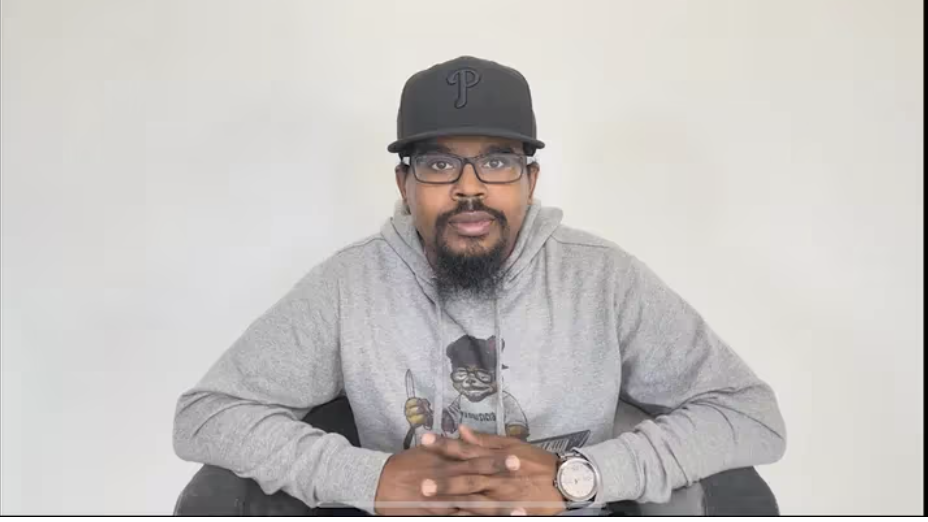
Charlamagne tha God is done with the small talk

For millions of morning radio show listeners, Charlamagne tha God has evolved into one of the leading voices in pop culture.

From his days at Z93 Jamz in Charleston, S.C. to his current post as the host of Power 105.1′s The Breakfast Club, the former morning show host of Philly’s 100.3 the Beat says he has lived by an unspoken oath: to think and speak freely.

His social critiques, polarizing political stances, and unpredictable interview moments have stunned listeners, led to national headlines, and turned hour-long interviews into bite-sized viral clips.

His infamously comedic and often vicious interviews with artists like Lil Mama, Kanye West, and Post Malone have generated millions of YouTube views, and his recent observations of President Donald Trump and President Joe Biden’s electoral campaigns have taken him to The Daily Show

In his third book, Get Honest Or Die Lying: Why Small Talk Sucks, he is asking America to stop lying to itself.

In the book, set to release on May 21, Charlamagne writes from the belief that the world’s imbalances stem from a lack of meaningful conversation among people, be it our neighbors or politicians. This, he says, leads to the oversaturation of “small talk.”

“I’m not talking about the pointless chitchat people try to make when you’re at the airport or randomly standing in line somewhere. I’m talking about the small conversations people have on social media every day,” Charlamagne said. “You know it’s micro because it only lasts 12 hours. This book is a way to open up conversation with people.”

The Inquirer talked to the self-proclaimed “prince of pissing people off” about the dangers of unimaginative conversations, the balance between righteousness and “ratchetness,” and hip-hop’s role in freeing America’s intellectual chains ahead of his book release and tour stop at Green Street Friends School on May 23.

The interview has been lightly edited for length and clarity

This is another big achievement for you. How do you feel?

I feel good. It was an effortless process because what I decided to write about in this book is where my mind has been for the past few years. I just think we’re in a society where everybody likes to focus on the micros instead of the macros. And because we spend so much time talking about the micros, we have so much small talk in the world.

Is this a conclusion you arrived at recently?

I’ve never liked small talk. I’ve always wanted to have big macro conversations and discuss big ideas, even when the conversation starts with individuals. I don’t want to discuss people, I want to discuss the ideas these people are presenting. Even on the radio, you may [hear] a headline about something, but I want to talk about the broader deep dive into what it is. Like the Kendrick Lamar and Drake rap beef, I don’t just want to talk about the beef. Let’s talk about the psychological aspect of all this. Let’s talk about where this will lead people or the culture of hip-hop.

Do you think your voice is big enough to steer these kinds of conversations?

I don’t sit around thinking, ‘Oh, my voice is big.’ I just think we need to start having more macro conversations. We have to start discussing things that benefit us and help us grow as humans. I’ve been like that my whole life. I always say I’m the perfect balance between ‘ratchetness’ and righteousness, or at least that’s what I strive to be. There’s never been a time in my radio career, no matter where I’ve worked, that I didn’t have voices we could learn from on my platform. From spiritual leaders to political leaders, it doesn’t matter. I’ve always had people you could learn from.

What about people who say you’re incapable of leading ‘macro’ conversations?

That’s their opinion, and they’re entitled to their opinion. You see that a lot with the conversations we’ve been having in politics [on The Breakfast Club]. This ain’t new. The first political guest to come on The Breakfast Club was Bakari Sellers in 2014. He was running for lieutenant governor of South Carolina, so he came on to talk about his campaign. From that moment on, the ball was rolling and everyone and their mother was coming on.

When it was 2020, all the Democratic candidates were coming through. Even back then, people said, ‘Charlamagne you went too hard on Kamala Harris,’ and ‘Charlamagne you went too hard on President Biden.’ The flip side of that: ‘Charlamagne you’re too easy on Democrats. Y’all are a bunch of Democratic shills and never ask Democrats the hard questions.’

Fast forward to 2024, when it’s a large Republican field and those candidates decide they want to come up to The Breakfast Club. They’re choosing to come to our platform, and all of a sudden people have a problem with us talking about politics. You’re damned if you do, damned if you don’t. And to be honest, neither one bothers me because it’s all a part of the larger conversation. It’s not going to stop me from having the conversations I want to have.

Moving on to hip-hop, is the genre and culture ready to have these ‘macro’ conversations?

Of course, and that’s why I wrote this book. One aspect of small talk is that we confine ourselves to these small echo chambers for no reason. Hip-hop has always been able to talk about these things. We used to say N.W.A was the CNN of the Hood. So the notion that hip-hop is not mature enough to listen. Says who? I guess that’s why it’s so easy for people to tell us to shut up and do what they say regarding politics. It’s probably so easy simply because maybe some of us aren’t sophisticated enough to know what’s going on politically. But I think that’s a bald-faced lie.

Was there a topic or chapter you second-guessed writing about?

Hell no. This book is about big conversations and focusing on the macros. I want [readers] to have conversations about the things I’m talking about. I’m not saying I’m right or the end all be all. I’m just sharing my experiences with the readers, and I’m hoping they get something from it.

I know your time in Philly was short, but what are some of your fondest memories of the city?

I love Philly because it’s one of the realest places on the planet. Almost everyone you meet will tell you the truth. The brothers and sisters in Philly are very honest, and I think that’s why they appreciated me while I was there. And any time I come back to Philly, it’s always love. I don’t take any of the support for granted.

At last year’s Roots Picnic, you named your top five Philly MCs. Who fills out the ranking?

I have to be objective here, so I won’t give a personal top five. I have to put Black Thought at No. 1 and Beanie Sigel at No. 2. You have to put the Fresh Prince at No. 3 — not Will Smith, the Fresh Prince. Then I’ll put Freeway at No. 4. My No. 5 coming out of Philly all-time, I want to salute the OG Schoolly D, but I feel like I got to put Young Chris at No. 5. He didn’t get his just due but Chris was very nice, and if you’re so nice that you’re influencing people like Jay-Z, that’s big.

– The Philadelphia Inquirer

Philly couple who went viral for living in a storage unit wants to prove ‘homelessness is a flex’

Like many Gen Zers, Lansdale couple Leland Brown Jr. and Breanna Hubbard gave TikTok viewers a tour of their new home, hours after they moved in.

The space was just large enough to fit a twin-size mattress, a small couch, a dresser, and a wall of storage boxes. But no windows, bathroom, or kitchen. It also happened to be located inside a storage unit in North Wales.

The container was an upgrade from their previous digs, a tent in the woods of Montgomery County. Brown and Hubbard, who spent most of their days creating videos, live a “minimal lifestyle” to avoid what they call the stresses of employment and costly housing.

According to a 2022 survey conducted by Freddie Mac, a government-sponsored finance company, adults between the ages of 18 and 25 have mostly positive thoughts about homeownership. But over one-third of them say it’s outside of financial reach.

“We think it’s more beneficial for us in the long run,” Hubbard said of living outdoors. “We’re not looking at how much we make now, we’re looking to build up our businesses and to work for ourselves. We want to make our own money by sharing our life, which we’re having success with.”

A mutual friend introduced the pair in March 2022, and they have shaped their online presence and living situation in tandem ever since.

It wasn’t always meant to be so “minimal.”

Brown and Hubbard were among the 31% of Gen Z who were living at home due to high housing costs. After continued disagreements with his father, who wanted the 28-year-old TikToker to pursue a more sustainable career, Brown was kicked out of his parents’ home in Montgomery County in May 2022.

“He told me I was grown and have a son, so I needed to figure it out,” said Brown, whose 7-year-old son lives with his mother.

Brown then moved in with Hubbard, 22, who was living with her family in Hatfield. That didn’t work out, so they packed up their bags and moved to the woods in September 2022.

Brown, who had never been camping before, was excited to adopt the new lifestyle. But he quickly learned how difficult it was living outdoors. “It was a lot once we got everything settled,” Brown said. “It was crazy dealing with the animals and the cold.”

After six months, Brown and Hubbard adapted to the new living situation and decided to chronicle their journey.

In December of 2023 he posted videos that showed him taking leftover food from his job at a nearby hotel to the tent. Brown lost his job soon after — but the videos generated millions of views on TikTok and YouTube.

Around the same time, Hubbard’s mom encouraged the couple to visit a nearby U-Haul store for an occasional break from the cold, and for a place where they could edit their videos and do other “office work.” The couple saw the storage units there as an opportunity to have a low-cost home of their own, at least while they saved money for a more permanent space.

They started by taking naps inside the U-Haul store, then moved their belongings into one unit. Over time, they organized furniture and made it into a small housing quarter. They posted the three-part series on TikTok, which generated over 22 million views and made national news, with outlets like CBS News, Complex, and Yahoo News reporting on their move into the climate-controlled space.

Within days, U-Haul management asked the couple to leave.

“Residing in a self-storage unit is a violation of state and federal housing laws,” Jeff Lockridge, a spokesperson for U-Haul International wrote in an email to The Inquirer.

“I was always prepared to get kicked out because of the video,” Brown said. “I didn’t expect it to become as viral as it was, but when it did, I knew I couldn’t delete it. I was making money off of it, so we had to run with it.”

The couple stayed in a U-Haul truck for a night before moving their stuff back to the Lansdale woods.

Brown and Hubbard currently live inside a large camping tent, filled with bundled blankets, an air mattress, and a power bank to charge their electronics.

Brown, who prefers the term “house-lessness,” said tent life is less than ideal. But the independence that comes with the low-cost lifestyle, he feels, is a sacrifice worth enduring.

“I’m very educated and intelligent, and so is [Hubbard], but people tell us how to live because their perspective in life is different,” Brown said.

While Brown had asked to move back in with his parents in the past, he said he and his father have now come to an understanding. “My dad is saying [I] have to stay in the woods and make it work,” he said. “He’s trying to teach me to be strong and survive.”

His father, Leland Brown Sr., a principal engineer and director of a military and aerospace communications company, said he had his concerns, especially when Brown and Hubbard moved into the storage container. Still, “I believe Leland has been very clear this is a choice he has made and he stands on his choice,” Brown wrote in an email. “If no harm is caused to anyone, content development is a good method to share his approaches on how he wants to live his life, while allowing others to follow his journey.”

While Hubbard’s parents have invited her back home, she’s continued to say no. “I had to leave to be the best version of myself,” she said.

Since last year, the couple has monetized videos of their daily exploits. They clean up in hotel bathrooms, use rented vehicles to run DoorDash deliveries, make food in a portable grill placed in the trunk of an electric car. All the while defending their house-free lifestyle against the naysayers who comment under their posts.

The couple is enrolled in the YouTube Partner Program and TikTok’s Creator Fund, which allow certain users to monetize their videos based on views, engagements, and other metrics. Brown said they pull in roughly $750 a week from their videos.

In a February video, titled “When You’re Homeless & Not Getting a Job #genz,” Brown talked about his desire to be an entrepreneur rather than working for someone else. “I’m not getting no job,” he said in the TikTok video. “I’ve had jobs in the past, and I’ve got fired at 90% of those jobs. It’s not for me. I’m an entrepreneur, self-made, and so is [Hubbard].”

In response to the video, one TikTok user commented “if you can’t handle a 9-5, you most definitely cannot handle entrepreneurship.”

Brown and Hubbard admit negative comments often get under their skin, especially when people suggest they are faking their lifestyle or meaninglessly avoiding employment.

“I’ve been saying homelessness is a flex, and I believe that with my heart and soul because of the challenges homeless people endure,” Brown said. “People don’t understand that.”

Still, Brown says he recognizes his and Hubbard’s living situation is a lot different from many unhoused people. They are located in a relatively quiet suburb and can earn a steady flow of income from their videos. “We got very lucky,” he said. “I grew up here half of my life, so that’s a privilege.”

Tyler Greene, who has known Brown since they were in elementary school, is happy his friend is garnering attention online, but “I want him to get out of that tent,” he said.

The couple will continue living in the woods for now, but Hubbard said they intend to save money and eventually buy a tiny home before starting a family together. They currently want to purchase an RV and document van life. (A recent social media trend focuses on #vanlife, where people live out of modified vans. It’s often promoted as a bohemian way to travel and save money, but critics say it’s really “glorified homelessness.”)

Their only hurdle is a lack of payment and credit history.

In the 2022 Freddie Mac survey on homeownership, insufficient credit history and unstable employment were two of the top five obstacles preventing young adults from purchasing a home.

“We have to be more patient, live out in the woods for three or six more months, and just be more financially intelligent,” Brown said. “We’re just waiting for the right time while we live in the wilderness.”

As they continue to chase their entrepreneurial dreams, which include starting a clothing and pottery business, Hubbard said they want to change the negative perception of unhoused people through their content.

“It’s not the end of the world to be homeless or live minimally,” she said. “It’s an opportunity we have to work on ourselves.”

Erick The Architect Steps Into A New World On 'I’ve Never Been Here Before'

Rapper/producer Erick The Architect is no stranger to reinvention. 

The Brooklyn-bred MC cut his teeth over alt-East Coast beats as Erick Arc Elliot before forming psychedelic rap trio Flatbush Zombies with childhood friends Meechy Darko and Zombie Juice. But after multiple mixtapes and two albums with the group, Erick is returning to solo form and venturing into new creative ground. 

Following 2021’s Future Proof EP, Erick is embarking on new musical travels with the release of his official debut album, I’ve Never Been Here Before. Out Feb. 23, the double album explores Erick’s flowy instrumentation, poeticism, and artistry at full scale. The project is fueled by singles "Shook Up" featuring FARR and Joey Bada$$, "Ezekiel’s Wheel" with funk forefather George Clinton, and the breezy "Instincts" with Westside Boogie.

Erick says I’ve Never Been Here Before is more than a collection of catchy introspections, melodic monologues, and '90s-inspired jams. It’s the shedding of one persona — and sound — and the beginning of a new: the Mandevillain. 

"This album is an identity of a new person," Erick the Architect tells GRAMMY.com, noting that the moniker is an ode to his father’s hometown of Mandeville, Jamaica. "A lot of people may have thought there was a ceiling to what I’m capable of, but I think this album will showcase a brand new artist and identity, which is really hard to do when people think they already know you. But I really think this is unique." 

The switch isn’t just in name — he’s taken on a new approach to music, too. For the first time in years, Erick says he’s prioritizing himself and his specific musical world. "It’s the first time I have created with the headspace that I’m free," he says. "I find that other artists don’t listen to other people’s music when they’re in a creative space, but this is the most locked off I’ve been from things."

As much as I’ve Never Been Here Before signals new creative ground for Erick to fertilize, it also represents his collective efforts to limit distractions and break free of any barriers — personally and sonically. 

While it was difficult to stay so focused and inward-looking while creating his debut album, turning to some of his legendary collaborators provided some clarity. After having conversations with James Blake, George Clinton, and other artists as part of the project, Erick no longer feels forced to fit a mold or address outside criticism. 

"This album is about sacrifice, and I’ve Never Been Here Before is me being okay with losing things," he says. "I think that losing has always a negative connotation because nobody wants to lose, everybody wants to win. But it's the first time I'm losing stuff and it’s better being lost. Whether it's a habit or a person in your life, you don't need to hold everything."

I’ve Never Been Here Before lives up to its title in both theme and creation. Where Erick previously wrote songs in moments of vulnerability, the rapper says he "doesn’t feel that way anymore." 

Citing the work of Keith Haring, Miles Davis and Pablo Picasso as inspiration, Erick says he was driven to write more high-spirited songs, rather than ones tethered to struggle and hardship. As a result, the album is more accessible than some of his previous work.


"I’m tired of writing from a perspective of just being like, 'I’m sad today, bro,'" he says. "I haven’t made a project that I feel like you can just put that joint on and just play it, don’t even think about anything else because it’s commanding an energy that we all need." 

In transforming the project, the "Die 4 U" artist pieced together a blend of new and older songs he recorded five years ago. And while a double album is a "death sentence" in the eyes of most rap fans, Erick says he’s prepared for both heaps of praise and hurls of "he’s overrated" from listeners. He would feel more anxiety only if the music never came out.

"I’ve always believed that I had another special part of me that I think people didn’t witness because I didn’t put it out in the forefront," he says.

While getting a new release across the finish line can be a heavy weight to bear, Erick says he’s determined to prove his doubters wrong and own his legitimacy as a solo act. "I didn’t get lucky or sneak in here and steal beats from somebody’s laptop," Erick says. "This project is great to defeat people who have perceptions about me that are incorrect."

With the momentum of I’ve Never Been Here Before, Erick is set to test his new music and moniker on the road during his upcoming Mandevillain Tour, which kicks off in Austin on March 25.

Now that he’s fulfilling his ambitions as a solo act, the artist has a few more mediums he plans to explore – TV and film. After being a rapper/producer for more than a decade, Erick says he’s ready to take grander creative leaps.  "I’m just trying to take this to the highest caliber," he says.

– Grammy.com

The Philly artist who gets mistaken for Banksy

Susan Ferrence was in a rush on a December morning as she passed by Jefferson Plaza at 12th and Chestnut Streets. She was late for a workout session when an image stopped her in her tracks.

It was a stenciled mural of a young child, screaming while wrapped tightly in a straitjacket.

Ferrence, an art historian and director of publications at INSTAP Academic Press, took pictures of the freshly stenciled work with darkened shadows and etched grooves. She told her friends she had just spotted a Banksy.

The “Banksy” turned out to be the work of a Southwest Philly artist who goes by Bad Luck. The 33-year-old, who opts to conceal his identity, had stenciled the sketch of the screaming child on a wood-paneled wall hours before Ferrence walked by it.

The idea for the mural, he says, stemmed from a feeling of restriction, like being bound in a straitjacket. Bad Luck wanted to break free of his thoughts, like the child he drew screaming in enraged silence.

That’s how he’s always envisioned his artwork — as a cleansing of thought and emotion. But the comparison to Banksy is something he says he never imagined or wanted.

“I hate it, man,” he said. “He’s so big, talented, and clever. But if you try to do stencil work, then somehow you’re automatically biting off of Banksy. That’s how people view it.”

Philly artist Bleak, who shares an Instagram page with Bad Luck and assists him on select projects, said the comparisons are “wild.” “We admire Banksy’s work obviously, but we’re trying to be our own thing.”

Bad Luck started out as a graffiti writer before transitioning to stenciling after seeing Banksy’s work, but he wants to avoid being labeled a copycat.

“I’m inspired by him for sure, but not as much as people would like to think,” he said. “He showed me a new way to be able to create things years ago, but I try to find my own style. I try to send different messages, which is why my work can be darker.”

Since long before catching Ferrence’s attention, Bad Luck has been fascinated with the art world, but was forced to admire it from afar.

Growing up in foster care, and bouncing around group homes as a teen, the self-taught artist never attended a traditional art school. In time, Bad Luck said, art became his emotional refuge. He embraced the pain of his challenging upbringing and called himself “Bad Luck.”

If it were up to Bad Luck, he would spend most of his nights drawing on street corners and highway overpasses. But with a full-time job and a separate life as a husband and father, it can be a difficult balancing act for both him and Bleak.

“My wife has definitely expressed concern about cops and safety,” Bleak said. Thankfully, there haven’t been any real run-ins with law enforcement. The only real conflict, he says, has been between stencil and graffiti artists.

“For any art form, Philly is all about being respectful and true to yourself, but [Bad Luck and I] have received a lot of love and a lot of hate,” Bleak said. “Stencil artists don’t mix well with graffiti writers. We’ve heard some good things too, so it’s not completely sour.”

Bad Luck said he’s had graffiti artists spray over his artwork, and he has covered theirs in retaliation.

Despite the criticism and infuriating comments — including being called “Fake Banksy” — Bad Luck said his respect for graffiti artists and other Philly creatives has never wavered.

“The art in the city is unreal man,” he said. “The people here are talented with brushes and paint cans. I feel like that’s real art.” But when it comes to stenciling, he doesn’t see anyone else doing it on a large scale.

Conrad Benner, who’s covered the arts for years under his Streets Dept banner, says there are plenty of stencil artists in Philadelphia. But like many trends in the industry, some rise in popularity or grow more obscure over time. While Philly’s street art generally doesn’t have a recognizable Banksy influence, Benner said, there are definitely stenciling artists in the city other than Bad Luck and Bleak.

West Philly resident Tyquaan Bardlavens is surprised by the Banksy comparison.

Bad Luck’s ability to convey his emotions through his work is what drew in Bardlavens. And as they have become friends, he’s encouraged him to take his street art to wider audiences.

Bad Luck said he next plans to place his work in gallery spaces. He’s still figuring out how to navigate commercial art space, but above all, he wants to deliver positive messages through his creations and be known as “the stencil man.”

“It’s not about the money — I don’t want to get paid,” Bad Luck said. “I want normal people that are in the art world to see my s— on a wall and in an exhibit, and for me to get recognition. Oh, and to not get caught by the police.”

Inside The Metro-Verse: How Metro Boomin Went From Behind-The-Scenes Mastermind To Rap's Most In-Demand Producer

Metro Boomin isn’t your ordinary hero. Instead of scaling walls and flying over cityscapes, he possesses the rare ability to generate hits across a myriad of genres while remaining true to form. Like heroes in the Marvel and DC universes, the often withdrawn producer has played a not-so-quiet role in hip-hop for a decade.

For his superpowers, Metro has become one of the most in-demand sonic architects in the game. His collaborations with Future, Travis Scott, 21 Savage, Big Sean, and other big-name artists defied convention, turning Southern trap into high-performance art. Despite his reserved demeanor, Metro Boomin has been behind the board of more than 100 Billboard Hot 100 songs, including top 10 hits like the Migos’ "Bad and Boujee" and 21 Savage’s "Mr. Right Now" with Drake

Metro spread his heroics even further last year. He produced standout tracks on Young Thug’s Business is Business ("Oh U Went), Lil Durk’s Almost Healed (War Bout It") and other major releases, while cranking out his own viral hits – "Am I Dreaming" featuring A$AP Rocky and Roisee and "Superhero" with Chris Brown and Future. His contributions led to his nomination for Producer of the Year, Non-Classical at the 2024 GRAMMYs, and showcased his versatility as an artist. 

Thanks to Metro, and his unmistakable calling card — "If young Metro don’t trust you, I’m gon’ shoot you" — trap's appeal has grown outside of the rap community, influencing pop and R&B. And his string of hits with the likes of The Weeknd, James Blake and Solange further proves Metro's musical wizardry. 

But on his second album, Heroes & Villains, which is nominated for Best Rap Album at the 66th GRAMMY Awards, the St. Louis native proves that he's as strong a solo act as he is an engineer of others' hits. Driven by lead single "Creepin’" featuring  21 Savage and The Weeknd, the 2022 album topped  the Billboard 200 charts and became Metro’s third project to land at No. 1 

It’s the second installment of an ongoing album trilogy, which follows 2018’s Not All Heroes Wear Capes. 

Boasting features from John Legend, Future, Chris Brown, Travis Scott, Don Toliver, and Young Thug, Heroes & Villains is the second installment of an ongoing album trilogy, which follows 2018’s Not All Heroes Wear Capes.  

According to Luminate, Heroes & Villains netted Metro his biggest opening week to date, with an estimated 185,000 equivalent albums sold in the U.S. "I didn’t see that coming," Metro told DJ Drama in January 2023. "A lot of times my stuff will grow slowly because I’ll put my time into it and people will realize, Oh, this is dope. I thought it was going to be one of those usual things … But it definitely caught me off guard." 

In a recent renaissance of soundtrack projects, the multi-platinum producer also created the soundtrack to the animated blockbuster Spider-Man: Across the Spider-Verse. Metro flexed his versatility on the 13-song project, which combined sonorous trap beats, reggaeton and Afrobeat-inspired jams, and lush pop ballads. 

Metro's success and recent GRAMMY nominations have been the result of years of Herculean feats.  Never content to follow a single sonic thread, Metro has continually expanded his reach to other genres and mediums. He’s dabbled in film and TV, producing songs for the short-lived and The Weeknd-starring HBO series "The Idol," and embraced live orchestration both in song and performance. On songs like "On Time" with John Legend, the producer amplified the grandiose record with stringed instruments, then performed the song with a live orchestra at the Dolby Theater for the Red Bull Symphonic back in November 2023.

Despite his vast production credits, Metro says he’s been unfairly labeled a "trap producer." He’s conjured pop and R&B hits, too. "I love R&B music, I love making this, love making that," he told GQ in 2022. "Why would I wanna do something that I did?" Along with producing The Weeknd’s No. 1 song "Heartless," Metro laid his hands to tracks on James Blake’s Assume Form and Solange’s When I Get Home, then later produced Coldplay’s "Let Somebody Go" featuring Selena Gomez in 2019.

Metro’s venture into solo stardom shouldn’t be a surprise either; the 30-year-old producer told Billboard he wanted to be a rapper as a teenager. "In order to do that, I needed some beats, so I started to make my own beats." At age 13, Metro took notice of artists like Soulja Boy, who also made his own beats. "It was like … it’s possible." 

Now, after years of playing the background, the man behind the blistering trap beats and rattling hi-hats is finally unmasked and fully embracing his solo artistry. There were flashes of his genre-bending genius on Not All Heroes Wear Capes, with the Offset, WizKid, and J Balvin-assisted "Only You" melding trap, Afrobeats, and reggaeton in euphoric form, but Across the Spider-Verse fully showcases Metro's musical dexterity both behind the board and in front of the mic. 

On the film’s soundtrack, the roaring orchestral sounds of "Am I Dreaming" form a transcendent exchange between A$AP Rocky and eclectic vocalist Roisee. Songs like "Hummingbird" see Metro return to his trap roots, but James Blake’s harmonious croons breathe mists of pop magic into the track. 

The hip-swaying "Silk & Cologne" and "Link Up" fuse reggaeton and Afrobeats, but "Nas Morales" is a complete step in unfamiliar territory for Metro. The unlikely collaboration between him and Nas closes out the 13-song project — Metro’s most experimental to date. 

The album Heroes & Villains is more in line with Metro’s roots, with songs like "Superhero (Heroes & Villains)" and "Niagra Falls" highlighting the producer’s darker, more mystifying trap wizardry. He also, for the first time, conjured a rollout for the project. 

Before the album’s release, Metro dropped a short film that featured cameos from Gunna, Young Thug, and actors LaKeith Stanfield and Morgan Freeman. The video, directed by Gibson Hazard, shows TV journalists (Gunna and Thug) reporting on a firetruck driver (Stanfield) setting flames to a city’s streets. Metro, overlooking the destruction alongside Morgan Freeman, decides to take action and stop the arsonist. 

Last year was a big one for Metro, but the producer isn't driven by accolades.  He wants fans to know that no amount of fame or hardware can take him away from his calling. "More than any accolades, sales, and everything, I just want people to know at the end that I cared the whole time. Every ounce of effort that I possibly could put into the art, I did," Metro told Complex.  

With a new year in full swing, Metro has already hinted at a possible hat trick in 2024. While interacting with a fan on X, formerly known as Twitter, Metro wrote, "2023 was great but just watch what I do 2024!!!!!." The fan then asked how many albums to expect, with Metro responding, "3 at the very least." 

GRAMMY.com

Benny The Butcher Is Ready To Rise On 'Everybody Can’t Go'

Benny The Butcher is prepared to spar with the biggest names in rap music to prove he’s one of the most prolific MCs in the industry. 

"My confidence comes from my talent, and my talent comes from my preparation," Benny tells GRAMMY.com. 

For the uninitiated, the East Buffalo rapper's brash delivery and unshakeable confidence could be perceived as arrogance. But for Benny and long-time fans of the Montana Avenue vet, he’s more than earned the distinction. 

"If you see these dudes, they’re not confident because they’re not prepared to talk that talk. We stand behind this music, man," he continues. "I’m only on this interview with you because I rap good. I’m not on this interview with you because I’m dating an R&B chick, or because I have a Rihanna feature.”

Benny The Butcher is just days ahead of releasing Everybody Can’t Go, his debut album with Def Jam Recordings. Out Jan. 26, Everybody is Benny's major label launch but it's far from his first foray.

Off the heels of his critically acclaimed album Tana Talk 4 in 2022 — which boasted the viral hit "Johnny P’s Caddy" featuring J. Cole — Benny has kept a steady hand on the pulse of the rap game. Since then, he’s been heard on DJ Drama’s "Forever," G Herbo’s "Real Rap" and memorialized a Buffalo legend on the BSF project Long Live DJ Shay.  

In that time, Benny, born Jeremie Pennick, has fashioned himself as the proprietor of "caviar drug rap," and he’s not afraid to remind you, either. He’s confident the release of Everybody Can’t Go will showcase his evolution as an artist.

"I’m on a higher level than I was. Everybody gets to watch my career elevate and it’s right in front of me," he says. "From the mixtapes, from the freestyles, featuring on Westside Gunn and Conway The Machine’s s–, and people share that journey with me. It’s high-level drug rap."

After switching his moniker from "Benny" to "Benny The Butcher," he veered away from rapping over other artists’ beats and started working with in-house Griselda producers like Daringer to round out his nostalgic, boom-bap sound that’s become synonymous with the Griselda imprint. 

If the album’s lead singles "Bron," "Big Dog," and the title track are any indication, Benny isn’t deviating from the sound that made him. Tales of his past exploits are coated in Hit-Boy and Alchemist beats, with features from Griselda and BSF collaborators Westside Gunn, Conway the Machine, 38 Spesh, Lil Wayne, and others. But the method behind the music, Benny says, was all the same. 

"I didn’t take no new approach, I just wanted to deliver some dope music and make sure I sounded how I felt," the 39-year-old MC says. "I feel like my sound is more refined and I switched my flow up."

To casual connoisseurs, Benny is a burgeoning star who’s aiming for wider success and acclaim. But for fans of the "Trade It All" lyricist, who saw his rise as the younger cousin of Westside Gunn and Conway the Machine on Griselda, he’s earned the right to share his vivid tales and signature brand of mafioso rap on a larger scale. And he’s already made good use of the label’s platform.

He’s rubbed shoulders with artists like J. Cole, connected with legends like Snoop Dogg for his Def Jam signing, and now has his sights on more R&B-oriented records. Benny wants to work with the "Queens of R&B and hip-hop," naming legends including SZA, Teyana Taylor, Coco Jones, Summer Walker, and others at the top of his list.  

With his ascension, Benny is continuing to discover the perils of fame. He admits it’s challenging to deal with trolls and faceless critics on X (formerly known as Twitter). "You have to remind yourself it’s only a fraction of the people. Their voice is so loud on social media that it tricks the artist into thinking that’s the general population that feels like that, but it’s not," Benny says.

He’s also accepted the fact that not everyone is meant to be a part of his journey. The sentiment inspired the new album title and is reflective of his new attitude: Whether friend or family, hindering his growth is too hefty a price tag. As his career continues to take flight, others will be left at the terminal. 

"Everybody Can’t Go is me realizing, Wow, it’s not for everybody even though I got this far to help provide opportunities," he said. "You could make someone the president or an A&R at Def Jam, but that doesn’t mean they’re ready for it. A lot of people don’t want to work, they just want what comes with the work —  the lifestyle, the fame, and the money."

After the project’s release, Benny intends to expand as a legitimate businessman and do more executive production, starting with his roster of BSF talent, which includes Rick Hyde, Heem B$F, ElCamino, LoveBoat Luciano, and other members. 

With Griselda, Benny already has his two cousins as counterparts, but Benny talked about having his daughter by his side during the album’s press run. He was impressed with her vocal ability and is open to exploring her musical side. "This is a family business," he says. "I encourage everybody to get into music because it’s therapeutic, it keeps you out of the way, and it’s lucrative if you do it right."

Of his growth as a solo artist, Benny says, "It feels like I’m on pace to keep doing great things." In the near-future, he's already making plans to dive into the film industry and drop another project to close out yet another big year in music. 

– GRAMMY.com

‘There’s no edge like Philly’: Why the city’s most talented won’t leave their hometown

Philly’s “got major talent,” as entertainment mogul Charles “Charlie Mack” Alston says. “There are some remarkable people and talent that have come out of Philly, and the city has a surplus of it.”

But the demands of the industry often pull artists, musicians, and actors away from their beloved hometown, forcing them to pack their bags and migrate to cities like New York, L.A., Atlanta, and Miami.

But for Mack, who was Will Smith’s long-term bodyguard and personal assistant before becoming a notable Hollywood power broker, there’s only one place he calls home — and that’s Philly. And he is not alone.

Some entertainers born and bred in the region can’t seem to leave the city behind. We asked them why.

Responses have been lightly edited for clarity.

DJ Jazzy Jeff

DJ and hip-hop pioneer; West Philly native

Where do you live?

I’ve lived in Delaware for almost 20 years, but I never had a desire to move far away. It’s what I know. This is home.

Does the Philly area’s affordability play a factor?

It’s true – Philly isn’t as expensive as New York or L.A., and I know the city so I feel more comfortable here. I know how to navigate Philly; I don’t know how to navigate New York or L.A. In Philly, I know my surroundings.

Why do you think some Philly-born entertainers choose to leave the city?

Philly is a tough town. It prepares you to go off into the rest of the world because Philly doesn’t show love to those who don’t deserve it. Nothing comes easy, and it prepares you to go to places like New York and do a good job.

I think the people who move out of Philly never lose the love for Philly.

What does Philly’s future as an entertainment hub look like?

If you look at the history, [the Philly scene was lively] with Kenny Gamble and Leon Huff, then it left. That was the neo-soul movement and [then came] The Roots, it all goes in cycles. I tell a lot of inspiring musicians to just be ready when it comes back because it’s coming back.

Tierra Whack

Rapper; North Philly native

What’s inspired you to stay in Philly?

I love to travel, visit new places, and experience new things but nothing feels better than waking up in my hometown, with people that look and feel just like me.

Did you always see yourself staying in Philly?

I am Philly [and] Philly is me. I love my city and everything it has to offer. I want to put my city on the map. I’m not sure why other people leave, but I’m here to stay.

In a past interview, you talked about pouring back into the city. What does that look like for you?

My goal is to build a creative space here in Philly. Not only where I can go and be creative, but where others can, too. I love what’s happening in our city right now, [and] I want to be a positive light for everyone coming up after me.

Eugene ‘ManMan’ Roberts

Producer and musical director; South Philly native

Why do you think so many popular entertainers from Philly prefer to live in Philly?

A lot of people pull from Philly. Every major album, tour, and every band — someone from Philly is in the mix. And sometimes when we leave home and go to these other places, you’re filling them up with your energy, your presence, and your sound, but they can’t refill that cup. You got to go back home to get that vibe, inspiration, and aesthetic that makes home, home.

What’s stopped you from leaving the city?

We got rich history here. We have amazing producers, songwriters, and artists. We’re really good, and I never wanted to turn my back on the place that made me who I am. I’ll always be that no matter where I go.

Do you see Philly becoming a renewed musical hub?

Philly used to have Philly International, Sigma Sound, and all these other studios, and people came here to cut records. But when the world went digital, it took away needing studios. Until we build up an empire of entertainment with studios and rehearsal facilities, I don’t think any city can [become a musical hub].

L.A. is all that because that’s where all the celebrities live, and there’s good weather but I think the pandemic made it a level playing field for everybody.

Charlie Mack

Entertainment mogul and community leader; Southwest Philly native

Why do you think big-name entertainers from Philly choose to venture elsewhere?

Philadelphia is like a character, and people that used to come here admired it, but admired it from afar. If you don’t feel safe, you can’t relax and let your hair down. Right now, we’re in a place where we’re hemorrhaging and going through a very horrific transition, and I hope and pray that the kids here have an opportunity to experience Philly the same way I did.

I love my city, but the reality is people don’t feel safe. And home is supposed to be just that: a place you feel safe and welcome.

How can Philly go back to being what it used to be?

The natives of Philadelphia are in a space where they don’t love themselves. That’s the harsh reality, and it’s hard for someone to stay put when they’re not received or revered from their own people. Artists need validation and love, it’s a part of their makeup. Philly is real and harsh, it will hit you right in your face. Residents won’t give you fanfare if you’re not tapping into the things that make them move.

How can we better retain the talent that comes out of Philly?

I feel like the men of the city of Philadelphia have to restore safety. Women are stepping up in major ways, but men have to restore everything that is amazing about Philadelphia: the artistry, the streets, the sports, the politics, city government, and everything that it’s about.

Adam Blackstone

Multi-instrumentalist and songwriter; Trenton native

What does being close to Philly mean as an entertainer?

One thing is the culture of Philadelphia. There’s a go-getter and hustler’s spirit. For me, no other city has embraced the arts like Philly.

In Philadelphia, we just want to see each other win and we represent our city from all over the world, no matter where we’re from. That’s always a plus we have that maybe other cities don’t.

Are there certain Philly spots that give you inspiration?

When we go to any sports event, whether it’s the Philadelphia Eagles, Sixers, or Flyers, I feel a sense of oneness and a feeling that we’re all fighting for the same thing.

Don Cannon

DJ and record executive, West Philly native now living in Atlanta

Why does it seem like more Philly artists are staying in the city?

I feel like people just love the culture. I can walk through Society Hill and Parkside, and it just feels different than anywhere else in the world, from Brooklyn to Compton. It’s just a different feel, and I think that’s why people want to stay here. And sometimes you get away from home and think, “Man, it’s not the same,” and go back.

I know you relocated to Atlanta, but do you ever come back to Philly?

I left when I was 18, but I often go back to see what’s happening there, what’s the newest trends, and to get some edge. Sometimes you travel across the world, but there’s no edge like Philadelphia.


– The Philadelphia Inquirer

Meet the sound engineer creating Philly’s new sound

Whether it was the Philadelphia Sound of the 1970s, the piercing jams that propelled the neo-soul era, or the inception of gangsta rap, Philly has always been a pioneer in music and culture. It’s home to artists who have gone against the grain, and now there’s a new legion of creatives continuing the tradition.

From Lil Uzi Vert and Tierra Whack to Armani White, Fridayy, D Sturdy, 2Rare, and others, Philly-bred stars are dominating the airwaves.

White’s “Goated” went viral on TikTok, and vocalist Fridayy is one of the most exciting R&B talents of our time. The booming and frenetic pace of D Sturdy’s “Shake Dhat” and Whack’s “Millions — Jumbo Sounds Mix” has added a Philly-style variety to the electro-sound.

This new Philly sound is a mix of pop-rap, trap, and Jersey club music, a subgenre that originated in Newark in the early 2000s.

One of the architects fueling this new creative wave is Ben Thomas. The 27-year-old audio engineer and producer most recently worked on Lil Uzi Vert’s hit “Just Wanna Rock,” which garnered a nod for best rap song at the 2024 Grammy Awards next month.

“There has been a strong emergence of artists from Philly based on the Jersey wave,” he said. “It’s really dope to see them winning.”

Uzi’s record, Thomas said, is one of the many demonstrating the city’s renewed musical charge and influence, beyond its very recognizable R&B sound.

“I think this period of Philly music is beautiful,” said Thomas, who marked his eighth Grammy nomination with “Just Wanna Rock.” “Uzi does a Philly and Jersey song, and then we have major artists copying their style. Also, we have so much talent here. It’s great to see people getting their shine and I’m blessed to play a small part.”

As an audio engineer and producer, Thomas is partly a curator and a connector. He has linked the city’s biggest artists and helped craft their solo or collaborative projects. And through his work with Uzi and other local artists, he has turned the once-regional Jersey club sound into one also helmed by Philly artists, and opened doors for emerging musical talents.

In the years of knowing Thomas, Def Jam signee Fridayy said Thomas has always made a way for Philly artists to flourish. “He’s definitely gone outside the box with a lot of records in Philly,” he said. But his work across different genres is what’s elevated Thomas’ profile.

Thomas, a New York native who moved to Philadelphia in 2009, attended Germantown Friends School and met now-mentor Brandon Jones, the school’s then assistant athletics director and varsity basketball coach.

When Thomas majored in business at Temple, it was Jones who convinced him to change course and pursue music full-time. “When you combine passion and work ethic with a skill set like [Thomas’], the result is what you see today,” Jones said.

After deferring a job offer from Deloitte, Thomas started a makeshift studio inside the basement of his mom’s Mount Airy home. This is where artist Chill Moody began working with Thomas.

Never taking up that Deloitte offer, Thomas met Lil Uzi Vert through their manager and became his dedicated sound engineer for three and a half years.

He recently branched out to pursue audio mixing and songwriting, which has led to collaborations with the likes of Justin Bieber, Bryson Tiller, Jazmine Sullivan, and Meek Mill. Or in other words, “the stuff that’s getting the national attention, like the big stuff,” as Moody puts it.

For Thomas, “It’s just me planting a lot of seeds.” He likes to think he is just “doing me, and that some of the stuff I’m doing is winning. But I also don’t want to be complacent. It’s important to get on the new wave as it changes.”

When DJ Don Cannon met Thomas through Uzi, he was immediately struck by how Thomas studied the business and evolved as an audio engineer. “He was never late and his ear was always tuned for today’s work. It’s something a lot of people would look past,” the Generation Now label cofounder said. “And unlike most engineers and producers, Thomas didn’t smoke or drink; ... [he] used to watch Jeopardy! in his free time.”

“This new phase of Philadelphia music has been brewing since 2015 or 2016,” said Armani White, who shot to fame with his viral hit “Billie Eilish.” “We’ve all been around each other, and in some way crossed paths, and [Thomas] has been in those rooms with a lot of different names.”

As Thomas continues to perfect his craft and pursue songwriting ventures, he wants to put the same energy toward community service and engagement, especially for young students of color. Along with opening the doors of his Kensington recording studio to local artists, Thomas mentors young residents who are a part of GettingtheMAXoutoflife, a community-based program ran by life coach and motivational speaker Maxwell Brown.

“I think he has qualities that will make him one of the greatest producer-engineers of all time across all genres,” Moody proclaimed.

And while Thomas is happy to receive the recognition, and he’s hopeful Uzi’s name gets called on Grammy night, awards are not a source of motivation for him; it’s community itself. “It’s not a one-person show over here,” he said. “There’s a lot of support that allows me to shine, and I’m very thankful for everybody.”

– The Philadelphia Inquirer