The Philly artist who gets mistaken for Banksy

Susan Ferrence was in a rush on a December morning as she passed by Jefferson Plaza at 12th and Chestnut Streets. She was late for a workout session when an image stopped her in her tracks.

It was a stenciled mural of a young child, screaming while wrapped tightly in a straitjacket.

Ferrence, an art historian and director of publications at INSTAP Academic Press, took pictures of the freshly stenciled work with darkened shadows and etched grooves. She told her friends she had just spotted a Banksy.

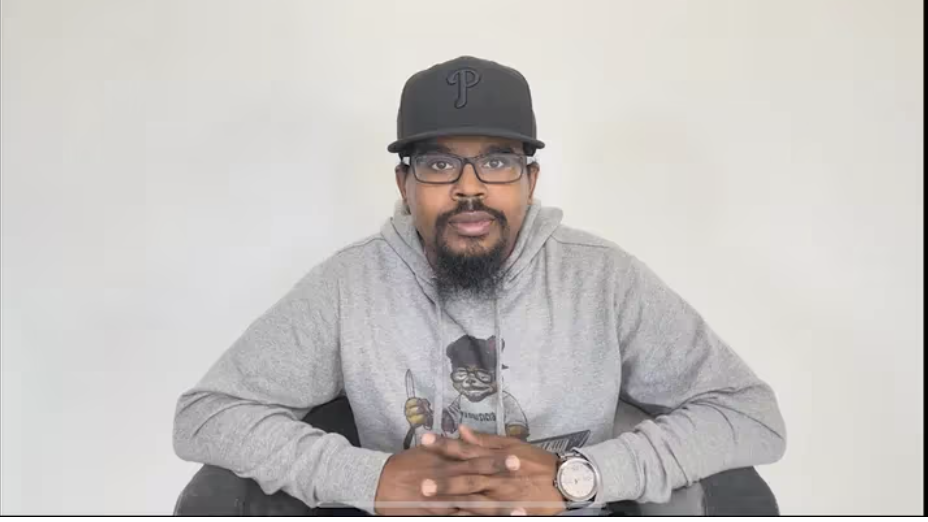
The “Banksy” turned out to be the work of a Southwest Philly artist who goes by Bad Luck. The 33-year-old, who opts to conceal his identity, had stenciled the sketch of the screaming child on a wood-paneled wall hours before Ferrence walked by it.

The idea for the mural, he says, stemmed from a feeling of restriction, like being bound in a straitjacket. Bad Luck wanted to break free of his thoughts, like the child he drew screaming in enraged silence.

That’s how he’s always envisioned his artwork — as a cleansing of thought and emotion. But the comparison to Banksy is something he says he never imagined or wanted.

“I hate it, man,” he said. “He’s so big, talented, and clever. But if you try to do stencil work, then somehow you’re automatically biting off of Banksy. That’s how people view it.”

Philly artist Bleak, who shares an Instagram page with Bad Luck and assists him on select projects, said the comparisons are “wild.” “We admire Banksy’s work obviously, but we’re trying to be our own thing.”

Bad Luck started out as a graffiti writer before transitioning to stenciling after seeing Banksy’s work, but he wants to avoid being labeled a copycat.

“I’m inspired by him for sure, but not as much as people would like to think,” he said. “He showed me a new way to be able to create things years ago, but I try to find my own style. I try to send different messages, which is why my work can be darker.”

Since long before catching Ferrence’s attention, Bad Luck has been fascinated with the art world, but was forced to admire it from afar.

Growing up in foster care, and bouncing around group homes as a teen, the self-taught artist never attended a traditional art school. In time, Bad Luck said, art became his emotional refuge. He embraced the pain of his challenging upbringing and called himself “Bad Luck.”

If it were up to Bad Luck, he would spend most of his nights drawing on street corners and highway overpasses. But with a full-time job and a separate life as a husband and father, it can be a difficult balancing act for both him and Bleak.

“My wife has definitely expressed concern about cops and safety,” Bleak said. Thankfully, there haven’t been any real run-ins with law enforcement. The only real conflict, he says, has been between stencil and graffiti artists.

“For any art form, Philly is all about being respectful and true to yourself, but [Bad Luck and I] have received a lot of love and a lot of hate,” Bleak said. “Stencil artists don’t mix well with graffiti writers. We’ve heard some good things too, so it’s not completely sour.”

Bad Luck said he’s had graffiti artists spray over his artwork, and he has covered theirs in retaliation.

Despite the criticism and infuriating comments — including being called “Fake Banksy” — Bad Luck said his respect for graffiti artists and other Philly creatives has never wavered.

“The art in the city is unreal man,” he said. “The people here are talented with brushes and paint cans. I feel like that’s real art.” But when it comes to stenciling, he doesn’t see anyone else doing it on a large scale.

Conrad Benner, who’s covered the arts for years under his Streets Dept banner, says there are plenty of stencil artists in Philadelphia. But like many trends in the industry, some rise in popularity or grow more obscure over time. While Philly’s street art generally doesn’t have a recognizable Banksy influence, Benner said, there are definitely stenciling artists in the city other than Bad Luck and Bleak.

West Philly resident Tyquaan Bardlavens is surprised by the Banksy comparison.

Bad Luck’s ability to convey his emotions through his work is what drew in Bardlavens. And as they have become friends, he’s encouraged him to take his street art to wider audiences.

Bad Luck said he next plans to place his work in gallery spaces. He’s still figuring out how to navigate commercial art space, but above all, he wants to deliver positive messages through his creations and be known as “the stencil man.”

“It’s not about the money — I don’t want to get paid,” Bad Luck said. “I want normal people that are in the art world to see my s— on a wall and in an exhibit, and for me to get recognition. Oh, and to not get caught by the police.”

Inside The Metro-Verse: How Metro Boomin Went From Behind-The-Scenes Mastermind To Rap's Most In-Demand Producer

Metro Boomin isn’t your ordinary hero. Instead of scaling walls and flying over cityscapes, he possesses the rare ability to generate hits across a myriad of genres while remaining true to form. Like heroes in the Marvel and DC universes, the often withdrawn producer has played a not-so-quiet role in hip-hop for a decade.

For his superpowers, Metro has become one of the most in-demand sonic architects in the game. His collaborations with Future, Travis Scott, 21 Savage, Big Sean, and other big-name artists defied convention, turning Southern trap into high-performance art. Despite his reserved demeanor, Metro Boomin has been behind the board of more than 100 Billboard Hot 100 songs, including top 10 hits like the Migos’ "Bad and Boujee" and 21 Savage’s "Mr. Right Now" with Drake

Metro spread his heroics even further last year. He produced standout tracks on Young Thug’s Business is Business ("Oh U Went), Lil Durk’s Almost Healed (War Bout It") and other major releases, while cranking out his own viral hits – "Am I Dreaming" featuring A$AP Rocky and Roisee and "Superhero" with Chris Brown and Future. His contributions led to his nomination for Producer of the Year, Non-Classical at the 2024 GRAMMYs, and showcased his versatility as an artist. 

Thanks to Metro, and his unmistakable calling card — "If young Metro don’t trust you, I’m gon’ shoot you" — trap's appeal has grown outside of the rap community, influencing pop and R&B. And his string of hits with the likes of The Weeknd, James Blake and Solange further proves Metro's musical wizardry. 

But on his second album, Heroes & Villains, which is nominated for Best Rap Album at the 66th GRAMMY Awards, the St. Louis native proves that he's as strong a solo act as he is an engineer of others' hits. Driven by lead single "Creepin’" featuring  21 Savage and The Weeknd, the 2022 album topped  the Billboard 200 charts and became Metro’s third project to land at No. 1 

It’s the second installment of an ongoing album trilogy, which follows 2018’s Not All Heroes Wear Capes. 

Boasting features from John Legend, Future, Chris Brown, Travis Scott, Don Toliver, and Young Thug, Heroes & Villains is the second installment of an ongoing album trilogy, which follows 2018’s Not All Heroes Wear Capes.  

According to Luminate, Heroes & Villains netted Metro his biggest opening week to date, with an estimated 185,000 equivalent albums sold in the U.S. "I didn’t see that coming," Metro told DJ Drama in January 2023. "A lot of times my stuff will grow slowly because I’ll put my time into it and people will realize, Oh, this is dope. I thought it was going to be one of those usual things … But it definitely caught me off guard." 

In a recent renaissance of soundtrack projects, the multi-platinum producer also created the soundtrack to the animated blockbuster Spider-Man: Across the Spider-Verse. Metro flexed his versatility on the 13-song project, which combined sonorous trap beats, reggaeton and Afrobeat-inspired jams, and lush pop ballads. 

Metro's success and recent GRAMMY nominations have been the result of years of Herculean feats.  Never content to follow a single sonic thread, Metro has continually expanded his reach to other genres and mediums. He’s dabbled in film and TV, producing songs for the short-lived and The Weeknd-starring HBO series "The Idol," and embraced live orchestration both in song and performance. On songs like "On Time" with John Legend, the producer amplified the grandiose record with stringed instruments, then performed the song with a live orchestra at the Dolby Theater for the Red Bull Symphonic back in November 2023.

Despite his vast production credits, Metro says he’s been unfairly labeled a "trap producer." He’s conjured pop and R&B hits, too. "I love R&B music, I love making this, love making that," he told GQ in 2022. "Why would I wanna do something that I did?" Along with producing The Weeknd’s No. 1 song "Heartless," Metro laid his hands to tracks on James Blake’s Assume Form and Solange’s When I Get Home, then later produced Coldplay’s "Let Somebody Go" featuring Selena Gomez in 2019.

Metro’s venture into solo stardom shouldn’t be a surprise either; the 30-year-old producer told Billboard he wanted to be a rapper as a teenager. "In order to do that, I needed some beats, so I started to make my own beats." At age 13, Metro took notice of artists like Soulja Boy, who also made his own beats. "It was like … it’s possible." 

Now, after years of playing the background, the man behind the blistering trap beats and rattling hi-hats is finally unmasked and fully embracing his solo artistry. There were flashes of his genre-bending genius on Not All Heroes Wear Capes, with the Offset, WizKid, and J Balvin-assisted "Only You" melding trap, Afrobeats, and reggaeton in euphoric form, but Across the Spider-Verse fully showcases Metro's musical dexterity both behind the board and in front of the mic. 

On the film’s soundtrack, the roaring orchestral sounds of "Am I Dreaming" form a transcendent exchange between A$AP Rocky and eclectic vocalist Roisee. Songs like "Hummingbird" see Metro return to his trap roots, but James Blake’s harmonious croons breathe mists of pop magic into the track. 

The hip-swaying "Silk & Cologne" and "Link Up" fuse reggaeton and Afrobeats, but "Nas Morales" is a complete step in unfamiliar territory for Metro. The unlikely collaboration between him and Nas closes out the 13-song project — Metro’s most experimental to date. 

The album Heroes & Villains is more in line with Metro’s roots, with songs like "Superhero (Heroes & Villains)" and "Niagra Falls" highlighting the producer’s darker, more mystifying trap wizardry. He also, for the first time, conjured a rollout for the project. 

Before the album’s release, Metro dropped a short film that featured cameos from Gunna, Young Thug, and actors LaKeith Stanfield and Morgan Freeman. The video, directed by Gibson Hazard, shows TV journalists (Gunna and Thug) reporting on a firetruck driver (Stanfield) setting flames to a city’s streets. Metro, overlooking the destruction alongside Morgan Freeman, decides to take action and stop the arsonist. 

Last year was a big one for Metro, but the producer isn't driven by accolades.  He wants fans to know that no amount of fame or hardware can take him away from his calling. "More than any accolades, sales, and everything, I just want people to know at the end that I cared the whole time. Every ounce of effort that I possibly could put into the art, I did," Metro told Complex.  

With a new year in full swing, Metro has already hinted at a possible hat trick in 2024. While interacting with a fan on X, formerly known as Twitter, Metro wrote, "2023 was great but just watch what I do 2024!!!!!." The fan then asked how many albums to expect, with Metro responding, "3 at the very least." 

GRAMMY.com

Benny The Butcher Is Ready To Rise On 'Everybody Can’t Go'

Benny The Butcher is prepared to spar with the biggest names in rap music to prove he’s one of the most prolific MCs in the industry. 

"My confidence comes from my talent, and my talent comes from my preparation," Benny tells GRAMMY.com. 

For the uninitiated, the East Buffalo rapper's brash delivery and unshakeable confidence could be perceived as arrogance. But for Benny and long-time fans of the Montana Avenue vet, he’s more than earned the distinction. 

"If you see these dudes, they’re not confident because they’re not prepared to talk that talk. We stand behind this music, man," he continues. "I’m only on this interview with you because I rap good. I’m not on this interview with you because I’m dating an R&B chick, or because I have a Rihanna feature.”

Benny The Butcher is just days ahead of releasing Everybody Can’t Go, his debut album with Def Jam Recordings. Out Jan. 26, Everybody is Benny's major label launch but it's far from his first foray.

Off the heels of his critically acclaimed album Tana Talk 4 in 2022 — which boasted the viral hit "Johnny P’s Caddy" featuring J. Cole — Benny has kept a steady hand on the pulse of the rap game. Since then, he’s been heard on DJ Drama’s "Forever," G Herbo’s "Real Rap" and memorialized a Buffalo legend on the BSF project Long Live DJ Shay.  

In that time, Benny, born Jeremie Pennick, has fashioned himself as the proprietor of "caviar drug rap," and he’s not afraid to remind you, either. He’s confident the release of Everybody Can’t Go will showcase his evolution as an artist.

"I’m on a higher level than I was. Everybody gets to watch my career elevate and it’s right in front of me," he says. "From the mixtapes, from the freestyles, featuring on Westside Gunn and Conway The Machine’s s–, and people share that journey with me. It’s high-level drug rap."

After switching his moniker from "Benny" to "Benny The Butcher," he veered away from rapping over other artists’ beats and started working with in-house Griselda producers like Daringer to round out his nostalgic, boom-bap sound that’s become synonymous with the Griselda imprint. 

If the album’s lead singles "Bron," "Big Dog," and the title track are any indication, Benny isn’t deviating from the sound that made him. Tales of his past exploits are coated in Hit-Boy and Alchemist beats, with features from Griselda and BSF collaborators Westside Gunn, Conway the Machine, 38 Spesh, Lil Wayne, and others. But the method behind the music, Benny says, was all the same. 

"I didn’t take no new approach, I just wanted to deliver some dope music and make sure I sounded how I felt," the 39-year-old MC says. "I feel like my sound is more refined and I switched my flow up."

To casual connoisseurs, Benny is a burgeoning star who’s aiming for wider success and acclaim. But for fans of the "Trade It All" lyricist, who saw his rise as the younger cousin of Westside Gunn and Conway the Machine on Griselda, he’s earned the right to share his vivid tales and signature brand of mafioso rap on a larger scale. And he’s already made good use of the label’s platform.

He’s rubbed shoulders with artists like J. Cole, connected with legends like Snoop Dogg for his Def Jam signing, and now has his sights on more R&B-oriented records. Benny wants to work with the "Queens of R&B and hip-hop," naming legends including SZA, Teyana Taylor, Coco Jones, Summer Walker, and others at the top of his list.  

With his ascension, Benny is continuing to discover the perils of fame. He admits it’s challenging to deal with trolls and faceless critics on X (formerly known as Twitter). "You have to remind yourself it’s only a fraction of the people. Their voice is so loud on social media that it tricks the artist into thinking that’s the general population that feels like that, but it’s not," Benny says.

He’s also accepted the fact that not everyone is meant to be a part of his journey. The sentiment inspired the new album title and is reflective of his new attitude: Whether friend or family, hindering his growth is too hefty a price tag. As his career continues to take flight, others will be left at the terminal. 

"Everybody Can’t Go is me realizing, Wow, it’s not for everybody even though I got this far to help provide opportunities," he said. "You could make someone the president or an A&R at Def Jam, but that doesn’t mean they’re ready for it. A lot of people don’t want to work, they just want what comes with the work —  the lifestyle, the fame, and the money."

After the project’s release, Benny intends to expand as a legitimate businessman and do more executive production, starting with his roster of BSF talent, which includes Rick Hyde, Heem B$F, ElCamino, LoveBoat Luciano, and other members. 

With Griselda, Benny already has his two cousins as counterparts, but Benny talked about having his daughter by his side during the album’s press run. He was impressed with her vocal ability and is open to exploring her musical side. "This is a family business," he says. "I encourage everybody to get into music because it’s therapeutic, it keeps you out of the way, and it’s lucrative if you do it right."

Of his growth as a solo artist, Benny says, "It feels like I’m on pace to keep doing great things." In the near-future, he's already making plans to dive into the film industry and drop another project to close out yet another big year in music. 

– GRAMMY.com

‘There’s no edge like Philly’: Why the city’s most talented won’t leave their hometown

Philly’s “got major talent,” as entertainment mogul Charles “Charlie Mack” Alston says. “There are some remarkable people and talent that have come out of Philly, and the city has a surplus of it.”

But the demands of the industry often pull artists, musicians, and actors away from their beloved hometown, forcing them to pack their bags and migrate to cities like New York, L.A., Atlanta, and Miami.

But for Mack, who was Will Smith’s long-term bodyguard and personal assistant before becoming a notable Hollywood power broker, there’s only one place he calls home — and that’s Philly. And he is not alone.

Some entertainers born and bred in the region can’t seem to leave the city behind. We asked them why.

Responses have been lightly edited for clarity.

DJ Jazzy Jeff

DJ and hip-hop pioneer; West Philly native

Where do you live?

I’ve lived in Delaware for almost 20 years, but I never had a desire to move far away. It’s what I know. This is home.

Does the Philly area’s affordability play a factor?

It’s true – Philly isn’t as expensive as New York or L.A., and I know the city so I feel more comfortable here. I know how to navigate Philly; I don’t know how to navigate New York or L.A. In Philly, I know my surroundings.

Why do you think some Philly-born entertainers choose to leave the city?

Philly is a tough town. It prepares you to go off into the rest of the world because Philly doesn’t show love to those who don’t deserve it. Nothing comes easy, and it prepares you to go to places like New York and do a good job.

I think the people who move out of Philly never lose the love for Philly.

What does Philly’s future as an entertainment hub look like?

If you look at the history, [the Philly scene was lively] with Kenny Gamble and Leon Huff, then it left. That was the neo-soul movement and [then came] The Roots, it all goes in cycles. I tell a lot of inspiring musicians to just be ready when it comes back because it’s coming back.

Tierra Whack

Rapper; North Philly native

What’s inspired you to stay in Philly?

I love to travel, visit new places, and experience new things but nothing feels better than waking up in my hometown, with people that look and feel just like me.

Did you always see yourself staying in Philly?

I am Philly [and] Philly is me. I love my city and everything it has to offer. I want to put my city on the map. I’m not sure why other people leave, but I’m here to stay.

In a past interview, you talked about pouring back into the city. What does that look like for you?

My goal is to build a creative space here in Philly. Not only where I can go and be creative, but where others can, too. I love what’s happening in our city right now, [and] I want to be a positive light for everyone coming up after me.

Eugene ‘ManMan’ Roberts

Producer and musical director; South Philly native

Why do you think so many popular entertainers from Philly prefer to live in Philly?

A lot of people pull from Philly. Every major album, tour, and every band — someone from Philly is in the mix. And sometimes when we leave home and go to these other places, you’re filling them up with your energy, your presence, and your sound, but they can’t refill that cup. You got to go back home to get that vibe, inspiration, and aesthetic that makes home, home.

What’s stopped you from leaving the city?

We got rich history here. We have amazing producers, songwriters, and artists. We’re really good, and I never wanted to turn my back on the place that made me who I am. I’ll always be that no matter where I go.

Do you see Philly becoming a renewed musical hub?

Philly used to have Philly International, Sigma Sound, and all these other studios, and people came here to cut records. But when the world went digital, it took away needing studios. Until we build up an empire of entertainment with studios and rehearsal facilities, I don’t think any city can [become a musical hub].

L.A. is all that because that’s where all the celebrities live, and there’s good weather but I think the pandemic made it a level playing field for everybody.

Charlie Mack

Entertainment mogul and community leader; Southwest Philly native

Why do you think big-name entertainers from Philly choose to venture elsewhere?

Philadelphia is like a character, and people that used to come here admired it, but admired it from afar. If you don’t feel safe, you can’t relax and let your hair down. Right now, we’re in a place where we’re hemorrhaging and going through a very horrific transition, and I hope and pray that the kids here have an opportunity to experience Philly the same way I did.

I love my city, but the reality is people don’t feel safe. And home is supposed to be just that: a place you feel safe and welcome.

How can Philly go back to being what it used to be?

The natives of Philadelphia are in a space where they don’t love themselves. That’s the harsh reality, and it’s hard for someone to stay put when they’re not received or revered from their own people. Artists need validation and love, it’s a part of their makeup. Philly is real and harsh, it will hit you right in your face. Residents won’t give you fanfare if you’re not tapping into the things that make them move.

How can we better retain the talent that comes out of Philly?

I feel like the men of the city of Philadelphia have to restore safety. Women are stepping up in major ways, but men have to restore everything that is amazing about Philadelphia: the artistry, the streets, the sports, the politics, city government, and everything that it’s about.

Adam Blackstone

Multi-instrumentalist and songwriter; Trenton native

What does being close to Philly mean as an entertainer?

One thing is the culture of Philadelphia. There’s a go-getter and hustler’s spirit. For me, no other city has embraced the arts like Philly.

In Philadelphia, we just want to see each other win and we represent our city from all over the world, no matter where we’re from. That’s always a plus we have that maybe other cities don’t.

Are there certain Philly spots that give you inspiration?

When we go to any sports event, whether it’s the Philadelphia Eagles, Sixers, or Flyers, I feel a sense of oneness and a feeling that we’re all fighting for the same thing.

Don Cannon

DJ and record executive, West Philly native now living in Atlanta

Why does it seem like more Philly artists are staying in the city?

I feel like people just love the culture. I can walk through Society Hill and Parkside, and it just feels different than anywhere else in the world, from Brooklyn to Compton. It’s just a different feel, and I think that’s why people want to stay here. And sometimes you get away from home and think, “Man, it’s not the same,” and go back.

I know you relocated to Atlanta, but do you ever come back to Philly?

I left when I was 18, but I often go back to see what’s happening there, what’s the newest trends, and to get some edge. Sometimes you travel across the world, but there’s no edge like Philadelphia.


– The Philadelphia Inquirer

Meet the sound engineer creating Philly’s new sound

Whether it was the Philadelphia Sound of the 1970s, the piercing jams that propelled the neo-soul era, or the inception of gangsta rap, Philly has always been a pioneer in music and culture. It’s home to artists who have gone against the grain, and now there’s a new legion of creatives continuing the tradition.

From Lil Uzi Vert and Tierra Whack to Armani White, Fridayy, D Sturdy, 2Rare, and others, Philly-bred stars are dominating the airwaves.

White’s “Goated” went viral on TikTok, and vocalist Fridayy is one of the most exciting R&B talents of our time. The booming and frenetic pace of D Sturdy’s “Shake Dhat” and Whack’s “Millions — Jumbo Sounds Mix” has added a Philly-style variety to the electro-sound.

This new Philly sound is a mix of pop-rap, trap, and Jersey club music, a subgenre that originated in Newark in the early 2000s.

One of the architects fueling this new creative wave is Ben Thomas. The 27-year-old audio engineer and producer most recently worked on Lil Uzi Vert’s hit “Just Wanna Rock,” which garnered a nod for best rap song at the 2024 Grammy Awards next month.

“There has been a strong emergence of artists from Philly based on the Jersey wave,” he said. “It’s really dope to see them winning.”

Uzi’s record, Thomas said, is one of the many demonstrating the city’s renewed musical charge and influence, beyond its very recognizable R&B sound.

“I think this period of Philly music is beautiful,” said Thomas, who marked his eighth Grammy nomination with “Just Wanna Rock.” “Uzi does a Philly and Jersey song, and then we have major artists copying their style. Also, we have so much talent here. It’s great to see people getting their shine and I’m blessed to play a small part.”

As an audio engineer and producer, Thomas is partly a curator and a connector. He has linked the city’s biggest artists and helped craft their solo or collaborative projects. And through his work with Uzi and other local artists, he has turned the once-regional Jersey club sound into one also helmed by Philly artists, and opened doors for emerging musical talents.

In the years of knowing Thomas, Def Jam signee Fridayy said Thomas has always made a way for Philly artists to flourish. “He’s definitely gone outside the box with a lot of records in Philly,” he said. But his work across different genres is what’s elevated Thomas’ profile.

Thomas, a New York native who moved to Philadelphia in 2009, attended Germantown Friends School and met now-mentor Brandon Jones, the school’s then assistant athletics director and varsity basketball coach.

When Thomas majored in business at Temple, it was Jones who convinced him to change course and pursue music full-time. “When you combine passion and work ethic with a skill set like [Thomas’], the result is what you see today,” Jones said.

After deferring a job offer from Deloitte, Thomas started a makeshift studio inside the basement of his mom’s Mount Airy home. This is where artist Chill Moody began working with Thomas.

Never taking up that Deloitte offer, Thomas met Lil Uzi Vert through their manager and became his dedicated sound engineer for three and a half years.

He recently branched out to pursue audio mixing and songwriting, which has led to collaborations with the likes of Justin Bieber, Bryson Tiller, Jazmine Sullivan, and Meek Mill. Or in other words, “the stuff that’s getting the national attention, like the big stuff,” as Moody puts it.

For Thomas, “It’s just me planting a lot of seeds.” He likes to think he is just “doing me, and that some of the stuff I’m doing is winning. But I also don’t want to be complacent. It’s important to get on the new wave as it changes.”

When DJ Don Cannon met Thomas through Uzi, he was immediately struck by how Thomas studied the business and evolved as an audio engineer. “He was never late and his ear was always tuned for today’s work. It’s something a lot of people would look past,” the Generation Now label cofounder said. “And unlike most engineers and producers, Thomas didn’t smoke or drink; ... [he] used to watch Jeopardy! in his free time.”

“This new phase of Philadelphia music has been brewing since 2015 or 2016,” said Armani White, who shot to fame with his viral hit “Billie Eilish.” “We’ve all been around each other, and in some way crossed paths, and [Thomas] has been in those rooms with a lot of different names.”

As Thomas continues to perfect his craft and pursue songwriting ventures, he wants to put the same energy toward community service and engagement, especially for young students of color. Along with opening the doors of his Kensington recording studio to local artists, Thomas mentors young residents who are a part of GettingtheMAXoutoflife, a community-based program ran by life coach and motivational speaker Maxwell Brown.

“I think he has qualities that will make him one of the greatest producer-engineers of all time across all genres,” Moody proclaimed.

And while Thomas is happy to receive the recognition, and he’s hopeful Uzi’s name gets called on Grammy night, awards are not a source of motivation for him; it’s community itself. “It’s not a one-person show over here,” he said. “There’s a lot of support that allows me to shine, and I’m very thankful for everybody.”

– The Philadelphia Inquirer

Review: Travis Scott shakes the rafters at Wells Fargo Center

In a sold-out Wells Fargo Center, rap star Travis Scott “shook the rafters” on Sunday night, declaring the crowd one of the best he’s faced on his “Utopia — Circus Maximus Tour.”

“Not going to lie, y’all coming for the top-three spot tonight, Philly,” he said.

Backed by pulsating lights and stimulating visuals that flashed across the stadium’s LED screen, the Houston artist’s high-flying antics and crowd-stirring anthems brought fans to their feet as they celebrated the return of “La Flame.”

The tour is Scott’s first since 2021′s Astroworld Festival, where 10 people died in a crowd crush. And it’s been four years since he topped the Made In America festival bill in 2019. But even after the hiatus, Scott hasn’t lost his connection with Philly fans or his flair for high-powered performance.

Before Scott arrived on stage, fans stood on their feet while some watched the Eagles and Dallas Cowboys on their cell phones. But once the fog machined hissed and the arena lights flickered, the “E-A-G-L-E-S” chants from the crowd turned to roars as Scott leaped onto the stage like a WWE wrestler off the top rope.

He glided across the ends of the stage equipped with floating heads or parasails that rose above the 360-degree platform. Scott’s mystifying howls took the crowd on what felt like a musical voyage to outer Earth without a seat belt.

Scott started with the Utopia opener “Hyaena” and shifted to other records from the Grammy-nominated project, including “Thank God” and the Teezo Touchdown-assisted “Modern Jam.”

The rapper-turned-global-star then played favorites from early projects like 2014′s Days Before Rodeo (“Mamacita”) and Rodeo (”90210″) before bringing Philly’s own Lil Uzi Vert to the stage for their Pink Tape collab “Aye.”

While most of Scott’s performance was like a shockwave of visual and musical stimulation, the audio sounded muffled at distinct spots. It was hard to make out lyrics, and the charged momentum dipped whenever Scott picked fans from the crowd to ride the floating parasails.

While it was certainly a moment to remember for the fans, it didn’t add much to the show or aid Scott’s performance — not that he needed it. He, alone, made the show electric.

After Scott wrapped up headbangers like “3500″ and “A-Team,” things got a lot weirder when he played “Circus Maximus,” with three people dressed in ape costumes walking across the stage as Scott roared from its peak.

The second half of the show started slower than the hyper-speed pace of the first. But once Scott got going with “Meltdown” and “Topia Twins,” the concert kicked back into full gear. Scott went full supernova on “Fe!n,” playing the song five times in a row, as fans demanded one encore after another.

Scott continued to tip the arena’s sonic scales with 2018′s “Sicko Mode,” and wrapped up the hour and 45-minute performance with “Telekinesis” as a camera followed him off the stage.

By this time, Philly had slid into his list of best tour stops. “Y’all definitely in that top three spot,” Scott yelled.

Travis Scott Set List, Wells Fargo Center, Dec. 10, 2023

“Hyaena”

“Thank God”

“Modern Jam” (with Teezo Touchdown)

“Aye” (with Lil Uzi Vert)

“sdp interlude”

“3500″

“A-Team”

“Sirens”

“Praise God” (by Kanye West)

“God’s Country”

“My Eyes”

“Butterfly Effect”

“Highest in the Room”

“Mamacita”

“Circus Maximus”

“Delresto (Echoes)”

“Lose”

“Mafia”

“I Know?”

“90210″

“Meltdown”

“Topia Twins”

“No Bystanders”

“Fe!n”

“Sicko Mode”

“Goosebumps”

“Telekinesis”

– The Philadelphia Inquirer

Philadelphia’s Black Cowboys honor a fallen, four-legged figure

Every time he marched across Fletcher Street stables, the strapping frame and cappuccino-colored mane of the American Quarter Horse drew the attention of Philadelphia’s Black cowboys and cowgirls.

His name was Streakin’ E Class. The quiet equine had a grandeur and presence that matched that of partner and former owner Eric “E” Miller, founder of the Philadelphia Urban Riding Academy.

Miller purchased his four-legged friend from the New Holland Horse Auction in 2017, nicknaming him “Chuck” in honor of a childhood best friend who passed.

On Sunday, Chuck died at age 29. His passing was felt across Philly’s horse-riding community, with several Instagram users commenting Monday on PURA’s announcement. “Rest well Big Chuck,” one user wrote. “I’m glad I gave you extra treats last night.”

“Everyone that visited the barn loved him because he was just so pretty, and he was just the man,” said PURA executive director Erin Brown, who goes by the moniker Concrete Cowgirl. “People adored him. He was just so beautiful and strong-looking, and even the other cowboys noticed he had this presence just like [Miller].”

Chuck was one of several horses Miller owned but wasthe first he bought after his release from prison in 2017. Miller’s interest in horses was rooted in his childhood. His father, who went by Butch, owned a stable in North Philadelphia.

In January 2019, Miller founded PURA, and the nonprofit became an outgrowth of the Fletcher Street barn, where Miller kept his horses and employed locals to care for them. His vision was to teach horsemanship to riders young and old and to preserve the history of Philly’s urban cowboys, bringing their stories to the general public.

His work led to the making of the Netflix film Concrete Cowboy, released in 2021, which starred actors Idris Elba, Caleb McLaughlin, and Jharrel Jerome. Brown said Miller was “the voice behind the movie and script.” But a month before filming began in North Philadelphia, Miller was shot and killed inside his Roxborough home.


Brown, who met Miller as a teenager at Fletcher Street, was determined to fulfill Miller’s vision for the movie and to care for Chuck. “I just knew [Miller] would haunt me if I didn’t,” she joked. “I knew how important it was to him.”

Brown said that Chuck was Miller’s “baby boy” and that he never missed an opportunity to brag about his dashing looks.

After Miller’s death, Brown took up the executive director role at PURA and ownership of Chuck. Recently, the horse’s health began to worsen. “It was best to let him go out like a G,” she said. “You could tell he was really tired.”

The long-time horse rider gifted braided pieces of Chuck’s mane to Miller’s four children. It’s a custom among cowboys and their fallen horses, and Brown felt it was the best way to honor Chuck’s legacy and the bond he and Miller shared. “I knew he was special to [Miller],” she said.


Miller’s daughter, Emani, said Chuck was like an older brother.

Chuck even joined Emani during her prom send-off last spring. The horse’s shoulders were adorned with images of him and her father, bringing the teenager to tears. “I couldn’t believe the amount of joy I felt,” Emani said. “It just made the presence of my father feel so real.”

Looking back at photos of her and Chuck, Emani said that she is saddened at Chuck’s death but that knowing he and Miller are now “reunited in heaven” has brought her a sense of solace.

“I know how much my dad loved his horse,” she said. “It felt so good to receive a piece of Chuck’s mane, and I was able to have a piece of him I will forever hold near [and dear] to my heart.”

Brown didn’t ride Chuck much but on commercial sets, he was the “grumpy old man” she entrusted for the job. He even appeared in Concrete Cowboy alongside Elba.


With support from Philadelphia and Councilmember Curtis Jones, PURA is set to open a new stable in Cobbs Creek next spring. The roughly $1.2 million project will convert an existing structure into a climate-controlled barn, Brown said, and Chuck was to be the first horse to walk through its doors.

Jones said the project will not only provide added resources for PURA, which currently boards its horses at the Dream Park in Logan Township, Gloucester County, but it will pass the “the baton” for future cowboys of color and protect the history of Philly’s urban cowboys.

“If this city were left to its own devices, it would totally erase the rights of cowboys out of its city limits,” he said. “Brown is not only fighting for the rights of the cowboy of color ... assuring there will be riders in upcoming generations.”

Brown said that a plaque honoring Milller and Chuck — and stories of them together — will be placed along the stable’s walls.

Philly’s Illharmonic Orchestra is a house party in a concert hall

Like many Black teens in the 1980s, Philadelphia native Jeffrey McNeill was obsessed with hip-hop music and culture. He wrote his first rhyme at 8 years old, and at 12, he mixed the Beastie Boys’ “Paul Revere” and Beethoven’s Fifth Symphony to craft his first beat.

Years later, Coolio’s 1995 hit “Gangsta’s Paradise” gave McNeill artistic purpose. The song, built from Stevie Wonder’s “Pastime Paradise,” landed the late West Coast rapper a Grammy for best rap solo performance and led McNeill to the harmonious blend of hip-hop and orchestral music.

As Coolio, backed by an orchestra, hit the 1996 Grammy stage, McNeill watched in awe. “I pointed to the TV, thinking, ‘That’s it. That’s the idea, and that’s what I want to do,’” he said. “I knew it could work.”

The future MC looked to meld the powers of rap and traditional orchestration and play it in concert halls worldwide. And with the Illharmonic Orchestra, he did just that.

By the late 1990s, McNeill was recording and making music, but he wasn’t performing as regularly as he wanted. That changed when he began dating his wife and musical collaborator, Andrea, in 2000.

On their first date, McNeill took Andrea to see Mary J. Blige in Atlantic City and the two connected through their love of hip-hop, jazz, soul, and classical music. The two music lovers eventually joined hands on stage; She started out as McNeill’s hype woman, then became the group’s lead vocalist soon after.

Going by the stage names “Thee Phantom” and “The Phoenix,” McNeill and his wife perform classic hip-hop records that are woven together by a DJ and rotating ensemble comprised of trumpeters, cellists pianists, violinists, and other instrumentalists — mostly of color.

“It’s like a house party in a concert hall,” McNeill said, with audiences dancing through aisles as the duo play their orchestral renditions of songs like the Notorious B.I.G.’s “Big Poppa,” Eric B and Rakim’s “Don’t Sweat the Technique,” and other beloved hip-hop records.

“Hip-hop is an amalgamation of jazz, soul, breakbeats, and disco,” Andrea said. “But it also has instrumentation, and we’re putting a face to that. You’ve heard it on the radio or wax, but you haven’t necessarily made a connection to that sound in a Rakim song as a standing bass, or the piano in ‘The Bridge Is Over.’ It opens up the mind in another way.”

As many opportunities opened up for the orchestra, there was just as many “nos,” Andrea said.

“A lot of places were afraid of hip-hop,” she said. “Hip-hop is quintessentially Black, and bringing hip-hop into a classical space made people very uncomfortable.”

There was skepticism from the classical and hip-hop community. It was, as Jeffrey McNeill said, “draining” to continue spending their own money to rent venues and produce shows. “It was really tough to get booked on our own,” he said.

The couple was on the verge of disbanding, but in 2015, things began to change. That year, the orchestra was tapped to play at Carnegie Hall. McNeill brought a 25-piece ensemble to play at the famed concert hall, becoming only the third hip-hop artist to headline a show at the New York venue.

After Carnegie Hall, the orchestra continued to perform across the country, and even sold out the Kennedy Center in 2017. To date, the couple have had over 200 musicians take part in their touring orchestra.

Phill Charles, who joined the orchestra as a DJ in 2010, said Illharmonic looks to change the audience’s perception of hip-hop performances. “The orchestra is vast, diverse, and talented,” said Charles, who performs as DJ Philly C. “You can count on them at any time in any city. There are no wild cards because they have performed with us, been vetted, and they fit together like Legos.”

For Kelly Lee, chief cultural officer for the City of Philadelphia, the orchestra is a great representative of Philly, and she’s happy to see the ensemble receive its just recognition. “The Illharmonic Orchestra blends two iconic parts of Philly music culture into one genre-bending art form that makes hip-hop more accessible to orchestra lovers, orchestra music more accessible to hip-hop lovers, and lovers of both,” she said.

Philadelphia writer and DJ John Morrison, currently working on a documentary about the group, said what Illharmonic has done over the years is “mind-blowing.” “Working on this film has been eye-opening,” he said. “I’ve been able to go to a few of the orchestra’s performances, and seeing the reaction from the crowds has been powerful to witness. I didn’t get a full picture before we started the process, but watching the audience respond has opened my mind.”

“It’s not a gimmick for us,” Charles said. “This is not like a thing that we’re just doing because it’s in vogue right now. This is what we’ve always done.” Although other hip-hop orchestras have surfaced in recent years, the Illharmonic ensemble is the first of its kind.

The couple want to extend the Illharmonic legacy in a way that makes a community impact. With the documentary and continued performances, they want to inspire more instrumentalists of color to pursue their musical ambitions.

“Representation means something; it’s important on all levels,” Andrea said. “One of the things that gives me the greatest joy is being in a room full of gifted musicians, and we’ll continue to move with a certain level of intention.”

– The Philadelphia Inquirer